An Interview with Larry Beinhart: Author of The Deal Goes Down
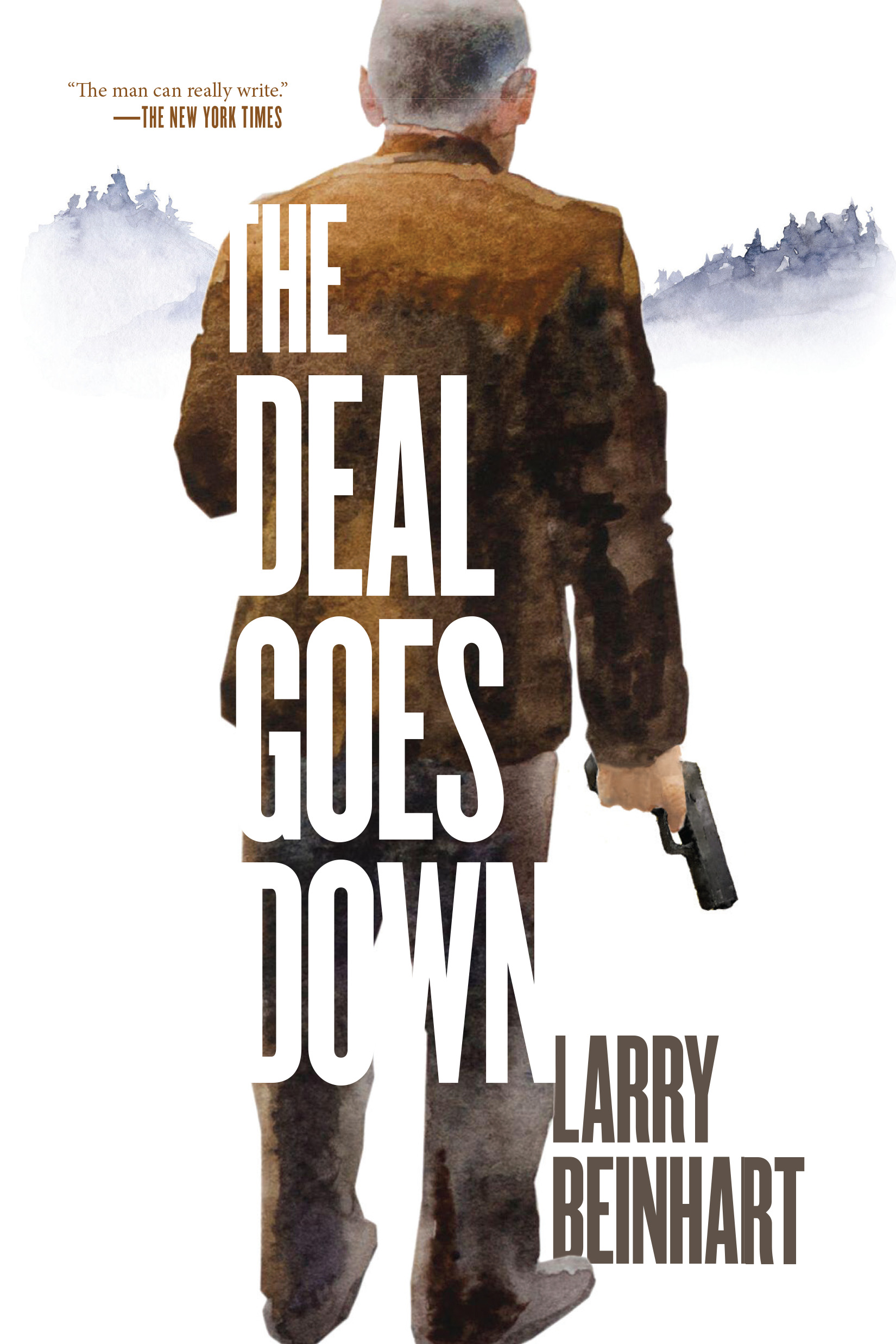
The Deal Goes Down marks the return of Tony Casella, an ex-private eye who first appeared in Larry Beinhart’s Edgar Award winning novel No One Rides For Free in 1986, and reappeared in the follow-up novels You Get What You Pay For (1988) and Foreign Exchange (1992). This is the first Casella novel in thirty years and the character begins the story at a very low ebb. Estranged from his family, in financial trouble and on the brink of having his home repossessed, Casella is thrown a lifeline when he meets a woman named Maddie who offers him a well-paid assignment – murder her abusive husband. Things get complicated when Maddie, backed by a financier who funds “good causes”, compiles an array of dangerous assignments for Casella.
The Deal Goes Down is a gripping read, both thrilling and amusing in equal measure. It can be read as a standalone novel or as part of the Casella series. I strongly recommend that you jump on this narrative rollercoaster that begins in Woodstock NY and climaxes at an Austrian resort where Casella faces off against a Russian billionaire named God.
I had the pleasure of interviewing Larry Beinhart about The Deal Goes Down. Talking to Larry is like reading one his novels. He is witty, clever and, like all good books, very companionable.
Just don’t mention Hollywood…
Interviewer: The Deal Goes Down marks the return of Tony Cassella. Could you tell us a little about the character and why you decided to bring him back after a thirty year hiatus.
Beinhart: I thought it might be a good idea for me to go back to my roots. Fundamentals. He doesn’t care. Unless I make him do so. If I was going to bring him back I thought it was interesting to make him 30 years older. A real 30 years. It’s a significant change, especially if it takes someone – anyone – into their seventies.
Once I started, it was just a matter of going with it as if it was real.
If you go back to the first book, you see he was a guy who started as an idealist. It was the time of Serpico and Bob Leuci (Prince of the City), if you remember all that, and like them his idealism hurt him. There’s also a very New York if you fuck with me, I’ll fuck with you reflex that we were taught in our school yards. One more layer is that he was smart enough to get into Yale law school (but left because he had to make a living when his father died.)
All those things allow him to act effectively and to let him get himself into trouble. When we last saw him, at the end of Foreign Exchange, he was actually happy and optimistic. Newly married to the mother of his first child, ready to reconcile those conflicting impulses.
Interviewer: Part of the genius of Casella is that, when he is being roped into various serious crimes, he can anticipate how the police will investigate, and therefore wrongfoot them. Do you do a lot of research into modern detection methods?
Beinhart: The “modern” elements of modern detection methods are, for the most part, matters of common knowledge.
Most important, the electronic footprints of our e-devices, computers and phones.
I’ve seen and read lots of crime/thriller dramas where those elements play an important part. Except for the Dragon Tattoo girl, it always the genius sidekick or super-tech-wiz that the hero knows who does the e-wizardry. The hero asks, that person delivers. We never see it done.
I want to see it done. Or, if I were to use a wizard, I’d want to at least see how one is found, contacted, operates.
So, I stick with matters that are in reach or easily researched.
An auto accident? Definitely a mechanical analysis, likely a tox screen. What do tox screens reveal? Look on the net or ask your friends who use a lot of mood elevators.
It’s more that he thinks through what they’re certain to do.
Interviewer: The novel covers a lot of serious topics, everything from domestic abuse and murder to international intrigue, but always with a terrific sense of humour. How important is it for you to have a comedic element to your writing and who were your influences?
Beinhart: There’s a scene in the book in which Tony goes into the local coffee shop.
“Beinhart [yes, that’s me] was at Bread Alone, as usual, in his regular corner, the NY Times open in front of him. He claims to read it for the comedy and sure enough he broke out cackling.
Jay Samoff, a retired local lawyer, sitting beside him, said, “You know the rules, no snickering unless you share.”
That’s literal reportage of a real scene. Except for Tony being there, since he’s not real. That’s my mentality. To some degree my culture, classic post-war New York City. Also, a lot of life is really quite funny.
Interviewer: You reference yourself in the novel and make some satiric digs at Hollywood, including the shocking Buchwald Vs Paramount case. What would your advice be to writers in Hollywood to help them avoid being exploited?
Beinhart: Hah! Hahaha.
I have no idea how to avoid it. Some small amounts can be fought by a good agent (if you have one, if they care) or lawyer (if they’re good, well positioned, and you can afford one). If you have more power than the person you’re up against. If you’re lucky. If you’re so successful with other things – books or whatever – that you can turn down offers for years and figure you’ll be happy if there’s never a deal.
Most of the time the writer needs the deal more than the deal-makers need the writer. Then calculate if it still works for you.
Interviewer: The novel is timely as a subplot examines Putin’s inner circle. Do you enjoy writing about contemporary politics in fiction and does the current state of the world worry you, or do you have optimism for our future?
Beinhart: I write about politics and economics a lot.
Actually, I was trying to make this book not be explicitly political. Certainly not in the sense that Wag the Dog and The Librarian were. But we live in a political world. Our lives are constantly shaped by economic policies. So, it’s there.
The current state of the world, compared to what? The Great Depression? World War II? Segregation in the US and apartheid in South Africa? Putin compared to Stalin? COVID v. pre-vaccination polio?
Optimism would be based on prediction. Will it get better? Will it get worse? If I had to guess, I’d say clearly on the road to better – better science, technology, material production, nutrition, medicine, education, involving more and more people – unless something manages to blow it up. All that positive stuff is happening, relentlessly, no matter how many politicians, theologians, pundit-entertainers, want to dig us down into the mud of our illiterate histories.


 The Venetian Vase