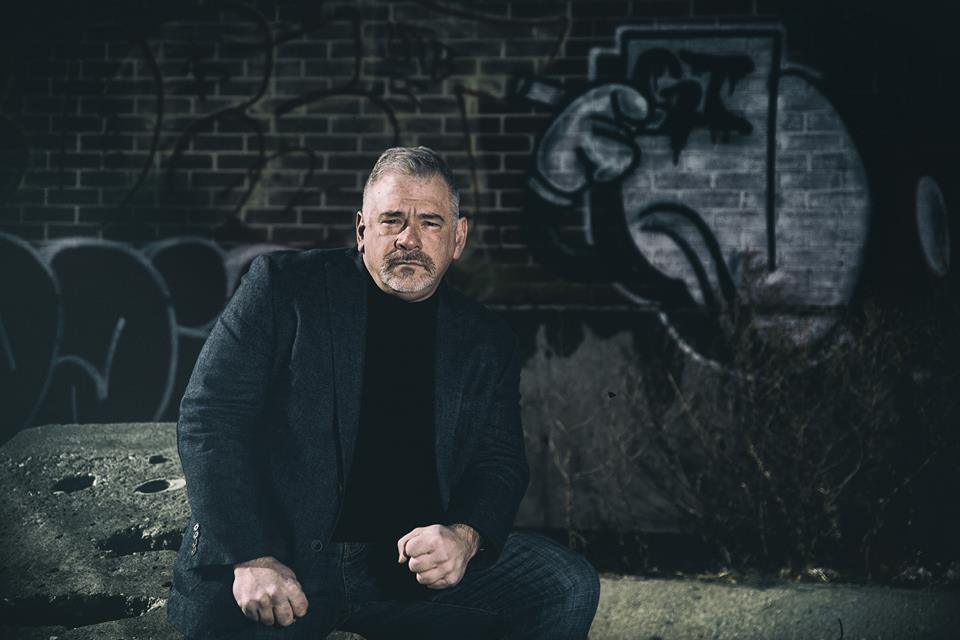
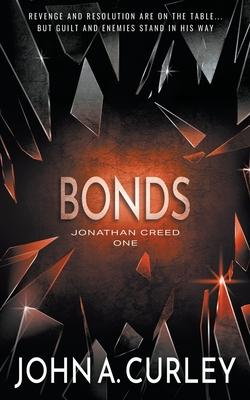
John A. Curley is an author and private investigator based in New York City. His crime novels Bonds, Sorrows and Harbingers featuring PI Jonathan Creed are vintage hardboiled tales in the mould of Robert B. Parker and Mickey Spillane. Child Protection is a key theme and the Creed novels, like Andrew Vachss’s Burke series, are noted for their authenticity as Curley has brought his own experiences and used real cases as a basis in his fiction.
Curley and Andrew Vachss were both friends and colleagues, sharing a mutual interest in child protection. But to call it merely an interest would be to do both men a disservice. For Curley and Vachss, making the US a safer place for children was nothing short of a lifelong vocation and quest. This is why I first began talking to Curley and subsequently started devouring the Creed novels. I had interviewed Vachss when I was researching Love Me Fierce in Danger: The Life of James Ellroy, and I was eager to hear about Curley’s memories of Vachss who sadly died in November 2021.
I spoke with Curley at length via Zoom. We talked for so long that I decided to split our interview into two parts. The first part, published below, is focused on Curley’s professional relationship and friendship with Andrew Vachss. And in the second part, to be published soon, Curley will discuss the inspiration behind the gripping Jonathan Creed novels.
I’ve interviewed a lot of authors and the first thing I learned was that a good interviewer lets the author do the talking and on occasion directs the conversation towards a certain topic. As a consequence, I have cut my voice out of the transcript below entirely and let Curley tell his story in his own words.
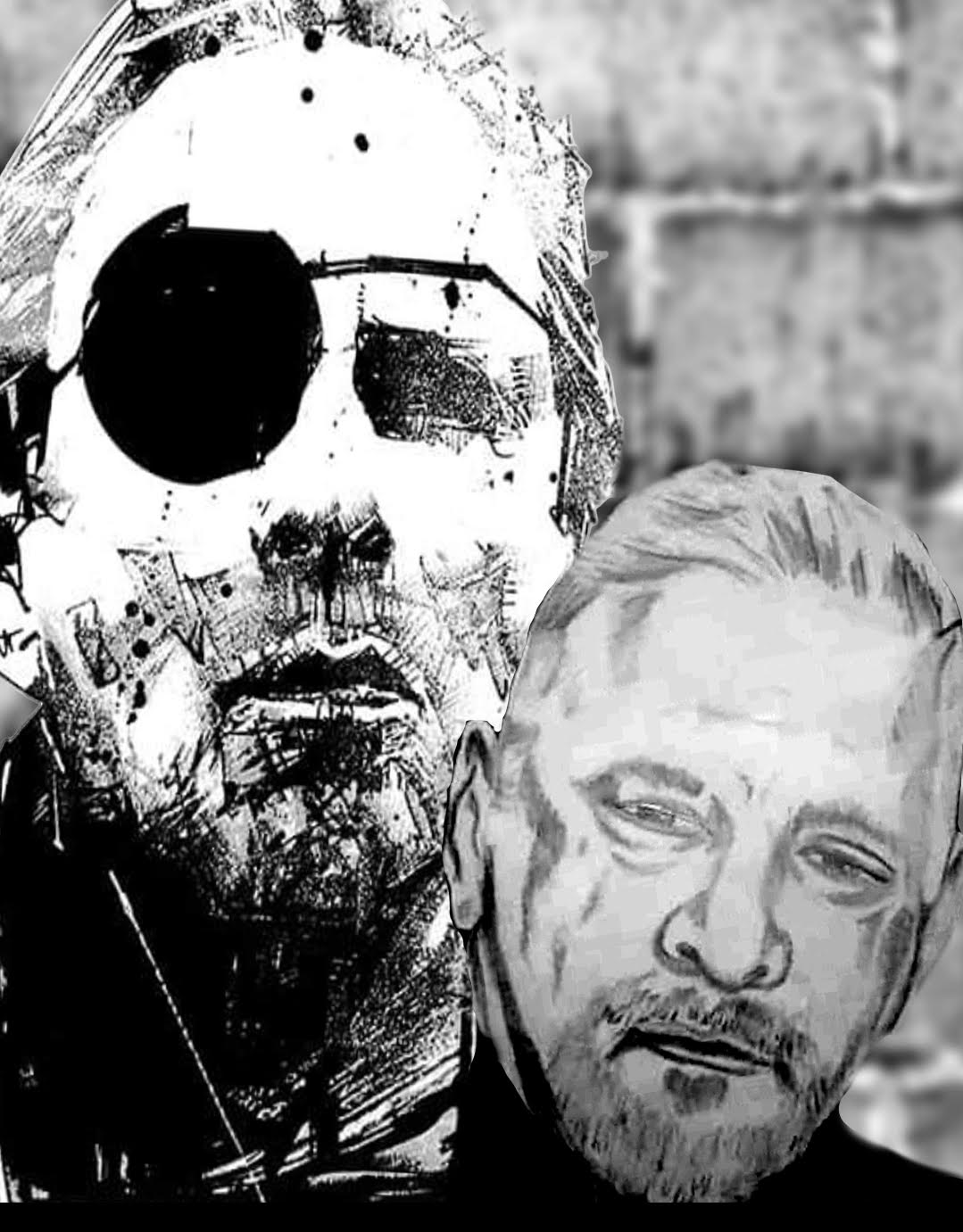
Vachss & Curley by artists Bill Sier and Donna Akers
Andrew (Vachss), by his own admission, was sometimes tough. I didn’t experience any of that because I regarded him as my teacher. I had the same respect for him as I would have for a martial arts instructor or a scholar. It moulded me. If we disagreed about something I would take it for granted he was right, although I might look further into it, and he would always encourage me to do that. But when it came, for example, to child protection. This is all the guy’s done for fifty years. He is the smartest, and that’s not an exaggeration, most logical, toughest guy that I know. If you look at some of the people I work with – retired Navy Seals, Army Intelligence officers, Police Chiefs – that’s high praise. But it was true and they’ve acknowledged that when they’ve spoken and interacted with him. And I would tell people, ‘So you’re gonna tell me he’s wrong based on your personal experience in this little area in which you, your family court case, didn’t go the way it’s supposed to. Logically, do you think he’s wrong?’ He pointed it out to me, just because you have a heart attack you’re not instantly a cardiologist. You have to objectively research, and he is a guy who had such hatred for predators that he objectively dissected them, and looked at them from every possible angle, and came up with common sense solutions to actually decrease significantly what’s happening.
I’ve been a PI for 36 years. I’m not a PI that sits in his basement and does things for insurance companies and things like that. I’ve worked for Fortune 500 companies. I’ve worked on 70 homicides in my 36 year career. I worked on the last Presidential Election. I was the head of the investigation, the Amistad Project, which I cannot speak about because I signed disclosures, and I was working for attorneys, and I’ve done hundreds of custody cases, and what I have seen in my own experience indicates he’s right. So it wasn’t just a blind devotion to him. Whenever we would talk he would patiently hear me out if I disagreed with him. We have a mutual friend, Marc MacYoung. Marc was Andrew’s go to violence expert. He’s like the Albert Einstein of violence. He grew up in Watts in LA as a white kid, so he was the minority in the worst neighbourhood in the country. (He was) first shot when he was fourteen. First Job was knocking over drug dealers with a local Motorcycle Club at sixteen, and he was Andrew’s go to guy. Marc and I got to be very good friends, and we would talk, and we would call Andrew ‘Satan’. He had that voice where he would talk to you like this (affects deep voice), and it would feel like the devil was yelling at you. And one day, I said something to Andrew, in the midst of this really long and tense conversation he stopped, and he said, ‘I haven’t considered that. I’m gonna have to think about this, and we’ll talk in a couple of days.’ So the first thing I did was call Marc and say, I was just talking to Satan because we would always try to show each other up. I talked to him last week, did you? And I said I got him to reconsider his position on something.
John A. Curley
He had a great sense of humour. A lot of people never saw that, because he was so intense about what he did. He asked me to do a job for him. A little job, but I was all excited, and this is about six months after we started speaking regularly. And I would say that we averaged an hour a week (talking) for about seven years and we got to be friends. We would actually bounce ideas of fiction off each other, which was a privilege for me. And for some reason I just had it in my head, I’m going to make Andrew laugh because he is always so serious. I gave him the results of the job, and he says ‘That’s a well done job. Thank you. Where do I send the cheque?’
And I said, ‘After I reimburse you for the writing lessons you can send me a cheque’. I said to him, ‘Do you know what the Captains of Crush are?’
He goes, ‘Never heard of them.’
I said ‘They are industrial strength grippers. The number two. It takes 190 pounds of pressure to close it. I can do that eight times with my right hand. I can almost, but not quite, close the number three, but my hands are average size, so I don’t think I’ll ever be able to do that, I said, but that’s still significant. So, do you know why I do that Andrew?’
And he said, ‘Well, I would imagine some martial arts tearing somebody’s throat out technique.’
‘No, I’m cheap.’
‘Explain.’
‘I will not leave the last little bit of toothpaste in that tube.’
And he laughed for about a minute! And just when I tried to talk he kept laughing, and he said, ‘you gotta give me a minute.’ He had a great sense of humour. The thing about Andrew, he was single minded in his focus. So what I tell people, when it comes to child protection, you can go to his website, read his novels and know everything I learned from him, because it’s all the same. He doesn’t change
I was in my late forties when we first started talking and I’m 56 now, and I wouldn’t think I’d have a father figure at this age but he proved me wrong. His loss is, if I make it through this interview without tearing up, it’s the first one, and I’ve done a couple of dozen. It’s a little intimidating, because a lot of people look in my direction where they used to look in his. I have no idea what he felt made me worth his time, and he never asked for anything, ever, but I knew he wanted people to continue his work. I told him, your fight is mine until the day I die. And it’s easy for me because I can’t improve on what he did. I just advocate for his position. He was a very complex man. I had a conversation with him one day. I was kind of upset by what I had been reading about Critical Race theory.
I said, ‘One of your founding principles is that no child is born bad. Why aren’t you more upset about this?’
And he took a deep breath, and he gave me that voice where I knew I had said something stupid, or I hadn’t thought it out all the way.
He said ‘I would not advocate for that to be part (of the curriculum).’
I said ‘I would think not, because it tells white kids that they’re evil and black kids that they’re born stupid if you look at the actual context.’
And he said, ‘I’m still trying to make Texas understand that an 11 year old when she’s impregnated by her father is not gonna show until she’s three or four months along. So their six week ban on abortion isn’t for that situation.’ This is about a year before he passed. He said, ‘I have limited time and I have to choose what I devote my time to. Besides that, why didn’t the opponents take it to court yet? Shouldn’t they have done that instantly? The information is out there.’
And I said, ‘Well, that’s a good question. Why?’
And he said, ‘Because then the opponents are going to stop making money from it. So nobody wants it to go to court.’
He just would peel something back, regardless of what the subject was, and he wasn’t vocal about anything unless it had to do with child protection. Before Roe vs Wade he advocated for a legal guardian to be able to have an abortion done on a child, because if you have an eleven or twelve year old that’s pregnant from a father or a brother that’s life-threatening. So that’s how long he was in the fight! There were conundrums I would come up with workwise. I would go to him when nobody else could figure it out, and he would get it. So he was an invaluable resource for me and I loved him. He was a good man, is a good man, and if there’s some way for him to still be fighting he is. You can take that to the bank. He was not the kind of guy that would back down or give up. I have friends who I work with who are actual Navy Seals, and they tell me that guy Vachss was one tough sonofabitch and that’s praise.
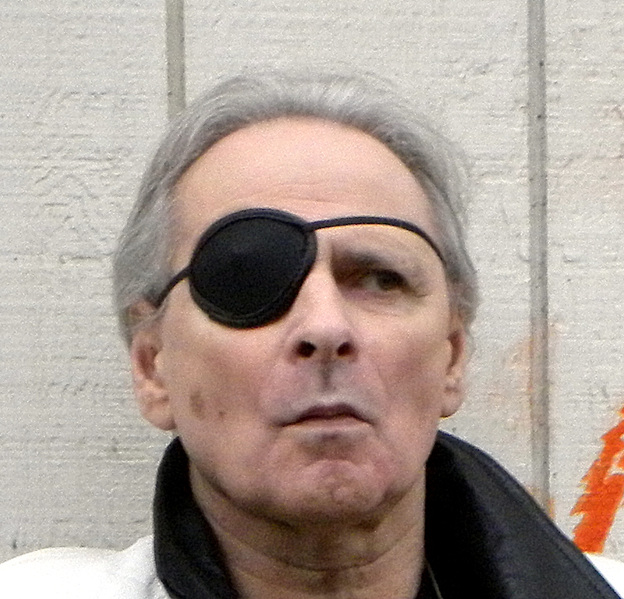
Andrew Vachss
He was a therapist as well to his friends. I have a younger brother that’s bad. He was extremely abusive to his wife and my niece and nephew and we took them in. Eventually he went to prison for repeatedly violating a protection order. They couldn’t nail him for drug dealing, which was his forte, but they did get him for violating the orders of protection so much that he got hard time for it. As I’m sure you can imagine, it was an extraordinarily traumatic time. It’s an easy decision to make – him or the kids. But it’s a hard decision to make, because that’s my little brother. During the pandemic we were watching this show on Netflix called Bloodline, and basically it was the Curley family set in Key West. You have a good brother for lack of a better word, and the evil brother who suffered some horrible abuse, who comes back into their lives and he’s an evil guy. He’s a drug trafficker and he kills people, and the good brother goes to see the mother and the mother is begging him. You have to help your brother, yet he knows it is spiralling down to this point where it’s beyond help, and one of us is going to die. He gets into his truck. He looks in the rearview mirror, and he sees his little brother in the back of the car, but as a child, and he turns around and starts screaming at this image of his brother – Fuck You!
I watched that and I just shut down. I didn’t talk for two days. After my brother had gone to prison, the economy tanked. My wife had gotten breast cancer. I injured myself so severely I was out of work for almost sixteen months. The bank wanted to take the house. It’s one thing after another. It’s almost like there’s no time to deal with this, so I put it away. Then I see the show years later and all of a sudden it all rushes back to me. Out of desperation I called him (Vachss) and we talked for about an hour, and he said, ‘Well, when he turned around, and he was saying fuck you to the image of his brother. Why was he saying that?’
‘Well, that’s easy, fuck you for making me do what I have to do, and for being what you are.’
And he said, ‘Well, you’re leaving something out there. What about the fuck you for your father that made him that way.’ He said, ‘It’s your brother’s fault because he chooses his actions as an adult, and none of the rest of you are doing what he’s doing. But nonetheless, that was the catalyst.’
And I thought, my father was not a bad man. He was one of those guys who thought what he was doing was making his kids strong, and he did what was done to him, and it wasn’t good. But that had a bad effect on my brother.
And then he said to me, ‘What else?’
‘What do you mean?
He goes ‘What else John?’
And I said, ‘I don’t know Andrew, how would you feel if I told you I actually had considered the possibility, and thought about it extensively that my brother or I might end up dead.’
And he said, ‘What would you think of someone who would allow that type of abuse to happen to a woman and a child, especially in their family and do nothing about it?’
‘I wouldn’t think much of someone like that. I wouldn’t keep company with him.’
And he said, ‘Well, that’s the problem with men like you.’
‘I don’t understand.’
‘Because you think this is the first time I’ve heard this from guys like you. You were thirteen or fourteen dealing with your father’s sudden death.’
(He was murdered. If you’ve ever seen the movie Goodfellas, the Lufthansa heist that happened in the movie. Those guys killed my father.)
He said, ‘You think somehow you should have been able to keep your family together, deal with your own grief at the age of thirteen just turned fourteen, and you’re somehow responsible for your brother going wrong?’
For years I felt that, and all of a sudden this huge weight that I didn’t know was on me was lifted off. And I said, ‘You know, Papa, you could put most therapists out of business’.
He laughed and said, ‘John, this is all I’ve done for the last fifty years. If I couldn’t help you, I wouldn’t be much good.’
But that was Andrew, that was a side of him a lot of people didn’t get to see. He had this really human benevolent, I’ll even say loving, side to him. Andrew was a tough man. He had to be to see what he saw. I have not seen half the tenth of one quarter of what he’s seen, and there are things that I’ve done. I’m no Superman but a few times I’ve walked in places and walked out with kids before they were sold (to the sex trade), and I know what happens and it rips me up to this day. He dealt with that on an almost non-stop basis, and I had no idea how he could do that. He was that strong willed. But there had to be damage inside of him. He’d never let you know about it, but he was human just like the rest of us.
One of his last wishes was that he wanted to make sure that people didn’t know exactly when he died, because him being alive upset a lot of the freaks. He said, ‘Don’t be offended. Someone will let you know when it’s time.’ And the last conversation I had with him was two days before he died, and he did not even talk to me about what was wrong with him. He spent that time trying to help me with something. It’s a really hard thing to not have him.
One of the things about Andrew. He was adamant about this. There is no such thing as selective free speech. There was a time when NAMBLA (the North American Man Boy Love Association), it’s disgusting to even say, they were having their monthly meetings at the New York Public Library. There was an uproar about this, and again, the only time people seem to care about this is when it’s in the news. Back in the Eighties there was little Lisa Steinberg who was murdered in New York by the piece of garbage that adopted her. There was no Internet then, but it was all over the newspapers, the radio, national and local news for the next six months. It was never going to happen again, and everybody jumped on board. But the problem with people over here is they don’t follow through on anything. People are so desensitised when they read a headline every few weeks about a child being murdered. It doesn’t affect them anymore. Oh, there was change. The Bureau of Child Welfare became the Administration for Children Services. With all the garbage that you see on television you don’t see people jump on board with this because it doesn’t bring them any kind of power. I know about violence. I’m a guy you come to when your daughter is being abused by a drug dealer or you’ve run afoul of the white supremacist down the road and you need somebody to make things right. They’re actual jobs by the way. I’ve sat down across from people who’ve told me that they were gonna kill me and mean it. So I have that experience and I understand those things. So the news interviewed Andrew about NAMBLA meetings at the Public Library.
‘You think they should remove them?’
He said, ‘No. Free speech is free speech. I want that freak on television telling people it’s normal for an adult to rape a child because, even as polarized as these things are today, I line up 100 people, 98 of them are going to go – Are you fucking kidding? The other two are freaks or collaborators. I want them out in the open, so that maybe an enterprising young cop can go there and write down licence plate numbers, and might have an idea where to look when the next kid goes missing. What I don’t want is for that to go underground.’
And that makes perfect sense. Because he would logically look at the problem. The gut reaction is – Get them out of there. I’m sure I felt that way too. The turning point for me was when he posted something about somebody hurting a child with an animal, and I did the typical bullshit machismo testosterone response. ‘If I had that bastard, I’d put him on a meat hook in my basement and use him as a heavy bag for a month.’
And he said, ‘What good would that do, John?’
‘Wait a second, aren’t you Andrew Vachss. Don’t you hate these guys?’
‘Well, you feel good, don’t you. You feel you let off a little steam?’
‘I do.’
‘You feel strong?’
‘I do.’
‘You know what would have been good. You calming down, writing a well thought out letter, sending it to that prosecutor saying – I want the Max. No plea deals and I vote – Put that up on Facebook and ask people to do the same thing. Maybe nothing happens, but maybe it will, and you did something.’
End of Part One. In Part Two Curley discusses the inspiration behind his excellent Jonathan Creed series of novels.


 The Venetian Vase
Trackbacks