An Interview with James Rice: Author of Alice and the Fly and Walk
Alice and the Fly is the debut novel of James Rice. It is a haunting tale, written from the point of view of a cripplingly shy young man named Greg, which touches on themes such as loneliness, isolation and mental health. It’s a terrific read: sometimes funny, sometimes sad. I’ve known James for some time. He is charming and self-deprecating, but I’ve never been in any doubt of the burning talent that drives him as an author. James agreed to be interviewed by me about the genesis and writing process of Alice and the Fly.
Interviewer: Tell me about the genesis of Alice and the Fly. How did you get from the germ of an idea to what every writer covets – a book deal?
Rice: I first started Alice… as a teenager. I can’t remember exactly where the idea came from, but there were various versions of it – a short story, a screenplay, a concept album (don’t ask). None of them ever really worked. A few years later I was studying for an MA in Creative Writing and I decided that I wanted to use that time to work on a novel, so I was looking back through old ideas. I came up with an opening chapter, with Greg and Alice on the bus, and I was quite pleased with that, but I didn’t really understand how I could go from this one scene to a whole novel.
Around the same time, I heard about Writing on the Wall’s “Pulp Idol” writing competition, so I submitted to that. Which was a turning point for me. The judges liked my opening. I had to perform readings in front of large groups of people and it kept getting a good reaction and that was a huge boost in confidence. One of the judges was an editor at Tindal Street Press. He was very encouraging – gave me his card and told me to keep writing. And so I did. For the next four years. I think I’d have probably given up if I didn’t have that card.
In the end Tindal Street were bought out by another publisher and the editor I knew left long before I finished Alice…, but I kept writing. I submitted to several agents. Eventually I managed to convince one to read it, and her reaction was encouraging. There was a lot of back-and-forth there – the novel was too long, it was too short, there was too much humour, too much sadness, etc. There were several six-hour Megabus trips to London. Everything she said was 100% correct though, so I appreciated that. Some people don’t like their writing being edited but I’ve always found it incredibly useful – someone taking the time to sit down and look at your work, try and make it the best possible version of itself.
Eventually we had something that felt like a novel and she agreed to submit it for publication. Then the emails stopped and there was just this deadly silence for what felt like years (but was probably months). I didn’t want to hassle the agency, so I just waited, wondering if I’d ever hear from them again. And then one evening I got the call. Hodder and Stoughton had said yes and wanted to meet me. A week later there I was, eating croissant in the office of a publishing house. It was all very surreal. There’s still a part of me that doesn’t believe any of it really happened. That’s mostly been my experience of writing novels – 99% of it is staring at a word document for hours on end, but occasionally there are moments like that that which make it all worthwhile. Although, maybe not. If I’m honest with myself, when it comes down to it, I’m definitely more of a sit-down-with-a-word-document kind of guy.
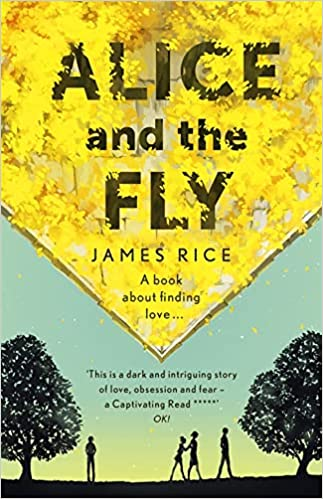
Interviewer: Name some writers you grew up reading. Who were your first loves as a writer, and did any of them work their way into Alice and the Fly as influences?
Rice: I didn’t read that much growing up, if I’m honest. There was a teacher who got me to read a few children’s novels. I remember her giving me The Indian in the Cupboard and Gary Paulsen’s Hatchet books – I enjoyed them. And there were these Bruce Coville books about aliens that my dad bought me. But I wasn’t one of those Matilda-type children who carries piles of books everywhere and make friends with their local librarian. I wrote a lot as a child, even without being much of a reader. I had a big imagination.
I was in my late-teens when I started to properly read, and I made up for it then. I read a lot of American stuff; I remember working my way through all of those masculine authors like Bukowski, McCarthy, Hemingway. Then I remember trying to counter that with yet more Americans, only this time of the opposite sex: Flannery O’Connor, Joyce Carol Oates, Amy Homes. After that I tried to broaden my horizons.
I always find this question difficult because the truth is I’ll read anything and everything as long as it’s well-written, and I believe everything I read influences my writing. I did an exercise in a class I was teaching once where I picked out every book from my shelves which had a direct link to something in my first novel. So, not just an influence, but a specific example whereby I could pick out something that I used (i.e. stole) whilst writing Alice…. The pile got very big. After a while it fell over and it was at that point I gave up. Lesson is: everything is an influence, in one way or another. So read everything.
Interviewer: Greg is a painfully shy young man, and a lot of his story inevitably brings up issues of mental health. Both in how it affects individuals and how society reacts to it. Did you do a lot of research in the mental health field?
Rice: I did all the usual stuff; I read, I watched documentaries, I researched case studies. But a lot of this was near the end, to be honest – I avoided trying to get too much into the medical side of things early on because I didn’t really want the book to be about that. I wasn’t trying to do one of those mental health books that get put on an NHS reading list to help people better understand specific medical conditions. Not that there’s anything wrong with that (other people do those books much better than I ever could) – but that wasn’t what I wanted to write. Greg had these ‘visions’ and people didn’t understand them and a doctor would more than likely diagnose them as a form of psychosis, and that’s as much as I wanted to get into it, in terms of ‘mental health writing’. To Greg they were real, and they were real for me too. Most of the research was done to make sure the story I was telling was believable in the ‘real world’ – even if that isn’t the world I was really interested in.
In terms of shyness – I knew where I was with that. I was shy as a child and awkward in my teenage years. I felt out of synch with everyone and everything – I think that’s a pretty universal experience, so a lot of the novel was a reflection on that. And how what’s happening inside someone’s head can be very different to how everyone else is perceiving them.
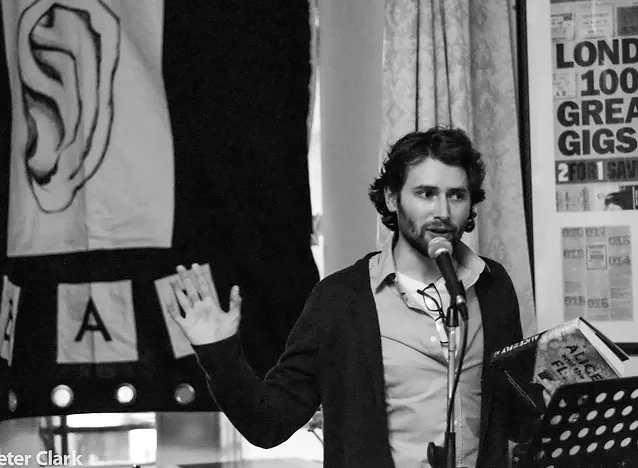
Interviewer: You incorporate different medium into the novel, from journals to transcripts of police interviews. Why did you decide on this innovative approach?
Rice: The idea of the book being a journal came early on. I wanted it be first-person, but addressed to Alice because there’s a certain sweetness to that. The word ‘you’ is very romantic when used in this way (e.g. 90% of love songs are addressed to “you”). But there are some drawbacks to this format. Just having the world as seen from Greg’s p.o.v. is quite limiting. Also teen-narrated novels can get a bit repetitive. I read a lot of teen-narrated novels at the time of writing Alice… and by the end these sorts of narrators where always starting to grate on me.
Also, my editor thought the novel needed more momentum. She thought the reader needed a sense of the drama to come. So the idea for police transcripts came along quite late in the writing process, as a way of addressing both of these issues; they give the reader a break from Greg’s voice, whilst letting them know something dramatic is coming in the final act. It also gave me the opportunity to write some dialogue, which was nice. (I like writing dialogue.)
Interviewer: Alice and the Fly garnered some terrific reviews which must be very gratifying. Did you receive any feedback from readers who personally identified with Greg’s struggles?
Rice: The reviews were good, yes. I try not to read them because I have that irritating author knack for just concentrating on the negative – so a review will be gushing with praise but then have one suggestion for something that could have worked better and I’ll fall into this utter pit of despair over it. I have a friend who reads them and sends me anything he thinks I’ll find interesting or funny (e.g. the reviewer who accused me of product placement because I mention Waitrose).
I did have readers contacting me, and still do, from time to time. (There was a little boost during the covid lockdown, which was I think due to everyone finally getting round to reading all those books they bought over the last few years.) Sometimes it’s because of the mental health aspect but usually just because they really connected with Greg and want to tell me they enjoyed the book and that’s always nice. I never know what to say though. I’m not very good with compliments.
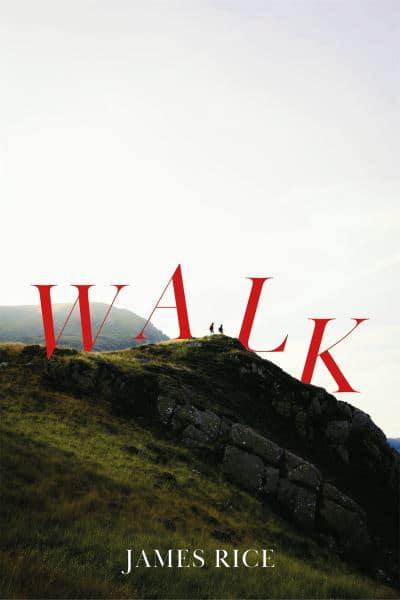
Interviewer: Your follow-up novel Walk approaches a somewhat different subject – two friends walking across Wales. But digging deeper, it appears there are some parallels. What inspired you to write this novel?
Rice: I wrote Alice… because I wanted to write about a particular time in my life – those awkward teenage school years – but in a way that felt authentic. It was very much a reflection on a particular period of life – even if the end product was complete fiction.
Walk is the same. It’s a reflection on those early-twenties years; that post-university time when you have to get on with the business of living. The horrible grinding struggle of that. I knew that’s what I wanted to write about for my next novel, but I didn’t have any structure or format for it. Then my friend asked me to walk Offa’s Dyke with him and it was as we were walking that I decided this was going to be the basis for my next novel: two dumb city-boys trying to cross a country together and failing at every turn.
I thought it was going to be easy. I struggled writing Alice… because I had never written a novel before, so I was very ill-disciplined when it came to structure, whereas the path they take in Walk is a sort of structure in itself. I had a timeframe and a geographic location to plan the novel along. It made it seem a bit less abstract for me. Turned out I was wrong – Walk was the most difficult thing I’ve ever written. Some of this is for technical reasons (the footnoted sections were challenging…) but there’s also the inbuilt need for a writer to try and push themselves beyond their abilities. I think this was true in the case of Walk. I think there’s a really good novel there, but I spent the entire process unsure as to whether I was quite good enough to write it. Hopefully I did ok.


 The Venetian Vase
Trackbacks