Iain Ryan: Interview with the Author of THE STRIP
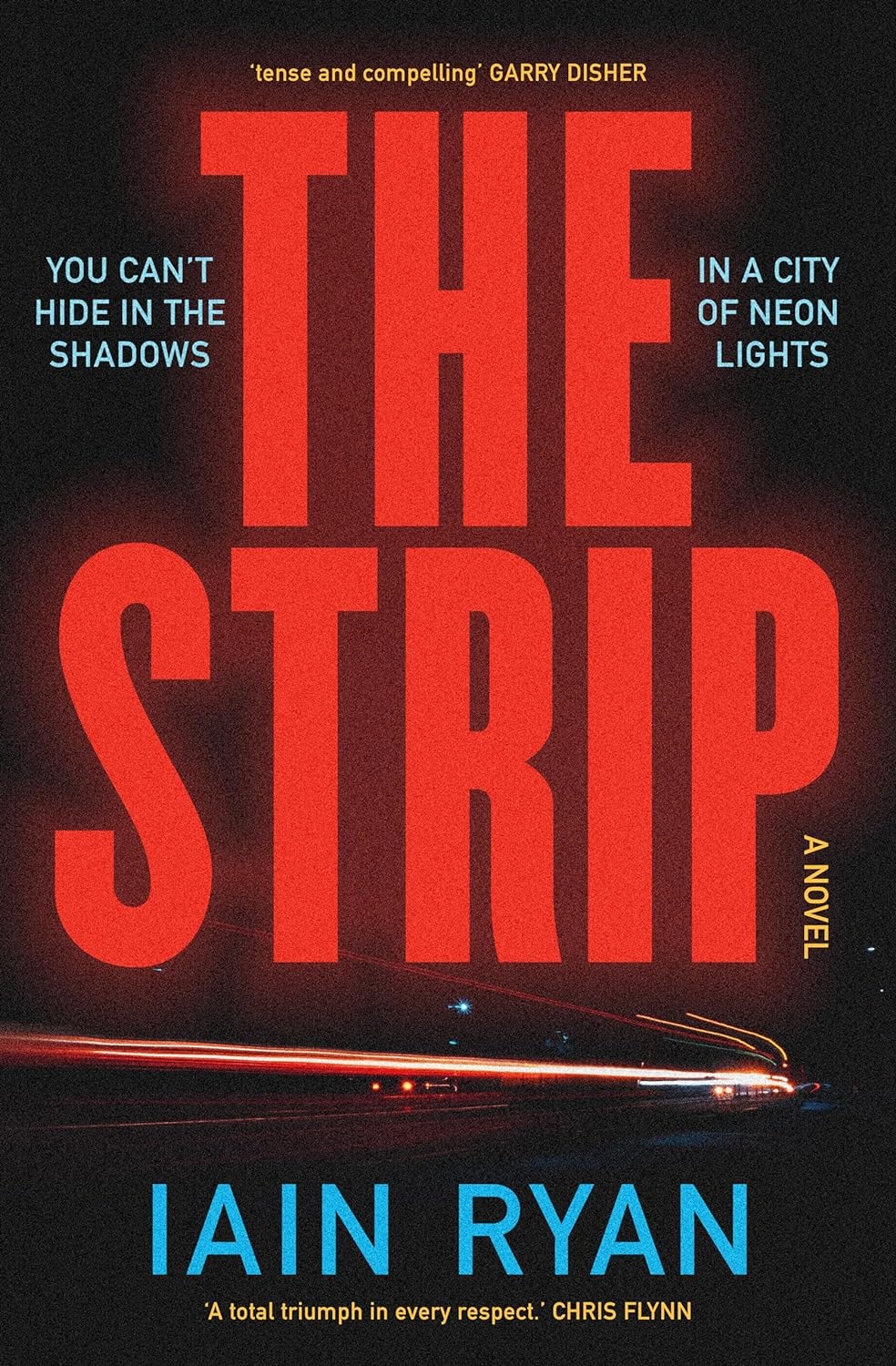
The Strip is the new novel by Iain Ryan. Set on the Gold Coast of Australia in the early 1980s, The Strip begins with Detective Constable Lana Cohen joining the notorious Strike Force Diablo. An outsider to this world of machismo, corruption and casual bigotry, Cohen must quickly establish herself in a man’s world. She is reluctantly paired with Detective Henry Loch, a copper haunted by his past failures who sees the investigation into the murder of a doctor as his shot at redemption. But one murder is quickly connected to a whole series of murders which the local police have been too corrupt or incompetent to solve, and it isn’t long before Cohen and Loch are in danger of becoming victims themselves.
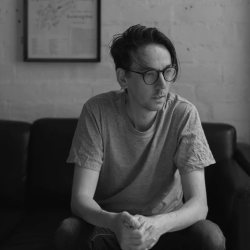
The Strip is one of the best crime novels of 2023. The Gold Coast setting and eighties period are vividly evoked and add a suitably sweaty ambience to the tense narrative which carries the reader along compulsively to final page. Author Iain Ryan grew up in Brisbane and knows the people, places and ethos of The Strip intricately. I had the pleasure of talking to Iain about his new novel:
Tell me about the genesis of The Strip. What first gave you the idea to write this novel?
The 1980s Queensland Police corruption scandal is the very first news story I can remember. In Brisbane—the capital of Queensland—the corruption is a matter of public record, and it is truly wild. We’re talking about absolute collusion between organised crime elements, state government politicians, and the very highest echelons of the Queensland Police. After it came unstuck, the state premier resigned, and the police commissioner went to jail. This was a major media event in Australia. It is the first news story I can remember from my childhood and I’ve been fascinated by it ever since. The Strip is based on a quote I came across during some research about how no one knows how bad the Gold Coast corruption was during the era. The Coast is only an hour’s drive from Brisbane, but the gossip is that it was probably much, much worse. That’s all I needed to get started.
The Gold Coast comes across as Australia’s Wild West—how much of this is portrayal is rooted in reality and what sort of research did you conduct?
I read what little there is in terms of historical writing. Until Matthew Condon’s recent three-volumes of reportage, no one was entirely sure you could talk about this history in Australia without consequence. So my stuff is forever indebted to his research. But a huge amount of the period detail is inherited from archival material, mainly the newspaper. I live in Melbourne and by some miracle, the State Library of Victoria has physical copies of the Gold Coast paper from the 80s.
There is a fine tradition of Australian crime and detective fiction. Could you name some Australian writers who have been an influence.
In terms of Australian crime writers, the biggest two are Peter Doyle and Andrew Nette. I actually met Peter before I read him. We were seated next to each other at a work dinner, and as soon as he heard I liked noir, he started giving me book recommendations. One of those recommendations was Derek Raymond, and this is a testament to Peter’s boldness, he suggested I Was Dora Suarez. Straight to the heart of the matter, ha ha ha. I’ve loved Raymond ever since. When I got to Peter’s own writing, I loved it too. He’s very underrated in this country. He might be the first local writer to really bring (James) Ellroy’s 90s energy into Australian noir. Andrew Nette, on the other hand, is a close friend. He lives nearby. I rate his fiction—especially Gunshine State, also set on the Gold Coast— but he plays a big role in my writing because he’s a fellow traveller. We go to the pub together.
There are other contemporary Australian writers I like—David Whish-Wilson, Garry Disher, in particular— but for the most part, Australian crime fiction is ‘literary crime’ rather than hardboiled noir. For a country with a very dark past, we’re strangely light on the grittier, weirder stuff.
Outside of Australia, you have identified James Ellroy and David Peace as influences. What is it about their work in particular that inspires you?
These two are everything to me. My biggest influences, period. Ellroy is an endless source of fascination. He was one of the first novelists I encountered who could compress a punk rock affect into writing. I know I’m talking about a guy who has a lifelong obsession with classical music, but in 1992 when the L.A. Quartet received trade paperback reissues, they landed in my lap alongside grunge and Reservoir Dogs and it all made the same kind of sense to my 16-year-old self. It all felt really exciting. In the decades since, Ellroy has remained influential. He’s endlessly reinvented his style, providing a broad canvas for other crime novelists to follow.
One of those novelists is David Peace, who took White Jazz and ran with it. Peace’s influence on me is very, very clear: reading him convinced me to try present-tense narration. I wrote my first novel The Student with 1980 on my desk, almost serving as a style manual.
I imagine I’m temperamentally much more like Peace than Ellroy, but we’re both indebted to the master.
One of the most powerful themes of the novel is institutionalised corruption, both in the police force and the church to give two examples. How much of this is a product of the early 1980s setting, and how much still exists on the Gold Coast today.
I’m no expert on contemporary policing in Queensland, but the entire state is different now. The end of the 1980s into the 90s saw huge cultural changes in Brisbane, in particular. The city went from something resembling a police state to a regular metropolitan centre throughout the late-century period and now, Brisbane is a regular Australian capital. There’s just no comparing what was with what is. It’s a pronounced, dramatic shift. From afar, the corruption these days just seems like the routine degradation of advanced capitalism, rather than what once was: a formal system orchestrated by occulted bad men.
Finally, what are you working on next?
I sincerely hope to do another three books (at least) in the series. I’ve written and submitted the next one, and by the time this is published I’ll be deep in the outlining for book three. It’s a bit of a wild ride—I still have a full-time day job— but it’s literally all I’ve ever wanted from writing and the challenge of it is pretty enticing.
The Strip is published by Ultimo Press.


 The Venetian Vase
Trackbacks