Chicago ’63: Interview with Author Terrence McCauley
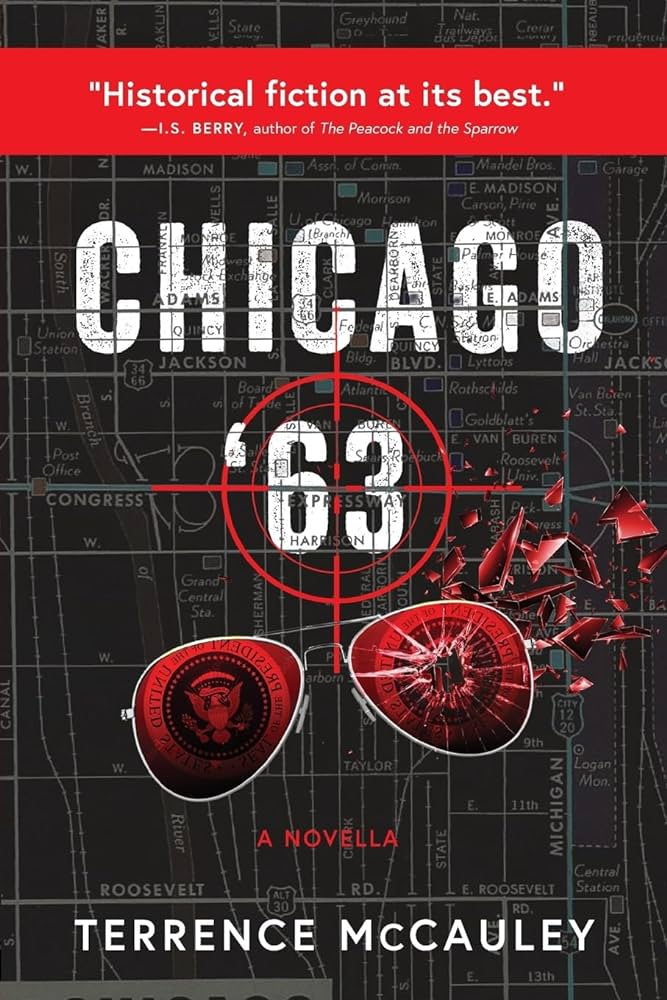
Chicago ’63 is the gripping new novella by Terrence McCauley. If you think you have already read everything there is to read about the assassination of President Kennedy then think again. McCauley sheds new light on the infamous event by focusing on a plot to kill Kennedy in Chicago. It took place one month before Kennedy was shot dead in Dallas.
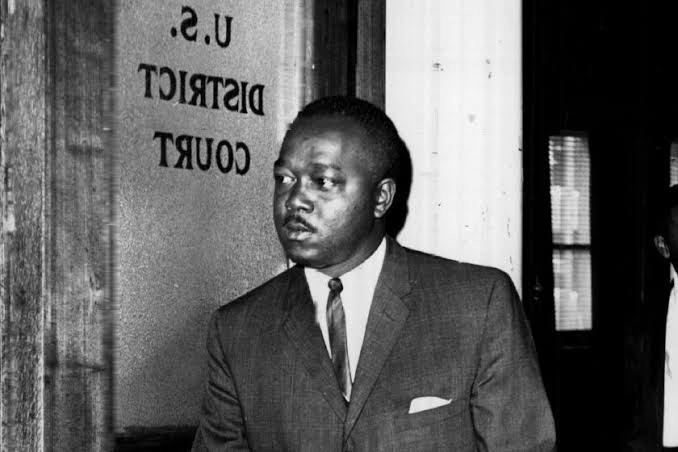
The protagonist of this story is Secret Service agent Abraham Golden, a thinly-veiled version of the real-life Abraham Bolden, who was the first African-American to be assigned to the Presidential Protective Division. Golden uncovers the Chicago plot but finds his investigative work is undermined by racism and institutionalised corruption from the start.
McCauley mixes fact and fiction seamlessly in Chicago ’63. It’s a riveting read and I was delighted when Terrence agreed to talk to me about the writing of the book.
Interviewer: Describe your earliest memories of the Kennedy assassination.
I wasn’t born until 1974, so everything I know about the assassination came from second-hand knowledge. My father had vivid memories of the event. On November 22, 1963, he had just returned home from a hunting trip when he learned JFK had been assassinated. He was watching television on November 24th when Oswald was shot on live television.
He was always interested in the assassination. He was also a classic movie fan, so I grew up watching “The Manchurian Candidate” with Frank Sinatra, “Seven Days in May” with Burt Lancaster, and “Executive Action”, also with Burt Lancaster.
We didn’t have cable TV where we lived in New York City, but I watched several documentaries on PBS and ABC News that covered the assassination in detail. “The Men Who Killed Kennedy” was probably the first documentary I saw that challenged the opinion that Oswald worked alone. My father never believed the lone gunman theory, either, though he didn’t spend much time wondering who else was involved. I suppose his doubts about the Warren Report conclusion stuck with me.
Interviewer: When did you first become interested in approaching the Kennedy assassination through fiction?
Everything I’ve written, whether it’s a thriller or a crime novel or a western, usually addresses the broader issues of control and mores at play in American society. Our lives rarely move in a straight line. There are always diversions and pitfalls and mistakes that alter our course. Society and government’s attitude at the time further dictate the cost of those choices and often our immutable conditions. For example, children born out of wedlock were once deemed illegitimate. Inter-racial marriages were frowned upon and illegal in some parts of the country. So was homosexuality. The unfortunate list goes on.
After graduating college, I began a career in government. I quickly realized the myths of the ‘hyper-prepared government’ and the ‘ever-incompetent government’ were equally incorrect. Government certainly has its place but is often reactionary and rarely proactive.
I wanted to address that dynamic in my fiction because, in my view, government and social norms impact our daily lives, whether the story is set in 1880s Montana, 1920s Manhattan, or the modern day.
As my voice as a writer took form, my earlier interest in the Kennedy Assassination continued to intrigue me. I never thought it was a plot entirely engineered by a government entity, but the lone gunman theory didn’t seem plausible, either. I read many nonfiction works on the subject and took note of the various theories. Some resonated more than others.
But when I read Ellroy’s ‘Underworld U.S.A.’ trilogy, it was the first time I saw an artist’s take on the event. Those books went beyond the television screen of documentaries or the factual interpretation of the events and focused on the human aspect of what happened in Dallas. That changed everything for me. The more one examines Oswald and the other players as people, the story takes on an entirely different meaning. Possibilities and probabilities become evident. That’s interesting to me.
I’ve been blessed to be able to write in various genres, but I never stopped looking for a way to portray the assassination in my own way. Ellroy’s fiction covered the sprawling web and motivations of the characters better than I ever could. I decided to tell the story from a different, more local angle where famous characters of Dallas were portrayed in a realistic light. That’s how my upcoming DALLAS ‘63 trilogy was born and, from that, CHICAGO ’63 rose.
Interviewer: The ‘Chicago Plot’ is a fascinating untold story in US history, but the facts are still sketchy and elusive. How did you approach researching this event?
I’m not an academic. I’m just an amateur historian with a hyper-active imagination. I’ve always had a passive interest in conspiracy theories, though I’ve dismissed most of them. I believe ancient aliens, Bigfoot and UFOs usually have practical explanations.
But the Kennedy Assassination is not so easily dismissed once one examines the people involved in the saga. My interest in conspiracy theories led me to discover the ‘America’s Untold Stories’ channel on YouTube where the hosts regularly drill down into the tertiary events and people found on the fringes of the assassination. Mark Groubert and Eric Hunley don’t ask the audience to take their word for it but encourage viewers to do their own research. One episode mentioned the ‘Chicago Plot’ and I began to do some digging on my own.
My research unveiled some shocking facts, some written only ten years after the assassination when memories were still fresh and participants still alive. I discovered reports about four Cuban men with scoped rifles in a boarding house near the president’s motorcade route. I learned of Homer Echevarria’s connection to anti-Castro groups in Chicago and of Thomas Vallee’s arrest on November 2, 1963. I used that overactive imagination I mentioned earlier to craft a plausible story that shapes these events into a novella. I don’t claim that the conclusions of CHICAGO ’63 are irrefutable, but I used facts to tell a convincing, plausible story. I think of it as a work of fiction firmly rooted in reality.
Interviewer: Abraham Bolden is a fascinating real-life character who, if fate hadn’t conspired against him, would probably be regarded as an American hero today. Do you think he was a victim of the system, and how much of the real Bolden was in your character Abraham Golden?
As a novelist, I knew that stories like CHICAGO ’63 often fail when too many characters are involved. The reader can get confused and lose interest. I chose to make Bolden the main protagonist of the story because it made narrative sense. It also allowed me to show how limited the Secret Service’s resources were at the time. They had no choice but to have other agencies like Chicago PD and the FBI to assist them with threat assessments.
I boiled down those investigators into my fictional Abraham Golden. As the real-life Bolden was a hero in his own right – the first African-American Secret Service agent assigned to the president’s protection detail – I thought he was a worthy candidate.
My constant desire to always portray social realities of the time in which my books are set led me to want my protagonist to be a black man. I wanted the reader to see how much of a trailblazer Bolden really was through the lens of my fictional Golden. I wanted to demonstrate how the deck was stacked against him, but he persevered.
In reality, his involvement in the assassination saga did not come until much later when he tried to inform the Warren Commission of the earlier Chicago plot. He later paid the price for it by being unjustly convicted of a bribery charge where he spent several years in prison. He was justly pardoned by President Biden in 2022.
I couldn’t properly convey his bravery in the scope of a limited work of a novella, so I boiled it down into a timeline that lasted only a few days. And while CHICAGO ’63 is a work of fiction, I sought to capture his obvious dedication to duty as best I could in my own way.
Interviewer: Finally, do you anticipate any new revelations emerging about the Kennedy assassination in the next few years? Are there any lingering mysteries about the event?
Thanks to the movement created in the aftermath of Oliver Stone’s ‘JFK’ film, many unclassified documents have been released since the 1990s. There are still a few documents that have not been released, but I believe even a casual examination of the case explains why.
I don’t think we’ll find that LBJ and the CIA were behind it all from the beginning. I don’t think you’ll see a photo of someone else firing a rifle in Dealey Plaza that day.
Instead, I think we’ll have no choice but to cobble together a theory from increased research into the people who appear on the edges of the event. Jack Ruby may not have been Al Capone, but he wasn’t just a crazy nightclub owner, either. Oswald has been proven to be involved with some unsavoury characters with undeniable ties to the intelligence world. J. Edgar Hoover is on record as saying there was more to him than met the eye. Senator Richard Schweiker, a member of the U.S. Senate Select Committee on Intelligence said that “everywhere you look with [Oswald], there’re fingerprints of intelligence”.
I think the truth lies somewhere between the hyper-prepared government and the ineffective government extremes I mentioned earlier. I think a few people from the underworld and rogue government affiliates had the means and motive to assassinate the president and did so. Definitive conclusions may not be possible, but it provides fertile ground for over-active imaginations like mine to flourish.


 The Venetian Vase