James Ellroy and Scala Dreams
James Ellroy often comes across as a conservative or reactionary figure. This is only natural. His politics are centre-right and he takes a certain joy in shocking audiences and reporters with his uncensored spiel. And yet it is precisely this Demon Dog persona that, in the late 80s and early 90s, gave Ellroy’s work a punk sensibility and a counter-culture following. It was only when I was watching the documentary Scala!!! recently on BFI Player that this facet of Ellroy’s identity really began to stand out to me.
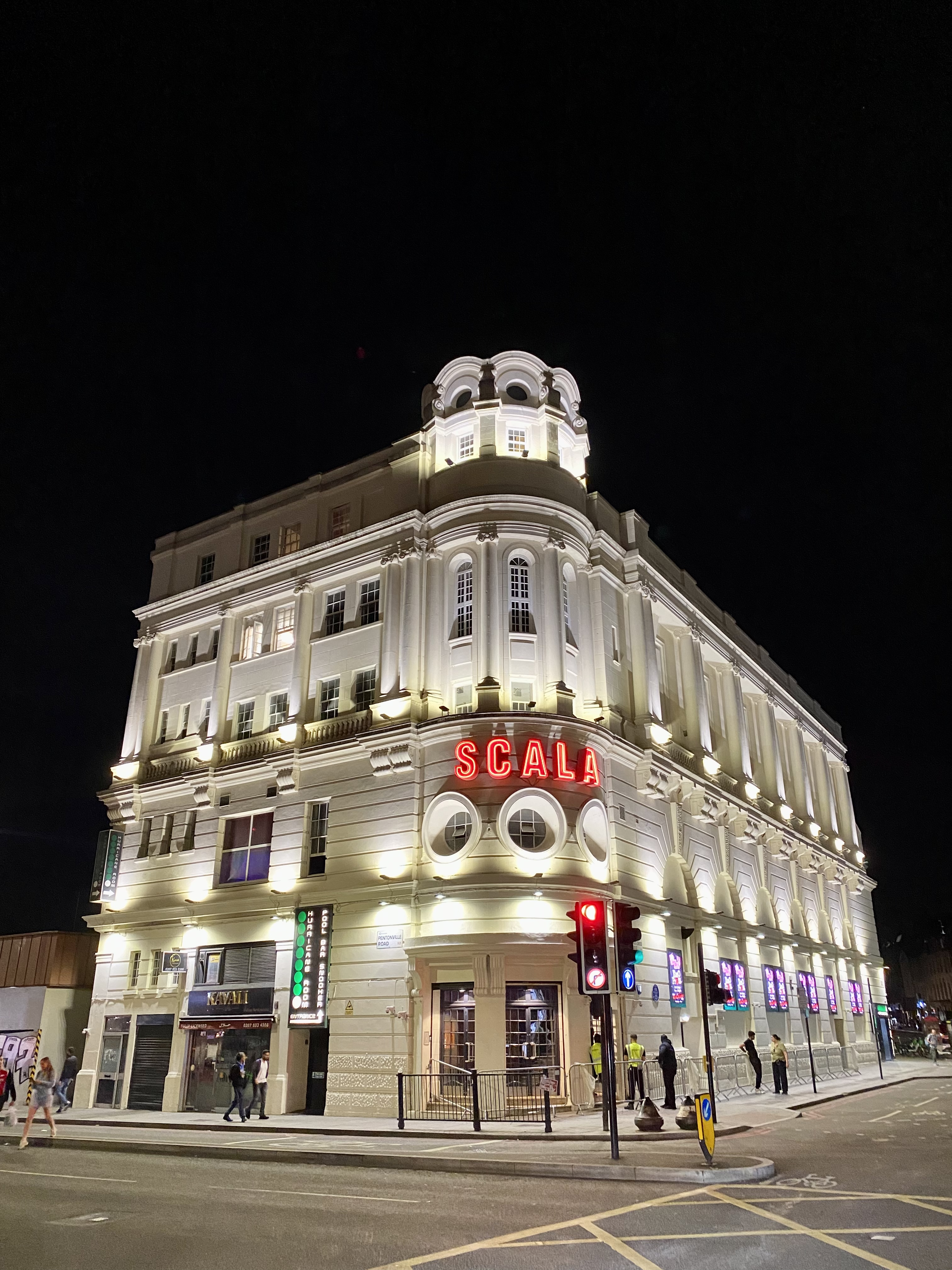
I should point out that Scala!!! isn’t about James Ellroy. It tells the story of an independent London cinema that operated in King’s Cross from the late 1970s to the early 1990s, as beloved by its regulars as it was notorious for its seedy vibe. The sordid shenanigans which went on in the building, which often rivalled the X-rated antics onscreen, gave the Scala it’s nickname ‘Sodom’s Odeon’. The documentary begins with the voice of Cathi Unsworth reminiscing about the Scala. Right away my Ellroy radar started pinging. Cathi is a journalist and novelist who interviewed Ellroy a few times back in the day. I spoke to Cathi about her memories of meeting Ellroy when I was researching Love Me Fierce in Danger. With her blue hair and husky voice, Cathi is gorgeous company and she introduced me to a few other people who knew Ellroy around the same time that she did.
Another Scala devotee who pops in the documentary is the musician Barry Adamson. Adamson is known, among other things, for being a member of Nick Cave and the Bad Seeds. Ellroy had a run-in with Nick Cave which went hilariously awry in the mid-90s. Things had started so promisingly between them. Cave declared how his study contains photos, lined up side by side, of his three idols – Jesus Christ, James Ellroy and John Lee Hooker. In turn, Ellroy stated his admiration for Cave’s song “Till The End Of The World”. However, when the pair finally met in London in March 1995 it was not a happy affair. Cave described Ellroy as ‘Jet-lagged and clearly deranged, he ranted on about rock ‘n roll being nothing more than “institutionalized rebellion”‘. Similarly, Ellroy said of Cave ‘I met Nick Cave-and he was a big bore. He was number 7 on my list of the 8 most boring people I have ever met. He was also number 8 on my list of the 8 most pretentious and self-absorbed people I have ever met.’
Around the same time that Ellroy met Cave he also had a business meeting with Barry Adamson. In Scala!!!, Adamson describes how the time he spent at the legendary cinema inspired his most celebrated record Moss Side Story. For those of you unfamiliar with the album, Moss Side Story is structured as a soundtrack to a crime film that doesn’t exist. The track titles are descriptive of a film noir plot outline and the music has all the ambience of classic noir. The record was so successful that people would contact Adamson and ask him where they could see a print of the film. When he met Ellroy, Adamson pitched him an idea that would have taken some of the ideas of Moss Side Story to a whole new level. Adamson wanted to do a spoken-word audio adaptation of White Jazz. Ellroy would narrate the entire novel and Adamson would compose a suitably jazzy backing soundtrack. Unfortunately, as Ellroy was touring American Tabloid at the time, he refused to consider any project that didn’t directly promote that novel. He suggested Adamson take the same idea and use it for American Tabloid, but Adamson declined. You can see why Adamson wouldn’t have been keen. Firstly, American Tabloid is twice the length of White Jazz. Secondly, White Jazz has a distinct location, setting and musical flavour, whereas Tabloid takes place over a five-year timeframe with the entire USA as the setting, and occasional excursions abroad. Thus, it would be a mammoth task to render the novel into music. American Tabloid was later adapted into an audio drama with Ellroy narrating the exposition and an all-star cast voicing the characters.
The beginning of the end for the Scala began in April 1992, with a showing of Stanley Kubrick’s A Clockwork Orange. Billed as ‘a surprise film’ A Clockwork Orange had been withdrawn from circulation by Kubrick himself over fears that it was inspiring copycat acts of violence. The legal action that followed was enough to empty Scala’s coffers. However, in March 1999, Scala reopened as a music venue which it remains to this day. In July 2022, Thurston Moore unveiled a blue plaque at the Scala to celebrate the fiftieth anniversary of the Lou Reed / Iggy Pop gigs which took place there in 1972. The ceremony could be taken as a sign that the Scala had come full circle, but even here there was an Ellroy connection. Thurston Moore and Sonic Youth were both early supporters of James Ellroy’s writing. They used to attend Ellroy’s book readings and even wrote a song, ‘The Wonder’, in honour of his work.
James Ellroy has spent the last thirty years talking about his intense dislike of rock-n-roll, but dig deep enough into his history and you can find many rock and punk influences. Scala!!! brings many of those influences to the fore.


 The Venetian Vase