2023: My Year in Review
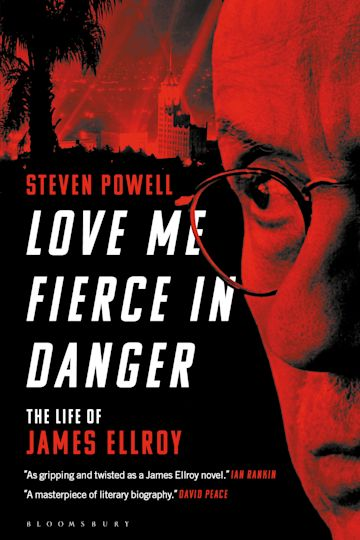
2023 was an extraordinary year that began with the publication of Love Me Fierce in Danger: The Life of James Ellroy and ended with it being named one of the 50 best books of the year (as well as one of the eight best biographies/memoirs of the year) in the Daily Telegraph.
Thank you to everyone who has purchased, read and spread the word about Love Me Fierce in Danger. There’s still time to treat someone you love to a copy of the book as a gift for the holidays. It’s a literary biography which is the perfect noir antidote to the sometimes overwhelming festive cheer.
Some of my other highlights this year were interviews I conducted with the man who would be James Bond – Finlay Light, as well as the wonderful authors, Patricia Marques, John A. Curley, James Rice, Andrew Nette and Iain Ryan.
Finally, it was a tremendous thrill to have two of my short stories, ‘The Beach Blonde’ and ‘Bahamian Rhapsody’ published in the incendiary online magazine Apocalypse Confidential.
See you next year!
Tales From The Mall: After Hours
It was a huge thrill to appear on the podcast ‘Tales from the Mall: After Hours’ with host Brendan McCauley and author Andrew Miller (look out for his forthcoming novel Namaste Mart Confidential). In this episode we discussed the life and literary career of legendary author Ross Macdonald, with special emphasis on the two film adaptations of the Lew Archer novels Harper and The Drowning Pool.
You can listen to the episode on Apple and Spotify.
Iain Ryan: Interview with the Author of THE STRIP

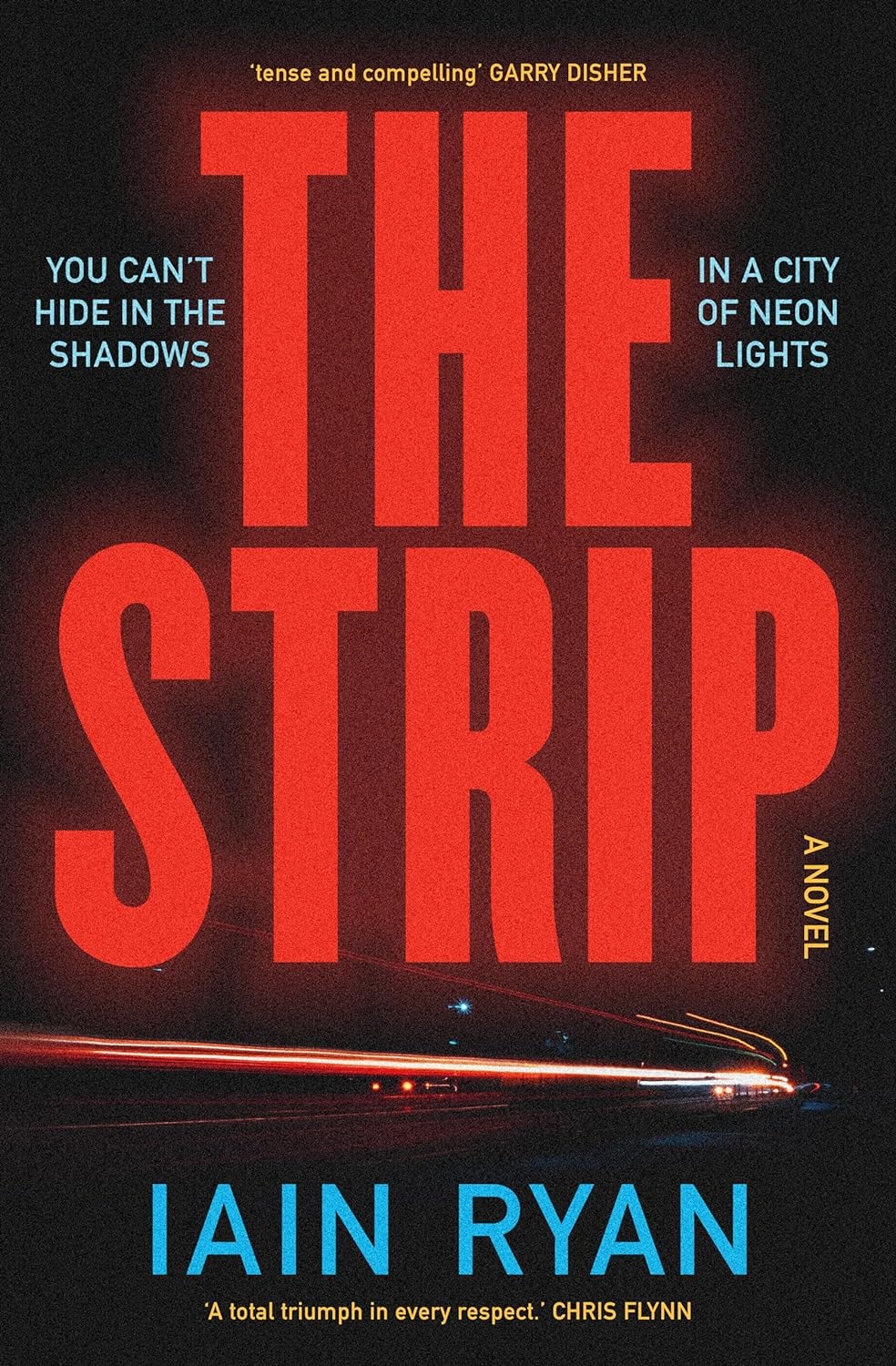
The Strip is the new novel by Iain Ryan. Set on the Gold Coast of Australia in the early 1980s, The Strip begins with Detective Constable Lana Cohen joining the notorious Strike Force Diablo. An outsider to this world of machismo, corruption and casual bigotry, Cohen must quickly establish herself in a man’s world. She is reluctantly paired with Detective Henry Loch, a copper haunted by his past failures who sees the investigation into the murder of a doctor as his shot at redemption. But one murder is quickly connected to a whole series of murders which the local police have been too corrupt or incompetent to solve, and it isn’t long before Cohen and Loch are in danger of becoming victims themselves.
The Strip is one of the best crime novels of 2023. The Gold Coast setting and eighties period are vividly evoked and add a suitably sweaty ambience to the tense narrative which carries the reader along compulsively to final page. Author Iain Ryan grew up in Brisbane and knows the people, places and ethos of The Strip intricately. I had the pleasure of talking to Iain about his new novel:
Tell me about the genesis of The Strip. What first gave you the idea to write this novel?
The 1980s Queensland Police corruption scandal is the very first news story I can remember. In Brisbane—the capital of Queensland—the corruption is a matter of public record, and it is truly wild. We’re talking about absolute collusion between organised crime elements, state government politicians, and the very highest echelons of the Queensland Police. After it came unstuck, the state premier resigned, and the police commissioner went to jail. This was a major media event in Australia. It is the first news story I can remember from my childhood and I’ve been fascinated by it ever since. The Strip is based on a quote I came across during some research about how no one knows how bad the Gold Coast corruption was during the era. The Coast is only an hour’s drive from Brisbane, but the gossip is that it was probably much, much worse. That’s all I needed to get started.
The Gold Coast comes across as Australia’s Wild West—how much of this is portrayal is rooted in reality and what sort of research did you conduct?
I read what little there is in terms of historical writing. Until Matthew Condon’s recent three-volumes of reportage, no one was entirely sure you could talk about this history in Australia without consequence. So my stuff is forever indebted to his research. But a huge amount of the period detail is inherited from archival material, mainly the newspaper. I live in Melbourne and by some miracle, the State Library of Victoria has physical copies of the Gold Coast paper from the 80s.
There is a fine tradition of Australian crime and detective fiction. Could you name some Australian writers who have been an influence.
In terms of Australian crime writers, the biggest two are Peter Doyle and Andrew Nette. I actually met Peter before I read him. We were seated next to each other at a work dinner, and as soon as he heard I liked noir, he started giving me book recommendations. One of those recommendations was Derek Raymond, and this is a testament to Peter’s boldness, he suggested I Was Dora Suarez. Straight to the heart of the matter, ha ha ha. I’ve loved Raymond ever since. When I got to Peter’s own writing, I loved it too. He’s very underrated in this country. He might be the first local writer to really bring (James) Ellroy’s 90s energy into Australian noir. Andrew Nette, on the other hand, is a close friend. He lives nearby. I rate his fiction—especially Gunshine State, also set on the Gold Coast— but he plays a big role in my writing because he’s a fellow traveller. We go to the pub together.
There are other contemporary Australian writers I like—David Whish-Wilson, Garry Disher, in particular— but for the most part, Australian crime fiction is ‘literary crime’ rather than hardboiled noir. For a country with a very dark past, we’re strangely light on the grittier, weirder stuff.
Outside of Australia, you have identified James Ellroy and David Peace as influences. What is it about their work in particular that inspires you?
These two are everything to me. My biggest influences, period. Ellroy is an endless source of fascination. He was one of the first novelists I encountered who could compress a punk rock affect into writing. I know I’m talking about a guy who has a lifelong obsession with classical music, but in 1992 when the L.A. Quartet received trade paperback reissues, they landed in my lap alongside grunge and Reservoir Dogs and it all made the same kind of sense to my 16-year-old self. It all felt really exciting. In the decades since, Ellroy has remained influential. He’s endlessly reinvented his style, providing a broad canvas for other crime novelists to follow.
One of those novelists is David Peace, who took White Jazz and ran with it. Peace’s influence on me is very, very clear: reading him convinced me to try present-tense narration. I wrote my first novel The Student with 1980 on my desk, almost serving as a style manual.
I imagine I’m temperamentally much more like Peace than Ellroy, but we’re both indebted to the master.
One of the most powerful themes of the novel is institutionalised corruption, both in the police force and the church to give two examples. How much of this is a product of the early 1980s setting, and how much still exists on the Gold Coast today.
I’m no expert on contemporary policing in Queensland, but the entire state is different now. The end of the 1980s into the 90s saw huge cultural changes in Brisbane, in particular. The city went from something resembling a police state to a regular metropolitan centre throughout the late-century period and now, Brisbane is a regular Australian capital. There’s just no comparing what was with what is. It’s a pronounced, dramatic shift. From afar, the corruption these days just seems like the routine degradation of advanced capitalism, rather than what once was: a formal system orchestrated by occulted bad men.
Finally, what are you working on next?
I sincerely hope to do another three books (at least) in the series. I’ve written and submitted the next one, and by the time this is published I’ll be deep in the outlining for book three. It’s a bit of a wild ride—I still have a full-time day job— but it’s literally all I’ve ever wanted from writing and the challenge of it is pretty enticing.
The Strip is published by Ultimo Press.
A James Ellroy Playlist: Beginnings
James Ellroy’s debut novel Brown’s Requiem was more than just the start of his literary career. It was the beginning of Ellroy’s musical obsessions, particularly towards classical music, pouring out into his writing. In the following post I am going to look at two of the most notable musical references in Ellroy’s first novel.
Fate Knocks at the Door
Brown’s Requiem is ostensibly a novel about a private detective, the Fritz Brown of the title. But it achieves so much more than the conventions of the genre usually allow. It is also a meditation on classical music. Ellroy’s favourite composer is Ludwig van Beethoven. Surprisingly, the Beethoven references in the novel are somewhat threadbare compared to that of other composers. It is almost as though Ellroy is afraid to critically analyse the master. Brown keeps a portrait of Beethoven on his wall and aspires to be the same form of Romantic, brooding hero, but when he mentions the composer in his first-person narration the effect is comical, ‘I was never a child. I came out of my mother’s womb full-grown, clutching a biography of Beethoven and an empty glass. My first words were “Where’s the booze?”’
The influence of Beethoven is so strong on Brown that he claims, admittedly humorously, that it started at birth. Ellroy himself discovered Beethoven’s music during his childhood. Ellroy was attending John Burroughs Junior High School when his music teacher, Alan Hines, played the four note opening motif of Beethoven’s Symphony No.5, which Beethoven described as ‘Fate knocks at the door’. It certainly was for Ellroy, it ignited a passion and reverence for Beethoven which has persisted to this day. The Fate motif is one of the most famous pieces of music in history. Almost everyone has heard it, and it’s influence is limitless, being easy to parody and inspiring rock and roll and disco covers.
Concerto for Orchestra
Ellroy’s original title for the novel was ‘Concerto for Orchestra’. His publisher Avon insisted he change it on the grounds that it would be difficult to market as a crime novel. The final section of the novel was eventually titled ‘Concerto for Orchestra’ in accordance with Ellroy’s wishes. Ellroy took the title from Béla Bartók’s Concerto for Orchestra. Considered one of Bartók’s most popular and accessible works, Ellroy later confessed to me that he now considers it to be ‘dry and academic’. The performance below by the Frankfurt Radio Symphony is both dramatic and suspenseful, and would be a good soundtrack to Fritz Brown unravelling the mystery narrative of Brown’s Requiem as he travels through Los Angeles and Tijuana.
Love Me Fierce in Danger: The Life of James Ellroy is published by Bloomsbury.
Highbrow Lowbrow: Halloween Special
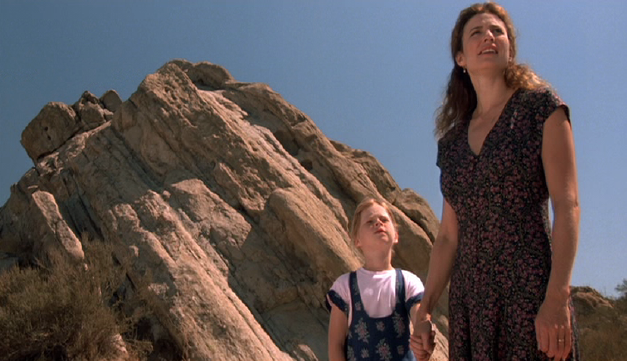
Hot on the heels of our William Friedkin tribute episode, Highbrow Lowbrow is back with a Halloween Special! My pick is Michael Tolkin’s The Rapture, in which Mimi Rogers plays a woman who turns her back on her promiscuous lifestyle to join a religious cult which believes the end of the world is nigh. Be careful what you wish for!
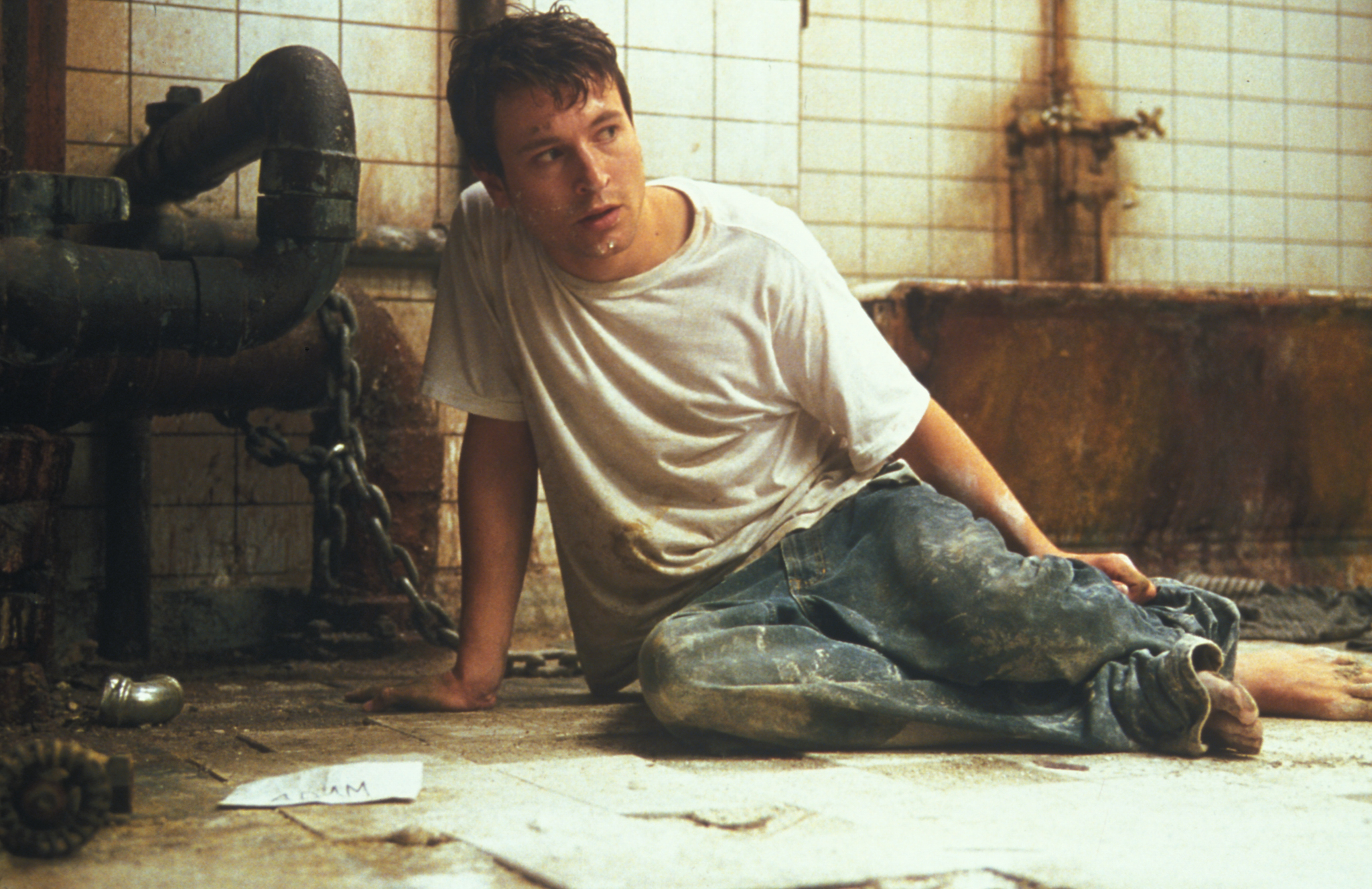
Dan’s choice is the horror classic Saw. Forget the sequels, Dan argues. The original Saw was horror at its bare bones best. You can listen to the full episode here.
Highbrow Lowbrow – William Friedkin Special
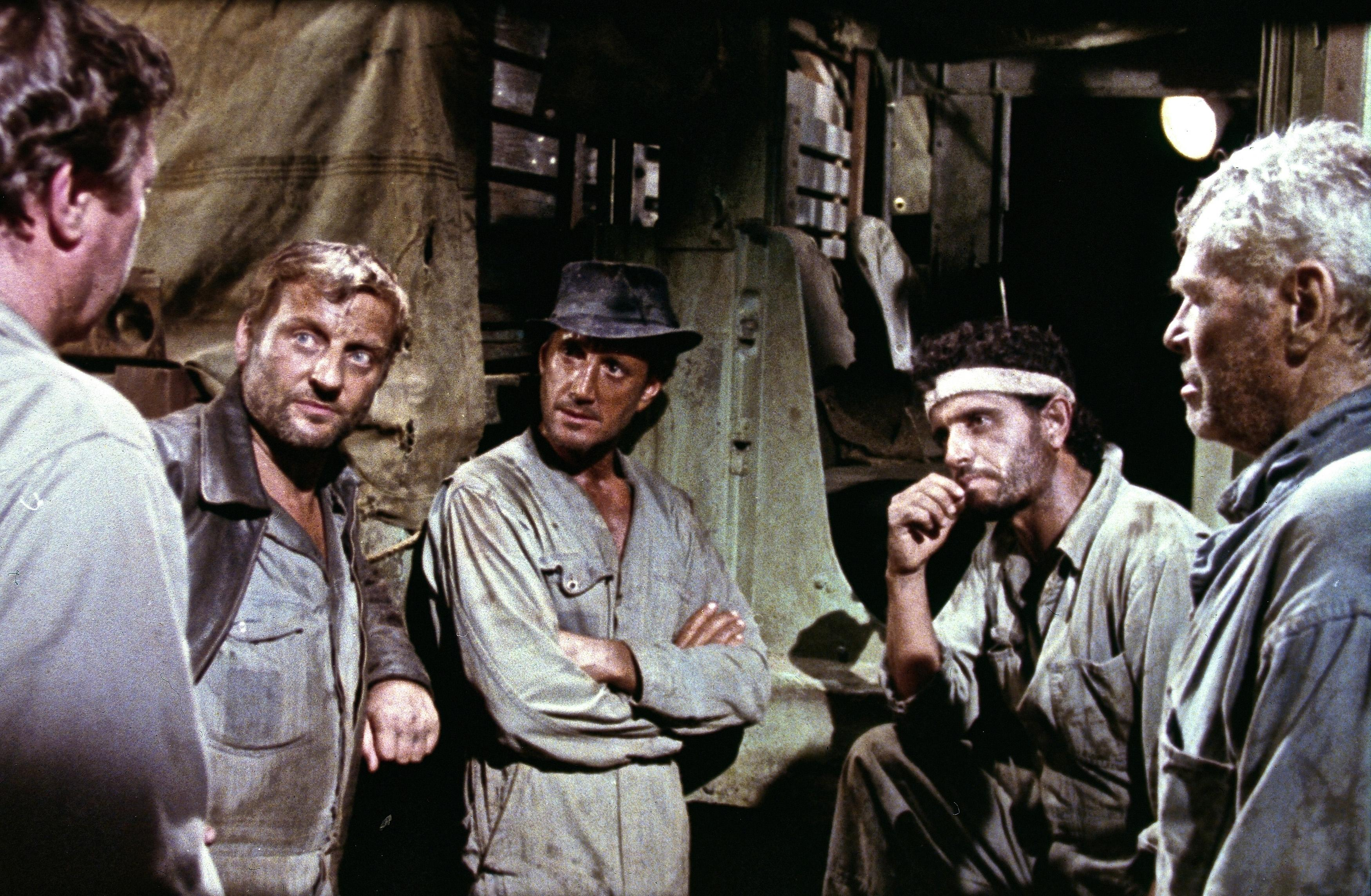
Highbrow Lowbrow is back with a tribute episode to the legendary Hollywood director William Friedkin who died in August of this year. My highbrow pick is Sorcerer. A critical and commercial failure when it was released, Friedkin’s film charting the journey of four desperate transporting unstable dynamite across the Amazon jungle has been critically reassessed in recent years, and is now regarded as a classic of suspense.
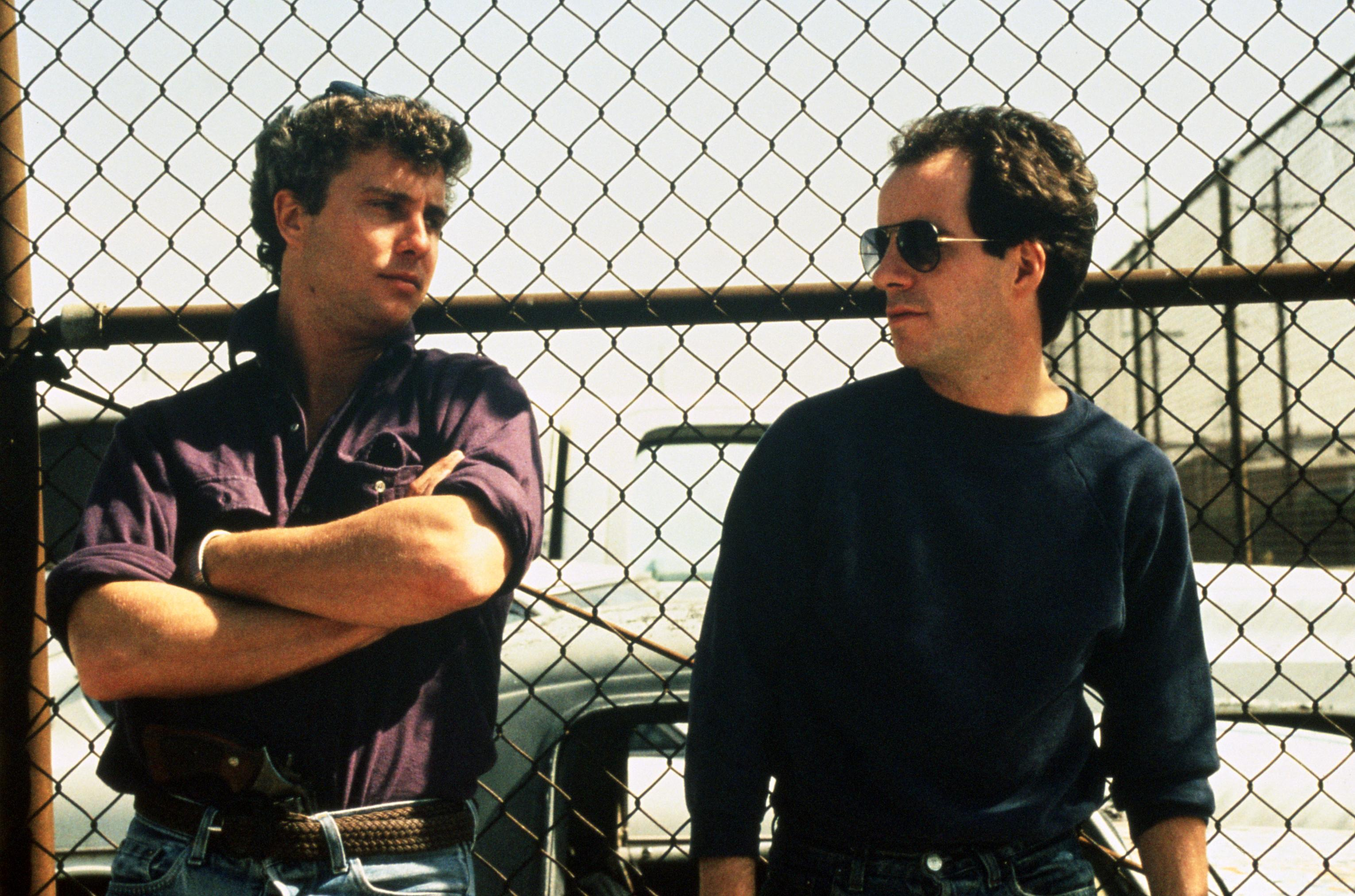
My podcast co-host Dan Slattery choice of film is To Live and Die in LA. A tale of counterfeiting and the secret service, double and triplecrosses, Dan argues that To Live and Die in LA is a modern noir classic, and more than just The French Connection for the west coast.
You can listen to the full episode here.
Everybody Knows by Jordan Harper – Review
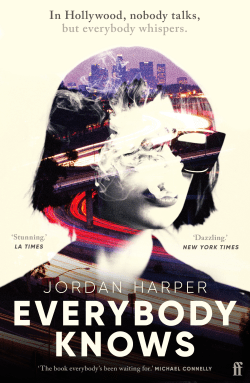
Everybody Knows is the brilliant new novel by Jordan Harper. It takes its title from an expression the characters use to discuss Hollywood secrets, up to and including sexual abuse by A-listers: ‘Nobody talks. But everybody whispers’. In Tinseltown, your career, reputation, and chance to pursue a creative life are dependant on protecting the beast – Harper’s name for the studio system and the abusers its shields. Our lead characters are two insiders who know this world intricately. Mae Pruitt is a ‘black bag’ publicist at a crisis PR firm. Some publicists job is to make you look good. Mae’s job is to make sure you don’t look bad. Early in the novel, a heavily-staged Instagram post involving one of Mae’s clients and her lap dog Mochi helps to narrowly avoid a scandal. It’s disturbing and darkly hilarious because its ring true. Mae’s world comes crashing down when her boss is gunned down outside a Beverly Hills Hotel. Suddenly the game has changed, and things can’t just be fixed anymore. Mae starts to investigate with the help of her ex-boyfriend Chris, only to find that both of their lives are in danger as they draw closer to the secrets which might finally slay the beast.
I interviewed Jordan Harper when I was researching Love Me Fierce in Danger: The Life of James Ellroy. Harper is a huge Ellroy fan, to the extent that he even named his dog Ellroy. He scripted a television pilot adaptation of Ellroy’s novel LA Confidential. He sent me a copy and I can attest to it being a brilliant piece of television. Harper had plans to adapt Ellroy’s sprawling novel into a series format, but despite a multi-million dollar budget, high-calibre cast and first-rate production values the TV pilot was never broadcast. Harper was showrunner on the pilot, involved in almost every aspect of the creative process. One can only imagine his disappointment that viewers were never given the opportunity to cast their own judgement on the show. Part of that frustration boils over into Everybody Knows, which is more than just a page-turning noir tale. It is destined to become one of the great Hollywood satires on a par with The Day of the Locust and What Makes Sammy Run?
The Enchanters: Ellroy’s captive audience
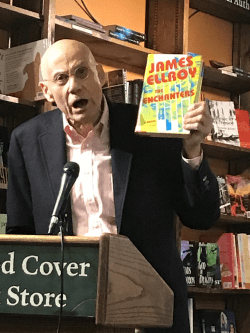
For the following piece we welcome back to the blog James Ellroy aficionado and all-round good guy Jason Carter:
“I put a spell on you!!!”
James Ellroy left his Denver audience in no doubt as to who runs an Ellroy presentation. “You’re nobody’s audience but MINE!”
Just minutes before, an employee of Tattered Cover’s Colfax location warned the audience in her introduction of Ellroy that the Demon Dog would likely utilise some colourful language that would easily offend.
The warning was well timed, as Ellroy then launched into an extra-lengthy rendition of his signature “Peepers, prowlers, pederasts, pedants” introduction, followed by the Reverend Ellroy’s promise of unlimited bedroom action sans adultery, negative ramifications and STDs for anyone brave enough to purchase literally thousands of copies of his new novel The Enchanters.
And while this salaciously solicitous greeting is often a standard feature of Ellroy’s introductions, tonight it carried even greater gravity as the Tattered Cover—an iconic independent Colorado bookstore with a decades-long history and locations throughout the state—had just announced its bankruptcy filing and also the soul-crushing closure of three of its locations…
Ellroy has always championed brick and mortar bookstores and printed physical books verses their electronic counterparts, and Tattered Cover’s recent bankruptcy actions heightened the urgency exponentially: “Buy multiple copies of this book, or a serial killer I have waiting in the parking lot will slaughter all of you!” Ellroy commanded. “And don’t buy this book on the internet… it doesn’t count as much towards the New York Times best seller list.” This evening, October 18th, 2023 also came just four days shy of the 14th anniversary of when I met Ellroy for the very first time at this very bookstore on October 22, 2009… I saw the Demon Dog for a second time here on June 21, 2019 during his tour for This Storm, and that evening was memorable because Ellroy—our premier practitioner of profound profanity—chose deliberately to not use any foul language, even going as far as refusing to read any passages from This Storm due to the novel’s ubiquitous vulgarity.
“The Enchanters is my best book ever!” Ellroy followed this confident pronouncement with a far more nuanced rumination: “Ninety-six years ago, Dashiel Hammett’s first novel Red Harvest was published… Now in 2023 comes its corollary… Hammett and I represent the alpha and omega of the American hard boiled novel.”
Ellroy did also manage to insert his now famous commentary on the dividing line between Hammett and Raymond Chandler—“Chandler wrote the man he wanted to be, and Hammett wrote the man he feared he was”—while also declaring that “Hammett is infinitely greater than the candy-ass Raymond Chandler…”
Dog then read from The Enchanters exhilarating opening chapter, and then opened the floor for questions—though with strict limitations: “No questions about politics, no questions about my life, no questions about movies I might have written… I’ll cut you off at the knees!!” Only questions about The Enchanters were acceptable.
Ellroy soon contradicted this absolution however, when a patron asked him whether he would ever narrate any of his novels, as it was a perfect opportunity to promote Audible’s upcoming unabridged verbatim rendering of American Tabloid, which features Ellroy reading the narrative and the dialogue performed by a full cast, all in an epic runtime of nearly 22 hours.
The Demon Dog did also acknowledge why he chose to expand the once-second L.A. Quartet to the now L.A. Quintet—comprised chronologically of Perfidia, This Storm, The Enchanters, and two future Fred Otash novels set during the final months of 1962. “It’s a micro-history of L.A. in 1962 when I was 14…”
The number 14 is quite significant to me also… I was that same age when James Ellroy first crashed into my life thanks to a now-classic Unsolved Mysteries episode in March, 1996. While The Enchanters is heavily concerned with the death of Marilyn Monroe, Ellroy cautioned his Denver audience not to think of the book as a tribute to Ms. Monroe: “The Enchanters is classic P.I., and while it gives you the protracted life and death of Marilyn Monroe, I never liked her… I dislike her as a human being and as an actress… She never did a thing for me as a woman.”
The Enchanters is published by Penguin Random House.
Love Me Fierce in Danger: The Life of James Ellroy is published by Bloomsbury.
Bahamian Rhapsody in Apocalypse Confidential
I am delighted to announce that my short story ‘Bahamian Rhapsody’ has been published by the brilliant online magazine Apocalypse Confidential. Apocalypse Confidential also published my previous story, ‘The Beach Blonde’.
You’ll find an extract of the story below. You can read the whole thing here:
The first time I saw Lenny Styles he was in the dock being arraigned on charges of assault and causing serious injury by dangerous driving. As a teenager I had dreamed one day I would see him in a packed football stadium belting out his hits “Don’t Forget My Love“ and “I Don’t Want You No More Baby”. He was a dashing figure then, having hit the big time in his mid-thirties. As he once told an interviewer, “I was old enough to appreciate the struggle it took to get here, but young enough to enjoy the fruits of a Rock N’ Roll lifestyle.”
Ten years later his band came crashing down amid rumors of bust-ups, threatened lawsuits and bad management. Whatever the reason, the one thing that was undeniable about Styles’ fall from grace was his declining popularity and sales. I should know; I was a diehard fan loyal enough to buy his critically panned experimental prog rock album Underground Suspicion, purely for completion’s sake of course.
The shambolic figure in the packed courtroom this morning didn’t look like the old Lenny Styles. My former idol now sported greasy unkempt hair, but not in a cool rock star way, and a bulging stomach seemed to be testing the buttons on his crumpled tan jacket. It had been a long decline for Styles. Despite claiming his bandmates had robbed him of millions in royalties he had bought a seafront mansion only twenty miles from Nassau, where I grew up listening to his albums. He moved in with his third wife, twenty years his junior, and settled down for what he hoped would be a blissful life enjoying the very best the Caribbean has to offer.
You know what they say about the best laid plans.
Mr Campion’s Memory – Review
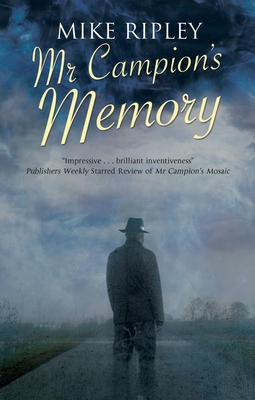
In early 1970s London, everyone in high society covets a gong. Construction magnate Sir Lachlan McIntyre wants to add a peerage to his knighthood, but his chance to don ermine is threatened by scandal and, much worse, murder. A journalist Sir Lachlan has engaged in fisticuffs with has been found shot to death.
Enter Albert Campion, an aristocrat himself who has foregone the traditional pursuits of the landed gentry in favour of a career in detection. Campion’s nephew Christopher is an aspiring public relations guru who wants his uncle’s help to clear Sir Lachlan’s name, but by doing Campion finds himself implicated. Campion’s name was found among a list of dodgy names in the late journalist’s notebook.
Mike Ripley’s first Campion novel was published in 2014. Mr Campion’s Memory is his eleventh in the series. Each novel is a perfect cocktail of mystery and fizzy wit which builds on the legacy created by Margery Allingham. Recently, Mike brought to a close his excellent online column on crime fiction ‘Getting Away With Murder’ after 200 issues. I never missed a word Mike wrote in that column which is why I made the dedication for Love Me Fierce in Danger: The Life of James Ellroy ‘To Mike Ripley – For Getting Away With It’. I thought writing ‘For Getting Away with Murder’ might have been a tad tasteless given the unsolved murder of Jean Ellroy.
The humour and expertise Mike brought to his 200 columns of ‘Getting Away With Murder’ is delightfully in evidence in the excellent Mr Campion’s Memory.


 The Venetian Vase