Stainless by Todd Grimson – reviewed for Ellroy Reads
On January 29th of this year, the author Todd Grimson died as the result of a bizarre traffic accident. He was only 73. Grimson’s premature death deprived American literature of a daring and transgressive writer. In the latest episode of Ellroy Reads I examine Grimson’s fascinating life, his friendship with James Ellroy and his classic vampire novel Stainless.

Warrant for X by Philip MacDonald – Ellroy Reads
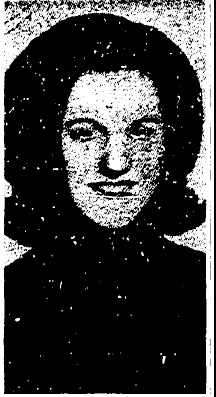
In this week’s episode of Ellroy Reads I discuss Philip MacDonald’s classic mystery Warrant for X. James Ellroy read Warrant for X in 1965, the same year Stephanie Gorman was shot to death in her family home in Los Angeles. I discuss the unusual connection between Warrant for X and the murder of Stephanie Gorman. Ellroy investigated the Gorman homicide and wrote about it in his GQ article ‘Stephanie’.
I hope you enjoy this mix of literary analysis, true crime investigation and stories from Ellroy’s incredible life. If this type of content is your sort of thing, consider subscribing to the channel.
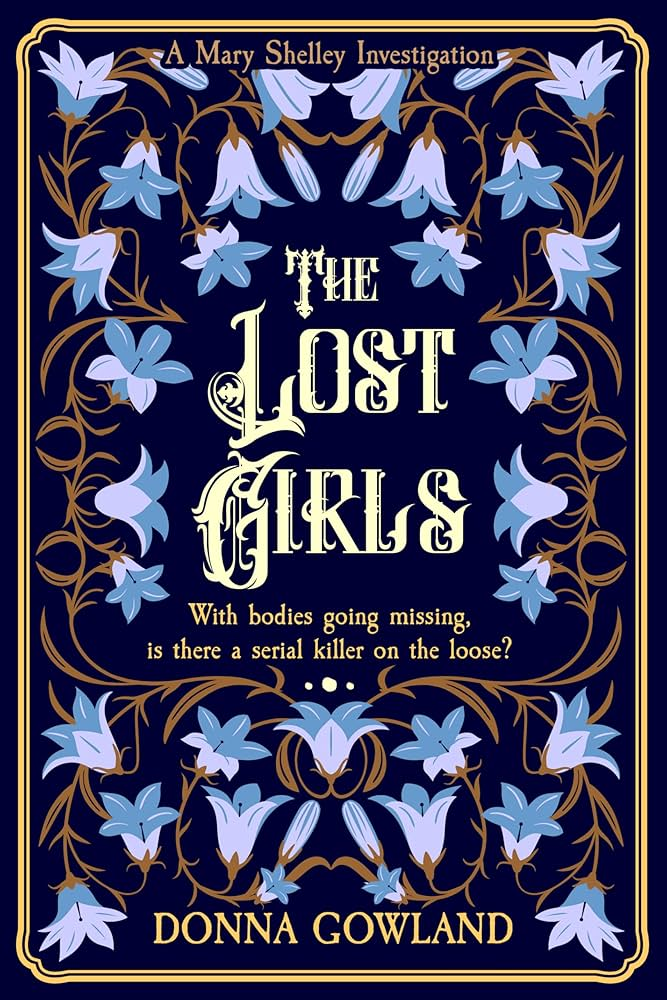
The Lost Girls by Donna Gowland – Review
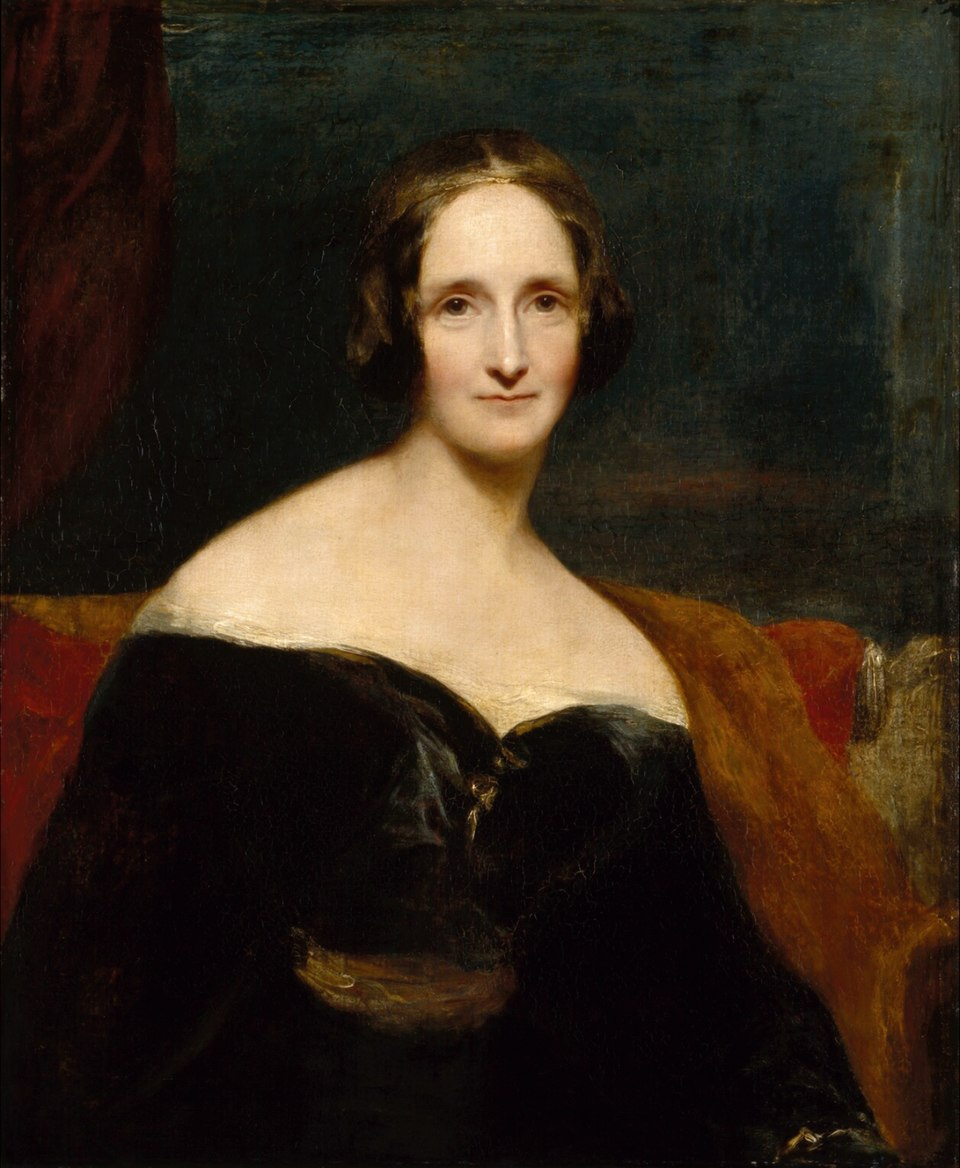
The Mary Shelley Investigations series began earlier this year with the publication of the excellent The Missing Wife. I interviewed author Donna Gowland about the book and she described what drove her to create a literary series in which Mary Shelley (Mary Godwin to be precise as the novel is set prior to her marriage to Percy Shelley) solves mysteries by playing amateur detective. Gowland is extremely knowledgeable about Mary Shelley and this expertise ensures that the latest addition to the series, The Lost Girls, is rich in period detail.
The story begins roughly where The Missing Wife left off. Mary and her lover Percy Shelley are back in London and find themselves ostracised from polite society as they are living together in sin. Percy is still married to his estranged wife Harriett. He spends his time in the taverns, drinking and whoring his days away. Mary is determined to find a way out their squalid living conditions. But soon enough, she finds herself embroiled in another deadly mystery. Mary’s stepsister Claire Claremont, who Marys suspects is a rival for Shelley’s affections, claims to have witnessed the violent death of a girl. But when Mary and Percy arrive at the scene of the crime the corpse has vanished. Shortly thereafter, more girls are reported as missing. There are shades of Robert Louis Stevenson’s ‘The Body Snatcher’ in the storyline and Gowland takes Mary to heart of the British medical establishment and the scientific advances that were being made at the time. I was fascinated by one character, Dr James Barry, in particular. These scenes shed light on how Mary may have been inspired to write her greatest work – Frankenstein; or, The Modern Prometheus.
The Lost Girls works as both a fine period novel and as an intricate Gothic mystery. Gowland has brought Mary Shelley alive in these novels. Now I can’t wait for the third volume in the series.
Ellroy Reads – LA Confidential: The Screenplay
Many viewers have been waiting for this episode of Ellroy Reads. Our text this week is LA Confidential: The Screenplay by Brian Helgeland and Curtis Hanson. I use the screenplay as a conduit to explore Ellroy’s changing opinion of the film over the years, and give some behind the scenes stories about the making of the movie. These stories haven’t been shared before and some of them are hair-raising. If you are the type who worships Hollywood celebrities then I should probably add a trigger-warning!
The video cut-off right at the end so I have uploaded this episode in two parts. The latter part is mostly the tail-end of the episode.
Thank you for watching and don’t forget to subscribe to the channel.
Ellroy Reads – The Count of Monte Cristo by Alexandre Dumas
There are certain books which are timeless. The stories they contain are so compelling they will never cease to entertain and inform. The Count of Monte Cristo by Alexandre Dumas is one such book. James Ellroy read it as a teen on the advice of his father and thought it was heavy-going, but over the years he has acknowledged it as a classic tale of revenge. This is the focus of today’s episode of Ellroy Reads.
Enjoy the show, and remember to share, like, comment and subscribe to the content.
Ellroy Reads – Margaret Thatcher The Authorized Biography Volume Three: Herself Alone
For the latest episode of Ellroy Reads I talk about a book which was also the last gift I gave to James Ellroy. Knowing Ellroy to be a conservative, I gave him a copy of Charles Moore’s biography of Margaret Thatcher for his 74th birthday.
I use the book as a conduit to discuss Ellroy’s politics and how they have changed over the years. For many readers and critics, Ellroy’s views are problematic and yet he still manages to be the darling of the liberal left. The most prominent left-wing newspaper in the UK, The Guardian, has never been shy in showering Ellroy with praise. As someone who has spent a lot of time with Ellroy, I can say that his views might surprise you. They frequently surprised me.
I hope you enjoy the episode. Remember to subscribe to the channel and share with your family and friends, whether they be on the left, right or everything in between.
A James Ellroy Playlist: The Loves of Freddy Otash Part II
The news that James Ellroy’s latest novel Red Sheet, featuring his current favourite lead character Fred ‘Private Eye to the Stars’ Otash, will be published in June of next year has inspired me to revisit my web series on James Ellroy and music. The previous instalment focused on two women, Judy Henske and Marilyn Monroe, who might be considered the loves of Fred Otash’s life. This episode will focus on two more women – Julie London and Doris Houck – who played the role of mistress and wife to Otash respectively.
Cry Me a River
In Widespread Panic, Otash claims to have had an affair with ‘soaring songstress Julie London.’
London was born in Santa Rosa in 1926. Show business was in her blood: her mother and father had a song-and-dance vaudeville act and three-year-old London made her professional debut on her parents’ radio show. Chance, however, led to her big break. While working as a lift girl at Roos/Atkins clothing store, London met the talent agent Sue Carol, who subsequently took London on as a client. London began acting in films and released her debut album Julie Is Her Name in 1955, which featured her signature song ‘Cry Me a River’. London’s contralto voice imbues this mournful song with both a powerful melancholy and great deal of sass.
Otash’s affair with Julie London is significant. From 1947 to 1954, London was married to Jack Webb, a.k.a. Sgt Joe Friday, the very archetype of the honourable idealised LAPD officer in Dragnet. For Webb to be cuckolded by a sleazebag like Fred Otash, who was drummed out of the LAPD by Chief William H. Parker himself, is a very cruel joke on Ellroy’s part.
Cry me a river, Jack.
I’ve Reached the Point of No Return
In the Otash novels, Ellroy reveals little about Freddy’s marriage and two divorces to Doris Houck. This is unsurprising as Otash treated Houck abominably and this inconvenient fact wouldn’t chime with Ellroy’s portrayal of him as a sympathetic lead character. Doris Houck was born in Wallace, Idaho in 1921. In the 1940s she was a prolific film actress, appearing in over twenty films from 1945-47. She was a formidable presence onscreen, and in the Three Stooges comedy Brideless Groom she persuades her reluctant boyfriend Shemp Howard to marry her by placing his head in a vice. She wanted to be his main squeeze!
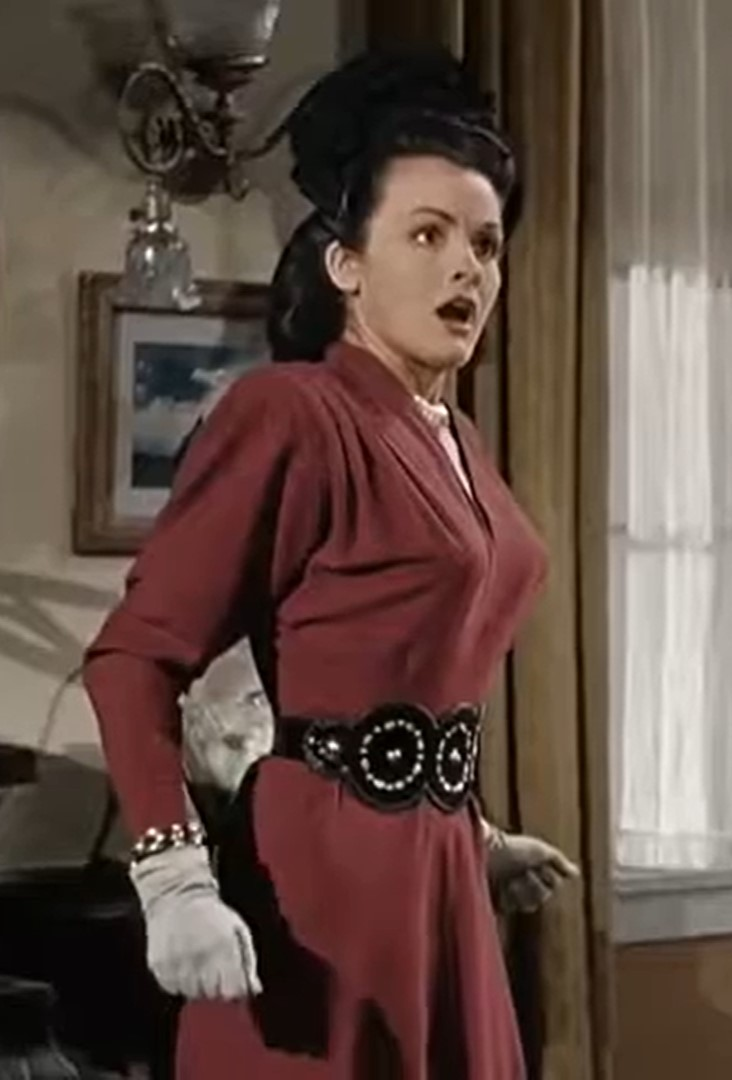
Houck married Fred Otash in 1950 and their union would prove short and tempestuous. Their first divorce was vacated after the couple reconciled. Their second divorce would be final in 1952, with Houck accusing Otash of assaulting her while she was pregnant, causing her to suffer a miscarriage. By this time, Houck’s acting career was over and she was working as a clerk at a Santa Monica aircraft plant.
Houck then made something of a comeback as a songwriter. In 1955 she signed a seven-year songwriting contract with T-C publishing corporation. Her lyrics are suffused with romantic longing which might sound touching in the song below, ‘I’ve Reached the Point of No Return’. Listening to this song in the context of her relationship with Otash, however, taints it with melancholy.
Doris Houck died of barbiturate poisoning at the age of 44 on December 14, 1965.
Ellroy Reads – Billy Bathgate by E.L. Doctorow
For the latest episode of Ellroy Reads I look at E.L. Doctorow’s classic gangster coming of age novel Billy Bathgate. James Ellroy greatly admires this novel about a Bronx lad who falls under the spell of legendary gangster Dutch Schultz. I have the inside scoop of how the story relates to the one and only unpublished novel of Ellroy’s career, ‘The Confessions of Bugsy Siegel’.
Enjoy the content, and do consider subscribing to the channel if you haven’t already done so.
A James Ellroy Playlist: The Loves of Freddy Otash Part I
The news that James Ellroy’s latest novel Red Sheet will be published in June of next year has inspired me to revisit my James Ellroy Playlist series. For those of you unfamiliar with this series it is, quite simply, an exploration of music that is important to the fictional world Ellroy has created in his novels.
Red Sheet is a continuation of Ellroy’s Freddy Otash series of novels. I wanted to explore the musical influences on the Otash novels, specifically by looking at songs by women who, for better or worse, could be considered the loves of Freddy Otash. As there was more material on this subject than I anticipated, I am splitting this post into two parts, with the second part to be published soon.
Wade in the Water
One of the most intriguing snippets from the Red Sheet synopsis came in this line, ‘the long-forgotten but still-stunning folk singer Judy Henske is on a collision course with the love of her life, the freewheeling Freddy O’. Judy Henske was born in Chippewa Falls in 1936. She moved to San Diego in 1959 and lived ‘on a sloop in a yacht basin’. Her singing career received a boost when she appeared on the musical variety show Hootenanny, and she became a prominent figure in the folk music craze of the early 1960s. Henske was noted for her booming voice. Crime writer, and for a time Ellroy confidante, Andrew Vachss noted in his novel Blue Belle that ‘If Linda Ronstadt’s a torch singer, Henske’s a flame thrower.’ In a recent interview with The Objective Ellroy said of Red Sheet, ‘Freddy meets a woman he can’t escape. She’s the folk singer, Judy Henske. She represents a kind of goodness he’s never encountered before and encourages him to tell the truth.’
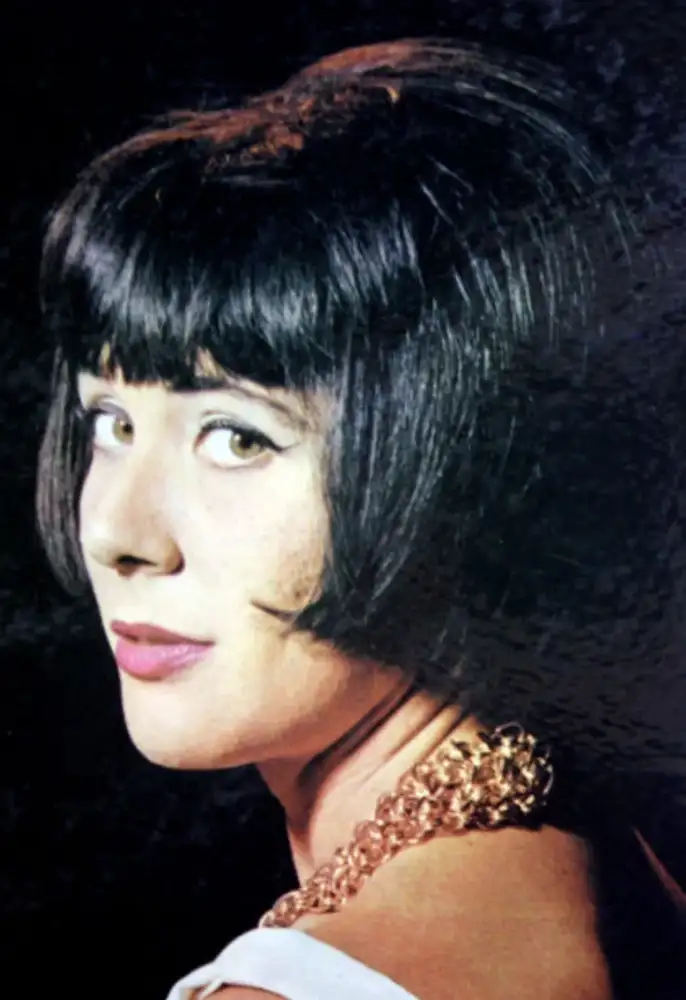
The Red Sheet synopsis describes Judy Henske as ‘long-forgotten’, but the October-December 1962 setting of the novel covers a time-period when she was in her mid-twenties and her career was in its ascendancy. Below is a stunning Judy Henske performance of the African-American spiritual ‘Wade in the Water’ from her only film appearance, the 1963 musical Hootenanny Hoot.
Happy Birthday, Mr. President
It might be a stretch to consider Marilyn Monroe as one of the loves of Freddy Otash’s life, but it’s fair to say they had a mutually important, albeit indirect, impact on each other’s existence in Ellroy’s novel The Enchanters. Monroe was praised for her singing ability. Her rendition of ‘Diamonds Are a Girls Best Friend’ in Gentlemen Prefer Blondes is a standout performance in her career. For this post though, I feel it most appropriate, given everything James Ellroy has written about the moral corruption of the Kennedy clan, to include Monroe’s performance of ‘Happy Birthday, Mr. President’, followed by a few lines of ‘Thanks for the Memory’, at Madison Square Garden on May 19, 1962. It is unforgettable performance made all the more poignant by the fact that Monroe died less than three months later on August 4, 1962. Were the Kennedys involved? Only Freddy O has the goods!
Ellroy Reads – The Collector by John Fowles
For the latest episode of Ellroy Reads, I discuss John Fowles’ classic novel The Collector. The novel had a profound impact on James Ellroy and other authors as well, being a direct influence on Irving Wallace’s The Fan Club, which was the first book I covered on the show. I also discuss some real-life criminal cases that have a connection to the novel, namely the unsolved murder of Stephanie Gorman and the grisly case of Kansas City serial killer Bob Berdella.
Hope you enjoy the show, and please remember to subscribe and share. I’m currently working on a post for my old website series ‘A James Ellroy Playlist’, which some of you may remember. It’s inspired by the forthcoming release of Ellroy’s new novel Red Sheet. Anyway, enjoy this episode of Ellroy Reads in the meantime.


 The Venetian Vase