Susan Jonusas: An Interview with the Author of Hell’s Half Acre
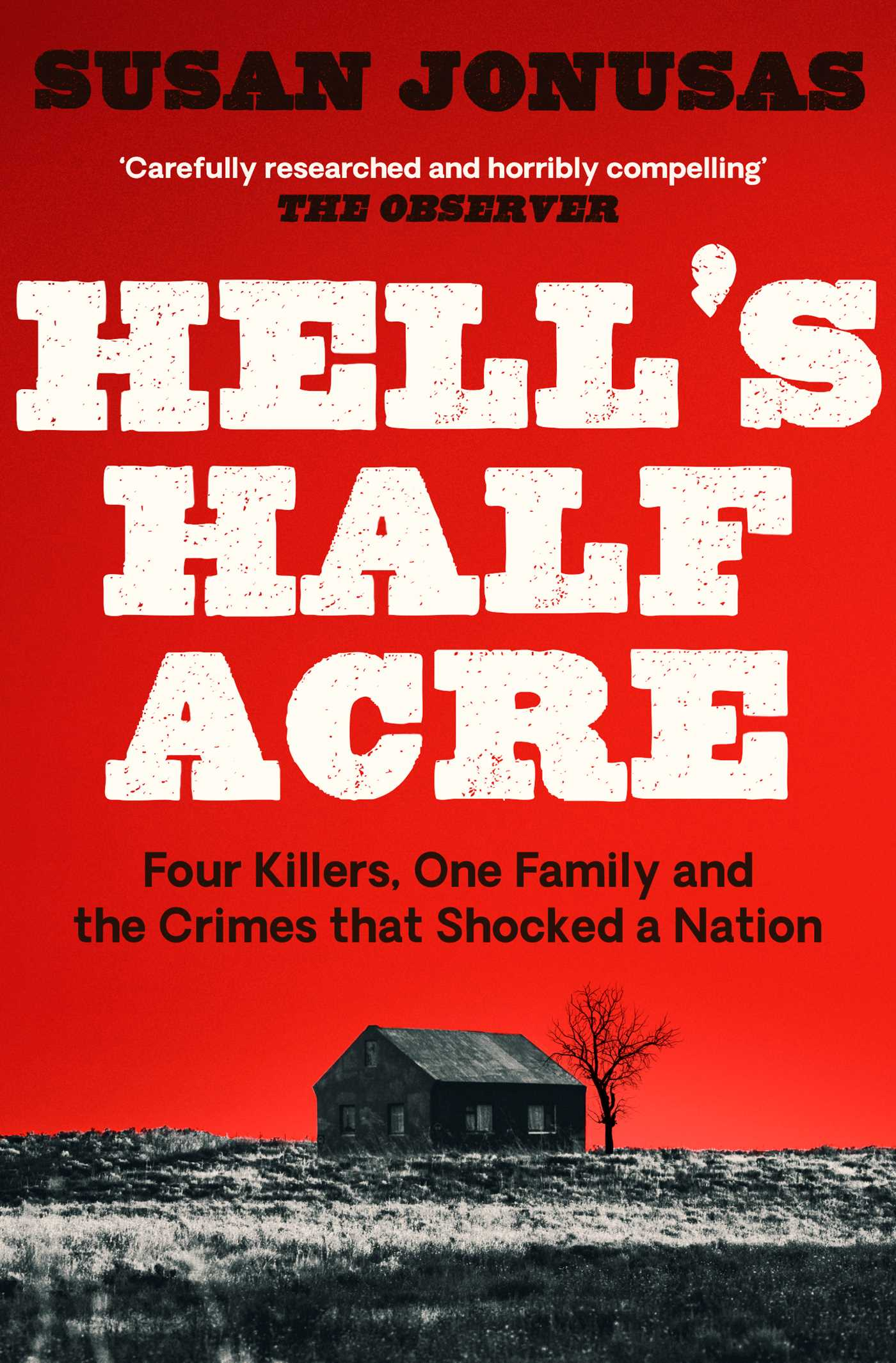
Hell’s Half Acre is one of the most gripping True Crime books published in recent years. It tells the story of the Bender family, often regarded as America’s first serial killers. In the 1870s, the ‘Bloody Benders’ of Labette County, Kansas murdered a series of travellers who had the misfortune of seeking shelter in the Bender home while crossing the frontier.
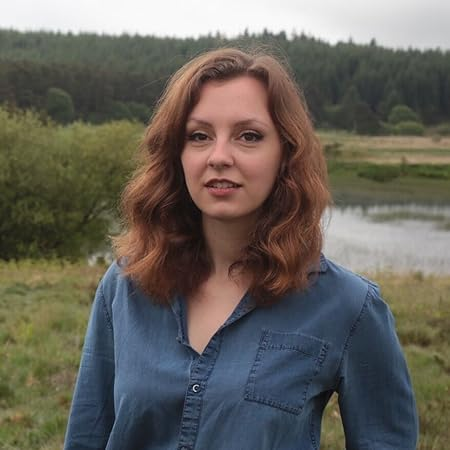
Susan Jonusas is a British author who has been researching the story of the Bender family for years. Most of the grisly tale remains shrouded in mystery, but in Hell’s Half Acre Jonusas brings much of the story to light. She has crafted a compelling history of murder on the frontier. I cannot recommend it enough.
I had the pleasure of talking with Susan about the research and writing process of Hell’s Half Acre: The Untold Story of the Benders, America’s First Serial Killer Family.
Interviewer: Firstly, congratulations. It’s an absolutely fantastic book. I suppose a good starting question is, what first got you interested in the saga of the Bender family?
Jonusas: I have always been interested from a very young age in the more ghoulish aspects of history. I was a big Horrible Histories person, and then I did my Undergrad. I focused on the history of crime, and then I kind of continued that into my Masters, where I was particularly interested in tracking the 19th century criminal, and how they were represented in visual culture and stuff like that. So I basically first read about the Benders in a book I got from a charity shop, and it was a big, over the top nineties coffee table book called Infamous Crimes. And it had many, many infamous crimes. But the Benders were one of the crimes in it, and they had this huge double page spread with all these images and stuff like that. And I remember reading about it, and just thinking how different this particular crime was to anything else in that book or really anything else I’d read about because you’ve obviously got a family (the Benders) for starters. It’s this really interesting location. It’s 1870s Kansas. And then you’ve got this very weird combination of a serial killer family and also a kind of an outlaw element to it. And I just spent years thinking there must be more about this, always on the lookout for them. A lot of the writing, there was quite a lot out there, but there wasn’t really much beyond 1873 and then eventually, I thought, you know what, I will solve this. They’re (the Benders) also very interesting, because we know they committed the crimes, but they were never found, and I thought that was a fascinating kind of element to the case. It wasn’t, who did this? Like Jack the Ripper, for example. It was, we know who did this, but we don’t know where they went.
Interviewer: It had me hooked from the start. Like yourself, I’m a True Crime enthusiast, and I know all the classic cases, and I love to dig up a slightly unusual case. I’d just not heard of this one, not heard of it at all. What were the first professional steps that you took? Do you remember the distinct moment where you did something and it started to come together as a professional research?
Jonusas: Yeah, I worked as a bookseller at Waterstones Piccadilly for a couple of years. And when I was doing that I got to meet lots of authors and publicists. I met Dan Jones, the historian, at an event that I did with him and he said, if you ever wanna write a book hit me up. I had various ideas related to my masters, in my mind, about the history of the mug shot, and then the Benders were in there as well. I worked a series of other jobs. And then I was like, I don’t like any of this, I want to write a book. So I basically messaged that (to Dan), and then he very kindly introduced me to his agent. And then I started putting together a proposal and doing more of the research. And one of the big things that I knew I would have to do is go to Kansas. I thought, there have to be primary documents related to this right. It’s such a famous case. And I thought, if they’re anywhere, they’re going to be in Kansas. And I could see some of it online, listed in the archive database. And then when I realised how many boxes there were related to them. I was just ‘Oh, my goodness, this feels like Christmas’.
It was weird writing the proposal and not necessarily knowing (if) I will find them. I had this little shred of hope that I would solve the mystery. I got halfway there, but the big spoiler for the book is that we still really don’t know. When I read the proposal now it’s so different to what the book ended up being just because the research changed so much of what I knew about them.
Interviewer: The big thing I find as a fellow researcher is you think you know everything. But then you realise you know almost nothing!
Jonusas: When I went into it I thought, I know this, and then I realised, I don’t know anything. But how exciting to get to do all of that detective work. Looking at different court records. I went through a whole period where I was trying to identify a man called ‘Missouri Bill’ William McPherson. I was going through all these jail records, finding all these William McPhersons and thinking, is this the William McPherson. And then I found a record online, it was a jail record, and on the back someone had written, Missouri Bill. That’s the moniker that he was known by, and that moment was a proper – leap up out of the chair and be like, yes!!!
Interviewer: The surprises along the way are wonderful. Because they are a dark family, what did you feel would be the kind of humanitarian linchpin of the story that we could relate to? It’s a very dark story.
Jonusas: Yes, and it’s interesting talking to different people about it, because some people said, I couldn’t read this or I had to stop this. And I think when you spend a lot of time in the dark, you kind of forget that maybe not everybody else wants to do that. For me, what became the soul of the book was the community around the Benders, basically the partners and families of the various victims. Mary York, whose husband, William York, goes missing, she became a focal point. And she thankfully had written this long personal account as well, and that had a lot of really deep emotional insight. Because also we don’t have anything from the Benders themselves we don’t know who in the family exactly was committing the crimes, the physical acts of the murder. We don’t know. The press obviously thought that the daughter, Kate Bender, was in charge, but we have no idea really. Because we didn’t know that much about them, I did need to build up the work and the different towns around them. I think that really forms the emotional core of the story. The Benders themselves are obviously very difficult people to like to read about, but I think the strength of the people involved in the investigation, the emotional connections to the victims and the children involved, it became very obvious to me that was what would hold it all together. That’s where I did the most crying as well when I was writing it. Just thinking about how vast that landscape was, and how difficult it was to communicate, and how these people were just so reliant on each other. To help each other through what was going on. The community there is still very much wrangling with the legacy of it, and that again is a big emotional point in the book.
Interviewer: I think that comes off swimmingly. True crime is a genre I love, but unfortunately a lot of the books veer towards the ridiculous. If it’s a Jack the Ripper book or something where the mystery has to be solved, but your book never got ridiculous in terms of you were filling in gaps with outlandish answers. You stuck to the facts as they were known at all times. But was there ever any pressure, or was there ever any temptation to start sketching in more than you could plausibly know.
Jonusas: Yeah, with a case like this, a lot of it is oral history. A lot of it is folk history. One of the big sources that I had was an account written by a man called Samuel Merrick, who travelled with the family, and when I read that account I thought this is like a novel. This man has written a fantastic novel about his time with the Benders. And because I’m a historian, I can’t just copy and paste that in. And then it’s about fact-checking every single thing. Checking locations, checking census records, checking jail records. And that’s where the detective element is really interesting, because I had letters that were written by the detectives looking for the Benders in 1873, and they were mentioning people that Samuel Merrick mentioned in his statement in 1879, and being able to link those things up and realising, yes okay, this person obviously was there. When we were there as well (we saw how) it’s such a part of the folklore in that region, and I didn’t want to lose that element, because I think that is key to how the story has changed over time, and how it was dealt with in the time period. So I did want to keep that kind of campfire feel to the storytelling.
Interviewer: I think you did it brilliantly. We’ve got something in common in that we are both British Americanists, very British if you don’t mind me saying so. How did you gauge the reaction to the book, particularly in America? Obviously the people in Kansas are much more emotionally connected to their own folklore.
Jonusas: I think that is a really interesting question because I am obviously, like you said, very British. And I always find that when I go to the States I become more British! Especially in more rural areas that aren’t visited as much. It’s a real door opener, because people ask, why are you here? Why would you, as a person from London, be interested in this very niche part of our history? And I think in that sense it was quite useful, because people were very excited to talk to me. I mean, my partner and I stayed in an Airbnb that belonged to an old oil baron, and that family had been in the area for a long time, and we were playing pool in their basement and talking about the different Bender theories and stuff like that. When the book first came out a lot of people said, ‘You’re wrong. All of this is wrong.’ And I had known that would probably happen, because it is a pet case for a lot of people. I think in America people do know a bit more. Nobody here knows about the Benders, unless you’re really into true crime. But in Kansas it was very much like, ‘Oh, yeah, the Benders. That murdering family.’
So some feedback I got was really good. I had people email me and say, ‘Oh, I have family stories about the Benders’. I was sent an amazing message by someone who had typed up a story that one of their ancestors had told them about staying at the Bender Inn. I also had people who said, ‘you shouldn’t have written this as an English person because how could you possibly understand what that was like for us?’ But most of the American feedback has been really good, and one of my favourite pieces of feedback is that from people in Kansas who say that they now know more about their own history from reading the book. There is a lot of history in it which has surprised some people who were looking for straight True Crime. It won a Kansas Notable Book Award, and that was really touching, because I felt, okay, the people of Kansas feel like this represents their history correctly. And I think when you are writing from outside, which I’m sure you feel as well, acceptance from that place is really the best feeling you can get.
Interviewer: I’ve got a two-part question to wrap up. Was there anything in it that broke your heart, that you couldn’t include or a lead that went nowhere? And the second question is, can you give us a little hint, perhaps, of what you might be working on next?
Jonusas: I knew that there were photographs of the Benders somewhere, and they’re referenced a lot in lots of different documents, both from the early 1870s right up to the 1890s. They (the documents) are talking about tin types. They were using them to try and identify who they were, and a real part of me thought, ‘Will I find them? Do we have the pictures?’ Because there are various pictures online. None of them are verifiable. If you go to the Cherryvale Museum, they have a picture of Kate and John Gebhardt supposedly, that was found in a Bible that someone in the community produced. But we have no way of verifying it, and Mike Wood at the museum doesn’t think it’s them. Sometimes, when I’m in antique shops in America, I think maybe I’ll find them. Maybe I’ll have a hand of God moment. But how would I verify them? I can only match them with the description on the wanted poster. There’s no real way. But yeah, to an extent I was sad that I didn’t find out where they ended up, but it was very satisfying for me to realise that the authorities knew where they were for a long time, and basically just finances and bureaucratic stuff all got in the way. And when people say, what do you think happened to them? I think they probably died on the open frontier somewhere, probably by people who didn’t even know who they were. Also it’s that time period where they could have died of cholera.
In terms of what’s next, I’m writing a biography! I’m writing a biography of Candy Barr, who you probably know. She’s referenced in American Tabloid because she was Mickey Cohen’s girlfriend.
I look forward to that book! In the meantime, grab yourself a copy of Hell’s Half Acre.


 The Venetian Vase
Hell’s half acre was excellent! Susan did an amazing job of research. Being retired from law enforcement in Kansas, I worked for the Mcpherson County Sheriff’s Department, this book was very interesting to me. I was wondering if Susan has thought about doing even more research, picking up where the little detective left off, in trying to positively identify if the claim of Katha Peters being Kate Bender was true, through modern forensic science and handwriting samples. Also, of Almira Monroe and Sarah Davis. Even though John James had “affidavits” and other documents that Almira was in the Detroit house, did anyone ever substantiate that? It seems that these two women knew too much about the benders.
Hi Rich, thanks for commenting. Susan really did an astonishing amount of research and it paid off with a terrific book. She did tell me, off the record, what her next book will be on, but I cannot go into it here. All will be revealed when she is ready. I will say that it is not a follow-up book on the Benders.