Ellroy Reads – By Reason of Insanity by Shane Stevens
In the latest episode of ELLROY READS I look at one of the forgotten classics of American genre writing – By Reason of Insanity by Shane Stevens. It could be argued that the serial killer genre began with this book, and it was certainly a major influence on James Ellroy, who has written obsessively about ‘the Red Light Bandit’ Caryl Chessman, one of the central figures of the text.
If you enjoy the show, why not hit the subscribe button and have future episodes delivered to your inbox:
ELLROY READS – The Zebra-Striped Hearse by Ross Macdonald
Ross Macdonald is considered one of the greatest writers of crime and detective fiction, and his Lew Archer were hugely influential and the genre and to James Ellroy in particular. So it is only naturally that Macdonald’s work would pop up on Ellroy Reads. The Lew Archer tale I examine is The Zebra-Striped Hearse, which Ellroy has named as an influence on his latest novel The Enchanters.
Enjoy the episode. Subscribe and spread the word.

ELLROY READS – The Light of Day by Eric Ambler
For the latest episode of Ellroy Reads, I look at Eric Ambler’s classic thriller The Light of Day. James Ellroy has always been an admirer of Ambler’s work. Ambler’s themes of statelessness, threatening border crossings and lost identity have always been important to Ellroy.
I hope you enjoy the episode, and extra marks go to those who comment, like, subscribe, share etc.
Ellroy Reads – The Cellist by Daniel Silva
For the latest episode of Ellroy Reads, I look at Daniel Silva’s contemporary spy novel The Cellist. Ellroy is a big fan of Silva’s Gabriel Allon series of novels, of which The Cellist is a fine example. Given the subject, I examine an issue which doesn’t pop up often in James Ellroy studies – could Ellroy be considered a spy writer?
Enjoy the episode:
An Interview with Randy Sue Coburn: Screenwriter of Mrs Parker and the Vicious Circle
Mrs Parker and the Vicious Circle is one of my favourite films, and I regard it as one of the greatest films about writers and writing ever made. It stars Jennifer Jason Leigh as Dorothy Parker, and the narrative focuses on Parker’s time as a member of the Algonquin Round Table, her chaste love for Robert Benchley, her depression and suicide attempts, her lucrative time in Hollywood as a screenwriter, and most importantly, her extraordinary talent as a poet.
So, as luck would have it, I was delighted when the screenwriter, Randy Sue Coburn, got in touch. I had covered Mrs Parker in an episode of Highbrow Lowbrow with my podcast co-host Dan Slattery, and Randy Sue reached out after listening to the show. Not wanting to miss an opportunity, I asked her for an interview. She agreed to talk with me about the making of the film, and the gem of an interview is below. Randy Sue has so many fascinating stories about working with Alan Rudolph (the director) and Robert Altman (the producer) and the all-star cast, but I’ll leave that to her to explain:
Interviewer: When did you first become interested in Dorothy Parker?
Randy Sue Coburn: I got interested in Dorothy Parker when I was in Junior High, and I started going through my mother’s copy of The Portable Dorothy Parker and copying little snippets of her poems into my diary, and then when I got into journalism, she was kind of an icon among women like me, young women.
Interviewer: Your reputation on her must have been significant to have got to the stage where Alan Rudolph, who was already quite a famous filmmaker by the early 90s, asked you (to write the screenplay).
Randy Sue Coburn: I first interviewed Alan Rudolph when I was a staff writer on The Washington Star in Washington DC. His first credited directed movie came out in 76’ – Welcome to LA. He had directed and written a very strange low-budget horror film before that but nobody knows it and he didn’t even use his real name, but Welcome to LA was coming out and a publicist asked if anybody in the Star’s Features department was interested in interviewing him as he was coming to town, and I said yes. I’d seen Buffalo Bill and the Indians, which he’d written the screenplay for and Robert Altman directed. It wasn’t Altman’s biggest movie, but I loved it. Rudolph had adapted Arthur Kopit’s play. So, I thought, yeah, he seems like an interesting guy. I interviewed him, wrote a profile of him. He told me about the next film he wanted to make, set in Paris in the Twenties, art (The Moderns), so I took him to the Phillips Collection in Washington DC that had a lot of art from that era, a lot of Impressionistic art, and then I kinda forgot about him until Choose Me came out. By then I was a freelancer, so I proposed a story about him. He was currently making Trouble in Mind in Seattle, and Vogue magazine sent me there. They ended up hating Trouble in Mind, so they didn’t run the piece, but I syndicated it elsewhere and he (Rudolph) asked me to novelize the script for Trouble in Mind. It was a thing back then (novelizations), kind of a silly thing really. But I considered it an audition for writing screenplays for him, and that’s kinda the way it turned out.

Interviewer: The Moderns is quite surreal. It has to be to reflect their (the Lost Generation’s) work, whereas Mrs Parker is more of a straight biopic, which I think is the right tone for the story. What did you think of Alan Rudolph as a person? Was he sociable? He was doing a lot of films back then. It seemed like he was really finding his voice.
Randy Sue Coburn: He was very personable, and actors loved him. He had me write a screenplay with him in regular prose. I didn’t have screenwriting software at that point, and we were more truly writing together. He was very encouraging. We wrote two scripts together before Mrs Parker, which I basically wrote on my own and then he came in and started adding things by the time it went into production.
Interviewer: I re-watched the film in anticipation of this conversation. It’s maybe my sixth viewing. It’s an incredible film. It’s probably the best cast I’ve seen in a film. You’re writing about such distinctive people. Did you have actors in mind when you were writing?
Randy Sue Coburn: No. One script Alan had me write he had an actor in mind, a particular actor, and I thought that was a big mistake. When Altman got involved in the project, and Alan met Jennifer Jason Leigh, it was about the time I found this book (Wit’s End: Days and Nights of the Algonquin Round Table by James R. Gaines) in a used bookstore. I showed it to Alan. It really got him jazzed. I went to about six different bookstores and got more copies and he immediately sent one to his Casting Director, Pam Dickson, who also worked a lot with Altman, and she just took off running with it.
Interviewer: You’ve gotta be an expert on all of them right (members of the Algonquin Round Table), because if you have a scene with Alexander Woollcott, you’ve gotta get it right even if he’s just in the background. Did your expertise start with Dorothy Parker and spiral out to the other members?
Randy Sue Coburn: Yeah, I read a lot of books during the writing. I have Harpo Speaks! No library should be without a copy of Harpo Speaks! I remember I found that. It was out of print in the US, but I found a copy of that in Paris, I think at Shakespeare & Co. There were lots of books. Everybody from the manager of the Algonquin (Hotel), to all the members themselves, a lot of them wrote books.
Interviewer: How did it read on the page? With the scenes set in the Algonquin, you’ve got all this overlapping dialogue. You’re hearing a little bon mot and fiery witticism here and there. How was it filmed?
Randy Sue Coburn: Alan did all that overlapping. There was a lot of improvisational stuff, but there was a lot to take off from in the script in those group scenes. Obviously, the group scenes change when you get a bunch of actors together. I mean originally Alan had shot a scene that was in the script that I wrote which showed the true origin of the Round Table, which was a party right after World War One that Alexander Woollcott had given and it was huge. And that was where they kinda met each other. But, I think wisely, that got cut. Alan shot it, but it just wasn’t the real heart of it to begin with.

Interviewer: Was there anything in it that broke your heart, in terms of what wasn’t shot or got cut?
Randy Sue Coburn: Well, there were things I felt would have warmed the viewer more to Dorothy. Her mother died when she was a child, but the only sense you got of that is the scene where she’s hardened and embittered and she walks out of the psychiatrist’s office. I still wonder if having her a little more emotionally vulnerable and available would have been a good thing. I did try to put that in the script, and I felt maybe a little more of it could have survived, but film is a directors medium. I knew that going in. I had interviewed and profiled enough directors to be fairly realistic about that.
Interviewer: The cast must have believed in the film going in. I believe Jennifer Jason Leigh took a pay cut.
Randy Sue Coburn: Nobody got paid their usual salary.
Interviewer: What did you think of her (JJL’s) voice? An audio recording of Dorothy Parker has survived. I think Jennifer Jason Leigh is a very powerful actress, but when I listen to Dorothy Parker’s voice…
Randy Sue Coburn: It’s an interpretation, right. Alan met Jennifer, I think it was at a Fourth of July party that Altman had given in LA, and by this time I had found Dorothy Parker’s spoken word recording where she records short stories on one side, ‘Horsie’ is the one that really grabbed me, and on the other side she is reading her poems. It was a little cassette. I made copies of that to be sent for Jennifer. I think Jennifer then found the interview of Dottie as an older woman, where she says, ‘Writing is the toughest way you can possibly take. It’s the loneliest way there is. There you are, you and your paper — that’s all. And nobody puts on their paper what they really meant to be there.’
Interviewer: Did you meet any of the cast in person?
Randy Sue Coburn: The shoot was about six weeks. I was there for four of the six weeks in Montreal, the same hotel where everybody was staying.
Interviewer: Was there a point when it looked like the production might collapse? As you alluded to, money was very tight.
Randy Sue Coburn: I don’t think the deal with Fine Line and Miramax was fully set until we started shooting. Altman’s a gambler that way, and he really gambled on getting the finance through for us.
Interviewer: Thank goodness he did! There are scenes in Hollywood where Dorothy is watching films being made. When you were watching the shoot, did you think it was going to be a critical hit or did you not dare to think how it would be received?
Randy Sue Coburn: I had hopes. Whenever Alan went somewhere and talked about it before we went into production people were really interested. So everybody had high hopes that it might be a critical hit, and it kinda was. It did well critically.
Interviewer: I think if it was made today, it would be right up for Best Picture, because you don’t get films that well made any more. Was there any review or comment you were proud of, or do you try not to read reviews?
Randy Sue Coburn: What I got the biggest kicks out of were reading reviews that were positive and quoted lines that I had written, and they thought Dorothy had actually said! I thought that was pretty funny. I thought, oh well I guessed we fooled them, so we did our job. (Robert) Benchley saying… it was one of the sweet, vulnerable scenes that survived when she’s sitting with Benchley, after they’ve run off from the Round Table crowd and she tells him, ‘I’m afraid, I’ll lose you’. And he says, ‘You’ll have to wear out a pretty large hole in your pocket to lose me.’ Some people thought Benchley had said that! It was fun.
Interviewer: You mention Benchley. There’s Peter Benchley (Robert Benchley’s grandson) in it playing Frank Crowninshield. There’s Nick Cassavetes, Rebecca Miller. There are all these people from great acting and writing dynasties. Blue bloods, I suppose you’d call them, in the artistic world. It is an incredible cast.
Randy Sue Coburn: Yeah, and so young, all of them. I’ve heard it said that it helps to know who all these people are if you are going to watch the film. It was interesting. I went to a few screenings in University College type settings and young people, who knew nothing about who these people were, really got into it because they knew about that hanging out in the chosen family type of vibe. Partying together and sleeping together and everything. They loved it.
(At this point Randy Sue’s dog wanders into the Zoom call)
Randy Sue Coburn: He’s a Schnauzer and one of Dorothy’s dogs in the film was a very drugged-up Schnauzer. One of my favourite adlibs was when she got a puppy and she was putting it on the floor, on top of a pile of newspapers and says, ‘learn to read darling’.
Interviewer: That was an adlib?
Randy Sue Coburn: It was! Gwyneth (Paltrow, plays a love rival to Dorothy) had a dog, speaking of dogs, she got a Labrador puppy during the shoot of Mrs Parker. And I remember, it would bark, and she would tell it to shut up. There’d be delays and she had these beautiful beaded costumes and the dog would be pawing them. I remember a production person on the film, looked at her and said, ‘Can you imagine Jennifer behaving that way at that age, she’s never gonna make it!’
But boy did she make it!

Interviewer: It was interesting to see Matthew Broderick playing the adulterer, heartless womaniser (Charles MacArthur). I’d never imagined him that way. Jennifer Beals (as Gertrude Benchley) seems like she’s hardly aged a day. I’ve always been quite intrigued by Campbell Scott as his father and his mother were so fiery, fill up a room type performers, whereas everything seems closeted in him, perfect for Benchley. Did you have a favourite performance?
Randy Sue Coburn: He didn’t have any lines, but I loved the Harpo (Marx) character running around. That surprised me. He (Jean-Michel Henry) was just so good at that. Sam Robards did a really nice job as Harold Ross, plus he was lovely. They were mostly all pretty swell. I remember Campbell told me something when we were at dinner, that whenever they were adlibbing or thinking of things to add to the screen, he said ‘it was never because the emotion or motivation was missing (in the script) it’s because they were there in the script’, and that made me feel really good because, of course, they have to feel at home in the scene and if they can bring something to it that’s great, then wonderful.
Interviewer: That’s quite a compliment.
Randy Sue Coburn: It means a lot to me. Possibly because when you’re the screenwriter on the set you don’t really feel like you’re top of the list. I don’t think Altman was generally known for adoring screenwriters. He’s famous for saying it’s (the script) just a blueprint. And by the time Mrs Parker went into production, that was the prevailing attitude. I think I was there mostly to work with the actors during the shooting of the group scenes to make sure they had as much information (as possible). Even though we had a researcher, I think that’s why Alan wanted me there. I also gave the girls a few dance steps for ‘The Everlasting Ingenue Blues’. We had it on record, Dorothy wrote this song for the revue that they all did (No Sirree!). We knew that she played the piano. We knew that she wrote the song, but we didn’t have the lyrics, so I wrote the lyrics, put it in the script and on the set, an Assistant Director Alan Nichols, who worked a great deal with Altman and Alan, he wrote the music. And Alan had me teach them a few steps. I was there for scenes like that primarily. I didn’t have a printer. I couldn’t hook my computer up to anything there so whenever I did write anything on the fly, I would have to write it out (by hand). I didn’t feel I was there as an exalted screenwriter.
Interviewer: Was there a big launch for the film?
Randy Sue Coburn: I went to Cannes for the premiere at the festival.
Interviewer: Did they love it? That tends to be the way. Maybe the French critics appreciate it more than the American critics do.
Randy Sue Coburn: I remember going to the screening before walking down the red carpet, and Altman asked me ‘did people love it’ and I had to say, ‘well it was pretty mixed’. Some people did, but I didn’t get an overwhelming sense. It was still a big night for me to have been there. That was Quentin Tarantino’s night really, but we had a nice party (Pulp Fiction won the Palme d’Or at the 1994 Festival).
Interviewer: Speaking as someone who’s watched it numerous times, it works on you slowly. It draws you back. Maybe it’s the volume of stuff you must take in. You just can’t do it on a single viewing. There are so many moving scenes. The scene with Stanley Tucci at the end is so powerful but also comedic.
Randy Sue Coburn: Yeah, Stanley was wonderful. Peter Gallagher (as Alan Campbell), another small part. They just brought so much to it.
Interviewer: When the film finally came out, how did it affect your career? Did the phone not stop ringing or was there a terrible comedown?
Randy Sue Coburn: A comedown, really. I was working some temp jobs as I was still finishing a novel that hadn’t gone to market yet, and I got into screenwriting for Alan as it paid better than freelance journalism, and I needed to earn so that I could work on my novel. I only looked at screenwriting as a better way than freelance journalism to subsidise fiction writing. I didn’t have a dream of moving to LA and pursuing it. Maybe because I’d interviewed so many filmmakers and so many novelists too, some of them had had things turned into films. One of them was John Sayles and the most memorable quote I got from him was ‘when you’re writing your novel nobody’s gonna tell you, “Sorry we ran out of ink, your adjectives will have to go.”’
But with a screenplay, it’s different.
Postscript: Since the release of Mrs Parker and the Vicious Circle, Randy Sue has written three published novels, Remembering Jody (1999) Owl Island (2006) and A Better View of Paradise (2009), and has two more in the pipeline.
Ellroy Reads – The Carpetbaggers by Harold Robbins
The latest episode of ELLROY READS covers one of the bestselling novels of all time – The Carpetbaggers by Harold Robbins.
Robbins never won the respect of the critics, but that did nothing to damage his sales, and a young James Ellroy was enthralled by The Carpetbaggers when he read it in the Summer of 1962.
Find out more in the video below, and please subscribe, share, comment and like if you feel so inclined.
Seraphim by Joshua Perry – Review
Joshua Perry worked as a New Orleans Public Defender for ten years. In his debut novel, Seraphim, he writes about two cities. New Orleans before Hurricane Katrina was a thriving economic hub with a sprawling middle class. Post-Katrina, the situation is different. New Orleans has become a magnet for gangsters, conmen and, perhaps worst of all, carpetbagging attorneys – the latter of which is how Ben Adler, Public Defender, describes himself.
When a sixteen-year-old boy confesses to the murder of a local celebrity (and Post-Katrina hero of the city), Adler and his partner, the amusingly named Boris Pasternak, end up representing the boy. Adler knows that the chances of his client receiving any kind of justice, he suspects that the confession is false, are slim. Perry gives numerous anecdotal examples of the New Orleans justice system in a state of dysfunction. His style is to mix black comedy with a simmering indignation. In fact, Seraphim a triumphant mixture of styles. As a legal thriller, it hurtles towards an explosive climax in the best tradition of the novels of Scott Turow or John Grisham, As a literary novel, it is alive with beautiful prose that will haunt you for long afterwards.
In a past life, Ben Adler was a rabbinical seminary student. He rejected his calling to work for a system he knows his corrupt, but hopes to profit from. Until this case turns his life upside down. Seraphim is a compelling read.


Theme issue of Clues: A Journal of Detection
Guest editors: Nathan Ashman (University of East Anglia) and Steven Powell (University of Liverpool)
2025 will mark the 30-year anniversary of James Ellroy’s American Tabloid, a historical novel which
challenged the established view of the events leading up to the assassination of President Kennedy. For
Ellroy, who had heretofore written acclaimed but largely genre-focused noir novels set in his native Los
Angeles, it represented a critical breakthrough in his writing career, and proved a major step in him
becoming a literary figure with an idiosyncratic revisionist take on American history. Thus, as Ellory’s
literary career moves into its fifth decade, it seems like an appropriate moment to reappraise his vast
literary output, particularly given the seeming decline of critical interest in his work from within the
academy over recent years. This can perhaps be situated within the context of Ellroy’s ever provocative
and controversial ‘Demon Dog’ persona, one that feels increasingly anachronistic in the era of social media and in the wake of recent political and social movements such as Black Lives Matter and Me Too. Yet these contexts also provide fertile ground for new or revised approaches to Ellroy’s canon and to the mode of the historical novel more broadly.
Subjects might include (but are not limited to):
● Ellroy’s characters as agencies of the State (and questions of state power more broadly)
● Ellroy and the Historical Crime Novel (including Ellroy’s influence on other practitioners and on
the development of the form more broadly)
● The various meanings of ‘policing’ and its relationship with the State in Ellroy’s fiction
● Gender in Ellroy’s work
● Ellroy and American History
● Sexuality in Ellroy’s work
● Race/racism in Ellroy’s work
● Music in Ellroy’s work
● Underworld and Overworld. Webs of corruption linking organised crime to the LAPD in James
Ellroy’s novels
● The protagonist as voyeur: Perverted viewpoints in the Quartet and Underworld USA novels
● Public and Private space
● Ellroy’s ‘demon dog’ persona (as well as broader consideration of animality in Ellroy’s work)
● Ellroy’s ‘late’ fiction
Submissions should include an abstract of 250-300 words and a brief bio (max 150 words). Proposals due 1st March 2025 and should be sent to Dr Steven Powell (s.p.powell@liverpool.ac.uk) and Dr Nathan Ashman (n.ashman@uea.ac.uk). Full manuscripts due of 5,000 to 6,500 words based on accepted proposal will be due 31st October 2025.
About Clues: Published biannually by McFarland & Co., the peer-reviewed Clues: A Journal of Detection
features academic articles on all aspects of mystery and detective material in print, television, and film
without limit to period or country covered. It also reviews nonfiction mystery works (biographies,
reference works, and the like) and materials applicable to classroom use (such as films). Executive Editor:
Caroline Reitz, John Jay College/The CUNY Graduate Center; Managing Editor: Elizabeth Foxwell,
McFarland & Co., Inc., Publishers Clues Web Site: https://sites.google.com/site/cluesjournal/

Highbrow Lowbrow: Olivia de Havilland Special
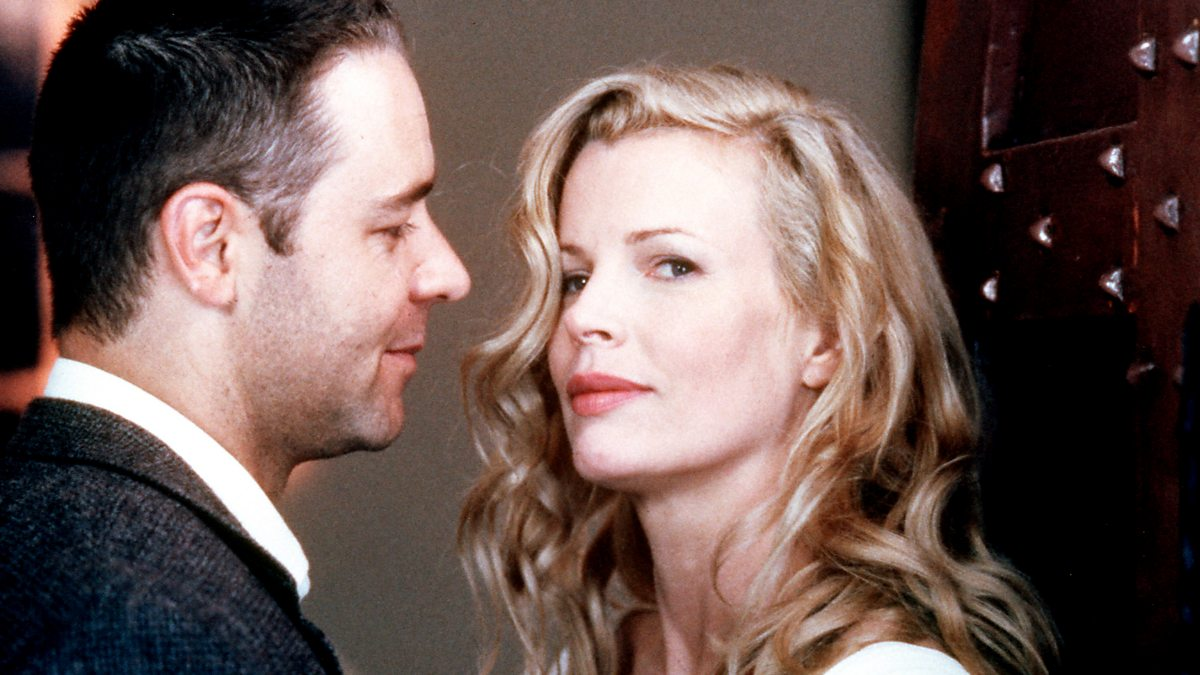
The latest episode of Highbrow Lowbrow is an Olivia de Havilland Special. We look at two of the most intense and powerful films de Havilland made in her long, illustrious career. Dan’s highbrow pick is The Snake Pit, a gruelling portrayal of mental health that was generations ahead of its time.
My lowbrow choice is Lady in a Cage. One of the first home invasion films, this little-seen horror gem is proof that de Havilland could turn her hand to anything.
You can listen to the full episode here.

Trapped in a lift with some uninvited guests – Lady in a Cage
ELLROY READS – The Lady in the Lake by Raymond Chandler
For the latest episode of ELLROY READS I look at the influence of Raymond Chandler on James Ellroy’s work. Ellroy fans will know that the Demon Dog has been merciless in tearing to shreds Chandler’s reputation as the master of the hardboiled private detective. However, this has not always been the case and, early in his writing career, Ellroy acknowledged Chandler as a major influence.
I hope you enjoy the episode, and please comment, subscribe, share, like and so forth.