Highbrow Lowbrow: After Hours vs Crank
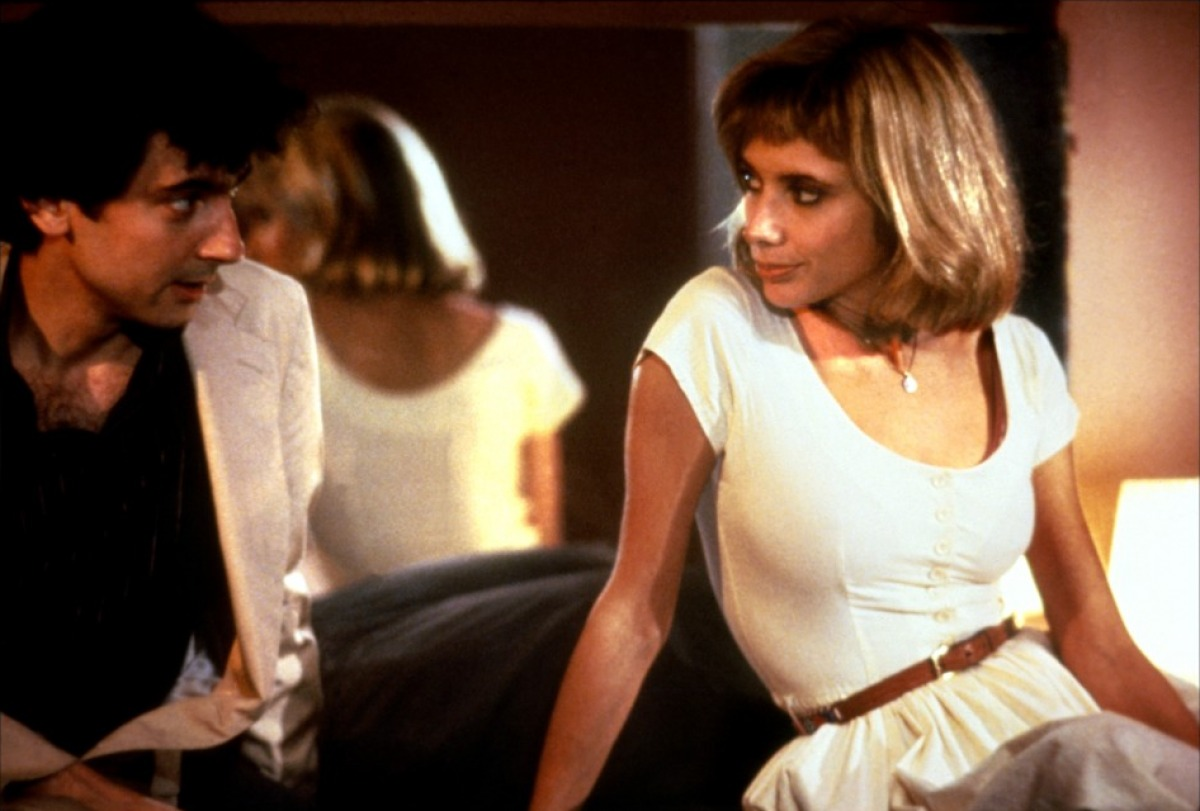
In the latest episode of Highbrow Lowbrow we go down the rabbit hole and look at two movies where the leading characters are plunged into a surreal nightmarish world where the conventional rules of society no longer apply.
I talk about my favourite Martin Scorsese film After Hours, in which Griffin Dunne’s potentially romantic assignation descends into a Hellish night trapped in SoHo. My podcast co-host Dan Slattery discusses Crank, in which Jason Statham has to maintain his testosterone after being poisoned by a Beijing cocktail.
You can listen here, and let us know what you think of our choices.
Mr Campion’s Mosaic by Mike Ripley – Review
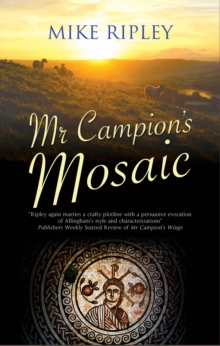
The year is 1972. Albert Campion is the guest speaker at a meeting of the Evadne Childe Society. The meeting is derailed by the news that someone has tried to kill the lead actor in a TV film adaptation of Childe’s novel – The Moving Mosaic. Campion is perplexed: Usually people want to kill actors after they give their performance. He agrees to investigate and soon finds himself plunged into a sordid world of bed-hopping and spouse-swapping thespians. It gives new meaning to the word “luvvie”. While visiting the film set in Dorset, Campion finds the mystery is complicated by the presence of some local ghosthunters, ‘The Prophetics’, who are trying to commune with the victim of a shootout between American soldiers during WWII. The Kingswalter Massacre was hushed up for fear of damaging relations between the Allied Powers. The final complicating factor is the existence of an impressive mosaic, the myriad design of which could be a metaphor for the elaborate plot-lines Ripley interweaves in this novel.
Mr Campion’s Mosaic is historical fiction at its best, as it invites us into a world which, while only fifty years ago, now feels as though it has vanished forever. It was a time when WWII veterans were numerous and the events of that conflict still resonated, not just in political but in personal ways. Actors were hellraisers, in and out of the bedroom. And there was debate among TV producers whether audiences had the patience to watch a feature-length detective drama! As they were soon to discover, no one ever went broke underestimating television audiences love of a good mystery. I found myself racing towards the conclusion to see how Ripley would tie it all together, and particularly towards the afterword Ripley includes to his Campion novels, which explains some of the references littered throughout the text. The Kingswalter Massacre, for instance, is based on the Kingsclere Massacre.
If you are unfamiliar with Mike Ripley’s Campion novels, then take my advice and treat yourself to a copy of Mr Campion’s Mosaic.
A marvellous book.
Skin Flick by Woody Haut – Review
A group of young friends are enjoying a carefree night in Pasadena in the early 1960s when suddenly their pleasant evening is interrupted by a large police presence on the streets. While ushering the teens away, an overly talkative police officer reveals that a woman has been murdered and the suspect is loose in the area. This fires the teens’ adolescent imaginations. Sure enough, they soon discover a man cowering behind a trash can down an alleyway. Assuming him to be the murderer, they savagely assault the man and crush his head with a rock, leaving him for dead.
This horrific event will define the lives of everyone involved, from the active participants to those that looked on unable or unwilling to stop it. As two decades pass, the friends drift apart, taking different paths in life: one becomes a cop, another a preacher and the main protagonist Billy, a modestly successful freelance journalist.
One day, Billy is contacted by Cassie, an old girlfriend. She wants him to use his investigative skills to help locate her teenage daughter who has suddenly vanished. Billy is hesitant at first, but he agrees to help for old times’ sake. After all, he’s had periodic romantic entanglements with Cassie and suspects he may actually be the father of the girl. As with the best noir tales, what begins as a somewhat reluctant assignment spirals into an all-consuming obsession. Billy is forced to confront the friends he was with the night a man was beaten to death twenty years earlier. He interviews Cassie’s ex-husband, a deadbeat poet who tacitly admits that he abused the missing girl. He interviews his friend who became a fire and brimstone (and sexually confused) preacher. He tries to recruit the support of his old pal who has become a terse, cynical cop. His passion for Cassie is reignited, even though she has become a ruthless businesswoman cashing in on the 80s property boom and embodies everything Billy detests about Reaganomics. Before he can judge his friends though, Billy is about to descend into his own personal hell. A nightmare from which it is far from certain that he will ever emerge.
I am sent copies of many newly published books… more than I’ll ever have chance to read, let alone review. But when a copy of Skin Flick arrived, and I saw it was the latest novel by Woody Haut, I knew it was going to be a book I would devour. I read it in two sittings. Would have finished it in one, were it not for the inconvenient fact that I had to go to work. Woody is a bona fide noir expert who has written several seminal works on the genre. His previous novels Cry For a Nickel, Die For a Dime and Days of Smoke were both superb. I’ve known Woody for several years as he was the guest speaker at the James Ellroy: Visions of Noir conference I organised at the University of Liverpool. In fact, there are strong parallels between Skin Flick and elements of Ellroy’s work. The fatal assault on the man hiding behind a trashcan reminded me of Ellroy’s Blood on the Moon, in which a horrifically violent event between adolescent youths reverberates through the decades, with equally violent results, for all of the main characters. But the stronger influence here is probably David Goodis, in that Haut doesn’t need a detective protagonist to unravel this tale of intrigue. Prepare to be sucked into Billy’s first-person narration as he recounts, in a form of noir poetry, the emotionally desolate landscape of eighties America and the fatalistic lives of the characters trapped in it.
Skin Flick is a modern noir classic.

Highbrow Lowbrow: The Hit vs High Fidelity
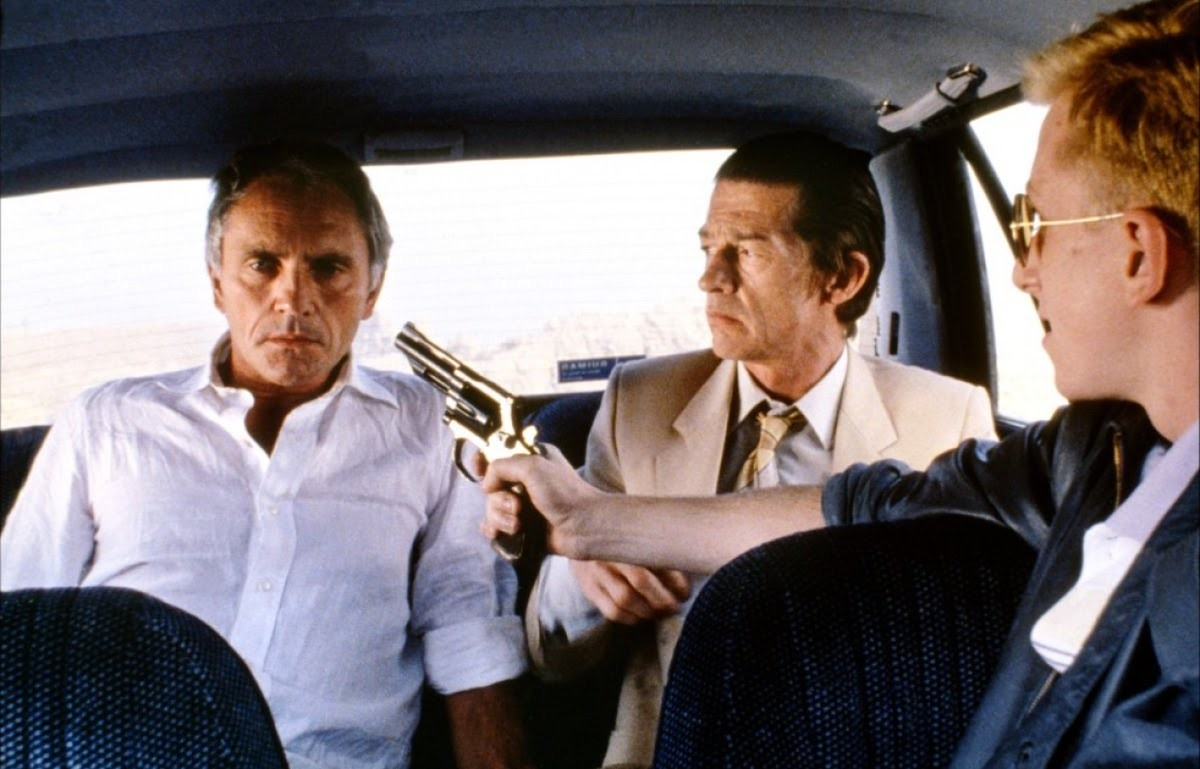
In the latest episode of Highbrow Lowbrow, I discuss the classic British Gangster and Road movie The Hit, and the role it played in revitalising the acting career of sixties icon Terence Stamp. My podcast co-host Dan Slattery argues that High Fidelity deserves a place in the pantheon of great movies about music. Both films were directed by Stephen Frears, and we talk about his eclectic career.
You can listen here. Enjoy!
In the Dark was an extraordinary internet drama that was broadcast (or should I say uploaded) onto YouTube between April and July of 2007. The drama focuses on Louise Paxton, a young woman who moves from Norwich to London to begin an exciting new life. The initial videos are fairly innocent. They show Louise having a farewell party with her friends in Norwich and then enjoying her new home. But pretty soon this idyllic life begins to fall apart. Louise begins to suspect that she is being stalked, and unsettling incidents in her flat appear to confirm this.
The video series was directed by Andrew Cull, who, working with a low-budget used practical effects with remarkable results in heightening the suspense of the drama. But the real star is Louise herself. Her video diaries are heartbreaking. She is increasingly scared, exhausted and always sympathetic. When the videos first came out, YouTube was in its infancy and the internet was awash with speculation that the videos were genuine, and even years later some viewers are still taken in by the story.
In the Dark was, of course, a hoax, or a drama, whichever label you prefer. It wasn’t real. I played a role in bringing this to light when I revealed the character of Louise Paxton was played by the actress Zoe Richards. I subsequently interviewed Andrew Cull who went on to direct the film The Torment (also known as The Possession of David O’Reilly) and is now a novelist based in Australia. For some time, I’ve been trying to get in touch with Zoe Richards. Her performance as Louise is heartrending and is key to the enduring appeal of In the Dark. Zoe Richards went on to play roles in Get Him to the Greek and Mr Selfridge. I was delighted when she agreed to be interviewed by me about the experience of playing Louise Paxton:

Interviewer: How did you first become involved in the production of In the Dark?
Richards: It was one of the first auditions I went to when I came back to the UK after studying at Lee Strasberg (Lee Strasberg Theatre and Film Institute) in New York. I signed up to an online audition website. I was working six nights a week in a bar in Soho and auditioning for anything and everything in the daytime.
Interviewer: Did you bring a lot of your own personality and experiences to the character of Louise, or would say you are two very different people?
Richards: I experienced a stalker when I was eighteen years of age at university. We had to get the police involved. Working on In the Dark made me feel like I almost made a tribute to women like me. Scared to leave their homes. I wanted to be a part of something that made people aware of it.
Interviewer: Were the videos tightly scripted or did Andy Cull allow room for improvisation?
Richards: There was a producer and writer/director. I always took instruction from them but it was a fluid creative project. So I was allowed to bring my training from Lee Strasberg in. As naturalistic as possible. I wasn’t involved in the streaming or real time posting of the project. That was all the mastermind of Cull. He had a vision. And executed it well.
Interviewer: The drama is an intense viewing experience. Was it an exhausting experience to film?
Richards: No. I was hired for a two week period. Paid expenses for travel from Victoria (where I was living) to Streatham where we filmed the project. I made no profit. I was trying to get a showreel together after finishing Drama School in New York.
Interviewer: Did playing Louise Paxton have a beneficial impact on your career?
Richards: No. I did have to audition for The Torment after In the Dark. I gained the lead female role. I only realised it had gained gravitas after receiving your message over twelve years later recently. I had no idea some of the videos had over 600 thousand views on YouTube. Well done Andy. The writer is the star not the actor.
Zoe is too modest. Her performance as Louise Paxton is stunning and will sear its way into your brain. Watch In the Dark and prepare to be emotionally haunted.
Highbrow Lowbrow: Sexy Beast vs Shoot ‘Em Up
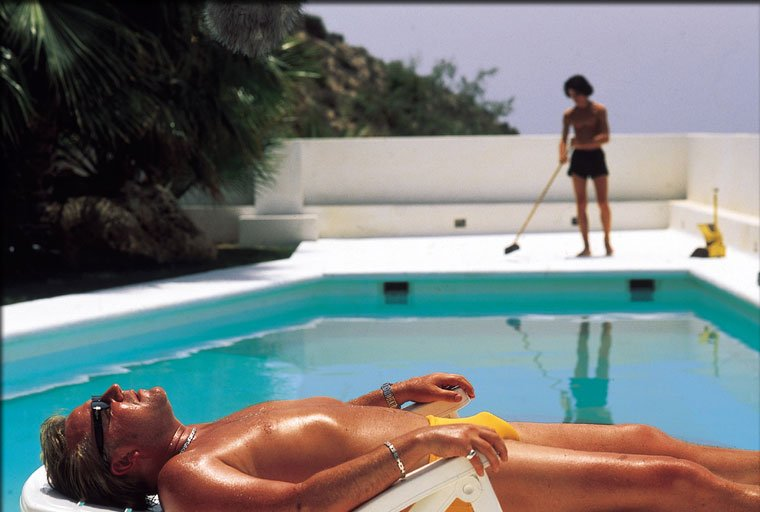
The latest episode of Highbrow Lowbrow (our ninth episode so far) is now available. In this one I argue that Sexy Beast (one of my favourite films) is the last truly great British gangster film. My co-host Dan Slattery makes the case for Shoot ‘Em Up as being the best film to spoof the action genre. You can listen here, and let us know what you think of our choices.
Highbrow Lowbrow: Das Boot vs Under Siege
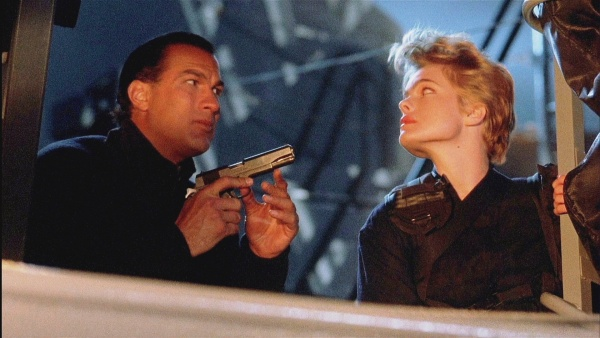
In the latest episode of Highbrow Lowbrow, Dan Slattery has the highbrow choice and discusses the merits of the classic wartime film Das Boot. Whereas, I argue for the lowbrow, but no less enjoyable, action film Under Siege. You can listen here. Enjoy!
The Blood Ogre: The Hellish Menace Beneath the House Doc Savage Built by Craig McDonald – Review
There are few figures in American literary life who know more about the history of pulp fiction than Craig McDonald. In his series of novels featuring Hector Lassiter, McDonald created an extraordinary pulp history of the twentieth century, mixing fictional characters with historical events and real-life figures in the world of literature, showbiz and politics.
In his new novel The Blood Ogre, McDonald is on familiar territory, but he adds a supernatural twist and the results are devilishly good. Indeed, there are moments here that evoke vintage Clive Barker.
The story revolves around the reputation of two remarkably prolific writers, Lester Dent and Walter B. Gibson. Dent suffered a nervous breakdown and early death in 1959, perhaps brought on by the impossible schedule of churning out Doc Savage novels by the dozen and averaging two million words a year on his typewriter. In his final days, Dent had hallucinations in which he would see and interact with Doc Savage characters. In 1965, Doc Savage and The Shadow novels are enjoying renewed popularity. The Shadow author Walter B. Gibson has a knack for publicity rooted in his parallel career as a magician. People start witnessing a black-clad figure looming around the Greenwich Village house where Gibson penned the final Shadow novel in 1949. Gibson claims it is a ‘living mind-projection’ of The Shadow. But if a hero can rise from the pages of an authors literary output, then what other, more sinister, characters will follow him?
McDonald’s knowledge of this material is unsurpassed, and he seamlessly merges Doc Savage and The Shadow-like narratives into The Blood Ogre, in a story that still feels bracingly original. As a metafictional text, there is some discussion of the mechanics of a pulp story. But it is never done in a dry or distant manner. Rather, McDonald invites the reader to ponder why we love these stories. How they remind us of childhood dreams and fading generations, and how the stories evolved over the decades to reflect changes in American culture.
The Blood Ogre is an affectionate tribute to a bygone era which might just earn a place in readers’ hearts so that is talked about long after the present generation has gone. No author can ask for more.

Highbrow Lowbrow
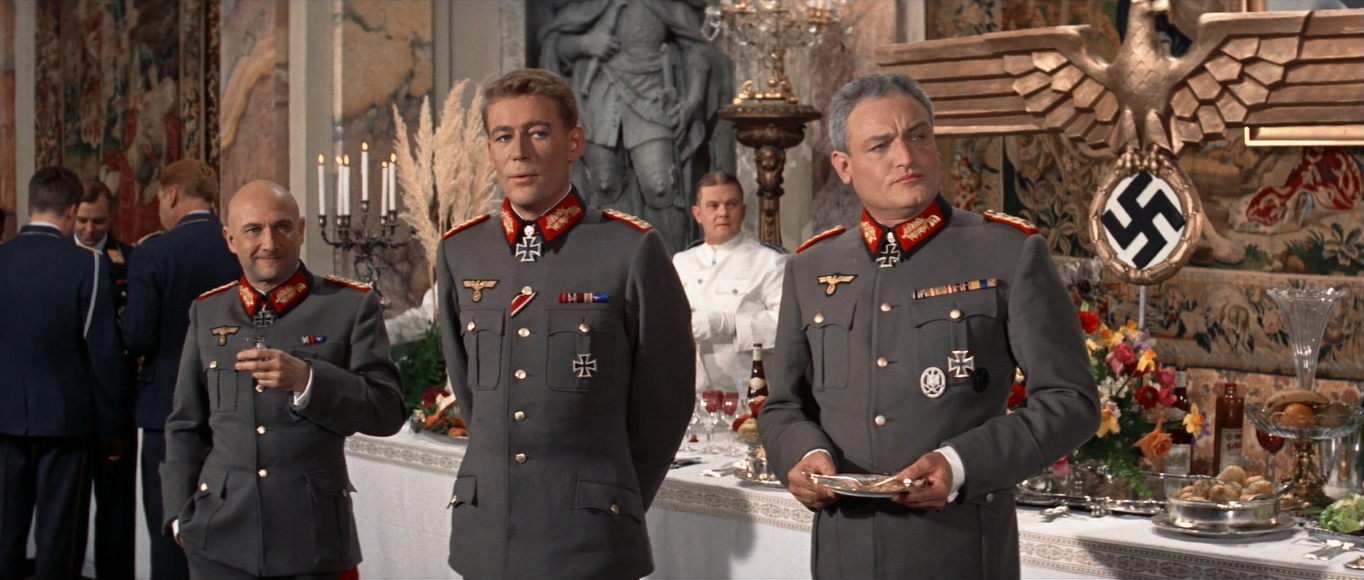
The latest episode of Highbrow Lowbrow is now available. My podcast co-host Dan Slattery and I look at two very different war films. Dan’s pick is Rogue One, possibly the best film in the Star Wars franchise. I discuss the World War Two murder mystery The Night of the Generals. An underrated gem.
You can listen here. Enjoy!
A James Ellroy Playlist: Death of a Composer
In the following post I am going to look at how James Ellroy portrays both real-life and fictional composers in his writing. Buckle up for some tales of talent and tragedy…
Requiem for Danny
The Big Nowhere contains many musical references. Towards the end of the novel, the dying Dr Saul Lesnick is being interrogated by Buzz Meeks about his patient, the recently deceased jazz musician Coleman Healy. Through his description of Coleman’s music, the reader gets a glimpse of how Ellroy might compose. Healy had been working on a piece titled “The Big Nowhere”, the same title as Ellroy’s novel:
Coleman was fighting his urges inchoately, with music. He was working on a long solo piece filled with eerie silences to signify lies and duplicities. The riffs would spotlight the unique high sounds he got with his sax, loud at first, then getting softer, with longer intervals of silence. The piece would end on a scale of diminishing notes, then unbroken quiet – which Coleman saw as being louder than any noise he could produce. He wanted to call his composition The Big Nowhere.
With such an aura of death hanging over these characters, it’s not surprising that Ellroy views music as elegiac. But this can be both solemn and exhilarating, as expressed in the stark high and low sounds that Coleman, a killer himself, produces with his sax. However, Coleman’s Big Nowhere is forever unfinished and deliberately meaningless. Ellroy’s sense of music is more closely tied to a narrative: crime fiction resolves mysteries and answers questions. Of course, the meaninglessness itself might be the answer, as Ellroy views Coleman’s murderous personality to be devoid of morality, empathy and ultimately just empty.
Jean-Louis Marchand and Delphine Baudet composed the album Requiem for Danny based on The Big Nowhere. In November 2019, while Ellroy was touring France, Marchand and Baudet pulled off a major coup when Ellroy agreed to read from the novel while the orchestra was performing Requiem for Danny onstage. Marchand and Baudet captured the brilliance of Ellroy’s prose and, at times, the bleakness of Coleman’s existence.
The track below is titled ‘Suicide’ and concerns the death scene of Danny Upshaw. Once again, music and death merge seamlessly in Ellroy’s world. May the Blues Sing Thee to Thy Rest…
Uptown Blues
In an essay titled ‘Ellroy’s History – Then and Now’ Ellroy describes the setting of his novel Perfidia, ‘rogue cops screw movie stars. Jimmie Lunceford is gigging at the Trocadero. Dig his eerie “Uptown Blues”‘. Ellroy had previously spoken of his love for Jimmie Lunceford’s music and “Uptown Blues” in particular on the BBC Radio 4 programme Inheritance Tracks. The concept of the show is that the guest picks one track they inherited from their parents and one track they want their children, loved ones or future generations to inherit from them.
Ellroy speaks knowledgeably about both the creative and technical aspects of the music which makes “Uptown Blues” such a powerful piece, ‘It has a haunting alto sax solo by Willie Smith, a haunting trumpet solo, and it’s almost a primer on the quiet elegiac mournful power of the Blues’
Ellroy chose “Uptown Blues” as the piece he hoped the children of his then partner would inherit from him. Lunceford died of a heart attack, shortly before a scheduled performance at The Bungalow Dance Hall in Seaside, Oregon. He was only 45. ‘He had a bum ticker’ Ellroy rued in Inheritance Tracks.
The composer dies. His music lives on.
Love Me Fierce in Danger: The Life of James Ellroy is available to pre-order from Bloomsbury. You can also pre-order a copy from all good booksellers.


 The Venetian Vase