James Ellroy: The Eye of This Storm
Now that some time has passed since the publication of James Ellroy’s This Storm, I thought it would be a good moment to revisit the novel and reassess it with some objective distance. To do this, I have been burrowing in the files and plunging deep into my subconscious.
One memory stood out. It was from when I saw Ellroy speak in Manchester during his 2014 publicity tour for Perfidia. Ellroy asked the audience whether any of them knew or admired the work of the English composer Havergal Brian. No one, including myself, in the largely British audience had heard of Brian. I was intrigued. Ellroy’s admiration for composers such as Anton Bruckner and Beethoven is well-known. He keeps a bust of Beethoven on his writing desk. But I had never heard him mention the name Havergal Brian before. I can remember Ellroy gushing about what he most admired about Brian’s work. Havergal Brian enjoyed periodic success in his music career, but by the end of his long life he was working in relative obscurity. Unlike other British composers such as Benjamin Britten or Ralph Vaughan Williams he did not enjoy the privilege of a middle or upper-middle class background or the patronage of the establishment to further his music career. He was noted for being prolific. He was still composing well into his ninth decade. And despite his lack of critical recognition his music was epic and ambitious – The Gothic is one of the longest symphonies ever written. Given the logistical challenges it presents, the work is rarely performed and is by no means universally admired by music critics.
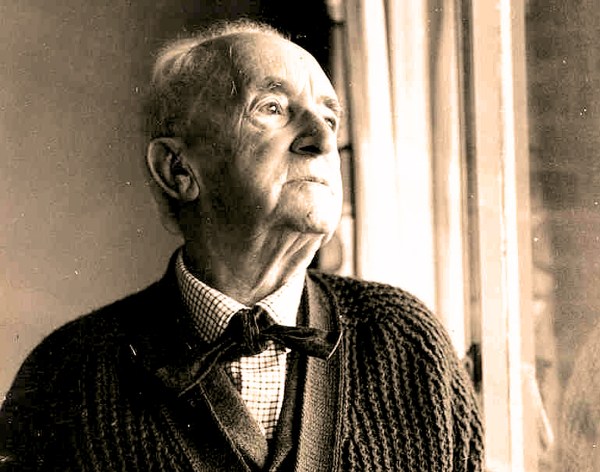
Havergal Brian
The more I read about Havergal Brian and listen to his music, the more I see how his ghost looms large over Ellroy’s recent writing. Like Brian, Ellroy’s family background was modest. He never graduated from an Ivy League university to write about middle-class problems in Suburban America. His talent was driven by his burning obsessions. Ellroy celebrates his seventy-second birthday this week and his books continue to get bigger, increasingly ambitious and more challenging to readers and critics alike. Ellroy is too competitive and well-established in his field to slip into obscurity in the same way that Havergal Brian did. But part of Ellroy appreciates how Brian, through his constant outpouring of classical music, fulfilled his Romantic destiny to ‘rage, rage against the dying of the light’.
If the work of Havergal Brian has been a hidden influence on Ellroy’s work then the references to WH Auden in This Storm were, at times, mystifying. The novel repeatedly employs the phrase ‘This storm, this savaging disaster’. It is supposedly an Auden quote, but the source is never fully made clear. Kay Lake writes in her diary ‘Joan (Conville) quoted it repeatedly and never ascribed a specific source.’ Ellroy has said of the Auden quote:
It’s an interpolation, a fiction. There is a letter WH Auden wrote to his friend Christopher Isherwood and I remember taking a look at it years ago and he used “this savaging disaster”, which, to me, felt incomplete. I wanted a title for this book that reflected my themes, reflected LA in winter and reflected the Pacific coast and I came up with the words “this storm”, which I felt I’d seen somewhere previously. In the book I attribute “this storm, this savaging disaster” to Auden even though he didn’t write that complete line.
As Peter Strempel has pointed out, Ellroy’s memory of Auden’s words has put the line through several permutations. He took it from a poem Auden wrote to his friend, and sometime lover, Christopher Isherwood titled ‘To a Writer On His Birthday’. The line actually reads ‘Who gives us nearer insight to resist / The expanding fear, the savaging disaster?’ The fluidity of memory and influence in Ellroy’s writing seems apt given the difference between the original LA Quartet and the recent novels. Personally, I don’t think once the new Quartet is finished Ellroy will have written a fully coherent fictional history of the US from 1941 to 1972, which he claims is his aim. How will he reconcile Dudley Smith’s parenting of Elizabeth Short with his absence from her murder investigation in 1947 if, as Ellroy insists, the new Quartet ends on VJ Day, 1945?
The new novels are more complex and dreamlike than that. For the first time the reader is in Dudley Smith’s head and it’s a strange place to be. With his opium habit, kimono fetish, blood-drenched memories of the Irish War of Independence and communion with a mystical wolf, Dudley is not a reliable character to make historical revelations. This might irk readers who usually revel in Ellroy’s ability to create and shape a plausible secret history but, upon revisiting This Storm I found that once I accepted these compromises I began to enjoy the text far more. Oh, and another thing, ‘The Expanding Fear’ might be a great title for volume three in the Quartet.
This Storm is Auden rewritten and Havergal Brian writ large. It is also quintessentially Ellrovian.
James Ellroy’s Wisconsin Police Gazzette: Milwaukee Vice
For the following post we welcome back to the blog James Ellroy aficionado and all-round good guy Jason Carter… This article is the sixth instalment in Jason’s series exploring the connections between Ellroy and the true crime history of Wisconsin.
Milwaukee first felt the corrosive effects of the Great Depression in the beginning of 1930. The national wave of bank failures trickled down to local businesses who began layoffs that would eventually affect more than 50,000 workers over the next three years. Foreclosure, eviction, homelessness and malnutrition skyrocketed.
Many families turned to public assistance, and the private charities and government officials overseeing the distribution of this welfare were quickly overwhelmed. Those who did receive aid often complained that it was grossly insufficient.
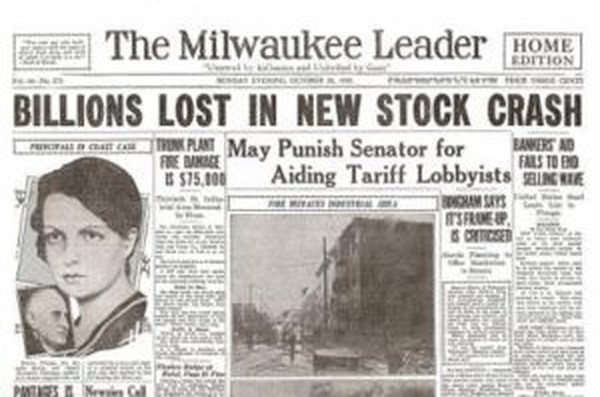
The Milwaukee Leader Reported on how the Cream City Economy was Severely Affected by the Depression
Vincent Crupi ran vice for the Guardelebene family, particularly the brothels of Milwaukee’s East Water Street. In 1930, reports surfaced of Crupi starting fires to eliminate competition from neighboring brothels. Detectives Ralph Hostettler, John Carnell, and Patrolman George Broder raided the Green Light Brothel in October, 1930. Crupi was arrested for running the brothel and released on $750 bond. Four local girls were arrested for prostitution. The very next evening, the Milwaukee vice squad raided five establishments and made 13 arrests. Crupi was arrested yet again for running a brothel.
Following the raids, Police Chief Jacob Laubenheimer ordered Detective Sergeant Burt Stout removed from the head of the vice squad and placed on regular night duty. Stout was charged with neglecting official duty following allegations that he protected Crupi. The accusations alleged that Stout told the district attorney to drop his case against Crupi.
Chief Laubenheimer both defended and berated his detective when speaking to the press: “In the 20 years that Detective Sergeant Stout has been connected with the vice details, he made the acquaintance of many underworld habitues, obtaining information from them which greatly aided the department in arresting other criminals… [However,] he failed to use good judgement. […] To permit a house of ill fame to operate merely because a lead might be obtained that would enable the police to arrest other criminals is not, in my judgement, good police work.”
As native Milwaukee chronicler Gavin Schmitt details it, the Milwaukee vice squad then underwent a complete shakeup: Detectives Hostettler and Carnell were made permanent vice officers, while all others involved in the raids were replaced with 10 new officers. Sergeant Arthur Schiefelbein was appointed the new head of vice and was ordered to report directly to Inspector Joseph Bernard Drewniak. Chief Laubenheimer said internal investigations revealed that favoritism was shown in the vice squad to certain repeat offenders, and especially to Crupi.
To eradicate the favoritism, Laubenheimer ordered that offenders only be arrested once under city ordinances, which carried with them nominal fines, while officers could respond to repeat arrests with state charges, which implied jail time.
The police board, led by Inspector John Bauschek, met to hear testimony on the ousted officer Burt Stout. Though Crupi was called to testify, he never appeared. Stout himself testified for more than two hours and was allowed to cross-examine other witnesses. The police board ultimately found Stout guilty of incompetence and neglect, and Chief Laubenheimer, who held the final decision, demoted the 18-year vice veteran.
Crupi was convicted on charges of running a brothel (known in court jargon as “operating a disorderly house”) in December, 1930, and sentenced to a term of 1-3 years in the house of correction. The vice lord’s time there would earn the House of Corrections the dubiously apt moniker “House of Corruption”.
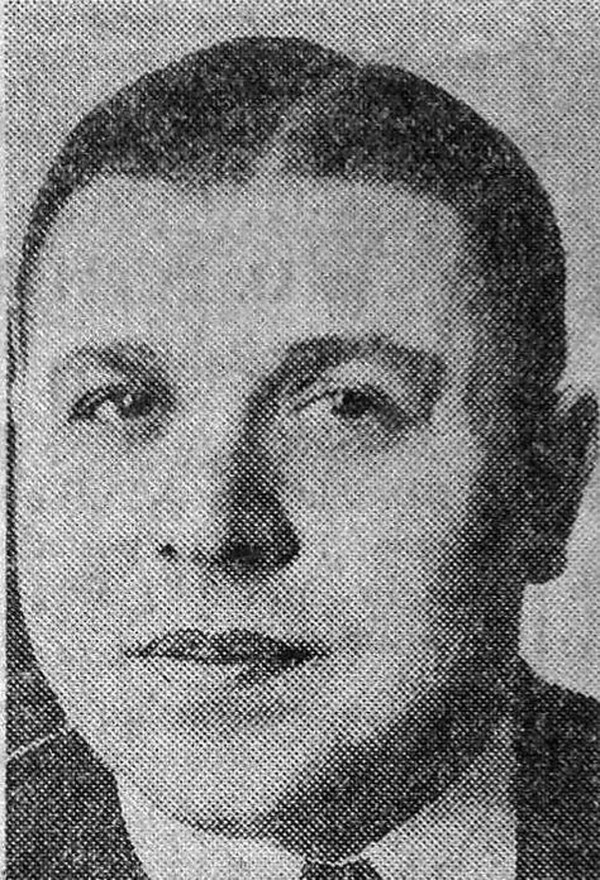
Mafioso and Vice Lord Vincent Crupi
Chief Laubenheimer was content with the verdict, saying afterwards, “I hope [this] will act as a warning to all the other vice mongers in the city.”
As Gavin Schmitt notes, former guard Charles Lappe kept a diary of daily activities for ten years. It was in these pages where Lappe documented frequent scandal in the house of corrections, including a wild 1933 party on New Year’s Eve involving a nude woman and large makeshift fans.
The next day, guards painstakingly cleaned up the debris, which included broken glass from 42 smashed windows and countless broken benches and chairs. As you may expect, Vincent Crupi sat at the epicenter of the chaos…
Former inmate Joseph Gapinski was subpoenaed before the Milwaukee County Board Committee on Institutions. After serving 38 months in the house of correction on a robbery charge, he began telling stories of inmates receiving favorable treatment through bribes. According to Gapinski, guards were paid to smuggle love letters out of the prison for Crupi, who in turn supplied the guards with liquor and tobacco. Also, Gapinski stressed in his testimony that House of Corrections Inspector William Henry Momson was unaware of such daily circumvention.
Inspector Momson was relieved of duty and suspended without pay following Gapinski’s testimony. Civil Service Commission Chief Examiner David Vincent Jennings charged Momson with permitting federal prisoners to leave the workhouse without the proper authority. Specifically, Jennings referenced the allegation that Momson personally chauffeured infamous Green Bay bootlegger “King George” Kolocheski (under the guise of retrieving a deed from a safety deposit box) to Green Bay’s posh Northland Hotel for several wild parties which Momson eagerly participated in.
In response to the testimony, District Attorney William Zabel asked the county board to replace Inspector Momson with Sheriff Joseph Shinner. Deputy Inspector Gillette Benson, Assistant Deputy Matt Ebert, and nine guards were also suspended for misconduct.
It would be far from the last time that scandal tainted the Cream City’s vice squad.
James Ellroy’s Wisconsin Police will return…
James Ellroy’s Wisconsin Police Gazzette: Bullets, blood and beer
For the following post we welcome back to the blog James Ellroy aficionado and all-round good guy Jason Carter… This article is the fifth instalment in Jason’s series exploring the connections between Ellroy and the true crime history of Wisconsin.
Prohibition, which began on July 1st, 1919 proved especially difficult for Milwaukee.
Some of the Cream City’s breweries preceded the 1920 passage of the Volstead Act by as much as 80 years. Most breweries survived the drought by producing soda water, syrups and heavily diluted alcoholic concoctions, known as “near beers.” Mainstays like Schlitz and Pabst even took on entirely new roles, manufacturing chocolate and processed cheese respectively. In 1918, Milwaukee had one tavern to every 230 residents, and all were heavily attended.
The Wisconsin state legislature would go on to pass the Severson Act, mandating that Wisconsin follow the Volstead Act, which itself clarified what alcohols would be considered illegal and what punishments would be assigned for violating the new law.
The proprietors of Milwaukee’s breweries lobbied the U.S. Congress to distinguish between hard liquor from beer, and saloons from the far more benign beer gardens. Their efforts fell on deaf ears.
Federal Prohibition agents struggled to keep the Cream City dry, and Prohibition enforcement eventually lagged. It was thus relatively easy for Milwaukee’s citizens to find liquor by making the drinks themselves, or by frequenting one of the countless roadhouses on the outskirts of the city. While the Cream City’s wealthier residents frequented membership-only resorts on the outside of the city, for locals, the Third Ward became a popular location for bootlegging. Certain elite members of Milwaukee’s Italian Mafia, known as the Padroni, even established an intricate system involving young boys who were tasked with transporting alcohol from Lafayette, Indiana, to Milwaukee.
Federal agents would often do nothing until a public outcry against their lack of enforcement spurred them to action. As complaints piled up, the agents would carry out a highly public raid on several small producers and sellers. Also, the federal agents were constrained by brutally limited budgets. At one point in 1921, there was just one agent for the entire eastern district of Wisconsin.
Arrests were rare, and even when there were arrests, bootleggers never faced serious punishment. In fact, some of the first bootleggers apprehended were sentenced to the city’s workhouse, where they formed a bootlegger’s row, which often held parties involving steaks and whiskey.
Most of Milwaukee vehemently opposed Prohibition and it’s not difficult to spot why: In 1918, just one year before the 18th Amendment became law, Milwaukee’s nine breweries employed over six thousand workers, with an annual output of $35 million, quite an enormous sum at the time. The 18th Amendment threatened jobs and livelihood citywide, and The Milwaukee Sentinel even editorialized against its enforcement.
In March, 1920, the Milwaukee Common Council demanded that the American people be allowed to vote on whether the 18th Amendment, which banned the sale and consumption of alcohol across the U.S., should become law. The council also suggested legalizing low-alcohol beers and wines.

Early Milwaukee Mob Boss Vito Guardalabene died on February 6, 1921 from systemic kidney inflammation at age 75. With Little Italy’s crime lord now gone, control of his empire passed to his sons Giovanni and Angelo.
Giovanni in particular hid his illicit activities behind a façade of legitimacy at the Monte Carlo night club, a popular destination during Prohibition known for its extensive liquor selection. Among Milwaukee businesses who broke the law banning the sale of alcohol, Giovanni’s Monte Carlo was one of the most frequent violators.
As native Milwaukee chronicler Gavin Schmitt details it, federal prohibition agents conducted several high-profile raids on the club, but always failed to convince Wisconsin authorities to declare the Monte Carlo a public nuisance, which would’ve banned the establishment from operating.
Milwaukee Police Chief John Janssen resigned in May, 1921 following back to back stokes, ending one of the longest careers in Milwaukee Police history. Janssen would die three years later.
You could say Janssen entered retirement confident about the longevity of his police department, evident by the 22 years he spent grooming his successor, a man whose organizational implementations would bring the MPD national recognition.
Though Jacob Laubenheimer Jr. began his police career at age 19 as a clerk stenographer, police work was in his blood from the very beginning: His father, Jacob Sr. was a Milwaukee police captain for decades, even serving as an Inspector of Police when junior was appointed chief in 1921.
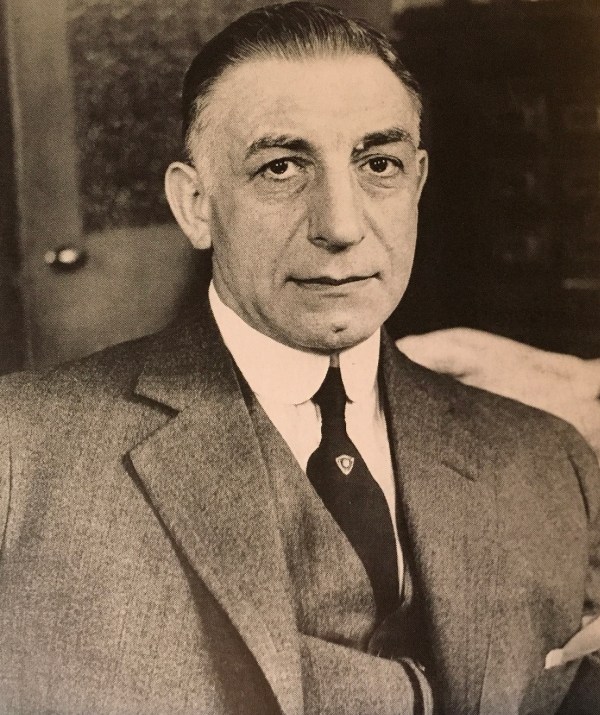
Milwaukee Chief of Police Jacob Laubenheimer Jr
Under chief Janssen’s wise tutelage, the future Chief Laubenheimer served as a foot patrolman in some of Milwaukee’s roughest sections. Laubenheimer would eventually rise to detective before becoming the chief.
Giovanni Guardelebene was arrested in October, 1926 for liquor violations. Prohibition agents from out of town had collected evidence against him the previous month. Milwaukee’s own prohibition agents were so well known in the Italian community, that a “grapevine telegraph” was used to warn of a coming raid before agents even stepped in the door.
Giovanni’s brother Angelo was also arrested, and Milwaukee’s newspapers called the arrests the Feds’ opening salvo towards drying up the Third Ward, which was renowned for ignoring liquor laws. The Milwaukee Journal even proudly proclaimed “The Third Ward is dead.”
Prohibition was a violent and painful era for Milwaukee, and Gavin Schmitt gives us an example of just how tumultuous times were: Serbian immigrant Anthony Kuzmanovich had worked in the saloon business since arriving in Milwaukee in 1913. In June, 1927, Prohibition agents seized six half-barrels of spiked beer from Kuzmanovich’s Te Kay Café, and arrested Kuzmanovich and his bartender. “Spiking” beer meant inserting a needle through a cork to add raw alcohol to otherwise non-alcoholic beverages. Kuzmanovich refused to divulge his suppliers when interrogated, and was sentenced to 8 months in the workhouse.
Less than a month after his release, Kuzmanovich was gunned down with a sawed-off shotgun fired from a car window just a block from his home. Milwaukee detectives Frank Burns, John Zilavy, and Ray Carlson responded before handing the case over to Sheriff Charles Frank Schallitz, a former brewery manager who famously campaigned on the slogan “I don’t want any dry votes.”
Sherriff Schallitz felt Kuzmanovich’s death could be part of a “beer war” between Milwaukee and Chicago. The Milwaukee Police had even received anonymous letters regarding Kuzmanovich’s beer dealings and felt they originated from a business rival.
Though Kuzmanovich’s murder was investigated exhaustively, no one was ever arrested for it.
James Ellroy’s Wisconsin Police will return …
James Ellroy’s Wisconsin Police Gazette: 1917’s Dark Legacy
For the following post we welcome back to the blog James Ellroy aficionado and all-round good guy Jason Carter… This article is the fourth instalment in Jason’s series exploring the connections between Ellroy and the true crime history of Wisconsin.
In September, 1917, Italian immigrant pastor August Giuliani instigated a frenetic chain of events that would culminate in one of the Milwaukee Police Department’s darkest days… Giuliani, a Methodist convert allegedly excommunicated from the Catholic Church, led a flock of Protestant Evangelists from Milwaukee’s Italian Third Ward to the smaller Italian alcove of Bay View, intent upon encouraging local residents to support America’s involvement in World War I.
Though Giuliani was met with resistance from a crowd he termed anti-war anarchists, the former priest was more unwelcome, according to journalist Robert Tanzilo, because of his defamation of Catholicism in his attempts to convert local Italians. When police approached the hecklers, guns were drawn and shots fired as the crowd frantically dispersed. As Tanzilo tells it, “[Bay View Officer John] Wesolowski testified ‘I seen guns coming out of their pockets and didn’t wait a moment, and shots were fired, and I drew my gun and fired into the crowd.’ Officer [Joseph] Rydlewicz saw another of the group […] Antonio Fornasier, […] draw a pistol and let off four rounds. The officer and Detective [Paul] Weiler emptied their revolvers, and Fornasier fell. […] August Marinelli […] shot at Detective Weiler from the side and Wesolowski fired on Marinelli, sending him to the ground.”

When the pandemonium finally subsided, two policemen were hurt, two Bay View Italians were mortally wounded, and two more were injured, with one shot in the back. Remarkably, (or perversely, depending on who you ask), Pastor Giuliani and his entire flock survived the carnage unscathed, with the pastor singing an Italian version of “America” totally undisturbed amid the chaos even as bullets whizzed by him. While Detective Albert Templin and Officer Rydlewicz were each grazed by a bullet and suffered minor injuries, Officer Wesolowski would earn the title “the man with the charmed life”, as the riot was the third shooting Wesolowski survived in just two years.
After backup arrived from Central Station, the officers proceeded to an adjacent house which one anarchist had been seen running towards. Ultimately, eleven suspects would be arrested and taken to the nearby Kinnikinic Police Station. A search of the anarchists’ meeting hall produced anarchist and communist literature, including Italian books on the Russian revolution, free love, economics, and agnosticism.
According to Tanzilo, The Milwaukee Sentinel reported that “On the walls of the clubrooms were maps, notably of the northwest, where anarchist activities have hampered government industries…” The investigating officers also found framed portraits of renowned anarchists Gaetano Bresci, Francisco Ferrer, and Enrico Maletesta, and anarchist periodicals, including one from Lynn, Massachusetts known as Cronaca Sovversiva or Subversive Paper.
Incredibly, police asked the riot’s primary instigator, August Giuliani, to translate much of the discovered literature, and the testimonies of the defendants; something UCLA sociology professor Constantine Panunzio seemed to cautiously reference in his 1921 study The deportation cases of 1919-1921: “Even more important than the intelligence of the interpreter, or his ability to properly interpret the alien’s or the inspector’s meaning, is the question whether the interpreter was in any way connected with the prosecution.”
Later, the police canvassed the neighborhood for clues, and were met with stone-faced silence from most residents. Those who would talk quickly described the 11 arrestees as “well read young men who spent their spare time discussing literary issues and social questions of the day.”
Over the next several days, police maintained a dominant presence in Bay View, eventually apprehending 15 more known associates of the anarchists.
Two months after the riot, and just a week before the trial of the eleven primary Bay View defendants was scheduled to begin, a package bomb was discovered at Giuliani’s Third Ward church. Giuliani himself had already departed Milwaukee for Markesan, Wisconsin.
Witnesses described the package as being the size of a half-gallon jar, topped with a small bottle filled with a dark brown fluid. There were metal plates on the package’s top and bottom. A parishioner carried the parcel to the police station, hoping officers would know what to do with it. Tragically, no one took the bomb seriously… The officers present that night were preoccupied with taking the statement of a woman reporting her former boyfriend who had been harassing her.
The explosion was heard for miles. As the Milwaukee Journal reported the next day “Glass, plastering, clothing, arms, legs, papers, covered the floor. A cap from an officer’s head hung on a broken bit of glass in a side window.” Just minutes after, a hysterical citizen demanded the imposition of martial law. “Give everybody a gun and a star, put the town under arms… Kill off all these anarchists.”
According to Robert Tanzilo, among the dead were seven detectives, a sergeant who straddled the bomb as he unwrapped its paper covering, and a police alarm operator on the floor above who was killed by projectiles shot through the floor beneath him. Numerous other officers sustained serious injuries. The massacre would earn the grim distinction of being the largest loss of American police life in a single incident, a record broken only by 9/11.

Firemen from Engine Company No. 1, located across the street, were first on the scene. As the New York Times reported, the systemic destruction “was a shock to even the policemen and firemen, who are used to tragic emergencies.” Detective David O’Brien’s mutilated body was found under a pile of heavy debris. As the Journal reported, positively identifying his body would require the testimony of dozens of his friends and colleagues. Sergeant Henry Deckert was found by the entrance, fatally impaled by a piece of steel. Rescuers would spend three hours collecting the remains of the dead.
Police Chief John Janssen would later tell the Milwaukee Sentinel “I never saw a bomb such as this is described to be… there is no doubt that its manufacture is the work of experts.” Subsequent investigation would reveal that the police had at least two hours to disarm or dispose of the bomb. One of the enduring unsolved mysteries of the Milwaukee police station bomb has always been why no effort was made to dispose of the package even after Sergeant Deckert and several officers believed it to be a bomb.
While news of the blast was deliberately withheld from the riot suspects, the event was front page news to the New York Times, and countless other publications across an America preoccupied with war. Unfortunately, most news organizations treated the event with a rabble-rousing sensationalism. Even Milwaukee’s own Sentinel joined in the fray with sensational headlines declaring “Body of Deckert is blown to bits.”
As Tanzilo recounts, after the bombing, Milwaukee police began rounding up Italians and others in Bay View and the Third Ward on suspicion, working off a list of names provided by Captain John T. Sullivan. Ultimately, more than thirty Italians were detained and interrogated. While similar operations were launched in Seattle and Omaha, even the combined efforts of the federal and local authorities failed to link anyone specific to the crime.
All 11 riot suspects were convicted of conspiracy and intent to kill. Their convictions were later overturned on appeal to the Wisconsin State Supreme Court, who noted that the conspiracy charge was insufficiently proven. Among several key observations, Justice Aad J. Vinje ruled that if a group was planning to attack—and murder—a significantly larger group, most of the attackers would be heavily armed, and yet eyewitness testimony and collected evidence showed the opposite to be true.
Names of the fallen officers are inscribed on a downtown Milwaukee monument to police killed in the line of duty. According to Robert Tanzilo, the monument would itself become one of several pipe bomb targets in 1984.
The 1917 Milwaukee police station bombing remains unsolved, although many of August Giuliani’s parishioners put the blame squarely on anarchists who may or may not have been among those apprehended and tried.
James Ellroy’s Wisconsin Police will return…

James Ellroy’s Wisconsin Police Gazzette: Blue blood
For the following post we welcome back to the blog James Ellroy aficionado and all-round good guy Jason Carter… This article is the third instalment in Jason’s series exploring the connections between Ellroy and the true crime history of Wisconsin.
Milwaukee citizens grew tired of the spoils system maintaining their police department. A delegation was sent to Madison to demand that a state law be passed to remove politics from the police and fire departments. Accordingly, the state legislature established the police and fire commission, a four-person non-partisan body charged with approving all appointments to Milwaukee’s police and fire departments and keeping political influence out. As one of its first directives, the commission established an unprecedented lifetime tenure for its police chiefs.
The first Milwaukee Police Chief to serve under this system was John T. Janssen, who would become famous for ushering in Milwaukee’s professional code of conduct. Janssen became chief in 1888 at age 34, and remained in the position for an astonishing 33 years. A favorite slogan that Janssen used throughout his long MPD career was “crime on Sunday, Waupun [Wisconsin’s state prison] on Monday.” (It is worth noting here that James Ellroy has used an eerily similar slogan to describe Los Angeles: “L.A.–come on vacation, go home on probation!”) As Milwaukee native and police historian George Kelling explains it, prior to the arrival of Janssen, Milwaukee and its police were so corrupt, that Chicagoans by the trainload would regularly travel to Milwaukee for gambling, prostitution and murder, all with minimal police interference.

Milwaukee Police Chief John T. Janssen
It would be impossible to tell the story of Milwaukee’s police without mentioning the Cream City’s dynamic mafia presence. According to native Wisconsin chronicler Gavin Schmitt, the origins of the Milwaukee mafia are unclear, primarily because the subject has not been explored as exhaustively as the Chicago or New York mobs. Also, because the Milwaukee mafia was unaffiliated with their New York or Chicago counterparts, the Milwaukee mafia’s earliest leaders were likely already involved in criminal activities while living in Sicily.
In a March, 2015 interview with Milwaukee Public Radio, Schmitt said “If there’s one thing the mafia loves to do, its prey on innocent people who need all the support they can, so [the impoverished, dilapidated, post-fire Third Ward] was prime picking ground for them.”
Milwaukee’s first mob boss was Vito Guardelebene, an immigrant from Sicily who would later be regarded as “King of the Third Ward”. Schmitt does not mince words when describing Guardelebene’s influence: “If you wanted to do anything in the Third Ward—if you wanted to get a job, if you wanted to get a bank loan, you had to go through him, because he had the connections to make it happen.”

Rare Photo of Milwaukee Mob Boss Vito Guardelebene (on left)
Along with counterfeiting, garbage collection was one of the Milwaukee mob’s primary undertakings. The Cream City’s garbage industry was founded in the early 1900s, around the same time as the city’s massive Italian influx. Prior to this, according to Schmitt, people would drive out of the city with their garbage and burn it. The earliest garbage collectors were all immigrants, and all were hired by mobsters who controlled the garbage collection. As Schmitt describes it, the hiring racket the mob constructed insured a steady stream of desperate dependents… “[The mob] hired the haulers, they hired the dump managers… anybody who wanted that type of job, which was […] everybody arriving off the boat at that point, had to go through Vito Guardelebene.”
The July, 1897 murder of teamster James Soukop instigated massive distrust of Italians among non-Italians, and widened the already cavernous divide between Sicilians and mainland Italians. As Schmitt recounts, one Italian businessman told the Milwaukee Journal that the Sicilians were “Dagoes” [an insulting slur for someone of Italian descent], and “not real Italians.” As the businessman explained it, “I am not proud of the people in this country who are supposed […] to be representatives of Italy. Sicilians have never become loyal subjects of Italy. They were born of a race of cut-throats and brigands who thrive only on crime and live in a condition of squalor and degradation. Brigandage [robbery] still prevails to a large extent on the island, especially under that large-scale organization known as the mafia… The Sicilians in [Milwaukee] are […] treacherous and vindictive.”
The early years of the Italian Third Ward were marred by countless murders, traced to a number of alleged criminal societies. One such society known as the Black Hand, were famous for taunting their extortion victims with multiple letters threatening the destruction of homes and families if their demands weren’t met. “These murders are too numerous and of easy commission, and we will do everything in our power to bring the criminals to justice,” Captain John Sullivan said after a particularly bloody 1911-1912.
As a possible solution, an anonymous Italian Third Warder told the Milwaukee Sentinel that the police department should hire more Italian patrolmen, because the residents possessed a tremendous disgust of authority. “The average foreigner is ignorant of the laws of the United States […] and there exists a prejudice that does not disappear in the first generation.”
Chief Janssen in turn would echo the Milwaukee Sentinel in expressing his own wish that his police force had more Italians. “There is not an Italian in Milwaukee […] with the nerve or desire to accept the best position in the Milwaukee Police Department.”
Janssen claimed that for a decade he offered the job to countless Italians, and was always met with refusal. Janssen said the reason for such persistent eschewal was that prospective Italian officers feared they would be murdered if they joined the department.
As reported in the Milwaukee Journal, the Cream City’s citizens universally agreed that the department should still hire an Italian detective. As attorney Hugo Trost implored, “Milwaukee needs Italian detectives… [more murders] will eventually result if something is not done.” Still, as Schmitt has grimly noted, no Italian joined the Milwaukee Police Department until 1928.
State legislation drafted in 1911 would give Milwaukee’s police chiefs full authority to establish police policies, rules and regulations, a virtual barrier between police departments and elected officials. According to Kelling, this distinguished Milwaukee on a national scale, as no other police department, and no other police chief enjoyed such unrivaled independence. Once appointed, a Milwaukee chief was in a monarchical position to completely dictate police priorities, policies, rules and regulations, all with lifetime tenure, and accountability to no one.
James Ellroy’s Wisconsin Police will return …
The Irishman – Review
Having married a Detroit gal, and by making many trips to Motor City over the years, I’ve heard my fair share of stories about what really happened to Jimmy Hoffa. Most of them have carried about as much weight as a ticket stub to a Detroit Tigers game and can be discarded with the same contemptuous shrug.
On the surface, Martin Scorsese’s Mafia epic The Irishman is just giving the same old hokey promise — to solve the mystery of what happened to James Riddle Hoffa after he stepped outside of the Machus Red Fox restaurant in Bloomfield Township and seemingly vanished off the face of the earth. But when it comes to iconic gangster films, few do them better than Scorsese. His best Mob films have portrayed organised crime through the character of the city in which they are set. Goodfellas is a classic New York film and Casino tells the story of Las Vegas better than the Book of Genesis tells the story of Sodom and Gomorrah. Both Goodfellas and Casino were reasonably accurate depictions of historical events. The Departed took the case of Whitey Bulger as a more allusive inspiration for its Boston setting, but it was just as gripping. The Irishman is Scorsese’s most ambitious gangster film to date. It’s cast of characters include hoodlums from New York to California, and while the story climaxes with the unsolved murder of Hoffa (one of Detroit’s most enduring mysteries) the narrative includes the Bay of Pigs fiasco, the Kennedy assassination and even Watergate. It’s a long road through the darker chapters of recent American history and appropriately enough the story begins with a lengthy car journey to a wedding.
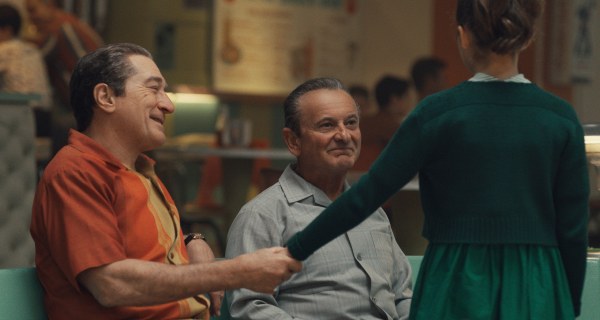
Some of the lighter moments in The Irishman come from Russell Bufalino’s failed attempts to impress Frank Sheeran’s daughter
The year is 1975. Hit-man Frank Sheeran (Robert De Niro) is tasked with driving Mob Boss Russell Bufalino (Joe Pesci) from his home in Pittston, Pennsylvania to a family wedding in Detroit. Both of their wives accompany them and to the outside observer the four travellers might seem like two typically bickering aging couples. But there is a history of dark secrets between these four people. Bufalino’s wife Carrie (Kathrine Narducci) chides him for not letting her smoke in the car, but she is more than happy to wash the blood out of his shirt after he has participated in a Mafia hit. Before they reach the wedding, another notorious murder will take place. Jimmy Hoffa will vanish in Detroit after turning on the Mob Bosses who years earlier had brought him to power. Sheeran, the film’s narrator, is involved in Hoffa’s disappearance, and his life-story involves many murders. From executing German prisoners during the war to taking on murder contracts in later life, Sheeran possesses both ambition and icy ruthlessness. Yet, he is at heart a family man, and his most painful moments come when he abandons his first wife and his daughter stops speaking to him.
Despite not being Italian (but being fluent in the language), Sheeran soon moves up the ranks of organised crime, befriending Jimmy Hoffa (played by a flamboyant Al Pacino) and landing a high-ranking role in the Teamsters Union. Sheeran is either involved in or talks the audience through some of the most infamous murders in Mafia history – Albert Anastasia, Joe Colombo, ‘Crazy Joe’ Gallo etc. When a real-life character first appears onscreen, their eventual fate, usually either ‘murdered’ or ‘died in prison’, appears in captions alongside them. One senses Scorsese’s Catholic upbringing never really left him. No matter how much wealth and power these men acquire, they are all damned in the end. There is one glaring error though in signposting revelations about these historical figures. The Irishman claims Allen Dorfman was murdered in 1979. He met his violent end, in fact, in 1983. This seems like an odd error to make, especially as Dorfman’s murder was dramatised in Casino. At times it does feel like the history is awkwardly stitched together, but what elevates the material is a handful of extraordinary performances. The aforementioned Kathrine Narducci is brilliant as the Lady Macbeth of Mob Wives, and Joe Pesci has never been better as the pensive, empathetic but still ruthless Mafia Don Bufalino. The soundtrack reflects the environment of these characters. Bufalino is a gangster reigning over rural Pennsylvania and the bluesy, harmonica drenched ‘Theme for the Irishman‘ perfectly captures this milieu. The de-aging technology used on the actors is fairly impressive, and certainly no worse than the average Hollywood facelift. The only time I felt nonplussed was a scene where De Niro is beating up a guy who is clearly thirty/forty years younger than him. Even though they’ve de-aged his face, De Niro’s body moves like that of a seventy year old.
The viewer might be inclined to ask, how convincing is The Irishman as history? Short answer, not very. At times the film riffs on, by now debunked, conspiracy theory films such as JFK as it features a split-second appearance of David Ferrie. Also how it presents Hoffa’s murder is nowhere near as convincing as theories put forward in Scott Burnstein’s excellent documentary Detroit Mob Confidential. But this does not stop the film from being dramatically satisfying, quite the opposite. James Ellroy’s American Tabloid, often considered his best novel, features a Hoffa who personally murders an informant with a machete. Few historians would argue that Hoffa would have ever got his hands dirty like this, but it matters little in a fictional portrayal of a very bloody era. Frank Sheeran’s lies have been exposed before, and The Irishman does not always convince as history. It does, however, provide a thrilling, darkly comic and welcome addition to the pantheon great gangster movies.
James Ellroy’s Wisconsin Police Gazzette: Milwaukee on the make
For the following post we welcome back to the blog James Ellroy aficionado and all-round good guy Jason Carter… This article is the second instalment in Jason’s series exploring the connections between Ellroy and the true crime history of Wisconsin.
Deputy Sheriff Herman L. Page was elected County Sheriff in 1853, and chose as his deputy sheriff, a former New York City Police Detective named William Beck.
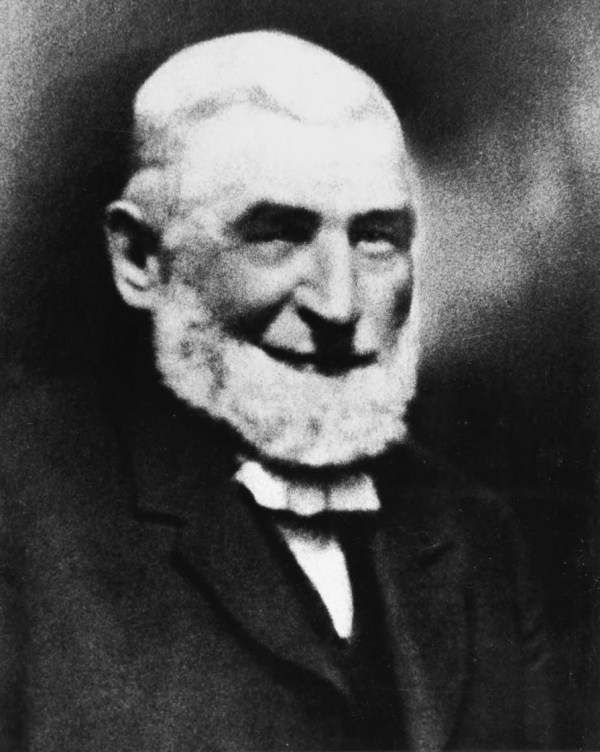
William Beck, Deputy Sheriff of Milwaukee
Though Beck was quite successful at bagging several thieves, Milwaukee’s rampant lawlessness continued, prompting a public outcry that forced city officials to establish a permanent police force in 1855.
According to Milwaukee Police Historian George Kelling, the Milwaukee Police Department, like Boston, and New York City before it, modeled its police force after London’s Metropolitan Police, who received their authority directly from the British Monarchy. While Milwaukee adopted London’s habits of maintaining order, preventing crime and patrolling neighborhoods, unlike London, Milwaukee policing was strictly a local matter unaffiliated with government… This would prove uniquely problematic, according to Kelling, as it kept police close to the concerns of local citizens, but also invited corruption and political manipulation of police departments.
With the unanimous vote of the Common Council, Milwaukee Mayor James B. Cross appointed William Beck as Milwaukee’s first chief of police. This was a typical procedure in the U.S. at the time. Beck selected six men for his force, all chosen for their formidable size and fighting skills. Arresting a suspect in those days typically meant whipping and beating him first, something that almost always earned the arresting officers black eyes, bruised cheeks, split lips, and contusions too numerous to count.
In 1861, mobs staged two disastrous riots. The first was a bank riot led by Milwaukee laborers enraged that the banks refused to accept the script the laborers were paid in. Thinking they were being cheated out of their wages, the angry mob sacked and demolished two banks beyond repair.
Barely two months later, another mob attacked the Milwaukee jail, intent on lynching Marshall Clark and James Shelton, two African American men held for the stabbing death of one man, and the wounding of another. While Shelton escaped (and was later acquitted at trial), the mob lynched Clark. Public blame for the fiasco fell on Chief William Beck, who soon after resigned.
Beck would return as chief from 1868-1871, and again from 1880-1882. The chief of police was an unstable and highly political position. Every time a chief was removed, all his friends resigned en masse fearing termination if they remained. The police department’s low morale even instigated a suspicion that many of the unsolved robberies were committed by policemen who knew they were about to be fired.
In April, 1882, Police Chief Robert Wasson led the department in one of the largest raids in Milwaukee history, aimed at disrupting some of the most frequented brothels in the city. Earlier that day, a pair of undercover officers had posed as out-of-towners prowling for cheap gash. The undercovers later secured warrants against several brothels in Milwaukee’s extensive riverside red-light district. Chief Wasson had planned the raid as the first in a series that sought to cleanse Milwaukee of its seedier citizens. Wasson had been appointed chief less than a month earlier following the election of John Stowell as mayor.

Robert Wasson, Milwaukee Police Chief
Wasson’s police army carried warrants on 15 different houses that night, just a fraction of the estimated 95 active prostitution houses in the city. Within 90 minutes, the raids netted 83 arrestees, and the central station was packed beyond capacity with prostitutes and their male clients. As was typical in these kinds of raids, most of the arrestees gave false names, paid their bail, and vanished. According to the Milwaukee Sentinel, by 2 p.m. the next day, most of the fuck pads scrubbed in the raid were back in operation.
In 1885, Wisconsin State Assembly member Florian J. Ries was appointed chief of police. Under Ries’ command, the Milwaukee Police Department began using mugshots to identify criminals. Prior to taking photos, identifying suspects was entirely dependent on officers’ memories, a difficult task in a city with over 200,000 citizens spread across 20 square miles.
According to native Wisconsin chronicler Gavin Schmitt, Milwaukee’s Third Ward was one of the Cream City’s most crime-stricken areas… As far back as the 1850s, this notorious neighborhood was occupied by poverty-stricken Irish. In 1858 alone, more than 40% of the inmates in Milwaukee’s county jail were Third Ward Irish.
The Irish were driven out in 1892 when a devastating fire at the Union Oil Company incinerated 16 square blocks and destroyed more than 400 buildings, including a fire station. Five people perished in the blaze, countless more were injured, and nearly 2000 were made homeless.

Devastation Caused by the 1892 Third Ward Fire
After being inhabited and rebuilt by Italians, the famously dirty and cramped Third Ward wasn’t much better… Each lot contained 2-3 houses, often with multiple basement compartments and all constructed with dilapidated and decaying lumber. Milwaukee Scholar George LaPiana depicts a scene that all but lays the foundations of a criminal undercurrent: “Four times as many people as should be permitted are often crowded into a given space…a population of workmen who often have no conveniences for cleanliness.”
In 1895, several of Milwaukee’s Methodist ministers admonished both Chief John Janssen and Mayor John Koch for what the ministers saw as a severely dismissive attitude towards the city’s numerous gambling parlors. The ministers accused both Janssen and Koch of allowing the Milwaukee Police Department to be infiltrated by gambling influences. One reverend even claimed that certain beat officers were working as intermediaries for gambling dens, directing strangers to surreptitious saloons and halls, who in turn would reward the officers with numerous kickbacks. Chief Janssen was unwilling to execute raids on these dens, which only further enraged the reverends, who felt that Milwaukee was fast becoming a lawless haven for gamblers, thieves, and assorted rogues. As Wisconsin historian Matthew J. Prigge details it, Milwaukee’s glut of cramped and crowded gaming rooms would each often house as much as 75 patrons or more. Accordingly, the potently ugly mixture of gambling and free-flowing alcohol produced countless fights and deaths by both blade and bullet.
In a prepared statement delivered to Chief Janssen and Mayor Koch, the Methodist ministers felt that Milwaukee’s gambling establishment was responsible for “breaking up homes, crushing hearts, impoverishing the innocent, [and] producing embezzlement, robbery, murder, and suicide.”
Janssen and Koch maintained their position that to act too aggressively against these gambling houses would merely inspire the house proprietors to relocate to yet another area of the city. As Koch would tell the Milwaukee Journal, “There is no occasion for the clergymen making all this fuss.”
Inspector Otto H. Reimar was one of the MPD’s early standouts. According to Schmitt, Reimar developed a reputation for honesty and did not approve of lying to criminals to secure a confession, feeling that such a tactic made him no better than the perps he apprehended. As inspector, Reimar supervised all the detectives and was outranked only by the Chief. Reimar tackled the 1897 daytime shooting death of James Soukop, a teamster for commission merchant E.R. Godfrey & Sons. Soukop was shot once in the intestines, and once in the spine, and died later that evening at the hospital. Investigators would later learn that Soukop’s assailant mistook him for another teamster.
Inspector Reimar told the newspapers that he knew with full confidence the identity of the shooter, but declined to reveal the name. The shooting of James Soukop would be the first mob-related killing in Milwaukee’s history… It would certainly not be the last.
Despite brutal interrogations of several apprehended Italians, the police quickly learned how unwilling the Italian community was to surrender one of its own. The Italians’ reticence only further motivated the police, who fervently believed the shooter was being harbored by his friends.
By the time James Soukop was laid to rest, all the Italians who had been detained in connection with the case were released, as there was no direct evidence linking any of them to the crime.
James Ellroy’s Wisconsin Police will return…
James Ellroy’s Wisconsin Police Gazette: The Wild Midwest
For the following post we welcome back to the blog James Ellroy aficionado and all-round good guy Jason Carter… This article is the first instalment of a new series exploring the connections between Ellroy and the true crime history of Wisconsin.
For many years, James Ellroy spoke vividly of wanting to write a novel about the Wisconsin State Police, partially as a tribute to his murdered mother, Jean Hilliker, a Wisconsin native.
I asked Ellroy about the status of the novel on the very first night I met him in 2009, and the Demon Dog didn’t hesitate for a second: “There is no Wisconsin State Police”. In the decade since, I’ve asked Ellroy about the project several times, and his answer is always the same.
Ellroy is partially correct. While there indeed is no Wisconsin State Police, there is an actual Wisconsin State Patrol, and Ellroy would pay tribute to this police force with the fictional Wisconsin State Police Officer (and serial killer) Ross Anderson from Killer on the Road. Beyond that, it’s tragic that we’re unlikely to see the Dog’s long-promised Wisconsin novel. Ellroy’s idea has always fascinated me, so I finally resolved to dig into Wisconsin’s dark past myself. Stay with me…

Milwaukee belonged to crime from the very beginning. Almost immediately after incorporating in 1845, The Cream City endured a crippling disagreement that nearly eviscerated the young American settlement.
At that time, the Milwaukee River was crossed by three bridges, and the residents on the west side favored only the one which led down Spring Street, allowing easy access to City Hall and the courthouse. Those on the east side preferred the connections convenient to their lakeside docks. When a lost schooner captain plowed his vessel into the bridge at Spring Street, the west side accused the east side of staging the incident to cripple their preferred passage as revenge for the east’s refusal to help finance the bridges they saw as detrimental to their community.
A mob of west side loyalists would in turn destroy the rival Chestnut Street bridge, hacking the crossing to a soggy tangle of mutilated timbers. Those on the east side would go on to demolish the Spring Street Bridge, and another bridge spanning the southern Menomee River, leaving just one passable bridge and the vengeful west siders unable to reach it.
This conflict, known in Milwaukee history as “The Bridge War” was settled by the village trustees, culminating in the historic 1846 signing of Milwaukee’s first charter. The Bridge War is just one example of the chaos that fuelled Milwaukee’s ascent from sparse settlement to booming metropolis. Those who facilitated this ascent were a shitbird mass rabble of peepers, prowlers, pederasts, pedants, panty-sniffers, punks and pimps with nothing to lose whose wanton antics would paradoxically spur the creation of an iconic police force.
Just nine years after becoming a city in 1846, Milwaukee was so inundated with murders, thefts, arson, and prostitution, the city marshal and county sheriff soon found themselves overwhelmed.
Often times, a hapless accident would erupt into all out pandemonium. As Milwaukee historian Matthew J. Prigge recounts in his 2015 book Milwaukee Mayhem, in August 1854, downtown Milwaukee’s dilapidated Davis Livery Stable caught fire, triggering fire alarms in all corners of the city. Volunteer fire companies were still en route to the scene as the flames spread to adjacent structures, including a series of dry and brittle wood-framed store fronts.
Within an hour, an entire city block was engulfed. On several occasions, the heat was so intense, the city’s volunteer squad was forced to turn their hoses on themselves to avoid heat exhaustion. By the time two hundred reinforcements arrived from nearby Racine, the block where the fire originated was a pile of ash.
As an intoxicated crowd of thousands gathered to watch the action unfold, chaos gradually ensued… a fisherman was stabbed during a melee on Huron Street, an exhausted fire fighter drove his ladder car over a man on Wisconsin Street, and all over the city, men seized the anarchy of the day to pilfer the merchandise of downtown businesses. As Milwaukee did not yet have a police force, the fire company arrested more than 40 men and sent them to the jail house on charges of theft and looting.
James Ellroy’s Wisconsin Police will return…
To Sleep with Anger – Review
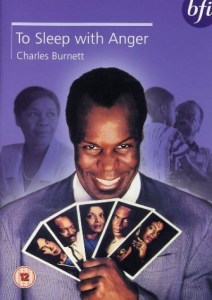 Charles Burnett’s To Sleep with Anger received some glowing reviews when it was released in 1990. It won the Special Jury Prize at the Sundance Film Festival before slipping away into obscurity, largely unseen and very difficult to find. Seldom broadcast on television, the film lacked a decent VHS or DVD release until it was added to the Criterion Collection this year.
So when the chance came for me to see this rare jewel in the cinema, I jumped at the opportunity.
Gideon (Paul Butler) and Suzie (Mary Alice) are an aging married couple living in South-Central Los Angeles. Although they have raised a nice family, they grapple with all of the stresses that such an endeavour entails. Their youngest son Samuel ‘Babe Brother’ (Richard Brooks) is feckless and pliable. Sam’s wife Linda (Sheryl Lee Ralph) detests her in-laws and their old-world ways. Gideon and Suzie resent constantly babysitting Sam and Linda’s kids. Babe Brother has a tense relationship with his older sibling named, confusingly, Junior (Carl Lumbly). All in all it is a normal family with a good life: their problems do not outweigh the values that sustain them.
This all changes when there is a knock at the door and in walks Harry, played with scene-stealing relish by Danny Glover. Harry is a friend of Gideon’s from the old days in the South. He has travelled down from Detroit and is looking for a place to stay. A delighted Gideon and Suzie tell him he can stay, not realising that once Harry is in the house, he will have no intention of leaving. Harry is all charm but a mass of contradictions. He claims to be a modern man and rejects Gideon’s churchgoing ways, and yet he is a believer in talismans and curses. He reacts coldly when a boy accidentally touches his shoe with a brush. Believing it to be bad luck, he spits on the brush to free himself of the hex. However, it’s not long before bad luck falls upon the family who are Harry’s hosts. Gideon inexplicably falls into a coma, and Harry starts to take over the house through a mixture of charisma and demonic intent. There are numerous hints that Harry could be the devil in disguise. A motley bunch of his friends arrive, seemingly out of nowhere, and Sam and Linda are reduced to being Harry’s servants, serving him food and drink and carrying out his every whim. Marriages are strained. Relations between family members start to crumble. One wonders if there is enough goodness left in the household to save everyone from Harry’s spell.
To Sleep with Anger doesn’t look like any other LA-set film you’ve likely seen before. There isn’t a smog-bound freeway, imposing architectural structures like the Parker Center, or the faux-glamour promised by the Hollywood sign. The entire world of these characters is contained within these few streets and suburban houses. Little wonder that Harry’s talk of ‘steaming juke joints’ and folkloric superstition of the Old South seems so alluring to a family inured to the blandness of contemporary life.
On its initial release, not all of the reviews were positive. In a largely complimentary review Roger Ebert admitted to struggling with the film, finding the climax ‘too long in coming’. To my mind Burnett has crafted a deliberately anti-climatic film. The sense of impending doom dissipates in the final half-hour as we move towards a denouement which is both beautiful and redemptive. Having pulled the family apart, it is completely in keeping with Harry’s character that he would bring it back together again. As he lies on the kitchen floor (spoiler alert), grinning up at the family he has belatedly united, Harry has made the ultimate Christ-like sacrifice. His ego demands nothing less.
To Sleep with Anger was screened at Picturehouse at Fact Liverpool as part of Black History Month. There can’t have been more than two dozen people in the audience, but sitting alone in the cinema just made it feel like a story that was all the more personal to me.
That said, it would be great if To Sleep with Anger finally found a larger audience. Give the devil his due and track down a copy of this overlooked classic.
Aly Khan, Armand Ellroy and a Royal Biography
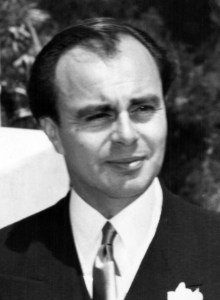
Prince Aly Khan
On May 12, 1960, Prince Aly Khan was killed in a car crash in the suburbs of Paris. Khan was only 48, and the news came as a shock to everyone who knew and loved the man. Khan behaved like he was going to live forever. His friends would say, ‘He was too alive to die.’ A multi-millionaire Royal, playboy, sportsman, soldier and diplomat, Khan had no difficulty in seducing beautiful women. Although some, like his second wife Rita Hayworth, grew resentful towards him when they learned that fidelity was not part of Aly’s vocabulary.
Leonard Slater was a journalist who worked at NBC News, Time, Newsweek and McCalls. Born in Pittsburgh and educated at the University of Michigan, Slater became a foreign correspondent and had a fairly adventurous life himself, working in Paris, Prague, Tokyo and Hong Kong. In the US, he reported from Washington DC, New York, Los Angeles and once witnessed a nuclear testing at Frenchman’s Flat, Nevada.
Leonard Slater had got to know Aly Khan a few months before he died, ‘visiting him at his Chateau de l’Horizon on the French Riviera; travelling with him to his stud farms in Ireland’. In 1962, Slater decided to write a biography of the late prince. The formidable task would require hundreds of interviews with everyone from ‘Hollywood choreographers to Islamic scholars’. Slater’s research took him from ‘the primitive upcountry of Pakistan to the locked and guarded erotica collection of the British Museum.’ Slater admits that ‘some doors were slammed in our faces’, but he praises the many people who were willing to share their memories of the lovable rogue Aly Khan.
There is one interview I wish to focus on in this article. Slater interviewed a man who was Rita Hayworth’s former business manager and had arranged her wedding to Khan in 1949. He was the father of a little boy named Lee who would grow up to be the greatest crime writer of his generation.
His name was Armand Ellroy.
The Interview
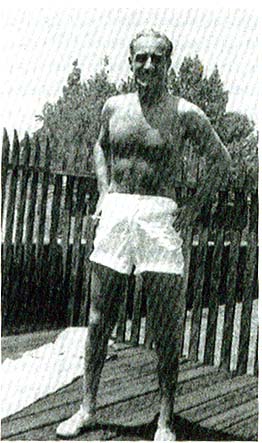
Armando Lee Ellroy
In the early 1960s Armand Ellroy was out of work and, after the murder of his ex-wife, raising his teenage son alone. In his memoir My Dark Places, James Ellroy candidly describes how hard-up he and his father were at this time: ‘We were poor. Our apartment reeked of dogshit.’
Someone Leonard Slater talked to in the movie-biz, it may have been Rita Hayworth herself, suggested he should contact Armand ‘Lee’ Ellroy. An interview was set-up. Alas we don’t know where, but we can assume it was not at Armand’s decrepit apartment which would eventually be fumigated after he was evicted. Slater and Armand met in a cafe or a restaurant. They talked at length, and Armand is quoted several times in the biography.
Armand told Slater about meeting Rita Hayworth when she was a dancer at the Agua Caliente casino and he was a croupier:
“After the evening show,” he (Ellroy) says, “a gang would get together for hamburgers or to go swimming, but most of the time Rita couldn’t go. I can still see her mother sitting there, watching Rita rehearse and keeping her eye out.”
Armand described to Slater how, when he was working as Rita’s business manager, he rented a ‘pink stucco house on Rockingham Avenue (for Khan), opposite Rita’s red brick colonial on Hanover Street.’ Due to the media frenzy surrounding Rita and Khan, Armand had to shield them for reporters who were ‘popping up in the guise of plumbers, telephone repairmen, readers of gas meters.’ Hayworth and Khan usually travelled in separate cars while Ellroy ‘took on the job of transmitting telephone messages to foil eavesdroppers.’
Armand’s greatest coup as Rita’s business manager came when he arranged the movie star’s wedding to Aly Khan. Armand flew to Paris, then made his way down to the Riviera at Rita’s request as she feared the wedding day was going to be a disaster. Armand managed to impose order and clarity on the wedding plans, which leads to one of the most revealing anecdotes in the biography:
Two nights before the wedding, Aly invited Ellroy, who was staying at the Chateau, to accompany him on a 3 am excursion. They went to the Casino at Cannes for some gambling. Aly turned to Ellroy. “You’ve been here a week or so now, haven’t you?” he asked. Ellroy replied in the affirmative. Aly, the host who thought of everything, disappeared and came back a few minutes later with two attractive girls, one a breezy blonde. “Take your pick,” he offered. When Ellroy declined, Aly shrugged and disappeared with the blonde.
Everything James Ellroy has ever written about his womanising father makes me wonder if there is a little more to this story.
Armand Ellroy was a chronic liar, as his son would attest to. Did Armand lie to Slater? Possibly, but as a seasoned journalist one would imagine Slater was skilled at spotting lies. Armand boasted to his son that he slept with Rita Hayworth. There is no mention in the Khan biography of Armand having an affair with Hayworth. As Slater was sympathetic to Khan, then it would not have been prudent for Armand to bring it up. If Armand did sleep with Hayworth one wonders whether it was during her marriage to Khan.
Slater’s inteview with Armand is special for a number of reasons. It marks the only time, outside of James Ellroy’s published memoirs, that Armand’s words are documented in a book. The first biography of Rita Hayworth did not appear until 1974, long after Armand had died. All of Hayworth biographers would use Slater’s interview with Armand as a source to understand the planning of her wedding to Khan, and his role as Rita’s business manager.
Another reason the interview is important is that it very nearly never happened. Armand had the first of several strokes on November 1, 1963. He had to learn to talk again using children’s primer texts. He died in 1965. Slater began his biography in 1962. He was lucky he got the chance to talk to Armand. If he had delayed his plans to interview him, then Armand Ellroy’s role as Hayworth’s business manger may well have been lost to history. James Ellroy did not know the interview took place. He didn’t even believe Armand had been Hayworth’s business manager until years later, when he spotted his father’s name in a Hayworth biography. Of course, Ellroy would never have spotted his father’s name in that book if it had not been for the Slater interview.
The Biography
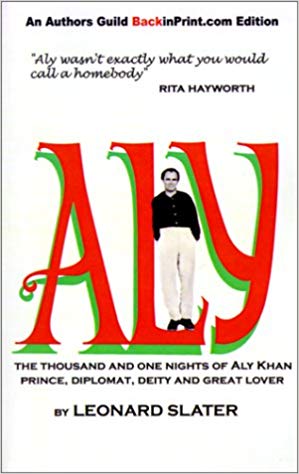 Once his research on Khan was complete Slater wrote the biography in a ‘draughty villa’ in Beaulieu-sur-Mer. It was published in June 1965, the same month Armand Ellroy died. Reflecting on the book years later, Leonard Slater wrote:
It appeared just as a new concept of morality was taking over from the Puritanism that had inhibited the USA from its earliest days. Sex had been something that consenting adults didn’t discuss in public, contraceptives had been sold under the counter, and books and movies about sex were censored, if not banned. But a new day was dawning in America, demanded by younger people, spurred by the invention of The Pill. TV networks began to take Elvis Presley’s pelvic gyrations for granted. “Hair,” a musical with lots of nudism was a hit on Broadway. Playboy magazine was sold openly on newsstands. The success of my book ALY was part of that new frankness.
Not all of the reviews were kind. The Kirkus Review wrote that the book was full of ‘tasteless speculation’, ‘shallow depth’ and filled with ‘meaningless round(s) of bedhopping.’
I regard the Kirkus review as too harsh. Slater skilfully adapts the key events in Aly’s life into narrative form. Khan’s birth in Italy, his peripatetic upbringing in France, India and England, his service with the French Foreign Legion during the war, his tumultuous love life and two failed marriages, and finally being passed over by the Aga Khan as the heir to the throne and finding a redemptive role as Pakistan’s ambassador to the United Nations, all makes for a compelling read.
If the book has a flaw it is that the constant boudoir antics occasionally read like a Mills & Boon novel. There is some attempt by Slater, for instance, to unravel one of the mysteries of the Orient. Khan was a practitioner of the sexual technique and philosophy of Imsak. I noticed my secondhand copy of the book was a bit dog-eared around these pages…
Leonard Slater died in 2005. His writing career was full of impressive achievements, including authoring an acclaimed book on the foundation of the State of Israel. But I am grateful most of all to Slater for giving Armand Ellroy a chance to tell his story. The interview allowed Armand to happily reminisce about Rita, Royalty and Hollywood’s Golden Age in what were his difficult final years.


 The Venetian Vase