Euroscepticism in British Literature
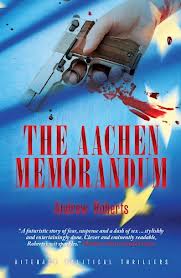
One of the First Eurosceptic Novels
I’ve written an article for the British Politics Review about a new trend developing in British genre fiction – Euroscepticism. Over the past forty years, politicians have debated endlessly about the pros and cons of the United Kingdom’s membership of the Common Market, latterly the EEC and now the European Union. Given the intensity of this debate, it is surprising that ‘Europe’– the EU as a political entity– has not featured more prominently in British novels. However, a few novelists have approached the issue head-on, Andrew Roberts’ The Aachen Memorandum (1995), Michael Dobbs’ A Sentimental Traitor (2012) and Alan Judd’s Uncommon Enemy (2012), take a distinctly Eurosceptic slant and cover a wide range of genres: political, spy, crime and science fiction. The examples I give are all broadly conservative in their views, but I also argue there are historical grounds for writers on the left to make an impact in this genre. Just as the Great Depression contributed to the birth of hardboiled pulp fiction in the US, the current Eurozone crisis could lead to a literary flowering on this side of the pond. The prospect of an In/Out referendum on Britain’s EU membership is likely to be top of the agenda come the next general election. Consequently, British novelists are becoming much less reticent to explore the matter in their books.
You can read my article and the entire issue online here.
I’d like to thank Mike Ripley and Bob Cornwell for sharing their encyclopedic knowledge of the genre with me, which was very helpful when I was writing the piece.
This is the second time I’ve written for the British Politics Review. It is edited by a great bunch of people, and I’m thrilled to be published alongside such distinguished writers. Here’s the link to a previous article I wrote for the BPR, on Tony Blair and Robert Harris’ The Ghost.
James Ellroy – Tory Mystic?
In his autobiographical essay ‘The Great Right Place’ James Ellroy describes himself as a Tory Mystic:
L.A. had overdosed me. Extreme stimulation had fried my brain pan. I had raped a beautiful place. I had usurped its essence to tell myself sick stories. My mind was infused with an L.A. virus. Wrong L.A. thoughts and undue L.A. stimuli could unravel me.
I believed it then. I don’t disbelieve it now. I was a tory mystic then, and I remain one.
Ellroy uses the term to explain his complex relationship with LA. His love of his home city, a loyalty to an institution or place bordering on Romanticism might loosely parallel Tory attitudes to national history and identity here in the UK. Still, it’s a conspicuous use of a political label which appears to be an oxymoron, and I quizzed Ellroy about it in an interview reprinted in Conversations with James Ellroy:
Interviewer: So did you choose “Tory” because it seems more nuanced? It’s not a particularly American term “Tory,” it’s distinctly British.
Ellroy: Yeah, you’re right, I did it for just that reason. Because right-wing is loaded.
Looking back, I see that I was wrong to say Tory is a distinctly British term. Tory was a common term for a loyalist before and after the American Revolution. Many loyalists fled to Canada where the Conservative Party are still known colloquially as Tories to this day. However it is rare enough in modern American discourse for Ellroy to adopt and adapt it to his literary persona in order to avoid the label right-wing.
To analyse Ellroy’s political views and the extent his politics can be found in his novels is no easy task. For some critics like Mike Davis, Ellroy is ‘a neo-Nazi in American writing’. Other readers may think that his tales of LAPD corruption and political conspiracies are some kind of angry, left-wing indictment of the US. I would argue that both views are wrong and that Ellroy’s Toryism relates to a British literary tradition known as Tory Anarchism. Peter Wilkin has written a book on this phenomenon, The Strange Case of Tory Anarchism (2010):
The idea of a Tory anarchist was first coined by Orwell to describe both Jonathan Swift and himself, and at its broadest it describes someone who is both a radical and a traditionalist. To be a Tory anarchist, then, is to embrace all manner of contradictions. It is a defence of good manners, good grammar, local customs and practices, respect for the individual and for privacy and an overwhelming hostility to the expanding power of the modern state. Tory anarchists celebrate Britain’s class system but at times condemn all classes for their role in Britain’s decline. They believe in both the idiosyncratic qualities of the British and at the same time mock their hypocrisy, stupidity, philistinism and vulgarity. Orwell saw Tory anarchism as a part of Britain’s, mainly England’s, rich social history, manifesting itself in particular figures at different times and places.

James Ellroy by Guillaume Paumier, CC-BY
Daniel McCarthy argues that the term could be applied to many American figures, independent of references to the English Class system or its customs, ‘Tory anarchism isn’t really an idea at all, just a intuition.’ So many of the writers who have been or could be labelled Tory anarchists John Osborne, John le Carre, Christopher Hitchens would be horrified at the term. For many on the left, being a Trot is okay, but to be Tory is unacceptable. In a sense it describes a contrarian, a left-wing figure with conservative tendencies, or in the case of Hitchens, someone who moves further to the right. Hitchens was known for his far-left views early in his career, writing for the Socialist Worker and protesting against the Vietnam War. At the same time he enjoyed dining at right- wing clubs, where he once ate pudding called ‘Bombe Hanoi’. One of my favourite Hitchens anecdotes is the time he claimed Margaret Thatcher showed him, shall we say, the smack of firm government. Ellroy expressed admiration for Hitchens. They shared a hatred of Bill Clinton. Ellroy’s criticisms of Clinton usually refer specifically to the Monica Lewinsky sex scandal, as to be fair, Clinton’s brand of triangulation, third-way politics seemed just as slippery as Ellroy’s views.
Ellroy the contrarian often delights in offending people, even groups of people who are usually offending each other. In an interview with Keith Phipps, Ellroy describes a book reading of ‘Jungletown Jihad’, a comic novella featuring some hilariously politically incorrect depictions of Muslim terrorists: ‘The walkouts I get from reading this are hilarious. I was just at a book fair in the South. I knew I’d get ten liberals and ten Christians walking out, and I did.’
Ellroy, however, has at times taken offence when people push him for some political statement. He once told Craig McDonald that he felt no obligation to let his views be known:
Interviewer: You’re asked to weigh in a lot on topical matters—everything from politics to the death penalty.
Ellroy: Here’s where we get to a point where I coin a phrase. Actually, my wife coined it: “The specious proximity of media.” Why—this happens all the time, particularly in academic communities—should I comment on George W. Bush? This is like going to England and the little guy with a brogue says, “Hey lad, what do you think of the Troubles in Northern Ireland?” Or, you go to Berkeley and the androgynous human being asks, “What do you think of gay rights?”
Ellroy may not feel the need to evangelise his political views, but we can still imply a degree of politics in his answer to McDonald. On the subject of Berkeley, in his first novel Brown’s Requiem (1981), Ellroy displays a Tory streak in his cynicism towards counter-culture movements. Leading character Fritz Brown describes how a brief visit to Berkeley, ‘gave me the creeps: the people passing by looked aesthetic and angry, driven inward by forces they couldn’t comprehend and rendered sickly by their refusal to eat meat.’ Is Ellroy’s cynicism towards leftist counter-culture relevant? His darkest years were the late sixties and early seventies. It was a time of the Summer of Love and the Hippy movement, but for Ellroy personally it was a period of drug and alcohol addiction, homelessness and crime. In one exchange I had with him, he expressed his admiration for the patriotic, conservative values of President Reagan by comparing them to the puerile and pointless nature of Punk Rock:
I have friends, contemporaries, who were big in the punk rock movement. And it’s just silly, puerile noise to me. I asked a magazine editor, a friend of mine, a woman who’s fifty-six, “What was punk rock about?” and she said it was a reaction to Reagan. And I said history has been very, very kind to Ronald Reagan. Very kind to this man who I think even the most reluctant liberal historian would concede as being one of the greatest American leaders of the past two hundred years. He was a massive presence. He took down the Soviet Union and did amazing things, and he was flawed in other ways as well. You know, OR a bunch of spiky-chinned, purple-haired kids jumping up and down. Come on! Just come on!
There is a sense of Tory Anarchism here. The lament of the breakdown in manners and good taste compared with the admiration for a political office which dates back to his country’s independence. On the subject of the Presidency, the 1960 Presidential election is one of Ellroy’s earliest political memories:
I was for Richard Nixon in 1960 when I was twelve, because my father was. […] When I was a kid, Eisenhower had been president forever, and all of a sudden, everything in the world was all about Jack Kennedy. The primary election—I was twelve, interested in politics; my father was from Massachusetts, had an accent like Kennedy—everything was about him. He handled it with a certain ironic detachment that was appealing. He was amused, he was bemused, and people mistook it for love. Bad miscalculation. Everything was about him for some years, especially after he was elected. I couldn’t believe it, because he looked so young and he had his run and he died. It’s like being with a woman and she leaves you before the sex gets stale. You’re always going to think of her, you’re always going to want more, you didn’t get enough. That’s how America was with Jack.
Ellroy was to take these childhood memories of the aura surrounding President Kennedy and craft them into his greatest novel, American Tabloid (1995). American Tabloid covers five years of US history, beginning in 1958 and ending on the day of Kennedy’s assassination in 1963. It is taken from the perspective of and even dedicated to the Underworld characters, both in organised crime and law enforcement, who conspire to kill Kennedy. Ellroy’s introduction to the novel reads:
Jack got whacked at the optimum moment to assure his sainthood. Lies continue to swirl around his eternal flame. It’s time to dislodge his urn and cast light on a few men who attended his ascent and facilitated his fall.
They were rogue cops and shakedown artists. They were wiretappers and soldiers of fortune and faggot lounge entertainers. Had one second of their lives deviated off course, American history would not exist as we know it.
It’s time to demythologize an era and build a new myth from the gutter to the stars. It’s time to embrace bad men and the price they paid to secretly define their time.
Here’s to them.
Ellroy strikes a tone which is both irreverent and profound. Although he is demythologising the Kennedy era, he feels a Tory instinct to ‘build a new myth’. American Tabloid was followed by two more novels which make up the Underworld USA trilogy. The trilogy ends with the death of J. Edgar Hoover in 1972, and by its completion, Ellroy had covered one of the most turbulent periods in modern American history: an era of political assassination, mass rioting, the Vietnam War and the dawn of the Watergate scandal. And yet despite all this, Ellroy is ever the patriot and optimist. One of my favourite Ellroy quotes came when I asked him if there was something positive in his depiction of America. He replied:
I love America and my books are all about one thing and one thing only, a man needs a woman. This is the Romantic’s code.
Romanticism and Toryism go hand in hand with Ellroy. It’s a more complex view than being seen simply as a Republican supporter. Ellroy voted for George W. Bush to ‘repudiate Gore and Clintonism and nobody hates Bill Clinton more than me’. However, he told Rolling Stone that he voted for Obama in 2008. He described his views on Obama in more detail to the Daily Telegraph:
What I do know is we’ve just concluded the most duplicitous American presidency in living memory. And the new guy is coming to grips with the facts: America has to rule the world, or someone worse than us will. A capitalist economy has to prevail, because massive social programs tend not to work. Still, I don’t think it’s that much of a shock to him. Obama is much more of a Tory than most people realized.
Ellroy sees the parallels between Obama and Kennedy. To their supporters both men embodied the hope that America was at the dawn of a new Golden Age. In his view though Obama understands the reality of politics better than Kennedy, (or perhaps Kennedy’s defenders), the limitations of his office and the need for change to be slow and in keeping with the traditions of his country. This is what makes Obama a Tory in Ellroy’s eyes.
There are many more examples of Ellroy’s political statements that I could talk about here. Sometimes he is thoughtful and nuanced and at other times he is sly, combative and relishes his ability to shock. Sometimes he can be all of these things at once. I’ll end with another quote from the author which I think sum up his views best. Ellroy is at heart a floating voter (although tribally more on the Right) who holds the Tory anarchist view that all Presidents, Democrat or Republican, do good and bad things in service to their country, and laments the fact that more people don’t see it this way. This is from my fourth interview with Ellroy:
It’s just the reluctance with which people would step back from the precipice of their own belief that shocks and appalls me. And you can’t get people to, on either the right or the left. You can’t tell a liberal, well, “read Edmund Morris’s book, Dutch: a Memoir of Ronald Reagan, and to one degree or another,” you’ll notice I qualified that, “you’ll dig Ronald Reagan.” You can’t tell right-wingers, “read any one of the great biographies of Franklin Roosevelt, step back a bit, you will dig Franklin Roosevelt.” You can’t.
In a Lonely Place

Nicholas Ray’s In a Lonely Place (1950) is an archetypal film noir and one of my favourite films. Humphrey Bogart plays Dixon Steele, a troubled screenwriter with a violent temper who is suspected of murdering a young woman and whose behaviour gradually convinces those around him, including his lover and the police, that he is the killer. Bogart’s performance is full of cynicism and menace. His scenes with Gloria Grahame, playing Laurel Gray, an aspiring movie actress, are tense with sex and fear; their on-screen relationship deteriorates into maelstrom of jealousy, threatened violence, and sleeping pills. Despite admiring the film, I didn’t read the novel from which it was adapted until quite recently, when it was reissued as a Penguin Modern Classic. I think it’s wonderful.
In a Lonely Place by Dorothy B. Hughes was published in 1947 and was her eleventh novel. It is a highly accomplished, fast-paced psychological drama in which the reader unwillingly sympathises with Dix Steele even though it is obvious from quite early on that he is a sociopath, and most likely a rapist and murderer. Like Jim Thompson, whose later The Killer Inside Me (1952) is much more graphic in its description than In a Lonely Place Hughes manages to encourage and sustain a lurid desire to know more about disturbed Dix Steele. Later, when things are clearer, you want him to get caught, but not just yet. She does so with observant, more or less elegant prose and smart dialogue, this from when Dix takes Laurel to dinner:
“You think you’ll know me the next time you see me?”
He returned to her actuality. He laughed but his words weren’t made of laughter. “I knew before I ever saw you.”
Her eyes widened.
“And you knew me.”
She let her lashes fall. They curved, long as a child’s, russet against her cheeks. She said, “You’re pretty sure of yourself, aren’t you, Dix?”
“Never before.”
Her eyes opened full again and laughter echoed through her. “Oh, brother!” she breathed.
The corniness of Dix’s words in this scene are partly what Laurel’s exclamation is about, but it also hints at her cynicism about their possible future relationship, and perhaps also her realisation, even at this early stage, that he is going to be trouble. Dix the psycho-killer lives in the certainty of his feelings at a given moment and attaches himself to Laurel with an emotional force that is both sincerely felt, and utterly artificial. Hughes makes sure her female character shows that she knows they are overblown too, though she doesn’t yet know why.
This relationship, and the one between Dix Steele and Laurel Gray in the film, are mirror images of one another. Here Laurel Gray has already begun to suspect, subconsciously, that Dix is not quite as he should be, and she is right; in the film, the relationship is ruined by false suspicion and misplaced distrust. In the one, a woman is taken in by a dangerous, controlling man; in the other, a damaged, troubled man loses the woman he loves because he is unable to allay her fears about him.
Book and film are radically different from one another, and at a deeper level than plot alone. Where Hughes’s novel can be read as an examination of masculinity through an extreme version in which women are objectified, exploited, killed, and dumped by the roadside, in the film adaptation neither Laurel nor Dix ever really understand or trust each other. This bleak analysis of human relationships, of men betrayed by women, is a trope of classic Film Noir, but both novel and film have interesting things to say about loneliness and isolation. Bogart-Dix’s ‘lonely places’ are his isolation under false accusation and the existential loneliness of a war hero, a writer in decline and a man without a woman. In Hughes’s original, lonely places are where girls are killed, the sad apartments where men and women live isolated and alone, and the corners into which compulsive liars are backed by their delusions. In the novel, Dixon Steele’s loneliest place is his own deranged mind. In the film he is driven to loneliness in a postwar America which suspects outsiders and fears imagination.
Ellroy in New York
I have recently been in Michigan visiting family. On the journey home my wife and I stopped off in New York for a few days. It was my first visit to this amazing city, and the beauty and exuberance of the place just floored me. I had been due to visit New York as part of a high school trip in 2001. Part of our itinerary was a visit to the World Trade Center. 9/11 happened, and the trip was postponed, then cancelled. I never made new arrangements to visit. Finally I have made the journey, and it was worth every minute of the wait. It was moving to visit the 9/11 Memorial built on the site of the twin towers where so many people lost their lives. If you get a chance, I would also recommend the Queen Elizabeth II September 11th Garden at Hanover Square, founded in memory of the British and Commonwealth victims.
Whenever I travel I like to look up some of the tucked away places that either relate to my research or to crime fiction in general. A few years ago, I visited Los Angeles to interview James Ellroy and also visited some of the sites which were connected to key moments in Ellroy’s life. New York played a key role in the life-story of Ellroy. When his first novel Brown’s Requiem was published in 1981, Ellroy at the age of thirty-three moved from LA to Eastchester near New York. As he put it in an interview with Don Swaim, he ‘wanted to wake up in the city that doesn’t sleep and boogie-woogie down Broadway to the Gershwin beat’. However, the cross-country move coincided with a difficult early stage of his writing career. Ellroy’s manuscript ‘L.A. Death Trip’ was turned down by seventeen publishers. Ellroy had not faced this sort of rejection with his first two novels, and he would take typically dramatic steps to turn his luck around. Renowned crime fiction editor Otto Penzler ran the Mysterious Bookshop at the time. It was, and is, popular with both readers and writers of crime fiction. In an interview with Poets&Writers, agent Nat Sobel describes Ellroy’s first visit to the Mysterious Bookshop, and how he marched into Otto Penzler’s office and announced:
“I am the demon dog of American crime fiction.” Otto said, “I’ve never heard of you.” James said he had this manuscript, which Otto sent to me as the first manuscript of the Mysterious Literary Agency. It was Ellroy’s third novel, which I edited, as did Otto. About that time, Otto got financing to start Mysterious Press. He told me he wanted to buy Ellroy’s novel for his first list. So the Mysterious Literary Agency went out of business.
Penzler may have been startled by the brazen Ellroy, but it would be the beginning of a long and productive partnership between the two men. The story of the meeting differs slightly between the numerous versions I have read over the years, but I find its most striking detail is Ellroy’s use of the Demon Dog name so early in his career. According to its website, the Mysterious Bookshop was originally located in midtown (it doesn’t specify where exactly). Its new address is 58 Warren Street in Tribeca. I found it to be a charming, characterful place with crime books of every conceivable style crammed onto the shelves of its four walls. Here are a few photos we took:
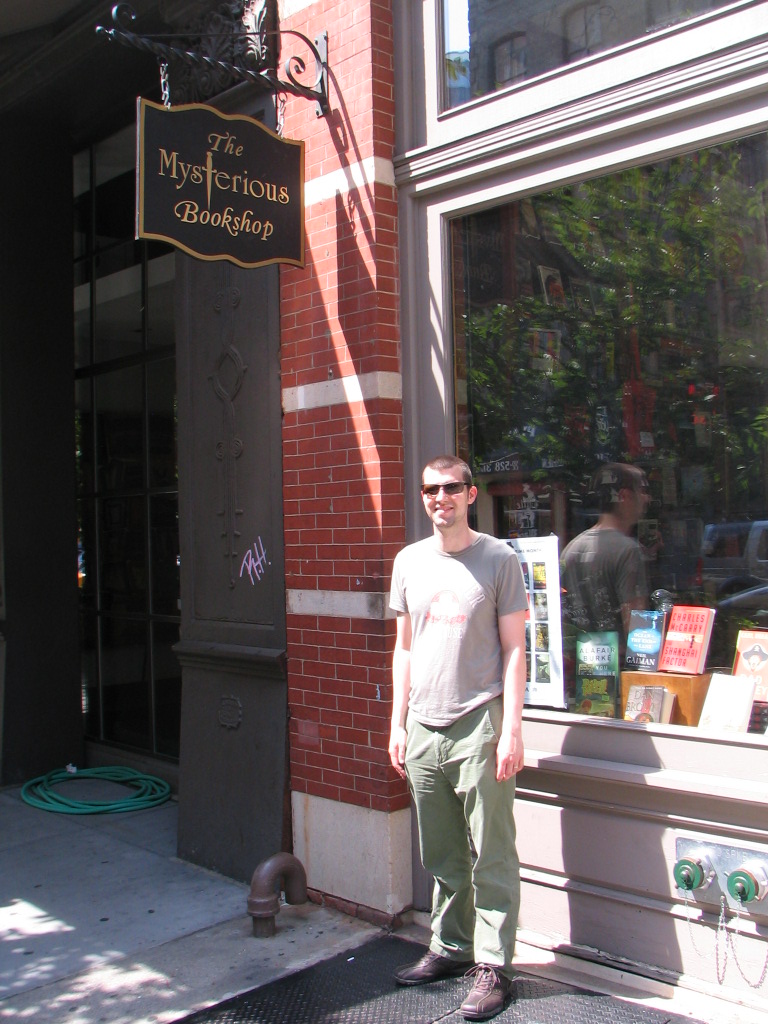

No visit to a bookshop of this calibre would be complete without buying some reading matter for the journey home. I purchased The Mask of Fu Manchu (1932) by Sax Rohmer and Colour Scheme (1943) by Ngaio Marsh.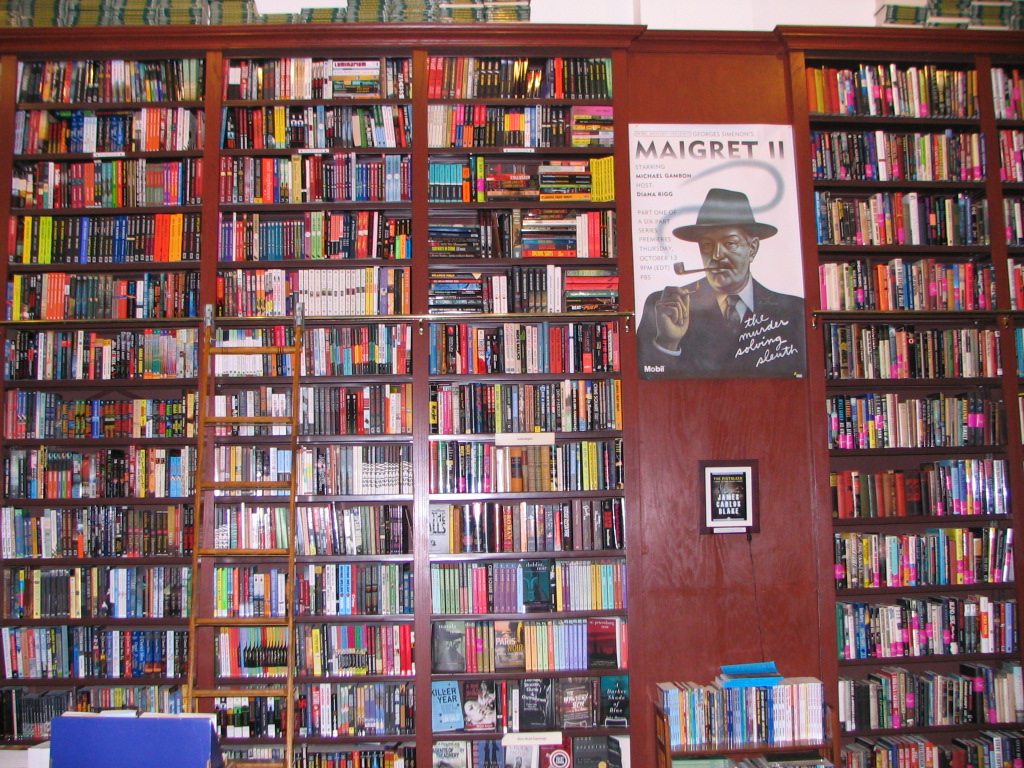
Another location in New York related to Ellroy’s career is the library where he began his research on the Black Dahlia case which was to lead to one of his most powerful novels. In one of my interviews with Ellroy, published in Conversations with James Ellroy, he describes the methods of research he used which laid the foundation for the novel:
I went out: I got three hundred dollars in quarters, put them in three triple reinforced pillowcases. Went into downtown New York City library, the one at Forty-Second Street and Fifth Avenue, and got on interlibrary loan the L.A. newspapers from that time. Fed quarters to it and made photocopies. Reprinted white on black and extrapolated off the actual facts of the case with fictional characters. That’s how I built that book.
The library on Forty-Second Street and Fifth Avenue is the impressive Stephen A. Schwarzman Building. Although, Ellroy may have been referring to the Mid-Manhattan branch of the New York public library, which is practically next door and is somewhat nondescript by comparison. I spent a pleasant hour exploring the Schwarzman and admiring its beautiful old world design. It was nice to think of Ellroy researching the Dahlia case here almost thirty years ago and perhaps being inspired by the interior’s wonderfully musty atmosphere.


Third floor of the Stephen Schwarzman Building; picture shows objects behind an empty Librarian’s desk. By Blurpeace, 6 June 2009
Cover Art: Two Novels by Joseph Wambaugh
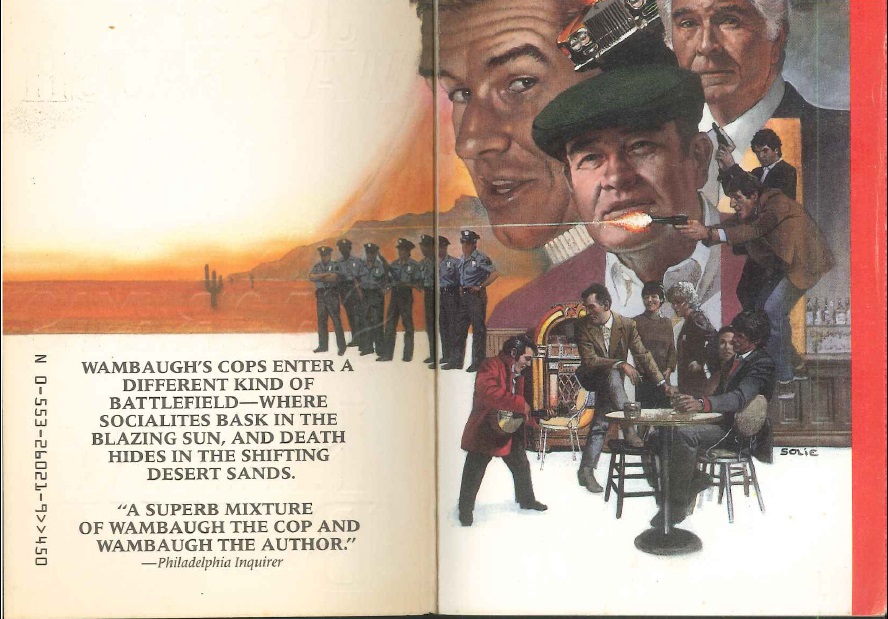
I’ve never blogged about cover art before, partly because I don’t know much about the subject, but I enjoy blogs such as Killer Covers and John D MacDonald Covers so much that I thought I would give it a try. Joseph Wambaugh is, in my opinion, one of the finest American crime writers working today, and over the years I have been impressed and intrigued by the cover art featured on his books, especially his books which have wrap-around cover art. In this post I’m going to briefly discuss the cover art on two books written by Wambaugh: Lines and Shadows (1984) and The Secrets of Harry Bright (1985). The artist is not credited in either edition I have selected, so if you happen to know who it is please get in touch via the comment thread.
Lines and Shadows is one of Wambaugh’s works of non-fiction, or the ‘non-fiction novel’ to quote the term coined by Wambaugh’s mentor Truman Capote. It follows the Border Crime Task Force of the San Diego Police Department from 1976 to 1978. The writing is at its sharpest when focused on the personal lives of the policemen or discussing the politics behind their assignment. The drawbacks of books of this kind, however, is that the writer is hostage to facts, which does not always lead to the strongest narrative. For this reason, the book drags, and the story never feels quite as interesting as it should be.
The front cover of this book is not outstanding: just a small image set against a black backdrop. But when you open the book, the excitement begins with a cast of characters crammed into an intriguing collage: there’s a hero on a motorbike, beautiful women, a boisterous gangster-type, a grizzled hardboiled looking man smoking a cigarette and lots of gunplay. It reminds me a little of the posters of Bruce Lee films or some of the James Bond films of the 1970s where a lot of the action set-pieces of the film were crammed into small images on the poster. They could be a bit too busy at times but certainly conveyed the sense of an epic, exciting story.


The Secrets of Harry Bright was a return to fiction for Wambaugh and is a wonderfully absurdist mixture of black comedy, tragedy and mystery set in the fictional Mineral Springs, California. I’ve written a full-length review of the novel here. This cover image is wonderfully minimalist. I like the way the reds and oranges convey the blinding, oppressive heat of the Sonoran desert. Unlike Lines and Shadows, in which the inside pages extend the cover art, for The Secrets of Harry Bright, the style is completely different. We’re back to the action-packed images, which is odd, as it is not a novel that relies on much action. The car explosion, if I remember correctly, belongs to the back-story. The inside cover art seems to reassure the reader that you’re still in a Wambaugh story, even if the promises of action made by the artist aren’t delivered in the story.

Holiday
I’m currently visiting family in Michigan. I’ll be blogging again in early July.

The Two Men Who Saved James Ellroy’s Career
As much as any contemporary crime writer James Ellroy is a household name, a celebrity author whose appearance on a chat show can turn mundane television into electrifying entertainment. What other crime writers can we say this of today? Needless to say, it hasn’t always been this way for the author, and Ellroy has gleaned much material from his harrowing early life. But even after Ellroy began his writing career there was a period when it seemed his early promise and the luck every successful author must possess had run dry, before two men, Otto Penzler and Nat Sobel, were to rescue his career and, by doing so, take a role in reshaping the modern American crime novel.

Otto Penzler
Credit: Carolyn Hartman
In the early 1980s, Ellroy had published two novels with Avon, Brown’s Requiem and Clandestine, both to moderate success. Although they were not groundbreaking works, there is no doubt that these publications were an incredible boost for Ellroy. It was only a few years earlier that Ellroy had been battling drug and alcohol addictions. For many first time writers, finding a publisher is usually a much more difficult process than writing itself, but Ellroy was to find a home for his first two novels remarkably quickly. He moved from Los Angeles to New York City in the hope of breaking out and living the writer’s life. But Avon rejected his third manuscript ‘LA Death Trip’. Now things started to go downhill as Ellroy describes in his memoir The Hilliker Curse:
My publisher rejected my third novel. They found the sex-fiend cop and his feminist-poet girlfriend hard to believe. They were right. I wrote the book in a let’s-ditch-L.A.-and-find-HER-in-New-York fugue state. My quasi-girlfriend agent sent the book to 17 other publishers. They all said nyet. My quasi-girlfriend dropped me as a client and pink-slipped me as a quasi-boyfriend.
The fact that he was dating his agent suggests Ellroy was not receiving objective advice about the manuscript. There’s no doubt that this was a crisis for his still fragile literary career. Ellroy had never before faced the rejection that is a rite of passage for most writers starting out. His solution was appropriately dramatic, and typical of the flamboyant persona which has come typify Ellroy’s public image. In an interview with Poets&Writers, Nat Sobel describes the New York literary scene that he had a hand in shaping at the time and that was to help Ellroy immeasurably:
Years ago, my lawyer was, and still is, the lawyer for Otto Penzler and the Mysterious Bookshop. He thought Otto and I should get together. I’ve been Otto’s agent for many years. Anyway, I liked Otto a lot, and we couldn’t figure out how a bookseller and an agent could do anything together. I got the idea, or maybe it was Otto, to form the Mysterious Literary Agency. This was really at the point when I was just beginning to represent authors, and the idea was that Otto had this wonderful bookshop where crime writers came in all the time, and he would send writers to me who asked how to get an agent. So we started the Mysterious Literary Agency. We did a whole thing where our letterhead had no address and no phone number. If you wanted to find us, you had to solve the mystery.
Ellroy must have solved this little mystery as one day he arrived at the Mysterious Bookshop, walked into Otto Penzler’s office and announced:
“I am the demon dog of American crime fiction.” Otto said, “I’ve never heard of you.” James said he had this manuscript, which Otto sent to me as the first manuscript of the Mysterious Literary Agency. It was Ellroy’s third novel, which I edited, as did Otto. About that time, Otto got financing to start Mysterious Press. He told me he wanted to buy Ellroy’s novel for his first list. So the Mysterious Literary Agency went out of business.
Penzler was clearly taken aback but also impressed with Ellroy after their first meeting. In a profile of Ellroy by Martin Kihn, republished in Conversations With James Ellroy, Penzler was quick to diagnose the problem with Ellroy’s writing at the time:
I thought, “This is an extraordinary original talent who doesn’t really know how to write a book.” A very powerful stylist, but they weren’t particularly well constructed plots. But he was such a bright guy and had so much raw talent, I never thought for a moment he wasn’t going to be a monster.
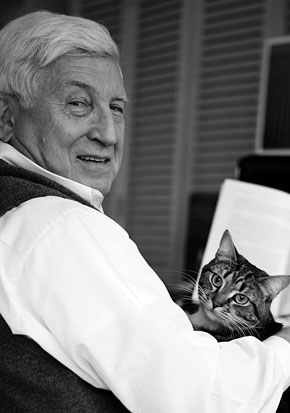
Nat Sobel
Credit: Pieter van Hattem
It wouldn’t be plain sailing for the self-proclaimed Demon Dog, though. Ellroy had written half of a historical fiction novel titled “The Confessions of Bugsy Siegel”, and no doubt he wanted to finish it and see it published, but Sobel and Penzler had other ideas, as Kihn remarks, ‘During a meeting at Penzler’s store, Sobel and Penzler told Ellroy that Siegel was out to lunch but “Death Trip” could be reworked.’ However, Ellroy was withholding information from his two mentors: ‘Of course neither Otto nor I knew that James’s previous agent had had seventeen rejections on this novel. But we had done a lot of work on the book.’ Sobel also reveals that Ellroy was no pushover when it came to the editing process of ‘LA Death Trip’, which was finally published under the title Blood on the Moon:
I wrote Ellroy a rather lengthy editorial report about that first novel I represented. I got back what looked like a very lengthy kidnap letter. It was written in red pencil on yellow legal paper, and some of the words on it were like an inch high: I AM NOT GOING TO DO THIS. I thought, “Oh, I’ve got a loony here. Somebody who calls himself the demon dog? Maybe he is a demon.” But it was a very smart letter. He was very smart about what he would do, why he wouldn’t do certain things. And he did do a lot of work on the book. I’ve edited him ever since. Nearly all of the editing is done here. He’s been wonderful to work with.
Although Ellroy moved on from the Mysterious Press some years ago his professional relationship with Penzler and Sobel continues to this day (Penzler and Ellroy edited The Best American Noir of the Century (2011) together). I’m not saying that Ellroy would have never published again were it not for Penzler and Sobel. Ellroy had the talent, drive and determination to succeed regardless of how many times he faced rejection. If he hadn’t found them, he probably would have found someone else. Still, Penzler and Sobel deserves credit for spotting a great talent when he was down and not letting him slip away. Fans of Ellroy and crime fiction have a lot to thank them for.
Early Ellroy
Thirteen years ago, I read my first James Ellroy novel, American Tabloid, and it remains my favourite to this day. Most Ellroy fans were probably introduced to the author through a LA Quartet or Underworld USA novel. Indeed, if you read some of the critical appraisals of Ellroy’s work, it sometimes seems like his career started with The Black Dahlia in 1987. It’s easy to forget that Ellroy wrote six strong and distinctive novels before The Black Dahlia, so in this post I’m going to take a look at early, somewhat forgotten works:
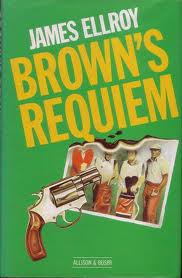 Brown’s Requiem (1981)
Ellroy’s first novel is something of a Raymond Chandler pastiche. Repo-Man cum PI Fritz Brown is hired by the strange, potentially psychopathic golf caddy Freddy ‘Fat Dog’ Baker to keep an eye on his musician sister Jane. Brown obliges, falling for Jane along the way, and becomes embroiled in a case which involves Mexican Hitmen, Neo-Nazis and corrupt police. There are shades of Ellroy in Brown, which he copped to in an interview with the Paris Review: ‘I started to plan a novel about a guy who gets involved with a bunch of country-club golf caddies, who does some process serving, who grew up at Beverly and Western, who was a tall, skinny, dark-haired guy with glasses, all of which is me.’ But what Ellroy doesn’t mention is that ‘Fat Dog’ was similar to the Demon Dog himself before he became an author. Fat Dog’s bigotry and homelessness (he sleeps on golf courses) has parallels with the harrowing early life of Lee Earle Ellroy. Brown’s Requiem is a solid, entertaining debut imbued with naive charm and Ellroy’s idiosyncratic quirkiness. The problem is a plausibility gap, not that crime novels have to be realistic, but authors need to convince you that the events could happen in the world they create. Brown’s Requiem never quite convinces or compels. Final thought, Ellroy’s preferred title for his first effort was the very non-genre sounding ‘Concerto for Orchestra’.
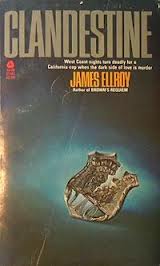 Clandestine (1982)
Ellroy’s second novel is meatier fare which features the first appearance of Dudley Smith here in a supporting role. The book is essentially split into two halves: narrator Freddy Underhill charts his rise and fall within the LAPD in the first section, and in the second section, Underhill is a self-appointed avenger determined to solve the murder of a woman with whom he had an ill-judged one night stand. There’s a lot of interesting themes at play here, such as ‘the Wonder’: Underhill’s appreciation for the awesome mystery of human existence. It was also Ellroy’s attempt to solve the murder of his mother in fictional terms: ‘I wanted to get rid of the story. I wanted to prove myself impervious to my mother’s presence and to get on with it.’
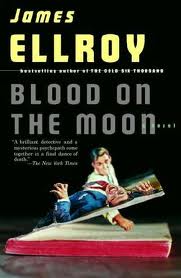
Blood on the Moon (1984)
With this novel, Ellroy introduced his first series character Detective Sergeant Lloyd Hopkins of the LAPD who would return for two more novels. It may have been a lucrative choice for Ellroy to start a series, but Blood on the Moon suffered a difficult gestation. It began life as ‘LA Death Trip’ which was turned down by over a dozen publishers. It finally found a home with Otto Penzler and the Mysterious Press but had to be extensively rewritten. The end result is a taut, competent thriller as Ellroy put it ‘contrapunctually structured’ between the viewpoints of detective and serial killer.
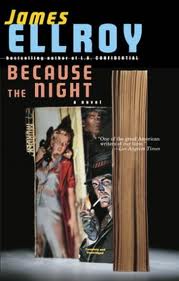 Because the Night (1984)
Ellroy’s second Hopkins novel was inspired by his reading of Thomas Harris’ Manhunter. Unfortunately, it’s not an influence that works well. Sinister psychiatrist Dr John De Havilland just seems like a pale Hannibal Lecter imitation, minus the cannibalism, and the plot is so convoluted and confusing that by the end I just didn’t care. On the plus side, Hopkins, an intellectually brilliant and impulsively violent sex maniac, is still an interesting lead character.
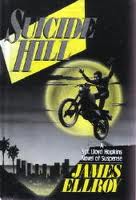 Suicide Hill (1986)
The final novel in the Hopkins series is the best. Hopkins is shifted to a relatively minor role, and the focus is on the tragic young criminal Duane Rice, who is motivated entirely by his love for a woman with a heart of stone. A sub-plot about growing Evangelical influence within the LAPD is also brilliantly done.
Killer on the Road (1986)
Probably Ellroy’s most bizarre novel. First published as Silent Terror before being reissued under Ellroy’s preferred title, the first person recollections of  serial killer Martin Plunkett make for grim and gripping reading. As with Fat Dog Baker in Brown’s Requiem, Ellroy isn’t shy in imbuing an essentially despicable character with some autobiographical traits. Ellroy fans may recognise Plunkett’s voyeurism, alcoholic mother and semi-detached father as taken from the author’s life. There is a twist about halfway through the novel that will leave you reeling, although that’s partly down to it being completely implausible. Killer on the Road is an interesting novel to read over a quarter-century since it was first published as it shows Ellroy’s development and future direction as a writer with its multiple viewpoints and multiple sources of information. The diary entries of FBI agent Thomas Dusenberry and newspaper articles, which appear between chapters, both work well.
Of his first six novels, I would probably say Clandestine narrowly beats Suicide Hill as my favourite, and Because the Night is the least impressive. However, I’d be happy to hear from Ellroy fans who disagree. As always, your thoughts are welcome.
Angels Unaware: a review
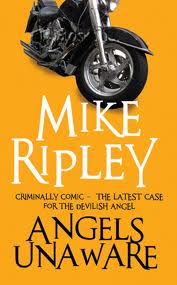 Anyone who has enjoyed the company of the talented Mr (Mike) Ripley will know that he is a devilishly funny chap. I discovered this myself surrounded by skulls and pathology equipment at St Bart’s back in January, and since then I resolved to find out if he’s as funny in his writing.
I recently finished reading Angels Unaware, the fifteenth outing of private eye Fitzroy Maclean Angel, who seems more at home in a pub quiz (especially if it has a round on ancient history) than in navigating the 21st century legal restrictions of being a private detective. Angel is no Mike Hammer– he’s not prone to throwing punches unless he has to (and even then, he’s usually hurling bike helmets or bottles of wine rather than engaging in hand-to-hand combat), and he’s surprisingly PC, defending a civil partnership from his rather old fashioned colleague. But Angel moans about the strictures of Health and Safety and about working as part of a female-dominated, modern detective agency. He also doesn’t seem capable of operating any technology without breaking it, including a mobile phone.
From the very beginning of the story, Angel is a man trying to escape: when old friend and city man Terrance Patterson comes to Angel asking him to find a missing scriptwriter in Manchester, Angel is all too happy to leave his new domestic restraints in Cambridge (his fashion-designer wife, their newborn and his ‘helpful’ mother who has uncomfortably installed herself in their home). However, Angel’s jaunt up north, and his pairing with the wonderfully audacious P.I. Ossie Osterlein, end up being more serious than the obligatory line dancing, fry up and borrowed Huddersfield socks would suggest. As the bodies pile up, Angel never loses his sense of humour:
All I had to do was find my client and ask him what the hell was going on, then I could go home with a clear conscience. I’d found a body, met a porn star, visited a red-light district, helped the police with their enquires, been shot at and forced to line-dance. Good God, I’d even had to go up north. Surely I deserved a few weeks’ holiday or at least compassionate leave.
I found Angel a strange mixture of types. Perhaps only by marrying him to a fashion designer could Ripley continually put the part pub-loving man-of-the-people part elitist Londoner and historian in his place. Yet his wife Amy May is herself a conundrum: a successful professional woman, whose designs are known by and appeal to a huge swathe of the population (including female cops?). I’m not sure if May could exist, (could you imagine Stella McCartney married to a PI?) and if she did, what she and Angel would see in each other besides the ability to trade pithy insults over the phone.
Although Angel might use his wife’s fame to make witnesses or police more amenable, Ossie’s ideas go further:
‘Well, I’ll ask [my client] if you call your friendly Greater Manchester police lady and chase up how the autopsy went.’
‘Why on earth would she tell me?’
‘She might, she seemed quite taken with you.’
‘She’s more a fan of Amy’s clothes than of me.’
‘Get the wife to send her some free samples then.’
‘Give me some legal advice, Ossie: would that be bribery or corruption?’
‘I think it depends on who complains,’ he said, seeming to give the matter some serious thought. ‘Anyway, you should always keep in touch with friendly coppers.’
Ripley is undoubtedly good at one-liners, and he does paint a lovingly quirky picture of London, Northerners and pub culture. I did enjoy this novel, not least of all for it’s hyperbolic northerner Ossie Osterlein.
James Ellroy – What’s in a Name?
 The information released so far about James Ellroy’s forthcoming novel reveals that it is provisionally titled Perfidia and is the first book of a new LA Quartet, which precedes the original Quartet chronologically and will show Quartet characters at earlier points in their lives. Perfidia is the title of an Alberto Dominguez song, much covered since, which Ellroy fans may recognise as the song Lee Blanchard and Kay Lake dance to on New Year’s Eve, 1946, in The Black Dahlia (1987).
Titles are an important detail for an author to get right. A good title can make the difference between someone buying your book or not. Several of Ellroy’s novels have gone through title changes as part of the creative process. Although we should remember that Ellroy went through a significant name change himself, the alcoholic and drug addict Lee Earle Ellroy was very different from the bestselling author James Ellroy. Here are a few examples of title changes in Ellroy’s work which are fairly commonly known (I’ve put rejected titles in quotation marks and the published titles in italics):
Ellroy’s writing career had started promisingly, but it stalled with his third manuscript, which told the story of a violent, chaotic battle of wills between Detective Lloyd Hopkins and serial killer Theodore Verplanck. Ellroy titled it ‘LA Death Trip’, and it was turned down by a total of eighteen publishers. It was only after Ellroy’s fateful meeting with legendary crime fiction editor Otto Penzler in the Mysterious Bookshop, New York, that Ellroy’s luck changed and the novel was published by Penzler’s Mysterious Press, extensively rewritten and re-titled Blood on the Moon (1984). It was the first of three novels featuring Lloyd Hopkins.
In 1986, Avon published one of Ellroy’s most bizarre novels, written as a memoir of a serial killer. Ellroy’s preferred title was ‘Killer on the Road’, but Avon insisted on the title Silent Terror. In 1990, the novel was republished in the US as Killer on the Road, although it is still in print and being sold as Silent Terror in the UK.
Expectations were high for the second volume of Ellroy’s Underworld USA trilogy, especially as the first volume American Tabloid (1995) had been Ellroy’s most extraordinarily complex and rewarding novel to date. Somehow word got out that the follow up novel was to be titled ‘Police Gazette’. It seems Ellroy did consider the title for a while, but it was quickly dropped, and any interviewer who mentioned it to the author, including yours truly, received an irritable response. The novel was eventually released as The Cold Six Thousand (2001).
There are a couple of other examples of title changes in Ellroy’s career that are less well known. I discovered them while I was doing research at the James Ellroy archive at the Thomas Cooper Library, University of South Carolina and included the information in my book Conversations with James Ellroy.
Ellroy wanted to title his first novel ‘Concerto for Orchestra’, but it was at Avon’s insistence that it was published as Brown’s Requiem (1981). ‘Concerto for Orchestra’ barely sounds like a crime novel at all, but it reflects the lead character’s love of classical music, specifically the work of Beethoven and Anton Bruckner. The romantic interest is also a musician. In the denouement, the villain reveals he also admires the work of Bruckner, and the music generally reflects the themes and emotions of the story. ‘Concerto for Orchestra’ was used as the title of the fifth and final section of the novel instead.
Before The Black Dahlia elevated him to literary prominence, Ellroy was planning a fourth Lloyd Hopkins novel. The plot is revealed in an eighty-four page outline, which is available at his archive. Hopkins is investigating a series of murders of high-class hookers. Lynn Dietrich is a hooker working for New Age Enterprises, the legitimate front for a prostitution ring. Her dream in life is to save six thousand dollars and then emigrate to the town of Xuatapul, Mexico, as in Xuatapul, a person can buy a year of luxury living for the sum of six thousand dollars. Whenever she is close to reaching the required amount, she wastes too much of her savings, thus she is periodically sabotaging her own ambitions.
Oh, and the title of the fourth Hopkins novel? Ellroy planned on calling it ‘The Cold Six Thousand’. It was probably no loss to Ellroy that he never wrote the novel. He was destined for greater things. It is remarkable to think that he filed this title for about fifteen years and returned to it in his Underworld USA novel The Cold Six Thousand. The Underworld novels are nothing like the Hopkins novels. Ellroy’s style had now achieved dazzling levels of complexity and scope, but in The Cold Six Thousand the title refers to a sum of money the character Wayne Tedrow Junior is paid for a contract killing. He fails to carry out the killing at first, with disastrous results, and he spends much of the novel with his $6,000 obligation unfulfilled, which is very similar in theme to Lynn Dietrich’s ambitions in the unwritten Hopkins novel.
So, titles are important, and with his forthcoming novel Ellroy has picked a fairly interesting one in Perfidia — if he sticks to it.


 The Venetian Vase