Ghosts of El Monte: A Modern History of Crime at the End of the Santa Fe Trail
The discovery of Jean Ellroy’s corpse on June 22, 1958, on a roadside adjacent to Arroyo High School in El Monte had devastating consequences that would reverberate for decades. For her loved ones, Jean’s premature death was a tragedy that would haunt them for the rest of their lives. To her son Lee (better known today as James Ellroy) the murder of his mother would prove to be a lifelong obsession, spurring him on to become an eminent author of crime fiction and, to a lesser degree, of true crime. But on the day he was informed of Jean’s death, Ellroy was only ten years old. He was too young to process the trauma. Ellroy wouldn’t truly mourn the loss of his mother until years later. Likewise, life in sleepy El Monte would continue much as it had before in the immediate aftermath of the murder, but it’s reputation as a peaceful getaway for Angelenos fleeing the smog and crime of LA was fracturing. After all, wasn’t escaping LA precisely the reason that Jean had moved to El Monte?
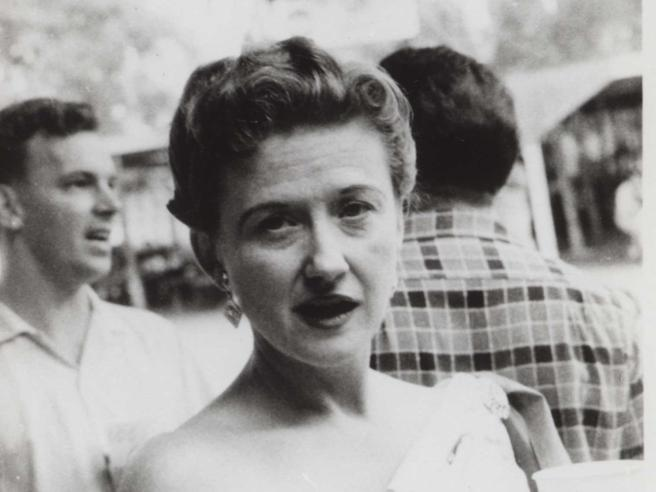
There had only been a handful of murders in El Monte since the end of the war. Jean was murdered within a few months of her arrival. The investigation into her death was outsourced by El Monte PD, which then consisted of twenty-six police officers, to experienced detectives in Sheriff’s Homicide, yet the case would prove confounding and would remain unsolved. When he was writing his book on the Jean Ellroy case My Dark Places, James Ellroy looked into every post-war murder that occurred in El Monte prior to June 1958 to see if one connected to his mother’s death. When I was writing Ellroy’s biography, he told me a story that has stuck in my memory as the details differed slightly from his description of it in My Dark Places. In the early 1950s an El Monte man, Walter H. Depew, discovered his wife was having a lesbian affair. He followed her to Ray’s Inn where she worked as a barmaid. Seething with rage, he drove his car through the wall of Ray’s Inn: ‘he kills two people. He didn’t kill his wife.’
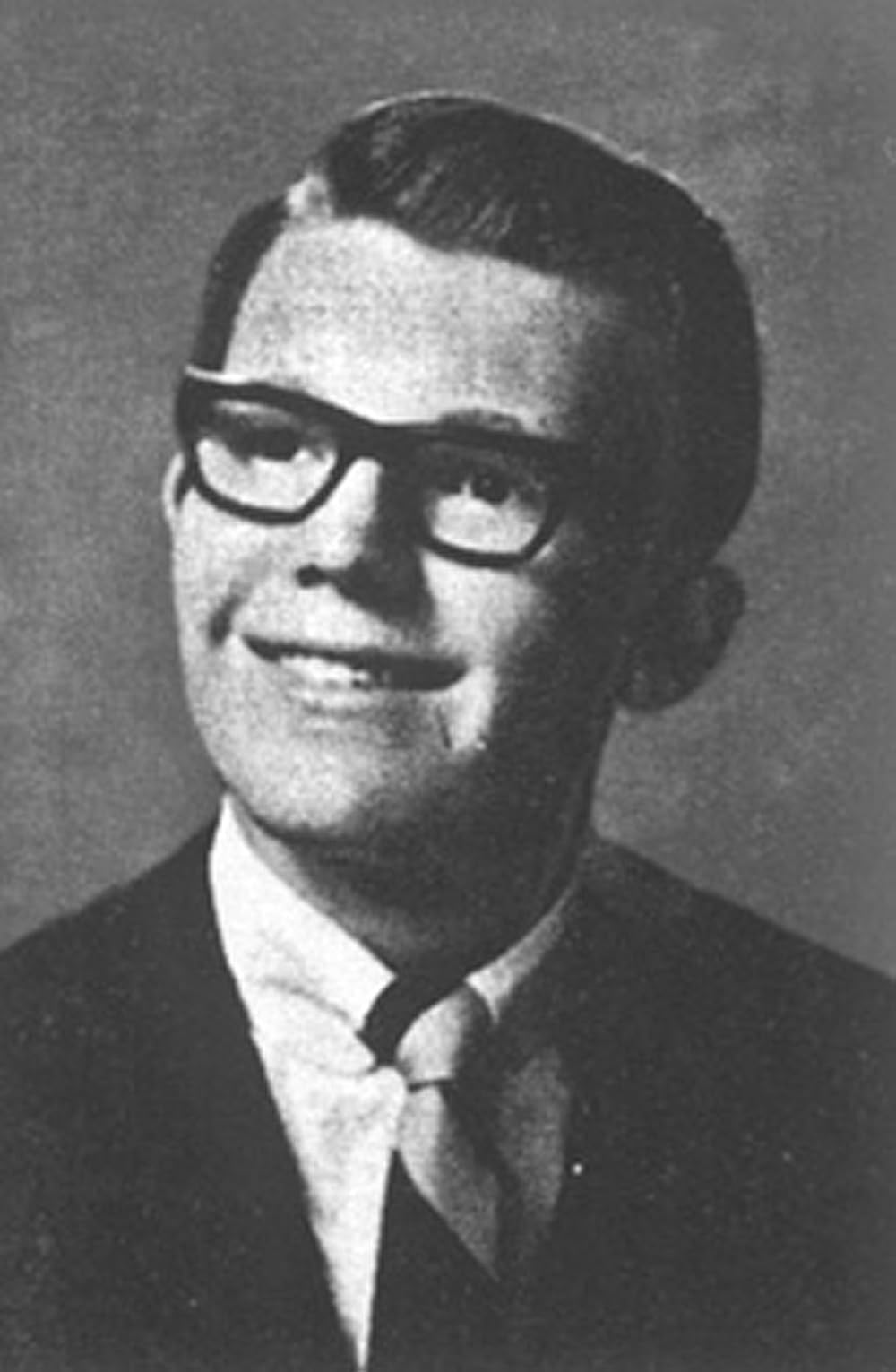
In the years after Jean’s murder, El Monte would be on the periphery or serve as the focal point for many more violent tragedies. Steven Parent, an El Monte native who lived a short distance from Jean Ellroy, would become known as the first victim of the Charles Manson family, when he visited 10050 Cielo Drive on August 8, 1969, with the intention of selling a clock radio to the house’s caretaker. It is believed that while he was leaving the property, Parent was accosted by Manson Family members Tex Watson, Susan Atkins, Patricia Krenwinkel and Linda Kasabian. They murdered Parent by stabbing him with a bayonet and then shooting him. They subsequently entered the house and murdered the inhabitants Sharon Tate, Jay Sebring, Abigail Folger and Wojciech Frykowski. Steven Parent was only eighteen at the time of his death. He was robbed of a promising future, but due to his modest upbringing, he would become only a footnote in a series of murders which shook LA’s upper-middle class Hollywood elite to its core. In El Monte, Parent is still well remembered today. On a research trip I made to El Monte in 2009, I got chatting to a staff member at Arroyo High School. She told me that El Monte receives many visits from True Crime enthusiasts and they tend to be evenly split between those interested in the Jean Ellroy and Steven Parent cases.
The population of El Monte would grow and become more ethnically diverse. When Jean lived there, it was known for it’s sizable Latin community. In the ensuing decades, its Asian population would boom.
The character of El Monte would also change. By the 1970s, violent crime was becoming more common. Some cases had a direct connection to the Jean Ellroy murder. Keith Tedrow was an El Monte cop who had attended the Jean Ellroy crime scene. He spread a false rumour that the killer had bitten off Jean’s nipple. In reality, Jean’s right nipple had been surgically removed as a consequence of mastitis. By 1971 Tedrow had transferred to Baldwin Park PD. He was shot dead by a woman he was trying to coerce into giving him oral sex. James Ellroy used the Tedrow name for the father and son Wayne Tedrow Senior and Wayne Junior locked in an Oedipal struggle in The Cold Six Thousand.
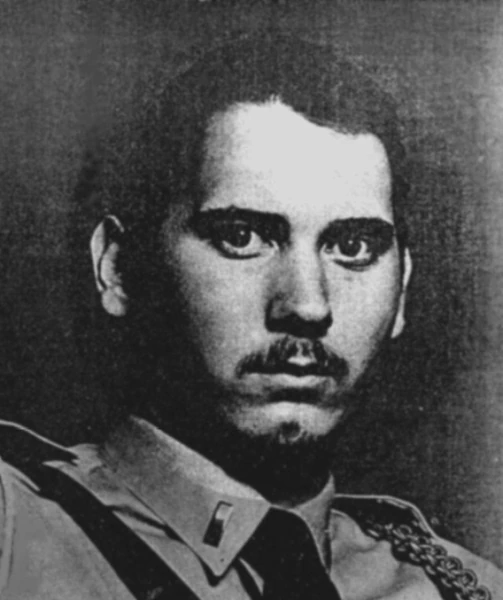
Ellroy fans will almost certainly recognise the name Rollo Tommasi (the name is so iconic a mathcore band has been named after it) from the film adaptation of LA Confidential. Joseph Tommasi was a prominent American neo-Nazi who was born in Hartford, Connecticut and raised in El Monte. At one point Tommasi had been a member of the National Socialist White People’s Party (NSWPP). He split with them acrimoniously in 1973 and on August 15, 1975, Tommasi was shot dead in a confrontation with NSWPP members outside their headquarters in El Monte. James Ellroy had been a member or affiliated with the American Nazi Party, the forerunner to the NSWPP, in his teens. Could he have encountered Joseph Tommasi and this served as the inspiration for the phantom Rollo Tommasi in LA Confidential? Most likely not. Tommasi was a few years younger than Ellroy and would only have been a child when Ellroy had his brief flirtation with the Far-Right. Rollo Tommasi was an invention for the film, not the novel on which it was based, and screenwriter Brian Helgeland told me that he took the name from someone he know in his own childhood, as it had always stuck with him as a distinctive name.
By the 1990s, urban sprawl in places like El Monte meant that Sheriff’s departments were playing an increasingly prominent media role in policing in Los Angeles County. This exposure inevitably led to some controversy. The Lynwood Vikings were a notorious gang of white supremacist deputies in the LASD based at Lynwood Station. A Viking tattoo was their trademark. James Ellroy had been in and out of jail throughout the 1960s and 70s. Despite his many arrests he never held a grudge against the LAPD, but his experiences with the LASD were different: ‘I saw them do some pretty brutal numbers’ he told interviewer Don Swaim in 1987. As a successful novelist, Ellroy would become an apologist for the LAPD throughout its many controversies. In his GQ article ‘The Tooth of Crime’ Ellroy did reserve some praise for the Los Angeles County Sheriff’s Homicide Bureau, who had decades earlier investigated the murder of Jean Ellroy. Ellroy suggested, half in jest, that they should replace their logo of a bulldog to a vulture, as vultures are ‘more charismatic than bulldogs’.
Today the post-war economic boom that had spurred many people to move to El Monte is long over and the city’s population is in decline. Social change is bringing new challenges to policing. One hopes that as people start to move away from the city known colloquially as ‘the end of the Santa Fe Trail’ that they might unearth new evidence on Jean Ellroy’s murder in their flight.
Steven Powell is the author of Love Me Fierce in Danger: The Life of James Ellroy which won the Edgar Award for Best Biographical/Critical Book.


Thanks for another look at the early days of Ellroy and the death of his mother. Would be interesting to have a psych team create a profile based on reading My Dark Places and The Hilliker Curse. (fwiw, there remain a fair number of Hilliker’s in western Wisconsin). bz
Thanks Bill. In My Dark Places, Carlos Avila did a criminal profile of the ‘Swarthy Man’. It was mostly speculative as profiling tends to be. The most striking feature was that Avila agreed with Bill Stoner’s assertion that the Swarthy Man was a serial killer.