A James Ellroy Playlist: Another Country
LP Hartley’s novel The Go Between has one of the most famous opening lines in twentieth-century literature: ‘The past is a foreign country: they do things differently there.’ Actually it’s just as famous for being misquoted as ‘another country’, which is what I thought it was until recently. It might be sacrilegious of me but I prefer the quote this way. The past isn’t foreign exactly, but it is ‘other’. Hartley, like James Ellroy and all of the great historical novelists, understood the romantic appeal of the past, and at the same time acknowledged that many of the social battles that were fought in bygone days and which ruined peoples lives have now been resolved, and the only debate that remains is why did anyone ever argue so passionately about them?
In the following post I am going to continue my examination of Dick Contino’s musical influence on the writing of James Ellroy. Contino’s promising career was virtually destroyed by the ‘draft-dodging’ stigma that stuck to him when he fled from pre-induction barracks during the Korean War. He was sentenced to six months imprisonment at McNeil Island, later served in the military and received a presidential pardon, but he never regained the stardom he had enjoyed at the peak of his popularity. However, during the 1990s, Contino enjoyed something of an Indian Summer. Thanks in part to his collaboration with Ellroy, which in turn formed part of a wider resurgence of interest in the Swing Era.
Hollywood Nocturne
Ellroy writes about the unexpected nature of memory in his essay ‘Out of the Past’. Dick Contino suddenly re-entered Ellroy’s consciousness in the early 90s. Ellroy’s recollection of him was faint. He recalled seeing Contino on television once as a child and his father making a derogatory comment about him being a ‘draft dodger’. Shortly thereafter, he saw Contino play the lead in the film Daddy-O. Ellroy did not think about Contino again until much later, although at least one event in his life paralleled Contino’s. Ellroy enlisted in the US Army in 1965. He quickly realised he had made a bad mistake and faked a nervous breakdown in order to be discharged, with the added bonus that this made him ineligible to be drafted for service in Vietnam. In Ellroy’s novel White Jazz, ‘a major sub-plot features a grade Z movie being filmed on the same Griffith Park locales as Daddy-O‘. Once he saw the influence Contino had indirectly played on his life, Ellroy resolved to find him. By the early nineties Contino had dropped off the map and Ellroy wasn’t sure if he was still alive. Ellroy re-watched Daddy-O and listened to ‘half a dozen of his [Contino’s] albums, revelling in pure Entertainment.’ Ellroy had to flesh out his personal memories to get a sense of how he might use Contino in fiction. It worked. Ellroy was able to locate Contino. They hit it off and Contino agreed to be the lead protagonist in Ellroy’s novella Dick Contino’s Blues.
Ellroy and Contino performed onstage together, with Ellroy reading from the text and Contino playing his beloved accordion. And then, as if by magic, that other country that is the past began to form around them in a big nostalgia boom. 1989 is usually regarded as the year the Swing Revival began in the US, the apex of which was the release of the double-platinum album The Dirty Boogie by The Brian Setzer Orchestra in 1998. Brian Setzer composed the song ‘Hollywood Nocturne’ for a big-screen adaptation of Dick Contino’s Blues which has yet to materialise (although those of who care hope that it will one day). The song later appeared on The Dirty Boogie. Listen to the lyrics ‘beneath a buzzing neon sign dressed in style so cool and refined stands a man from another time who’s calling out to you’ and think of Contino and how great this would sound over a Dick Contino’s Blues title sequence.
This Could Be the Start of Something
By the mid-90s Ellroy had taken to singing during public appearances on his book tours. Perhaps he wouldn’t have had the confidence to attempt this if he had not already shared a stage with Contino. With Pink Floyd the Barber (later renamed The Double Naught Spy Car) as his backup band in the US, and touring with The Jackson Code in Australia in 1996, Ellroy’s signature song was his unique cover of ‘This Could Be the Start of Something’ by Steve Allen. Ellroy considered it a great Swingers song, although he employed the term in a different sense to Swing music! He rewrote the song with profane and topical lyrics. It traditionally begins ‘You’re walkin’ along the street, or you’re at a party’. Ellroy revised this line so that the song begins ‘You’re beating up Rodney King and starting a riot’.
Imagine how incendiary this would have been to Nineties audiences when the LA riots were still a recent memory! Sadly, footage of Ellroy performing his version of the song doesn’t appear to exist. But if you watch footage of the original then you can see why Ellroy loves it, and why it was a good song to revive in the nostalgia-laden Nineties. It’s a great LA song with a dash of innuendo. My favourite rendition is below. A star-studded affair recorded for The Steve Allen Show.
Another Country? Truly, they don’t make ’em like this anymore:
Ship of Blood: An Interview with Charles Oldham
Have you heard of the Berwind Mutiny? No? Neither had I, until I read Charles Oldham’s terrific new book Ship of Blood: Mutiny and Slaughter Aboard the Harry A. Berwind, and the Quest for Justice. It’s a true crime tale with an intriguing premise. On October 10, 1905 the schooner Harry A. Berwind was drifting aimlessly about thirty miles off Cape Fear. Boarding parties were dispatched from shore to investigate and they discovered the Berwind was the scene of a bloodbath. The captain and four of his crew were dead. Three surviving crewmen were locked up and charged with mutiny. Were the murders were committed by one rogue member of the crew or was it a conspiracy involving all three men who had been charged? The crux of the matter was that all but one of the victims was white, whereas the three men charged with mutiny were black. In the South at a time when slavery and the Civil War were still a living memory for many people, one would think there was only ever going to be one outcome. However, this landmark case defied everyone’s expectations.
I had the pleasure of speaking to Charles Oldham about the Berwind Case and his writing of Ship of Blood. An Attorney based in Charlotte, North Carolina, in person Charles comes across as everything you would want a lawyer to be – measured, analytical, empathetic, a gentleman orator and a good listener. Moreover, he’s a Carolinian to his core.

My opening question to Charles was how did he first get interested in the story:
I came across the story almost by accident. It was about three or four years ago after I had finished working on my first book (The Senator’s Son), which also dealt with a true crime story that happened in eastern North Carolina. It was around the same time period as Ship of Blood, the early 1900s. After writing that book, it had got some favourable responses and I knew I wanted to do a second one. So I was looking around for a subject and I came across the story of the Berwind Mutiny by chance. I found an article that was written about it and it was published in a Historical Review Magazine here in North Carolina. It’s not a very old article. It was written in 2014, but it summarised the basic dynamics of the story – the mutiny, murder trials and what happened afterwards.
I was really stunned that I had never heard of that case before as I am someone who grew up in North Carolina. I have spent most of my life being really familiar with eastern North Carolina, vacationing there. It’s part of my family heritage but I was really surprised that I had never heard of that case with all the twists and turns and how fascinating it was. I was very surprised that nobody had yet written a book about it. So I thought I’m looking for a subject for another book and this needs to be it.
Ship of Blood has a great sense of time and place. The culture, values and speech of North Carolina are beautifully evoked. Charles puts this down to North Carolina being:
Where I’ve grown up. It’s my family heritage, both sides of my family have North Carolina roots and I’ve lived here all my life and I’ve always been a history buff ever since I was kid. It comes naturally.
I ask Charles to tell me more about his background as an attorney. Did it help him when it came to researching and writing the book?
When I was practising law most of what I did was Criminal Defence, Civil Litigation. With a background like that I know my way around the courtroom quite well. So I’ve always had a thing for a really interesting courtroom drama which obviously this is. When I first came across the story I thought the history itself is fascinating with all the new studies which have focused on the Wilmington Insurrection over the past few years. I came across the story and I saw this is just a very fascinating postscript to everything that happened in 1898. I was very fortunate to find the transcripts of the trials. I found all of the appellate court documents. There’s a wealth of material out there.
I’m not gonna claim that I was the best attorney around, which I certainly wasn’t, but just having enough of a background to know my way around a court transcript and to have a pretty good idea of what I’m looking at when I dig up those old documents. I thought an attorney who has some experience in that type of thing is probably the best storyteller for this particular case. Not to toot my own horn too much, but I thought it was a convenient confluence of events.

We live in an age when race relations are back on the agenda. Did the parallels affect the writing process?
I’m coming along at just the right time frankly because when you look at the setting of the case – Wilmington, North Carolina, 1905 – the inevitable reality is that race and politics were inextricably bound up in that case. That was just unavoidable because of the history. It’s just within the past twenty or twenty-five years that a lot of other historians have looked seriously into the Wilmington Insurrection of 1898, and we’ve had several really good accounts that have been published within the past few years. Up until then it was a very neglected chapter in our history here. And all of that is to the good as we’ve become more aware of the tragedy that occurred back then. I’ve certainly been the beneficiary of all that and what I’ve written expands and expounds on what has come before.
I’m just glad that I came across the story and I’m happy to say that the story ends well. The particular case of these three men who were put on trial when everyone was expecting that they surely would be convicted and hanged very quickly, but it actually turned out not to be the case. A lot of people in Wilmington acted against type, against prejudices that you would have expected them to hold and because of that justice actually prevailed in the end, which makes it a really fascinating tale.
What can the story of the Berwind tell us about justice and race relations in the US today?
I look at the story in the way people used to think about Watergate for example, and the Dreyfus Case in France. In the end the good guys won in both of those instances, and here in Eastern North Carolina in 1905, even in the very worst days of the White Supremacist movement there were a surprising number of people in Wilmington who actually listened to the evidence in this case and they realised that out of those three men who were put on trial, three black men charged with killing four white men, they listened to the testimony of these guys and they realised well one of them probably is guilty, and if anyone ever deserved the death penalty he did and that’s what he got. But they recognised that the other two were probably not guilty and people acted upon it and the newspapers acted upon it, and a number of people in Wilmington, even people who had taken part in that insurrection in Wilmington several years ago realised that justice needs to be done here. They were the ones who got behind these guys and found legal counsel for them and eventually took the case to the Supreme Court and eventually to the White House, the presidential clemency petitions.
I hope if anyone gathers anything from the book it’s a message of hope. Even in the worst days justice can prevail. Fast-forward more than a hundred years to where we are right now. As much as we hear in the press about Black Lives Matter and nasty incidents like George Floyd, our situation today is incomparably better than it was back then. Politics today is nasty but politics back then was nasty, brutal and bloody. If justice can prevail back then we are in much happier times today. If people can draw some sense of perspective from that then I’ve accomplished my purpose.
You’ve managed to accomplish that purpose by avoiding sensationalism. So many books in the True Crime genre rush for easy answers or jump to far-fetched conclusions.
I try not to go beyond what’s actually in the historical record. When I speculate about what might have happened I make it as explicit as I can that I’m sort of going beyond the record right here and I’m speculating a little bit. I try to keep everything footnoted and documented as best I can and make it clear to delineate what’s in the record and what goes beyond that.
Writing is an addictive, rewarding and frustrating process. Now that Ship of Blood has been published will you follow it with another book?
I have a couple of ideas that I’m mulling around a little bit. I definitely want to do another one. I’d like to find a topic which might have more of a national appeal. My first two books have both dealt with local stories from Eastern North Carolina, from the same time period, and I’d like to get beyond that but I’m not going to venture into the details on it yet because I’m not sure exactly what direction I’m going to go in. But I fully anticipate there will be a third book.
Ship of Blood is published by Beach Glass Books.

Nicola Black is a Scottish filmmaker whose work includes Designer Vaginas, When Freddie Mercury Met Kenny Everett and the excellent White Jazz, which is perhaps the greatest of all the documentaries which have been produced on the life and work of James Ellroy.
I’ve been corresponding with Nicola for some time, and when I recently published a piece examining the parallels between Ellroy and Manson Family victim Steven Parent, she notified me of a documentary she had been working on for several years, provisionally titled It All Went Down, which tells the story of Bobby Beausoleil and the murder of Gary Hinman, its links to the Manson Family, and most intriguing of all, Beausoleil’s role in Kenneth Anger’s cult independent film Lucifer Rising.
Lucifer Rising
Bobby Beausoleil was born in Santa Barbara in 1947. He had a fairly typical Californian upbringing for the time. He would visit his grandparents in El Monte where, by coincidence, one of the Manson Family’s victims (Steven Parent) grew up. His interest in music was sparked, as a child, when he discovered a guitar in his grandmother’s attic. As a teen he started getting into trouble, and after a spell in Los Prietos Boys Camp he began to drift between Los Angeles and San Francisco, becoming involved with the growing counter-culture movement. Beausoleil joined several bands and came to the attention of independent filmmaker Kenneth Anger. Anger was smitten by the good-looking Beausoleil and cast him in the eponymous role of his short film Lucifer Rising, in which Beausoleil would play the Fallen Angel. However, no sooner had filming commenced when things began to fall apart. There are various accounts as to why the production ground to a halt. According to Nicola, ‘One story is that the money for the film was spent on drugs rather than film stock; the other version is that Bobby stole the rushes after he and Kenneth argued, leaving for LA where he ran into the Manson family.’ Anger later completed the film Invocation of My Demon Brother using left-over footage of Beausoleil he had from the Lucifer Rising shoot.
The Murder of Gary Hinman
It was Beausoleil’s encounter with Charles Manson that would seal his fate. At first glance Manson and his lifestyle seemed very attractive to Bobby. Manson was an aspiring singer-songwriter with a handful of showbiz connections, and a bevy of beautiful followers eager to indulge in his free love philosophy. Another acquaintance of Manson’s was the music teacher Gary Hinman. Beausoleil and Hinman, at least nominally, became friends. They were both talented musicians and Hinman had once played at Carnegie Hall. Manson was under the impression that Hinman was the heir to a sizable fortune and sent Beausoleil, accompanied by two female followers Susan Atkins and Mary Brunner, to Hinman’s home in Topanga Canyon with orders to extort a slice of it. Hinman refused to give them any money. Manson travelled to the house by car, driven by his right-hand man Bruce Davis, carrying either a samurai sword or a bayonet (reports vary). He slashed Hinman’s face and ear with the blade. This began several days of torture. Manson told Beausoleil by phone to kill Hinman and make it look like the work of black revolutionaries. After he stabbed Hinman to death Beausoleil wrote ‘Political piggy’ on the wall with Hinman’s blood. Beausoleil was arrested on August 6, 1969 after falling asleep in Hinman’s fiat which he had taken after the murder. The Tate-LaBianca murders by the Manson Family began on August 8.
Lucifer Resurrected
In 1968 Kenneth Anger travelled to Britain, where he ended up hanging out with the cream of Swinging Sixties entertainers. Eager to get Lucifer Rising back into production, he offered the lead role to Mick Jagger. Jagger declined, but recommended his brother Chris for the role. Soon after shooting restarted however, Anger started having arguments with Chris Jagger and sacked him. Anger met Jimmy Page at a Sotheby’s auction for Aleister Crowley artefacts. Both men were fascinated by Thelema and the Occult, and Page agreed to compose the score for the film. Anger and Page did not have a happy working experience together, and Anger was so incensed with the Led Zeppelin guitarist that he is rumoured to have put a curse on him. This is roughly when Bobby Beausoleil reenters the story of the film’s production.
Beausoleil had experienced some tough and turbulent years in prison. After being found guilty for Hinman’s murder, he was sentenced to death, but this was commuted to life imprisonment when the Supreme Court of California ruled that Capital Punishment was unconstitutional in 1972. During his trial and a subsequent sanity hearing for Manson Family members, Beausoleil appeared belligerent and still, it seems, in thrall to Manson.

Truman Capote interviewed Beausoleil at San Quentin prison in 1973 for a one-hour CBS special (which now appears to be lost). Capote’s In Cold Blood had been published in 1966 and quickly became a publishing sensation, but it was not well-known at the time how Capote had manipulated the prisoners at the heart of the story, Richard Hickock and Perry Smith, for his own ends. If it had been, perhaps Beausoleil would never have agreed to an interview. History would repeat itself. Beausoleil had the youthful looks and buff jailhouse figure which Capote found very attractive. A transcript of their interview makes for strange reading. Time and again Beausoleil is moved to silence, as though he is wowed by Capote’s formidable intellect. One can’t but wonder if this is how their conversation really played out, or is it merely all part of Capote’s fantasy. Needless to say, it did nothing to rehabilitate Beausoleil in the public’s eyes.
Beausoleil had been transferred to Tracy Prison when he learned that Jimmy Page was no longer involved in Lucifer Rising. He wrote to Anger offering to compose the soundtrack himself which he did over a three-year period with the Freedom Orchestra, musicians made up of his fellow inmates. Recording the score was particularly difficult given that band members would be paroled and transferred to other prisons, and they had restricted access to a small recording studio which had been built with the proceeds of a grant. Nevertheless, Beausoleil’s score perfectly complements the film which by the time it was finally released in 1980, played like a demonic cocktail of the 1960s psychedelia and 1970s fascination with devil worship. I’m not saying it’s necessarily a good film, but it is filled with striking imagery, weirdly memorable moments and it almost seems to be anticipating the Satanic Panic of the 1980s. Despite Anger’s penchant for falling-out with the people he worked with, there are still appearances by Jagger, Page, Marianne Faithfull and Donald Cammell. Even if you do not enjoy the film, Beausoleil’s score is a haunting and moving piece of music, full of creative and well-judged experimentation, which stands up well on its own.
Reinvention and Redemption
Beausoleil continued to compose and release music throughout the 1980s and the experience appears to have been life-changing for him. He began to increasingly distance himself from the Manson Family. His story about the Hinman murder also began to change. His most consistent account of the murder is that Hinman was killed over a drug deal gone wrong. In this version, Hinman supplied Beausoleil with mescaline to sell to a biker gang called the Straight Satans. But the drugs Hinman provided were sub-par. Fearing retribution from the bikers, Beausoleil confronted Hinman in his home and demanded he provide compensation. They argued and ultimately Hinman was killed. Another story which has spun off from this is that the Manson Family committed the Tate-LaBianca murders two days after Beausoleil’s arrest in an effort to fool the police. ‘Pig’ was written in blood on the front door of 10050 Cielo Drive by Susan Atkins to try and make the LAPD think that Hinman’s murderer was still at large, when in fact Beausoleil was already in custody (remember Beausoleil had written ‘Political piggy’ at the Hinman crime scene). If this story is true (and that’s a big if) it backfired spectacularly. The LAPD only linked the Manson Family to the Tate-LaBianca case once Los Angeles Sheriff’s Office Homicide Detectives informed them of its similarities to the Hinman murder. By trying to help Beausoleil, the Manson Family only ended up incriminating themselves.
When Nicola began work on her documentary, Beausoleil had been recommended for release by the parole board, and she envisaged her film ending with Beausoleil telling his story as a (relatively) free man. However, Governor of California Gavin Newsom reversed the parole board’s decision (as he did more recently with Sirhan Sirhan) and Beausoleil remained incarcerated. The spectre of the Manson Family continues to haunt him. Clearly Manson and his followers’ horrific crimes still cause the families of the victims emotional suffering, and there is no doubt that Beausoleil committed the worst crime of all in taking another man’s life. But perhaps after spending more than fifty years in prison, and working hard to be a constructive member of society from behind bars, it is time he was released. Whatever happens, I do hope Nicola gets to complete her film. The footage I’ve seen so far is excellent. She has audio interviews with Beausoleil, a terrific interview with Kenneth Anger and much more. More importantly though, she has a story which, in all its complexity and mythology, needs to be told.
A James Ellroy Playlist: From Cooley to Contino
In James Ellroy’s world, icons are only as interesting as their fall and their flaws. Ellroy finds ‘rogue cops and shakedown artists’ to be more compelling than the lofty figures of politics or showbiz. When he does take an interest in a celebrity, it’s usually for the secrets that lie behind the persona which can either make them appear more human or more sordid than their glamorous facade. For the latest instalment in my series on James Ellroy and music, we are going to take a look at two stars of the fifties who reached the dizzying heights of fame only to come crashing down with an almighty fall, and are, therefore, perfect specimens to be fictionalised in Ellroy’s work.
Shame on You
Spade Cooley was known as the ‘King of Western Swing’. His breakthrough hit was ‘Shame on You’ in 1944, and it’s slut-shaming lyrics ‘Ran around with other guys / Tried to lie when I got wise’, would prove to be chillingly prophetic. Cooley was convicted of murder after beating his wife Ella Mae Evans to death in 1961. Cooley suspected his wife was being unfaithful and his murderous rage was sparked by his belief that Ella Mae had joined a free love cult.
Ellroy’s interest in Cooley was personal. In My Dark Places, Ellroy notes that Cooley performed at the Desert Inn in El Monte, the same venue where Jean Ellroy was spotted with the Swarthy Man the night she was murdered. Ellroy also states the ‘quasi-Ink Spots’, who recorded a version of ‘Harbour Lights’, which is referenced repeatedly in White Jazz ‘played there’. Ellroy followed Cooley’s murder trial, the longest in county history at the time, with great interest. Cooley makes sporadic appearances in Ellroy’s fiction. The most notable being in LA Confidential where he is portrayed as a violent misogynist who Bud White suspects of murdering underage prostitutes. However, the real killer turns out to be a member of Cooley’s band, the fictional ‘Deuce’ Perkins.
During his incarceration, Cooley’s health declined rapidly. He was due to be paroled on February 22, 1970, reportedly after lobbying for his release from Governor of California Ronald Reagan. However, on November 23, 1969, while on a 72-hour furlough from his prison hospital unit, Cooley died of a heart attack during a benefit gig for the Deputy Sheriff’s Association of Alameda County.
Below is a Soundie of Patsy McMahon singing ‘Shame on You’ with Spade Cooley’s band.
Lady of Spain / Contino Medley
At the height of his popularity Dick Contino was known as the ‘World’s Greatest Accordion Player’. He found fame when he won the Horace Heidt/Philip Morris talent contest in 1947 with his rendition of ‘Lady of Spain’, which became his signature piece. Like Cooley, he would suffer a spectacular fall from grace, albeit his sins were notably less grievous than the King of Swing’s. Contino was drafted into the US Army to serve in the Korean War. In a panic, he fled from pre-induction barracks at Ford Ord. He was subsequently sentenced to six months imprisonment at McNeil Island Correctional Center. Although he would go on to military service, and would receive a presidential pardon by Proclamation 3000, the scandal did lasting damage to Contino’s career.
Ellroy had fond boyhood memories of seeing Contino perform on television during the late fifties when the accordionist was trying to rebuild his career. Years later, he managed to track down Contino in Vegas. The two men quickly became friends, swapping stories of LA lore, and Contino agreed that Ellroy could use him as the lead character in the novella ‘Dick Contino’s Blues’. In the novella, Contino crosses paths with Cooley. In Ellroy’s narrative, Contino once had an affair with Cooley’s ill-fated wife Ella Mae: ‘I remembered Fresno, Christmas ’47 – I was young, she was lonely, Spade was in Texas.’ Contino’s wife Leigh Snowden asks him to stop Cooley from beating Ella Mae. Contino drives up to Cooley’s ranch with ‘Shame on You’ playing on the car radio. He finds Cooley in a drunk, stoned and belligerent mood. He sedates Cooley and carries him to his bed, putting him aside his sleeping wife. ‘Keep it hush-hush, dear heart – for both our sakes’ he whispers to Ella Mae in her slumbers. The fact that Contino listens to ‘Shame on You’ as a precursor to this scene is telling. There is a triumvirate of shame with these characters. The shame of the cheating spouse, the shame of Cooley who the reader knows will go on to commit the worst crime of all, and the shame of the trysting lovers Contino and Ella Mae, whose passion is enhanced by the knowledge that what they have done is wrong.
Below is my favourite footage of Contino, performing with the June Taylor Dancers in 1957. This was filmed several years after the draft-dodging scandal, but Contino’s still got it. Find someone who looks at you the way the dancers look at him…
An Interview with Joshua Melville about AMERICAN TIME BOMB: ATTICA, SAM MELVILLE, AND A SON’S SEARCH FOR ANSWERS
Joshua Melville has an unusual family history. His father was a bomb-setter, radical and (depending on your definition of the term) terrorist. Sam Melville was connected to at least eight bombings in the United States in 1969, finally being convicted of bombing the Federal Office Building in 1970. No one was killed in Melville’s bombings. However, a little over a year after he was convicted, Sam Melville was dead, killed in the Attica Prison riot.

Josh Melville was only a boy when his father was killed, and it’s fair to say that he never really knew the man. He has gone on to have an extraordinary life of his own, working on Wall Street and the Music Industry and authoring several books on the latter under the pseudonym Moses Avalon. Now he has turned his writing skills to address his father’s story and a controversial period of recent American history when left-wing militant groups such as the Weather Underground were prepared to use violence to protest against everything from the Vietnam War, Capitalism, Imperialism and Racism.
The result is American Time Bomb: Attica, Sam Melville, and a Son’s Search for Answers. Prior to reading my review copy, I was a little apprehensive. I was worried the book would be a one-sided political screed. I couldn’t have been more wrong. American Time Bomb is an extraordinary mixture of memoir, mystery and social history. I devoured the book over a weekend and heartily recommend you do the same. Melville’s writing is at turns compelling, funny and always empathetic. Qualities he exhibits in person when I interview him about the book via Zoom.
One of the first things I ask Melville is to describe the book’s long gestation:
When I was approached to do a book about my father it was maybe 87-88. Then I realised I didn’t really know much about him, and didn’t know how I felt about everything he had done. The bulk of the book covers approximately three or four years of the initial research. Then I took a hiatus around 92-93. I kinda realised I wanted to get on with my life. There wasn’t a story here that I thought I could tell. I didn’t really have an angle. I didn’t understand how to tell it. I was still processing all of it. And then I met a great woman and I decided to have a family and focus on that, and then intermittently over the years little pieces would surface. I’d meet people who knew my father and would give me another little piece of the story, and I realised there was really a lot more here than just the initial research.
I guess it was around eight years ago when my wife said ‘when are you gonna write that book that you were starting to write when I met you?’
And I’d written other books in the interim and she said, ‘if you don’t write it now you’re probably never gonna write it.’
I was 51 at the time and I thought, well you’re right. I said ‘one of the reasons I haven’t written this book is because we’re raising two kids now and writing this book will easily be two or three years of my life with little time to do much else.’
She had just left her very lucrative job and started her own consulting business, so it was kind of bad timing all around, her starting a new business, me putting my career on hiatus to work on this book, but we both thought it was an important thing to do and she was very supportive, and so I did it. It ended up taking about five years, and then another two years to sell the book and then even after we sold the book the publishing company wanted to wait until the fiftieth anniversary (of Attica). So, all in all, this version of the book, the whole book itself is a thirty year process.
For a book which has taken a generation to research, write and complete, the theme of generations, families and coming of age is especially pertinent. As Josh transitions from adolescence to adulthood to parenthood he begins to view his father through different eyes, particularly as he learns what his mother told him about his father’s acts was not always accurate:
There wasn’t one aha moment when it came to me realising what my mother knew or didn’t know. That was the process itself. First realising that the story she told me was incomplete and there was an almost Disneyfied version of the story where my father was the victim in each version that she tells me. And then realising that my father was anything but a victim: that he was very cognisant of what he was doing, and made a very lucid decision to do this with his life. I don’t think I can point to the exact moment in time when I realised ‘oh my God, this is really the reality’. It was an arc. It was a process that happened over years.
And then at some point you just realise, a lotta people in their growing up, their transition from adolescence to adulthood, they realise that our parents lie to us. They’re doing it mostly because they think it’s for our own good, and most of the time it probably is. Being humans we tend to resent our parents for the things they lied to us about, focusing on the few times they lied to us when it turned out not to be for our betterment. Sometimes forgetting that most of the time it’s for our protection.
The other half of the journey was after realising my mother lied to me, then putting it into perspective – was this a reasonable lie to tell to me at age twelve and to continue to perpetuate these lies into my young adulthood? There’s that scene in the book where she finally confesses her reasoning which is ‘you remind me so much of him.’ She was afraid I would go down the same path and that’s what she was trying to protect me from.
Joshua Melville certainly didn’t go down the same path as his father. He went to work for a Wall Street Investment Firm. Was this an act of rebellion against his father?

It was an act of survival. I really needed my independence from my mother and I needed my own apartment. Living in New York City that didn’t come cheap. And so I needed a job that paid well and I was lucky enough to find one. The act of rebellion was probably quitting that job and going into music, partially in a romantic notion of following my father in some way, in a benign way as opposed to a radical way. Partially because it looked like a fun thing to do. The irony is that I learned that the music industry was just as corrupt as the banking industry (laughs), just in its own way.
In one memorable scene Melville is lunching with a colleague known as ‘Closer Dan’ when he finally confesses his family’s radical past. Rather than judge him for it, to his surprise, the salesman takes out a photograph of his younger self with long hair and admits he too was a student radical.
When he says that the Peace Movement was about saving sixty thousand lives, but he distils it to that analogy, ‘if you wanna save sixty thousand lives (in the US) just take away peoples driving licences for one year.’ That was a mind-blowing moment for me. In my interviews with radicals I asked, ‘Why did you do all this? What was the point?’
‘People we’re dying in Vietnam’ (They would respond and he’d repeat the line about the driving licences.) At which point they’d say ‘what about the two million Vietnamese (killed in the War).’
Okay, but that’s not supposedly what it was about. It seems like there’s sympathy for the enemy when it suited their argument, but when it didn’t suit their argument they focused on the corruption within the United States. I was never really able to get them to admit that a lot of the reasons for doing what they did were very personal to them. They weren’t really these big social causes. They were personal. That was a revelation to me to realise that a lot of it was just them having anger at their parents or society or just the rebelliousness that comes with being young, and living at the time when there were so many young people (the Baby boomers of the time made up the biggest demographic of the country, much as Millennials do today). It created this permission to be angry about this. It was cool to be angry at society. It was cool to hate your government. It was cool to hate your parents, and only a step away from that made it cool to decide to blow up buildings. It was acceptable at the time.
By the nineties, however, new forms of Domestic Terrorism were emerging in the US which were far more deadly and insidious than anything Americans had witnessed before.
Timothy McVeigh and the Oklahoma City bombing I think forever changed the public perception… even [of] people on the Left who had advocated the Weather Underground and bombings that were committed by radical groups in the early seventies. Now the public perception was that all bombings were just terrorist acts regardless of their intention or their methodology.
It’s important to point out to your readers that no one was ever killed in any of my father’s bombings and that’s by design. He was an engineer and he made sure the bombs were placed in such a way that it would only destroy property. He chose his targets based on political significance, not on convenience. And he chose his methodology to cause the least amount of collateral damage, and that’s what distinguishes my father and people in his class from what we would today call Islamic terrorists or Domestic terrorists or any of the versions of terrorism that we use in today’s conversation. That changed pretty much in the nineties: lots of plane hijackings, the Oklahoma City bombing. That changed public perception. Now suddenly if a bomb went off, there was no rationalising it in any way, shape or form.
One of the most impressive aspects of the book is the moment by moment reconstruction of the Attica Prison riot. Melville gathers all of the information and testimony he can regarding how his father was shot to death as authorities retook the prison from its mutinous inmates. Melville displays no bitterness in his writing he just wants to learn the truth. He is even empathetic towards Vincent Tobia, the man who bragged about shooting and killing ‘Mad Bomber’ Melville at Attica.
I wish I could have gotten the chance to interview him (Tobia). I did try. The closest I could come was one of his best friends who was also his law partner. I don’t think that he felt he did the wrong thing. I only know that after the Attica verdict came in he and his wife split up. He was estranged from his son which got worse after the Attica verdict. This all happened within the same year and then the next year he died of a heart attack. I’m just being a journalist. I’m just reporting what I learn. Prior to the Attica verdict he was living in a community where he was surrounded by his fellow cops who surely would have agreed with what he did. But after the verdict, when there was a shift in public perception and a shift in blame, the State had been held legally responsible, I think that probably changed the climate in Buffalo and the Tonawandas where he lived and navigated. I’m sure that contributed to his early death.
It took a decades-long legal battle for the survivors of Attica and their families to receive justice. Noted Civil Rights attorney Elizabeth Fink led the battle on their behalf, but she was no admirer of Sam Melville and would prove a thorn in Josh’s side for many years. To Josh’s surprise, Fink reveals this animosity stemmed from an off-colour comment Sam Melville once made about her weight.
It was surprising when it happened. I had come to the conclusion that she was marginalising my father to win the case. So it was surprising to learn there was a personal issue there. Elizabeth Fink was not a terribly popular woman except among people who were very close to her legal circles. She was not an easy person to deal with and even people who respected her would say, ‘Yeah. Liz was a handful.’ But I didn’t dislike her and I’m not sure my father disliked her either. He probably just didn’t give her the attention that she wanted, and so there was this issue. In spite of what she said, I do think her reason for marginalising my father in the Attica narrative was to win the case. It was probably just a convenience that she also didn’t like him. Her not liking of him was basically a transference onto me and seeing me as a threat to her litigation which I didn’t think I was at the time but looking at it now twenty, thirty years later, I can see why she would perceive me as a threat.
I spoke to Josh shortly after the first anniversary of the Capitol Riots. Does he see a parallel between his father’s struggle and the current divisions which are rife in American society?
I think it’s really hard to not see parallels between Antifa, BLM and the current political state of the country and the Weathermen, Black Panthers and SNCC and Nixon. I do think there are lessons to be learned here. One of the reasons I wrote the book now, and felt it should it come out now… and I actually wanted it to come out a year earlier but Chicago Review wanted to wait until the fiftieth anniversary of Attica. They felt it was really an Attica book. I never saw it as an Attica book. I saw it more as a social revolution book with Attica as its climax.
The situation as it exists today, in the last year of this country, with what’s happening in certain major cities, a lot of destruction, protests or riots or whatever words you chose. As bad as it is, it could get worse. The late sixties and early seventies are the analogue or template for what could happen if we as a society don’t start listening to each other and becoming more civil towards each other about discourse. We will eventually see more Sam Melvilles and more bombings, and I think this time not as much conscientiousness towards the safeguarding of human life. I think that’s clear. More civilians were killed in the last year or so in the so-called peaceful protests than were killed in all of the sixties and early seventies bombings and protests, and that’s just in the last year and a half. So we’re in a different state right now. We have more technology. We have a greater ease of availability to weapons and firearms and ability to destroy that’s much less expensive.
On the other side, government surveillance technology has improved ten thousand per cent. They (the FBI) had to do what today would seem like quite primitive surveillance techniques, hanging out in a car on a street corner. Now they can trace every credit card movement, every telephone call, every email. The ability to catch domestic terrorism, if we can use that term, is much better now. The FBI has way more tools at its disposal which makes you wonder, why did they allow so much violence in the country to persist over the last year and a half? You can do as some media outlets do and say, ‘well let’s blame the liberal Blue State mayors’. But the FBI is not governed by Blue State mayors and the FBI did virtually nothing to stop this and I can’t believe they don’t know who the leaders are. That is an impossibility given the technology they have at their disposal. If they could have figured out who the leaders were fifty years ago, and they did, certainly they can figure out who they are now. So if they’re not arresting them its obviously because they are agreeing with this agenda, and that’s a pretty radical shift in terms of the authorities endorsing various forms of violence and insurrection.
So if we got to the point where there would be more Sam Melvilles it would be much worse than isolated little bombings here and there like it was in 1969, and much worse than Attica was in 1971. As bad as Attica was, we will see more prison uprisings with more deaths. We will see more violence in the streets. Unless we learn to start listening and stop being so extreme in our viewpoints and understand that we have to try and unite together as a country.
American Time Bomb: Attica, Sam Melville, and a Son’s Search for Answers is available to purchase now.

Andrew Vachss (1942-2021)
I was saddened to learn Andrew Vachss died on December 27th. An attorney, author and activist, Vachss’s series of hardboiled novels featuring Burke (ex-con private investigator, survivalist and vigilante) became classics of the crime genre.
I interviewed Vachss in May of last year. It was for a book which I am currently writing on James Ellroy. Vachss and Ellroy were friends from the mid-80s to the early 90s. Setting up the interview was like a scenario out of one Vachss’s novels: I had to mail a letter to a PO Box address in Chicago to contact him, once I passed that hurdle, Vachss wouldn’t agree to the interview until Ellroy had given his permission. Ellroy kindly wrote to Vachss, initiating their first contact in thirty years, giving his blessing for the interview.
I finally spoke to Vachss by phone on a Sunday. He was in his law office in New York and explained to me that he could be called away at any moment if a legal issue arose that required his attention. I was floored by his hectic schedule considering this was a man in his late seventies. It’s hard to believe, only seven months later, he is not with us anymore.
Vachss died two days before Ghislaine Maxwell was convicted on five counts of sex offences. It was a shame Vachss didn’t live to see it. The more powerful the abuser, the more he seemed to relish in their downfall. Take for example, his analysis of the Roman Polanski/Samantha Gailey case, which is completely unencumbered by Polanski’s exalted reputation in the Arts. It was Vachss’s hard work and dedication that led to President Clinton signing the National Child Protection Act into law, otherwise known as the ‘Oprah Bill’. Photo below is courtesy of Mike Ripley.

Thank you Andrew Vachss for everything you did. It was an honour to talk to you.
Postscript: I’ve dug up a blurb Vachss wrote for the first edition of The Black Dahlia. It’s quintessential Vachss:
THE BLACK DAHLIA hits you like Chinatown directed by Caryl Chessman. With it, James Ellroy surges to the forefront of contemporary American mystery fiction—Krafft-Ebing in one hand, a chainsaw in the other.
James Ellroy and Steven Parent: A Tale of Two El Montes
Every bookworm should at one point undertake a literary pilgrimage. As a James Ellroy scholar I have retraced his steps in Los Angeles and El Monte, among other places. While visiting Arroyo High School in El Monte (where Jean Ellroy’s corpse was discovered) I got chatting to a member of the school staff. She informed me that in addition to all of the Ellroy readers who visited the school, they also received a lot of visits from people who studied the Manson Family murders. In her words, ‘the first victim of the Manson Family went to this school.’
His name was Steven Parent.
An El Monte Upbringing
The early lives of James Ellroy and Steven Parent have many parallels, intersections and strange coincidences. Ellroy was born Lee Earle Ellroy on March 4, 1948, at Good Samaritan Hospital in Los Angeles. As a child he moved to El Monte with his mother, Jean Ellroy in early 1958. Ellroy’s parents had been through an acrimonious divorce. Jean thought El Monte represented a clean break. Around twenty miles east of LA, it was far enough away from the City of Angels for Jean to live without the fear of constant harassment from her ex-husband Armand. Armand did not own a car and only got to see his son at weekends. Known as ‘Friendly El Monte’, the city was renowned for its low crime rate. Jean and Ellroy lived at 756 Maple Avenue. Jean enrolled Ellroy at Anne LeGore Elementary School. Life seemed to be looking up for Jean. She liked El Monte and the freedom it afforded her. Her son hated it. He wanted to live with his father in LA.
On June 22, 1958, the body of Jean Ellroy was discovered on a road adjacent to a playing field at Arroyo High School. She had been strangled to death. The previous night she had been on a date with a man at a restaurant called Stan’s Drive-In, and was seen with the same man and an unidentified blonde woman at the Desert Inn bar.
The murder of Jean Ellroy would go unsolved. Her ten-year-old son’s reaction to the murder was somewhat indifferent at the time, probably due to shock and the fact that he hated El Monte so much that he was secretly relieved he could now live in LA with his father. However, his life would slowly fall apart from that point on, and the ghosts of El Monte would haunt him for decades.
The Short, Eventful Life of Steven Parent
Steven Earl Parent was born to Wilfred and Juanita Parent in Los Angeles on February 12, 1951. At some point in 1958, the family moved to 11214 E. Bryant Road, El Monte. Whether their move happened before or after Jean’s murder is a moot point. The murder of Jean Ellroy would have been discussed in the Parent household: murders were not common in El Monte, and Jean’s slaying had been front page news on the LA Times. Naturally, Parent’s parents would want to shield their eldest son Steven, as well as his siblings Janet, Greg and Dale from the disturbing details. One suspects though that the children would have found out about the murder soon enough. Jean had lived less than half a mile away.

Steven began attending Arroyo High School in 1965. The following year he started getting into trouble. He was arrested for petty theft and, according to Lori Johnston, there is some evidence to suggest Steven committed several ‘burglaries at area schools’. His crimes were at least in some way spawned by his burning talent. Steven was stealing radios as he was quickly becoming an electronics whizz. He spent two years in juvenile detention where he ‘reportedly tested at near-genius level for electronics.’ Steven graduated from Arroyo High School in June 1969. Two months later he was murdered. Everything in Steven’s life seemed to be heading in the right direction. His run-ins with the law were behind him. He was planning to attend Citrus Azusa College. He was holding down two jobs to save up for the tuition fees, one of which was tied to his love of electronics. Steven worked as a salesman at Jonas Miller Studio in Beverly Hills. He was dating a girl. With life looking so good, what drove Steven to visit 10050 Cielo Drive on August 8, 1969? As Lori Johnston explains, it all happened through a seemingly innocent twist of fate:
In late July, Steven picked up a hitchhiker named William Garretson. This seemingly innocuous act would set the wheels in motion to alter the course of his life. Garretson, an Ohio native, was the summer caretaker for the property located at 10050 Cielo Drive in Benedict Canyon. The home, owned by Rudi Altobelli, a manager and producer, was being rented out to director Roman Polanski and his wife, actress Sharon Tate. Altobelli normally resided in the guesthouse but had hired Garretson on during the months he was in Europe. After dropping Garretson off at the property, the caretaker told Steven to feel free to drop by anytime he should be in the area.
Steven did drop by, on that fateful night in August with the intention of selling Garretson a clock radio. While he was leaving the property, Steven was accosted by Manson Family members Tex Watson, Susan Atkins, Patricia Krenwinkel and Linda Kasabian. Watson slashed Steven with a bayonet before shooting him three times. The killers then proceeded to enter the property and murder Sharon Tate, Jay Sebring, Abigail Folger and Wojciech Frykowski. Steven Parent has long been regarded as the first victim of the slaughter that happened that evening, although there is some evidence to suggest he may have been the last. In this scenario, Steven arrived at the property shortly after the murders occurred. Stumbling across the multiple murders, he panicked and ran to his car, being killed by Watson as he was trying to leave. However, Linda Kasabian, who served as a witness for the prosecution, testified that she saw Watson murder Steven Parent, and then enter the house with Atkins and Krenwinkel who then proceeded to kill the inhabitants. In any event, Steven was the least known of the five victims that night, which included a movie star (Tate), celebrity hairstylist (Sebring) and heiress (Folger). When the police were first briefing the press about the killings the following day, he was the only victim they had yet to identify.
An article by Morena Duwe argues that the LAPD came close to bungling the homicide investigation. A breakthrough occurred when ‘two Los Angeles Sheriff’s Office homicide detectives, Sergeants Paul Whiteley and Charles Guenther, told Sergeant Jess Buckles, an LAPD detective assigned to the Tate homicides, that they had discovered the body of 34-year-old music teacher Gary Hinman, who had been stabbed in his Malibu home. What was remarkable about this case was that the words “POLITICAL PIGGY” were written in his blood on the living room wall.’ This provided a solid connection between the murders as Susan Atkins had written pig on the front door at Cielo Drive with Tate’s blood.
Crosscurrents
By the late sixties, Lee Earle Ellroy was in the midst of his own burglary spree, targeting Hancock Park houses belonging to the families of young women he knew socially. Ellroy found burglary to be relatively easy at first. He would telephone the house in advance. If no one answered the call, he was reasonably confident the property was empty and he would look for access through a cat flap or an unlocked window. It was the public’s reaction to the Manson Family murders which persuaded Ellroy to stop committing burglaries: ‘I started to see more and more alarm tape on windows, people were getting dogs, there were stickers for the Bel Air Patrol and Hollywood Patrol, private companies that patrolled the swankier areas’.
Ellroy stopped burglarising houses but his life remained turbulent over the next few years as he endured such horrors as drug and alcohol addiction, homelessness and jail-time. Like Steven Parent, Ellroy also did time in Juvenile Detention. His description of Georgia Street Juvenile Facility is far more graphic and terrifying than any of his later experiences in jail: ‘Darkness jump-started my imagination. I put myself through a string of jail horrors and cried myself to sleep.’ Fortunately for Ellroy, the father of a friend was a cop and he managed to wangle Ellroy six months’ probation as an ’emancipated juvenile’. Ellroy joined AA in 1977 and began to turn his life around, embracing sobriety and beginning what would become a spectacular writing career. Ellroy became renowned for incorporating the key events in LA’s criminal history, such as the Black Dahlia murder and the Bloody Christmas police brutality scandal, into his novels. Of the Manson Family, he has written relatively little, although Manson and his acolytes do appear in Ellroy’s novel Killer on the Road (also published as Silent Terror).
Killer on the Road is one of Ellroy’s least well-known novels, despite being one of his most autobiographical works of fiction. The story follows the first-person reminiscences of serial killer Martin Plunkett. Ellroy borrowed heavily from his own life-story to flesh out Plunkett’s back-story. Plunkett has an alcoholic mother and languid, uncaring father, heavily modelled on Ellroy’s parents. Early in his criminal career he is somewhat enamoured by the reputation of the Manson Family, meeting two of Manson’s female followers – Flower and Season.
Later though, Plunkett is serving time at the LA County Jail where he meets Manson. He is so disgusted by Manson’s shambolic appearance and incoherent ramblings that he verbally humiliates him in full view of prison staff.
In a rather unsavoury novel in which Plunkett murders dozens of people, his haranguing of Manson, forever destroying his mystique, is probably the most morally courageous act Plunkett commits. Ellroy and Manson both served time in LA County Jail, although they never met. Ellroy did meet Charlie Guenther and describes him as ‘the man who really broke the Charles Manson case’. Ellroy met Guenther when he launched his own private investigation into his mother’s murder, which lasted from September 1994 to December 1995, and which he documented in his memoir My Dark Places. Ellroy teamed up with retired LASD detective Bill Stoner to assist him in the investigation. Stoner and Guenther had been partners on the Cotton Club murder case. Ellroy interviewed Guenther over a tip he received in 1970 from Shirley Miller. Shirley claimed her husband, Will Lenard Miller, had murdered Jean after dating her when they worked together at Airtek Dynamics. Miller was apparently enraged when Jean rejected a medical claim he had submitted. Guenther interviewed Miller at Orange County Jail. Miller agreed to take a polygraph test about the murder and passed it. Guenther informed Ellroy that Miller had not been a plausible suspect.
Generations
When Jean Ellroy was murdered in 1958, the homicide investigation was handled by the LA Sheriff’s Homicide Bureau, known today as ‘the Bulldogs’. In his 1995 GQ article ‘The Tooth of Crime’, Ellroy noted how the Bulldogs now ‘investigate about 500 snuffs a year’. He adds ‘There were 14 Bulldogs in 1958. There are 140 today’. A quarter of century on from when that article was published, LA finds itself in the grip of another crimewave.
The murders of Jean Ellroy and Steven Parent occurred a little over ten years apart, and both in their way symbolised the end of their respective decades. In the 50s, LA had gone through an economic boom and the middle-classes were rapidly expanding. In the 60s, riots broke out in US cities and the younger generation was clamouring for progressive change. The murders of Jean and Parent both served as brutal reminders of how tragedy can strike at the heart of the American ideal. El Monte was never quite the same ideal suburb after Jean’s murder, and the bizarre beliefs of the Manson Family brought a lot of the prevailing hippy and new age beliefs into disrepute. Steven Parent and James Ellroy had several things in common, aside from sharing the middle name Earl(e). They were both highly talented teens who ran into trouble with the law. Ellroy was lucky to survive his vices and the traumas that were inflicted on him. Perhaps his extraordinary writing career is his acknowledgement of this, as he is both making up for lost time and grateful that he is still alive. Today, in his mid-seventies, Ellroy shows no sign of slowing down.
Steven Parent was not so lucky, and his brutal murder robbed him of what would have been, given his drive and determination, an extremely bright future. At least the Parent family received justice. Two of the killers from that night are still in prison today. The murderer of Jean Ellroy was never found, alive or dead, but perhaps one day El Monte’s oldest mystery will finally be solved.
Sixty-four years after Jean’s murder, the Ellroy family is still waiting for justice.
The Women of Woolrich
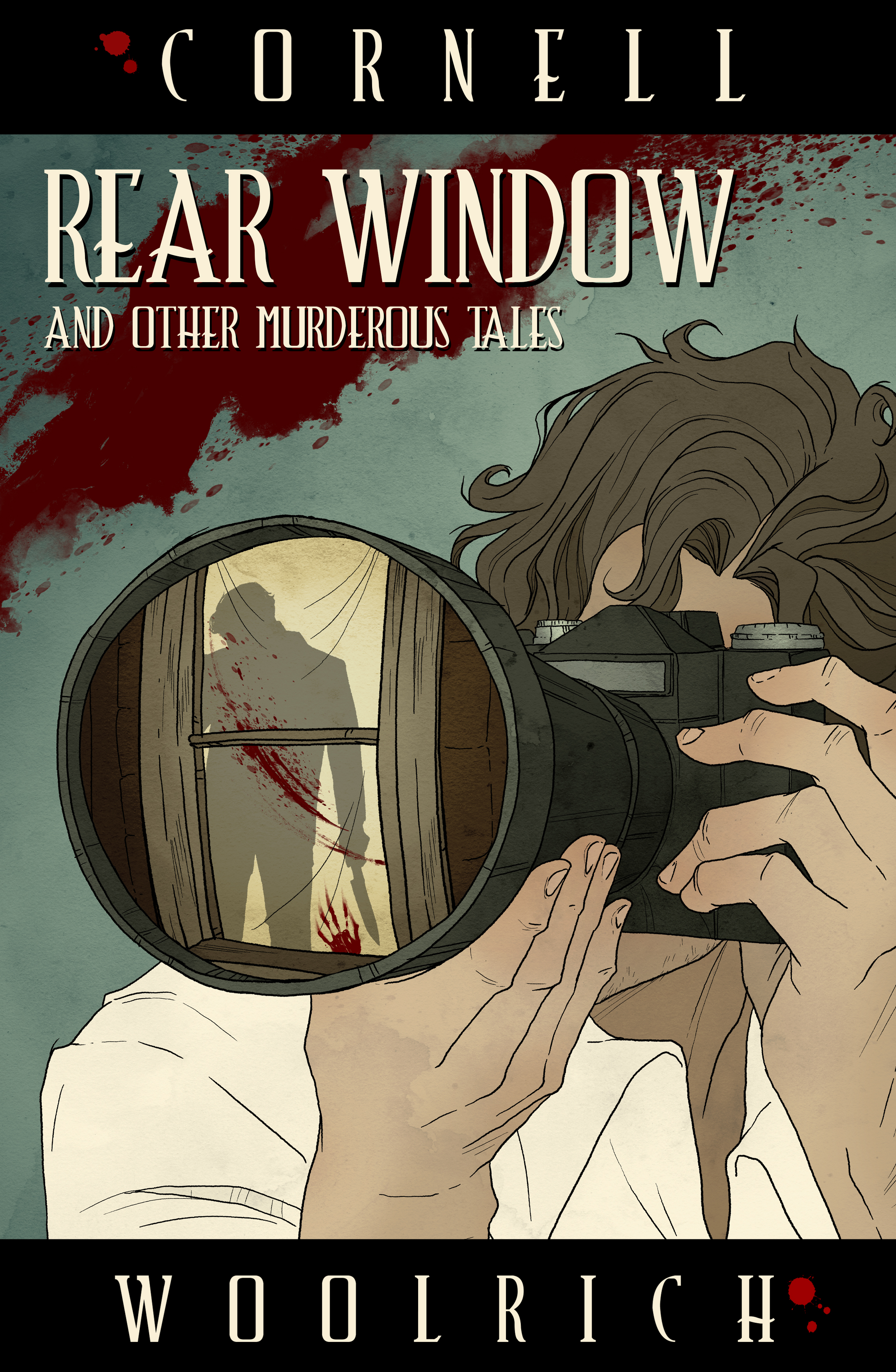
Since the height of his career, the stories of Cornell Woolrich have never received so much attention. For decades after the famed crime and suspense writer’s death, much of his work had been unfairly gathering dust in out-of-print books and magazines. But the team at Renaissance Literary & Talent, including president Alan Nevins and agent Jacklyn Saferstein-Hansen, have worked tirelessly to sort out rights issues to the hundreds of stories and dozens of novels Woolrich wrote during his lifetime. Renaissance is the agency that represents the various parties that control the Woolrich estate, and they also partly serve as publisher: their robust ebook and paperback library, which boasts many of their clients’ backlist titles, also includes a vast selection of Woolrich’s work. Between their own publications and titles they’ve licensed, a wide array of Woolrich fiction is now available to readers, from the six books of the excellent Black Series to the short story “It Had to be Murder,” upon which Alfred Hitchcock’s 1954 hit Rear Window is based.

Renaissance has gone beyond just publishing his novels and short stories individually. With rights to his many stories and early collections retrieved from previous publishers, they’ve been able to pore through the Woolrich canon and curate brand new themed short story collections for crime, suspense and noir fiction fans old and new. In the last few years, they’ve published two hugely popular multi-volume collections: Literary Noir: A Series of Suspense and An Obsession with Death and Dying.
Just in time for the holidays, they’ve released yet another fantastic collection, this one with a special flare: Women in Noir.
Women in Noir is significant not only because it showcases some of Woolrich’s most intriguing female narrators and protagonists, but because the writer was ahead of his time in his portrayal of women. While contemporaries like Dashiell Hammett and Raymond Chandler put their man’s man heroes front and centre, with women relegated to passive support, if featured at all, Woolrich found revolutionary ways to make his heroines the driving force of his stories. Three of his most famous characters, let alone female characters, are the titular Phantom Lady, The Black Angel and The Bride Wore Black from his blockbuster novels of the 1940s.
Renaissance’s new collection, 22 stories across three volumes, seeks to introduce readers to Woolrich’s lesser-known ladies. In Dangerous Dames, you meet a group of Woolrich’s baddest broads. From demure wives with hidden lives to overt femme fatales, the women in these stories are smooth, cunning, and most of all, dangerous. Sleuths & Sages features some of the savviest gals in the Woolrich catalogue. Regular women, brave and bold, take it upon themselves to solve crimes and bring justice to those less fortunate. The women of Lover’s Lament are tangled up with their lovers for better or worse. Each story explores a complex relationship and the position women are put in when their male counterpart’s crimes, or the treacherous hand of fate, are involved.

Aside from bringing new life to the few females of the genre, Women in Noir is also an opportunity for readers to wrestle with the mystery of Woolrich himself. While his contemporaries were focused on tales of the alpha male, why did Woolrich dedicate so many pages in his novels and short stories to compelling, powerful female characters? He was such a deeply tormented figure, so we might never have an answer, but in that fact lies a clue.
Since childhood, he led a tortured life and experienced near constant anguish, starting with his parent’s divorce. He was an alcoholic recluse leading a hidden life as a gay man. He had few romantic affairs with women, all of them meeting miserable ends, including a particularly disastrous marriage. And always looming over him, forever defining his connection to the female, was his lifelong love-hate relationship with his mother, with whom he lived most of his adult years. After her death, he deteriorated both physically and mentally, dying not long after.
Perhaps all of this made him more human, more able to relate to those marginalised and maligned by society. Whatever the case, there is no question that Woolrich’s treatment of women in his writing was as layered as the man himself. Women in Noir seeks to shed light on those layers, and introduce a new generation of crime, suspense and noir readers to the brilliance of what many critics have deemed one of the best writers of the 20th century.
Women in Noir is available on Amazon in both ebook and paperback.
A James Ellroy Playlist: Straight Life
Regular readers of this blog will know that this year I started a series on the use of music in the work of James Ellroy. Here’s the latest episode on White Jazz, perhaps the most musically consistent Ellroy novel.
Straight Life
Part I of the novel is titled ‘Straight Life’. The title is rather ironic as, in this world, everything from sexuality to the line between criminality and law and order is twisted. Take, for example, LAPD Lieutenant Dave Klein’s incestuous love for his sister, or the fact that he accepts contracts from the Mob to murder a witness he is supposed to be protecting.
White Jazz contains multiple references to saxophonist Art Pepper. Pepper’s memoir Straight Life makes for extraordinary reading. His life bears many parallels with Ellroy’s. They both struggled with alcohol and drug addiction and spent time in the LA County Jail. As a candid tale of substance abuse, self-destruction and recovery, Straight Life is matched only by Ellroy’s memoir My Dark Places. Moreover, the whole text reads like a research template to Ellroy’s LA Quartet. Pepper gives great insight to the criminal/narcotics subculture of the jazz scene of 1950s Los Angeles.
Straight Life is also the name of an album Pepper released in 1979, the same year his autobiography was published. The title track is a contrafact of the song ‘After You’ve Gone’, which Pepper had previously recorded on the 1957 album Art Pepper Meets the Rhythm Section. As the ’57 version is closer to the setting of White Jazz, this is the track I’ve posted below:
Money Jungle
Money Jungle is the title of Part IV of White Jazz. The novel, like all of Ellroy’s works, is so preoccupied with sexual obsessions that it is to easy to overlook how important a factor money is to most crime stories. White Jazz is no exception. The LAPD uses the Kafesjian Crime Family as ‘authorised’ drug dealers. Dudley Smith employs his Mobster Squad to crush the criminal competition. Even the legal deals reek of corruption. Klein is a slum landlord of properties in Chavez Ravine, where Hispanic families are being turfed out of their homes to make way for the construction of Dodger Stadium. In the pre-digital age, the sight, sound and smell of money was an ever present temptation. The allure of filthy lucre has proven influential to many forms of music, and 50s jazz musicians would have felt it strongly, especially if they had addictions to feed and found themselves at the mercy of incompetent or exploitative managers.
Money Jungle is the title of a 1962 jazz album by Duke Ellington which he recorded with double bassist Charles Mingus and drummer Max Roach. The title track below could hardly be described as easy listening. The opening and closing strings sound like shredded nerves, and the overall tension of the album has been attributed to conflict in the studio between Ellington, Mingus and Roach. Creative friction has often led to great art, and in this case Money Jungle is the perfect artistic backdrop to Dave Klein’s inner torment.
Mr Campion’s Wings – Review
A life in academe is full of surprises, but being carted off by the security services during an honorary doctorate ceremony tends not to be one of them. However, that is exactly what happens to Lady Amanda Campion at Cambridge University while her aristocratic husband Albert looks on in horror. This is the opening scene of Mr Campion’s Wings, the latest and possibly the best of the recent Albert Campion mysteries.
Mike Ripley’s continuation novels in the Campion series have more than done justice to the toffish detective created by Margery Allingham. Mr Campion’s Wings is the second novel in the series this year, after the excellent Mr Campion’s Coven. In that novel the setting was the early 1970s, and the plot was littered with references to witches and esoteric beliefs. Here, it is 1965. Britain is letting go of the Empire piece by piece, the Special Relationship has been damaged by the unmasking of the Cambridge Spy Ring which has led our American Cousins to believe that MI6 has more leaks than the dodgy plumbing in a Butlin’s Holiday Camp. Perhaps new technology can save the reputation of the UK. Harold Wilson has promised a ‘Britain that is going to be forged in the White Heat of this (scientific) revolution’. As it happens, the detained Lady Campion had been working on the Goshawk Project, tasked with creating a new aircraft with the rather novel design of swept-forward wings. Campion must investigate whether a grisly death at the Goshawk hangar is connected to his wife’s detention, and discover whether Russian (or even American) spies have been stealing Britain’s military secrets.
Fans of Albert Campion will not be disappointed with Ripley’s latest entry in the series. It is a delightfully witty mix of murder mystery and industrial espionage caper, topped off with a terrific chase scene of characters punting on the Cam. Best of all though, the novel is an insightful portrayal of Britain transitioning from the Imperial Age to the Jet Age. Recommended.