James Ellroy’s Hollywood Death Trip
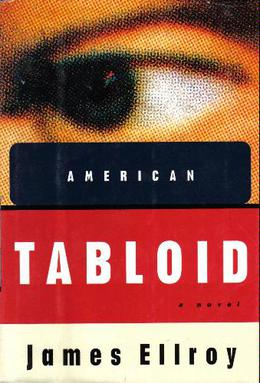
The long-awaited podcast James Ellroy’s Hollywood Death Trip is now available on Audible. Here’s some more information about the series on Ellroy’s website. If you enjoy this series you may be delighted to hear that Audio Up are also producing a 12 episode podcast adaptation of American Tabloid. There have been many attempts to adapt American Tabloid over the years. It seems Audio Up have succeeded where Hollywood and the TV studios have failed.
Jill Dearman: Interview with the Author of JAZZED
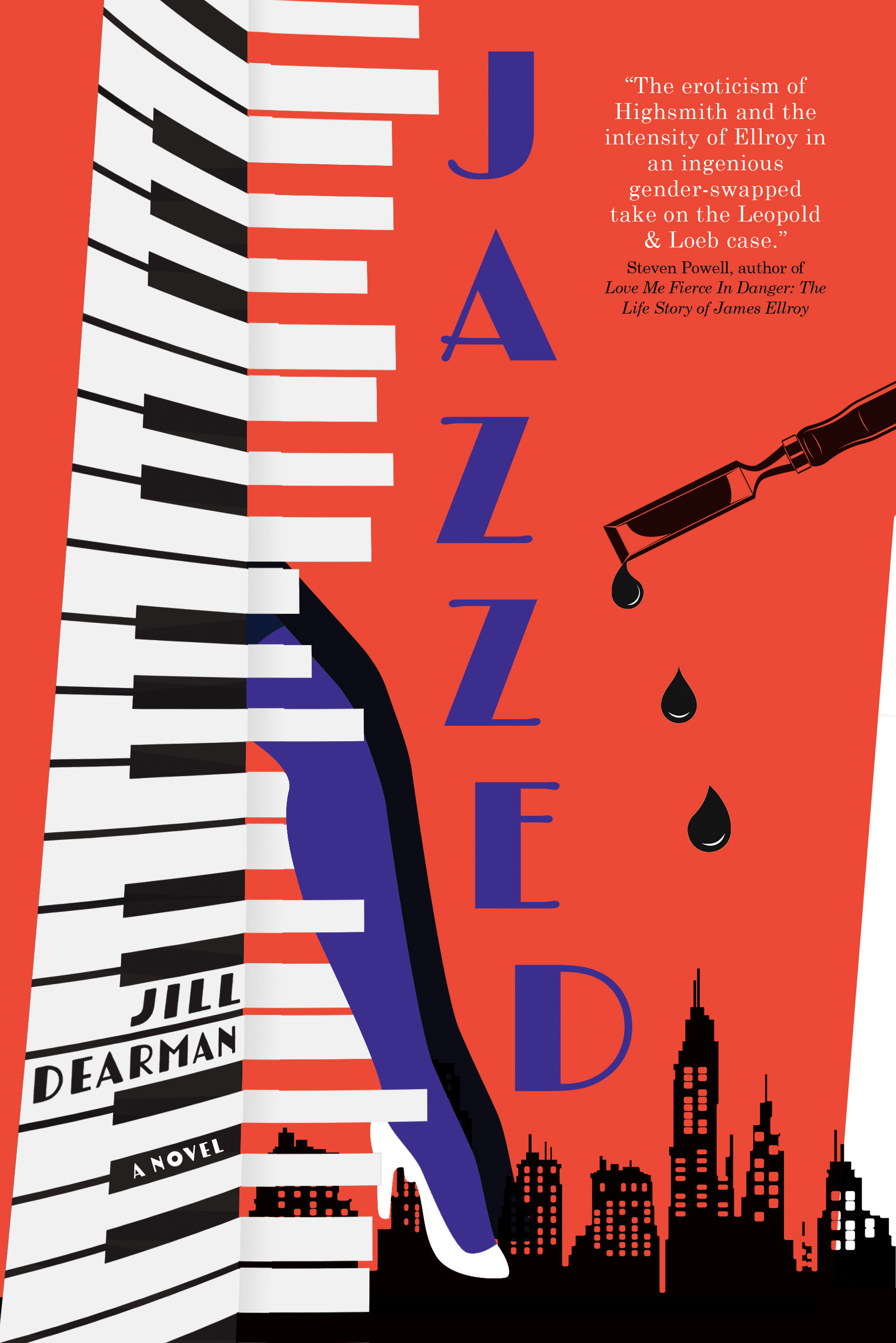
Jazzed is the compelling new novel by Jill Dearman. It delivers an ingenious twist on the Leopold & Loeb case – what if the two killers were women? The setting is Barnard College for Women, New York City, in the 1920s. Wilhelmina ‘Will’ Reinhardt and Dorothy ‘Dolly’ Raab are Freshman roommates at Barnard. Like many people who are attracted to each other, Will and Dolly have an interesting combination of similarities and differences. They are both from upper middle class Jewish families. However, Will is bookish and shy whereas Dolly is dominant, confident and knows exactly how to tease Will by withholding affection. At first their relationship blossoms among the Harlem speakeasies that made New York the epicentre of the Jazz Age. But an interest in Nietzschean philosophy thrusts the two women into increasingly transgressive acts that will ultimately lead to their destruction. When, for reasons of barely concealed prejudice, Barnard officials pair the couple off with new roommates, Dolly decides that she and Will must break the ultimate taboo by committing, and getting away with, the perfect crime – kidnapping and murdering a child.
Anyone who is interested in the Leopold & Loeb case, or indeed any reader who broadly enjoys crime fiction, will find Jazzed riveting. This is a story which is by turns sexy, dark, disturbing and tragic and yet it all coheres seamlessly into an exhilarating read.
I’ve been corresponding with Jill for several years now as we are both fascinated with True Crime, Film Noir and James Ellroy. Every conversation with Jill is a joy. She has wit, verve and joie de vivre. Enjoy this interview and buy yourself a copy of Jazzed. It’s sizzling.
Interviewer: How did you become interested in the Leopold and Loeb case?
My late father, a New York City cab driver, was obsessed with true crime and introduced me to the case when I was an adolescent. There was something about the relationship between the two boys that resonated for me. I wondered how much the “madness” of desire and the hatred (by the mainstream) of that desire might be the spark that ignites the “need” to kill. If your very being – who you are as a person – is completely oppressed, and you are being kept from the one you love, wouldn’t you feel desperate? I believe my father had a lot of desperate drives and I explore some of the backstory of our relationship in this personal essay, “Compulsion.”
Interviewer: Was it difficult to transfer/adapt the personalities of two male killers into the personalities of Dolly and Will?
No! They poured out of me, as if Dolly and Will were waiting for a chance to come to life. Though Dolly was based on Loeb, and Will on Leopold, their inner lives were their own. As I wrote and revised it was clear that being women informed so much of their experience.
Interviewer: Have you always been fascinated by the Jazz Age, and how would you describe its legacy in America today?
No, I came to jazz later. I had recently picked up piano and developed an immediate love for improvisation, just a year before penning my writing book, Bang the Keys. There is something about jazz that is so deliriously uninhibited. Whether listening to jazz or reading a novel, that sense of music or prose being created in real time, through the art of improvisation, is just so thrilling. And I am endlessly fascinated by the way jazz stands as “America’s music.” I think all of the United States is one big improvisation. Unlike older culture, the United States seems to get by on fast talk and a strange lack of history, of groundedness. Jazz stands as a perfect model of America’s selective memory. We’re a country built on superconfidence and a predilection for hucksterism.
The swagger and bravado of jazz captures those vibes. And at the same time Jazz emerged from Black culture and was commodified by whites. This particular early ‘20s era of jazz that serves as a character in my book is of special fascination to me. All the lesbian jazz singers, the Black jazz acts that rose up from the underground against the odds; there was a sense of rebellion. By the Great Depression just five years later, the mood would change.
I’m reminded of the Obama years in the United States. It seemed like this country might just move towards a new time of personal freedom. A Black president. Gay marriage. Trans identity going mainstream. There was a terrific prestige television show that aired during Obama’s second term called Treme. David Simon of The Wire fame was one of the creators. Treme dealt with the jazz life in New Orleans, just after Hurricane Katrina. The sense of life and the sense of doom merge perfectly. Given the dark path America is taking, it’s a great time to revisit the Jazz age and compare notes from a 100 years ago.
Interviewer: You’ve experimented with a variety of styles with Jazzed and your previous novel The Great Bravura. How would you describe the difference in both style and narrative between the two novels?
Well, The Great Bravura was much more stylized noir, whereas Jazzed is more direct in terms of language. In Bravura, which was set in 1948, it was fun to use some surreal techniques, such as making gay marriage just a regular part of life. Given the state of the world today, that seems even more surreal! And since the novel revolves around magic, I felt compelled to explore not just the work-a-day world of a magician, but also elements of mysticism, and the unknown. Jazzed is realist in its narrative style, but the key plot element of music allows the characters to experience a kind of transcendence, universal love. And musicality is of great importance to me in my writing, so I really do try and “hear” books as I compose them.
Interviewer: The novel provides an important critique of sexism, racism and homophobia. How did you approach this when your two main characters commit the worst crime of all, so in theory they shouldn’t be sympathetic?
It’s interesting because we are living in a moment and in a world in which the interconnectedness among us is hard to miss. The book is set about a hundred years ago, before “intersectionality” was termed and before the Internet and the climate crisis allowed us to see with such immediacy how connected and interdependent we all are. What I wanted to do with Will and Dolly was show that they were influenced by the many forms of oppression they faced. To quote the Bruce Springsteen song, “Johnny 99”: “Now I ain’t saying that makes me an innocent man, but it was more than all this that put that gun in my hand.”
Highbrow Lowbrow: Episode Two
The second episode of Highbrow Lowbrow is now available. In this episode I discuss the neo-noir Killing Them Softly and my podcast co-host Dan Slattery defends the action thriller Taken 3. You can listen to it here. Enjoy!
Gods of Deception is the brilliant new work of historical fiction by David Adams Cleveland, who takes the reader on an epic, revisionist sweep through post-war American history. The nonagenarian Judge Edward Dimock is writing his memoirs. The most troubling episode is his role as the defence attorney to Alger Hiss in the ‘trial of the century’. Dimock’s conscience is stricken at the thought that Hiss could have been guilty of espionage. Dimock enlists his grandson, Princeton astrophysicist George Altmann, to research the case. It’s the beginning of an investigation that could change their understanding of America’s Cold War history.
David Adams Cleveland is a novelist, historian and former correspondent and arts editor for Voice of America. I had the pleasure of talking to him about Gods of Deception. Interviewing David is a joy. It’s like sitting back with a snifter of brandy and listening to Gore Vidal or E.L. Doctorow wax lyrical about American history. Enjoy the interview and buy the book.
Interviewer: What motivated you to write Gods of Deception?
I found the Alger Hiss spy trial—the “trial of the century” as it was known, to be fascinating on many levels, especially for a fictional treatment. In Alger Hiss (and we now know for a certainty that he was guilty of spying) you have a spy’s spy who never, to his dying day, admitted his guilt, even in the face of overwhelming evidence. In this, he was very unlike the infamous British spies, the Cambridge Spies: Guy Burgess, Donald Maclean, and Kim Philby who were plagued by fear of exposure and so escaped to the Soviet Union where they died early of alcoholism in their Moscow dachas. Hiss maintained his equanimity to the end, refuting his accusers and seeking redemption.
Equally mesmerizing was the clash of Hiss and his accuser and one-time GRU (Soviet military intelligence) handler, Whittaker Chambers, who testified in intimate and telling detail about his days photographing top secret State Department documents passed to him by Hiss, many copied by his wife, Priscilla Hiss, on their Underwood typewriter. In the trial and later in his memoir, Witness, Chambers wrote at length about their relationship—everything from trade craft, to renting summer homes together, to rearing their children and bird watching. And yet Alger and Priscilla Hiss denied everything, only admitting that they might have known Chambers under a different name and for a very short time. These clashing stories—parallel universes in which both parties claimed to be telling the truth, were catnip for a writer trying to sort fact from fiction.
And then there is the astonishing way the guilty verdict returned against Hiss divided the country for almost five decades. Half believed vehemently in his innocence, that he was framed by Whittaker Chambers and the FBI and perhaps Richard Nixon as well; the other half believing he was a spy and a traitor. How could opinion be so drastically divided? For some, the elegant well-spoken Alger Hiss represented the ideals of the Eastern establishment and Roosevelt’s New Deal, and so the accusations levelled against him seemed an attack on the very foundations of liberalism. While his accuser, Whitaker Chambers, an admitted ex-communist and spy, was, oddly enough, seen by those of more conservative views as a soul who had confessed his sins and so offered witness to the dark underside of socialism in the guise of Stalin and the totalitarian state. As a subject of fiction such competing world views and how they played out in three generations of one family seemed a perfect opportunity to explore the mystery of how humans are drawn to various ideological viewpoints and often dragged down by a misbegotten allegiance.

Interviewer: Our understanding of the Alger Hiss case has changed with time. By telling the story across three generations of the same family do you find it easier to portray the complexity of that change?
What changed over the decades since Hiss’s conviction in 1950 was the very slow accumulation of new evidence confirming Hiss’s guilt along with changes in attitudes toward Stalin and the Soviet Union. These shifts certainly lent themselves to fictional exploration over three—actually, four generations of the Dimock family. Even during the two trials (the first ending in a hung jury) these tectonic shifts in public opinion were taking place with the imposition in Eastern Europe of the Iron Curtain and the test of a Soviet atom bomb in August of 1949, followed by the outbreak of the Korean War and the Soviet invasion of Hungry in 1956 and Khrushchev’s denunciation of Stalin’s crimes. Support for the Soviet experiment and the American Communist Party (numbering 200,000 at its height) declined rapidly. And with it an uneasiness among the far-left supporters of Hiss and the possibility that he may indeed have flirted with the communist party or worse. The most damning evidence of Hiss’s guilt didn’t come out until the mid-90s with the release of the Venona decrypts of Soviet cable traffic from the 1940s, and the brief opening of Soviet intelligence files during the Boris Yeltsin presidency of Russia. The cumulative evidence was damning. Not only was Alger Hiss a spy but an agent of influence who sat at Roosevelt’s right hand at Yalta, where he was debriefed each morning by his Soviet handler—giving away the US and Allied negotiating position. Hiss and his fellow spies in the White House, Lauchlin Currie, and Treasury, Harry Dexter White, had done Stalin’s bidding throughout the war years and beyond. On his way back from Yalta, Hiss and members of the Yalta delegation stopped in Moscow, where Hiss was taken aside in a secret ceremony and given the Order of the Red Star for his service to the Soviet Union.
I designed my narrative to flesh out this often-complex changing perspective on Alger Hiss by having my lead protagonist, George Altmann, a Princeton astrophysicist, explore the Hiss affair by questioning his grandfather, “the Judge”, who had been on Hiss’s defense team. Through George’s eyes, and his grandfather’s memoir, along with the Judges three daughters, the reader becomes aware of how attitudes towards Alger Hiss have evolved over time, a changing picture that is reflected not just in the characters’ lives but that of the country as well.
Interviewer: The novel implies Soviet penetration of the US government at the highest level which affects key events in American history. Did your research into the case inform this narrative approach?
When I began my research on the Alger Hiss case, I assumed that Hiss was probably guilty as spelled out in his perjury conviction: passing top secret State Department documents to his GRU (Soviet military intelligence) handler, Whittaker Chambers, in the late thirties. I was stunned to find that the real damage Hiss and his confederates did was as agents of influence, along with close to 500 of Stalin’s willing spies who infiltrated the US government and related war industries. We now know that Harry Dexter White, an undersecretary at Treasury, did Stalin’s bidding by pushing for harder and harder sanctions on the Japanese in 1941—Operation Snow, in hopes of provoking the Japanese to attack south into the Pacific rather than continuing to attack Soviet positions in northeastern Asia along the border of Mongolia and Siberia. Pearl Harbor was the result.
Another Soviet agent in army intelligence, William Weisband, tipped off his KGB handler that the US had broken Soviet military logistic codes, at which point the Soviet military changed their codes, so leaving the US in the dark as Stalin shipped war materials to North Korea. If Truman’s White House had been able to monitor this movement of supplies, tipping off the US about the buildup for a North Korean attack, the US might well have been able to warn off Stalin and prevent the invasion of South Korea and the Korean War. Of course, the story of the Rosenbergs and how their ring of spies stole US atomic bomb secrets is well known. But I speculate in the novel, based on my research for Gods of Deception, that Soviet fears that their technical spy networks might be compromised and uncovered caused them to do everything in their power to prevent Alger Hiss’s conviction, which they feared, as indeed was the case, would open a Pandora’s box of spy fever, and so endanger their ongoing operations to steal details about the hydrogen bomb, then in development. There were a number of unexplained deaths and disappearances of potential witnesses in the Hiss spy case, ambiguous falls from buildings (a KGB specialty), or exile behind the Iron Curtain, much remarked on at the time, which I have explored in Gods of Deception. A title that references the fervent self-image of many American followers of Lenin and Stalin who saw themselves in the vanguard of history.
The 1950 conviction of Alger Hiss for perjury, even if only for passing top secrets documents to the Soviets in the late thirties, alerted the country that they had a very real problem with Stalin’s KGB and GRU spy networks. The great irony is that by the time this had all sunk in with what is now known as the “Fifties Red Scare”, most of the damage was long done and Stalin’s spies had either been exposed or had slunk away never to be heard from again.

Interviewer: Tell us a little about your journalistic background. How did your experiences inform the writing of Gods of Deception?
My years working for Voice of America covering the Soviet Union, Eastern Europe, and China during the perestroika-glasnost period left me with a pretty good understanding of how totalitarian regimes employ the big lie and disinformation to hold their societies in check, while falling back on force and repression when all else fails. This made the Alger Hiss case all the more problematic for me: how was it that at least 500 other Americans were so willing to do Stalin’s bidding (they were not paid but were eager supplicants). Not to mention the 200,000 members of the American Communist Party, which served as a recruiting ground and underground infrastructure for these spies and their handlers. Except for Whittaker Chambers’ autobiography, Witness, and a few other spy memoirs very little about these people and why they chose a path of subversion has surfaced, even seventy years later. This seemed inviting territory for a fictional exploration of the motivations of these American spies, the compromises they made, the lies they lived, and the pain and loss bequeathed to their families.
Interviewer: With Putin fighting a hopefully unwinnable war against Ukraine, what happens next in the US’s relationship with Russia? Is a military confrontation between Nato and Russia inevitable?
It has been eerily strange for me to have Gods of Deception come out with the onset of Putin’s war against Ukraine—Dracula pulling out a silver stake and walking the earth again. Everyone thought that Putin, trained in the dark arts of the KGB, could not reconstitute the terrifying days of Stalin’s Soviet Union with its use of the “big lie” and false flags, repression backed by brutal force, and—even with the internet, imposing state sponsored propaganda to mold public opinion. It looks like Putin has managed to bring down another Iron Curtain—if not another Cold War, at least for a time, possibly a fleeting moment in the great sweep of history, but a moment for which the Ukrainian people are paying so dearly.
I’m hopeful that the Russian people will soon realize that Putin is a tyrant intent on bringing about another dark age in Russia, and so find a way to replace him and his circle of aging ex-KGB sycophants. Putin’s military is looking more and more inept even as they inflict horrific suffering and destruction. So, I don’t see the war in Ukraine spreading any wider, especially since recent advancements in military technology now seems to favor the defense. Sad to say, when I started Gods of Deception it seemed a story about a distant past—now, suddenly, a cautionary tale for our times.
Gods of Deception is published by Greenleaf Book Group
Highbrow Lowbrow
Highbrow Lowbrow is a new podcast created by Dan Slattery and I. We took the basic idea from conversations we have at work. My taste in films is a little more highbrow, and Dan prefers genre films.
In each episode one of us recommends a film that might be termed “highbrow” and the other recommends a “lowbrow” film. We then have to defend it, knowing that it’s a film which the other person hates.
We realise that “highbrow” and “lowbrow” are completely subjective terms (how would you classify noir?) and in future episodes we are going to shake things up a bit. In the meantime, enjoy episode one. My Highbrow pick is Barry Lyndon directed by Stanley Kubrick and Dan valiantly defends The Expendables directed by Sylvester Stallone. You can listen here.

A James Ellroy Playlist: The Beat Poets
James Ellroy’s LA Quartet is set predominantly in the 1950s and the influence of jazz and film noir on Ellroy’s narratives is fitting given the cultural trends of the decade. But just as the 1950s was the apex of the film noir age, many other genres and art forms were thriving. The Western, Musical, Swashbuckler and Biblical epic all enjoyed their heyday during the 50s.
In this article I am going to explore a lesser-known cultural influences on Ellroy’s work – beat poetry. The Beat movement was peaking during Ellroy’s childhood and had an inevitable impact on him.
High School Drag
Given Ellroy’s conservative views, it’s not surprising that even as a child he associated Beat Poetry with the derogatory term Beatnik. The Beatnik was a media stereotype which portrayed the Beat Generation as a motley crew of drug addicts, criminals and hilariously pretentious artists.
High School Confidential was the first film Ellroy saw at the cinema after the murder of his mother – Jean Ellroy. It’s not surprising, given the timing, that it had a profound effect on the young Ellroy. Produced by legendary schlockmeister Albert Zugsmith, the film is nominally a crime story. A police officer poses as a student to go undercover in a high school and bust a narcotics ring run by the enigmatic ‘Mr A’. However, the film is too consistently outrageous for the crime narrative to be taken seriously, as it perpetuates stereotypes about beatnik culture. All of the students speak in jive and several are portrayed as sex-obsessed, while Zugsmith takes great pleasure in rubbing the audiences’ face in smutty content. Please don’t take this as overly critical. High School Confidential is a riot from start to finish, partly as it can’t help being a little fond of the subculture it is ‘warning’ against.
Ellroy was quite taken by the attractive actress Phillipa Fallon, whose reading of the beat poem ‘High School Drag’ is the highlight of the film. Do you see elements of Ellroy’s bookstore performances in this jive kats?
Vampira and The Beat Generation
Zugsmith followed High School Confidential with The Beat Generation. Once again, it’s a crime film drowning in beatnik satire. The basic premise is chilling. Ray Danton plays Stan Hess, aka ‘The Aspirin Kid’. Hess is a rapist who worms his way into women’s homes while their husbands are away. Charming and handsome, Hess knocks at the door claiming that he owes the woman’s husband money. Once inside, he feigns a headache and pulls out a tin of aspirin. While the woman is distracted getting a glass of water for him, Hess sneaks up from behind, assaults and rapes the woman.
Although he doesn’t murder his victims, Hess could be modelled on the serial killer Harvey Glatman. Known as the ‘Glamour Girls Slayer’, Glatman selected his victims by contacting aspiring models with offers of work. While in prison, Glatman was interviewed by detectives in connection with Jean Ellroy’s murder. As if the film couldn’t get more Ellrovian, Dick Contino performs a song at the climactic ‘Beat Hootenanny’, wherein Hess and Detective Culloran (Steve Cochran) fight it out amid a group of enraptured beatniks, who happily sing and dance and are completely oblivious to the duel unfolding before their eyes.
The Beat Generation features an actress who is referenced in Ellroy’s White Jazz. Maila Nurmi was a Finnish-American actress better known as Vampira, a character she created as the host of The Vampira Show. Part Two of White Jazz is titled ‘Vampira’, although reference to the character is quite brief. Dave Klein spots the portrait of ‘a ghoul woman’ on the shelf of Glenda Bledsoe, an actress he is keeping under surveillance for Howard Hughes. Glenda says of Vampira:
She’s the hostess of an awful horror TV show. I used to carhop her, and she gave me some pointers on how to act in your own movie when you’re in someone else’s movie.
The mention of Vampira must be something of a turn-on, as Klein struggles to hide his attraction for Glenda when she is describing the horror host: ‘Shaky hands – I wanted to touch her.’ Billed as Vampira, the alluring Maila Nurmi appears in The Beat Generation as ‘The Poetess’. She recites a beat poem, not dissimilar to ‘High School Drag’, with a cigarette in her hand and a white rodent on her shoulder. Although the poem is typically hilarious, the scene is quite chilling. Detective Culloran is watching The Poetess, and her recitation is interspersed with clips of Hess who is at that moment using his usual routine to enter Culloran’s house:
Love Me Fierce in Danger: The Life of James Ellroy is available for pre-order from Bloomsbury.
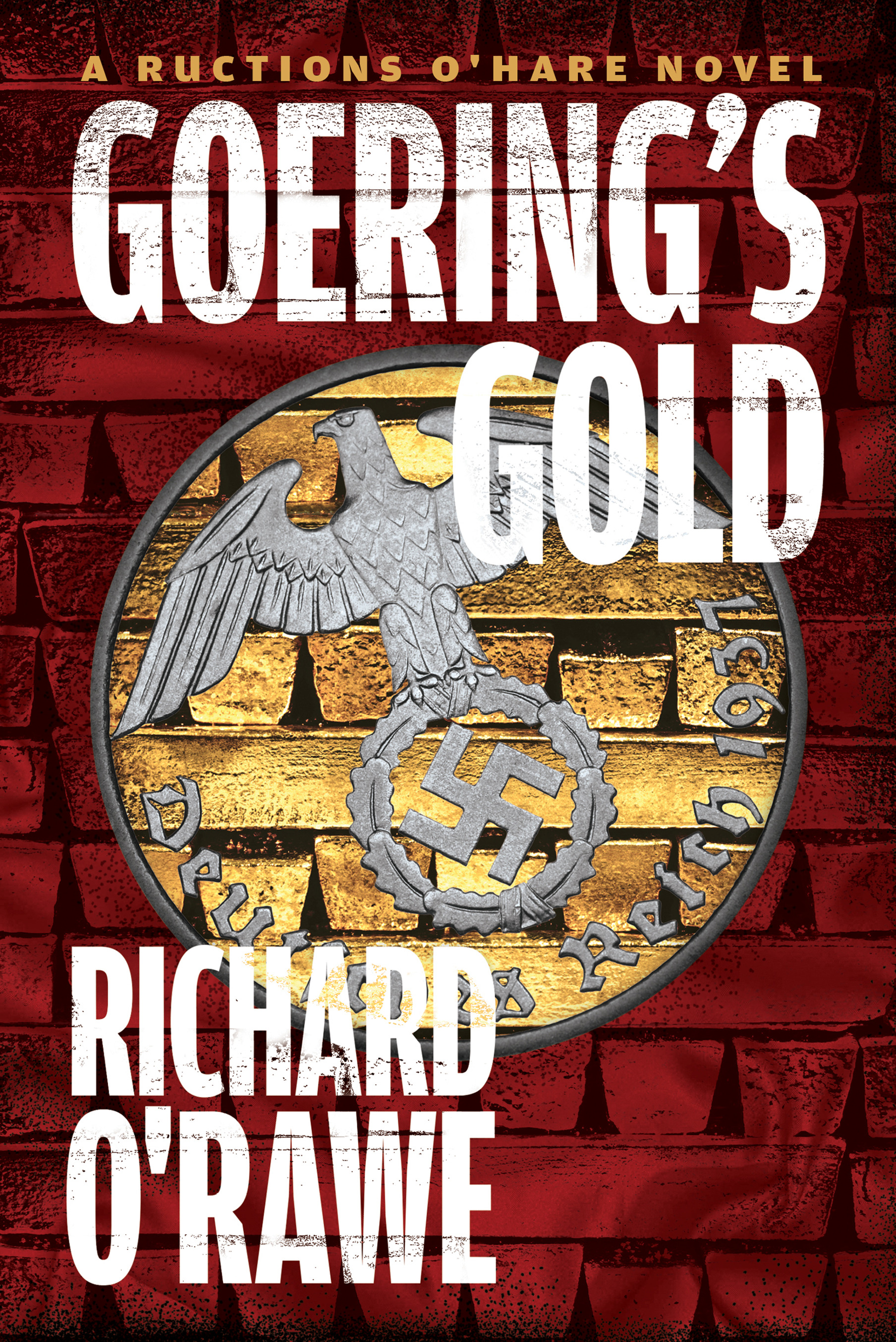
Goering’s Gold is the latest novel by Richard O’Rawe, and the second novel to feature O’Rawe’s protagonist Ructions O’Hare. Ructions is a former IRA operative turned adventurer. When a piece of Nazi memorabilia leads Ructions to suspect that Reichsmarschall Hermann Goering may have hidden his looted booty in Ireland towards the end of World War Two, Ructions can’t resist the temptation of going on a treasure hunt. But when Ructions goes hunting for gold, he soon finds himself in the cross hairs of vengeful former comrades in the IRA, fanatical Neo-Nazis and dogged Security Services. It all amounts to a terrific romp, entertaining and hilarious in equal measure. I would put Goering’s Gold straight onto your Summer reading list.
I had the pleasure of interviewing Ricky O’Rawe about the novel… at least the conversation was supposed to be about Goering’s Gold. Ricky is a natural raconteur and has had such a fascinating life that we got a bit sidetracked. Like Ructions, Ricky is a former IRA operative. But I won’t say anymore here. I’ll let him describe his life in his own words:
Interviewer: Is there a touch of you in Ructions?
O’Rawe: Ructions has a wee touch of my personality. I always think that when you’re writing these things, there’s always a bit of you in the protagonist. Having said that, I wouldn’t be as clever as Ructions right. But I know people from my time in the Republican movement. People who were very, very smart, who would have been able to think on their feet, who would have a touch of the Ructions guy about them. Probably an amalgamation of three or four different guys who I met along my journey. There is a touch of me in him, I have to be honest. I like his humour. Sometimes he comes off with wee bits of humour, and that’s definitely me.
Interviewer: For the benefit of my readers, will you tell me a little bit about your background. It’s interesting that Ructions has fallen out a bit with the IRA leadership which is somewhat similar to you.
O’Rawe: My whole family is very republican. I’m one of these guys who come from a fairly pristine republican background. My father was one of the OC’s of the IRA in Belfast during the 1940s campaign, and he was interned and escaped out of prison. Tunnelled his way out of Derry jail and escaped with others. And he was interned again during the IRA 50’s campaign – the IRA has a campaign virtually every ten years. They never go anywhere! I was brought up in this republican culture, or ethos, call it what you may. When The Troubles broke out in ‘69, I was a student. I was doing A Levels. I’d just finished my O Levels, and the next thing was that The Troubles broke out and I joined the IRA and in no time at all I was on the run. And I ended up on the prison ship Maidstone in February 1972 and that was my studies. I couldn’t go to school because I would have been arrested and interned a lot earlier. So that was the sort of place my life was in for the next fifteen years. It was dedicated to the Republican struggle in the IRA and struggle for Irish freedom and, as I say, some of the people I’ve met along the way were Ructions type guys. Highly intelligent people. You would look at them and say, he looks a bit of a dodo but in actual fact there’s a great brain behind this guy’s bland facade. But I was in and out of prison four times. I was interned without trial twice. I was in for a kidnapping, which I beat in court, and then I got eight years in 1977 for a bank robbery. And I spent three and a half of those eight years on what was called the Blanket protest.
Interviewer: And that was the start of your drift away from the IRA?
O’Rawe: Well it was some ways. I ended up, during the second hunger strike in 1981, in the leadership position being PR of the Republican prisoners and de facto I was number two in the prison behind a guy called Brendan McFarlane. And four of the guys had died – Bobby Sands, Frank Hughes, Raymond McCreeesh and Patsy O’Hara – they had already died on hunger strike, and we were coming up to the critical point with the fifth guy, a friend of mine called Joe McDonnell. And the British Government, I put out a statement on the fourth of July, which was very conciliatory which broke down the five demands. And broke them down in a conciliatory way because we needed to reach out to the British to give them a way out. You can’t expect outright victory. And the British did respond. They responded with an offer which me and McFarlane accepted. They were gonna give all prisoners their own clothes, which is what we asked for. And they were gonna give us letters and stuff. The big one was the clothes, that was the one that defined whether you were a political prisoner or not, and they had broken that. So we accepted that offer, and sent a communication to the outside leadership. A call came in from Gerry Adams saying that they were surprised we accepted the offer. And they didn’t think that it justified the deaths of the first four men. So as a result of that, the hunger strike continued and another six men died. I was in an awful state. Truth be told, it was the most traumatic time of my whole life. And there’s nothing I could do to stop this thing, and it ended on October 3, 1981 with ten men dead. I got out two years later and I go back to the Republican Movement because I was still a Republican. I wasn’t one of these midnight guys who come in, have a wee look and nipped out again. I was there for the fight. I came out and Gerry Adams came to the house and grabbed me to do PR for the Republican Movement during the 1982 elections. I stayed until 1986 when my wife gave me an ultimatum. I was doing fifteen hour days down in the press centre. She says look, here’s the choice: you either stay with the Republican Movement or you come with me and your daughter, but you can’t have the two. So I picked my wife and my daughter. And that was when I left the Republican Movement – blackmailed out of it (laughs)!
By the way, (it was) the best decision I was ever forced to take in my life. She and I were only married six months and I was away for six years. And I come out of jail and I am right back in the business, knocking out 15 hour days, not earning any money for the house. Senior Republicans got £30 a week, a lot of guys only got a tenner. And I was getting thirty quid a week and my whole family, my daughter, my wife were suffering. And she was right, she just took the attitude – you’re shiteing on us again and I’m not having it.
Interviewer: You’re still quite involved in politics and you’re working a little with the SDLP.
O’Rawe: The SDLP invited me on to what they call their experts committee. It’s a very broad committee of environmentalists and ex-government ministers and people from the various political parties down south etc. And they said to me, would you like to come on and give some sort of republican perspective? I said, why not, of course, so I do work with the SDLP in that sense. I’m far too busy to be involved in party politics because I’m always writing. I’ve always got something in the pipeline. So I don’t have time to start immersing myself in party politics, and I never would anyway. I could never again commit to the discipline that comes from being in a political party. If somebody told me to believe something that I didn’t believe in it would be chaos. I would never be political again, but I do have opinions and I do express them if I’m asked, and I wouldn’t be behind the door criticising the SDLP, Sinn Fein, DUP, whoever. If they deserve criticism and I’m asked, they’ll get it.
Interviewer: While we’re on the subject of nonfiction, I’m very intrigued by the Gerry Conlon biography that you’ve written. How did that come about?
O’Rawe: Me and Gerry were lifelong friends. We lived beside each other, We were born and reared together in Peel Street in the Lower Falls. We lived in 6 Peel Street and the Conlons lived in No.7. There was three months between us in terms of age. So he and I virtually grew up together. I lived in his house, he lived in my house, and we grew up together and we were always great friends. And Gerry was different from me. Gerry was a crazy sort of a child right, one of these wee fuckers that was breaking into houses when he was about 10 or 12 you know. Whereas, I had a very strict upbringing and I wasn’t into any of that. Gerry was the sort of a kid that was just wild but I loved him. He was like a brother to me, truly. After he got out of the Old Bailey in 1989 I met him again in Belfast, and he and a guy called Brendan ‘Darkie’ Hughes, a very famous Republican, we all got drunk. Darkie Hughes was actually the guy who said to his (Gerry’s) father back in 1973 ‘get him out Giuseppe or he’s gonna get shot.’ So the three of us had a drink and got mad drunk. but then he went away to England and he had his tribulations in England. He ended up on crack cocaine. He ended up in Plymouth, moving down from London, trying to break the habit. He lived like a hermit in Plymouth. Very lucky to have a psychiatric nurse called Baz who talked him through it and walked him through it and he got clean. He came back in 2006. The minute he came home he phoned me up and said, come on out for a drink. So we met a lot of old friends, but it was about me and him. So we started going out for breakfast every week, sometimes twice a week and it was one of those situations where you could tell him anything. There’s very few people in life that you’ll meet like that. You can say whatever you want to say and it’s not going to be carried, and he and I had that sort of relationship.
I released Blanketmen, my first book, in 2005 and he loved it, absolutely loved it. And we were walking up Royal Avenue in 2006 and he said to me, I want you to write my biography. I said, Jesus Christ they made a film about you. Daniel Day Lewis portrayed you, and you’ve already written your own book, Proved Innocent, you’re well covered Gerry. He said, you’re talking balls. My life didn’t start until the day I got out of jail. That’s when the Gerry Conlon story begins.
And I had other commitments at the time. I had a screenplay with Northern Ireland Screen with a producer guy in Dublin and we were talking about running it as a film. It didn’t work out. He (Gerry) says, are you gonna do it? I says, well… He says, are you gonna do it, I want a commitment? I says, I’ll do it but it won’t be in a day. It won’t be tomorrow. So I gave it no more thought. Neither did he push me for it, because he knew eventually we’ll get round to it. I get a call from his sister Ann. She says, Gerry wants to see you. He’s in hospital. I says, what’s he doing there? She says, it’s not good. She told me he had two or three weeks to live at the most. He has cancer. It’s such a shock. So I went down to see him. It was very emotional for the two of us, because I knew I wouldn’t be seeing him again. He said to me, are you doing the story? You said you would and you haven’t done it yet. So I said, I’m gonna do it. Believe me, I will do it. So we had a very emotional farewell, and he died within about a week.
I had another book, I had Northern Heist lined up to do next. I had to set it aside and get whacked into the Gerry Conlon book, and started doing all the interviews. Had to travel down to Devon, had to go to London, had to go to Glasgow, Derry, down to Tipperary. It was one of those books you had to get on your bike and go and actually talk with people about him. It was one of those books which was very funny in places because Gerry was one of those characters, some of his stories were funny. I mean the antics of him and Johnny Depp. Johnny Depp was fantastic for me. Johnny Depp wrote the foreword. That’s a story on its own. I didn’t think he was gonna do it. It was actually Siobhan MacGowan (Shane MacGowan’s sister). She was a lovely wee girl and we were down interviewing her, down in Tipperary, myself and my daughter. We were walking away, she said to me ‘why don’t you ask Johnny Depp to do the foreword. Ask him, I think he’ll do it. He loved Gerry.’ So she gave me his email address. I bounce away an email, Johnny would you be up for it? I heard nothing for two weeks, I thought let’s get someone else to do it, and then word came through from Johnny Depp, ‘Ricky, I would love to write the foreword to Gerry Conlon’s biography. That is such an honour, and thank you so much for asking me.’
Interviewer: That is an extraordinary story.
O’Rawe: They’d (Depp and Gerry) been on this crazy drinking binge down in southern Ireland and they’d drunk the place dry, all around Cork and Killarney and all. They’d been to all these places and had a great time with the chicks, just real guys going let’s go mad. And he says ‘I remember going into a bookshop in Dublin and Gerry bought a book on The Beatles and I bought Brendan Behan’s Borstal Boy. I have it in my hands as I’m writing this.’
The story itself is fantastic. It’s now a screenplay. We released it in the Lyric Theatre in Belfast and it sold out every night. It’s actually in the biggest theatre in Belfast, 1100 seater, the Grand Opera House at the end of July and it leaves there to go the way over the Edinburgh Fringe Festival for a month. And it’s called In the Name of the Son. If I say so myself, it’s fucking brilliant! Humour, pathos, everything that’s lovely and hard times and funny times. You couldn’t really go wrong because his life was such a rollercoaster. He got through a million quid in under a year, and he ended up rifling through bins because every penny went to drugs. Went to cocaine.
Interviewer: I heard he had PTSD.
O’Rawe: But he fought it. He fought it like a champion and he beat it. I talked to his mate. His mate was also a crack cocaine addict, and he said he went on heroin to get off crack cocaine. He said he couldn’t beat it, but Gerry beat it.

Interviewer: What made you turn your hand to fiction with Northern Heist?
O’Rawe: I don’t like to be pigeonholed. I will write whatever takes my fancy, and Northern Heist came about… actually these things always come about with one single thought, and usually it’s a ‘what if’. Me and my daughter was sitting in a pub down in Belfast at Christmas. She doesn’t drink. She was having a coke and I’m having a pint of Guinness and we’re talking about the Northern Bank robbery. They got away with twenty-six and a half million quid. It’s all over the papers. The government down south, the government in London, in Belfast, all the political parties are saying that the Provos, the IRA done it right, carried the robbery out and truth be told, there’s no one else in Ireland who could have pulled it off, other than the IRA. It was such an intricate job, brilliant job. It was one of those jobs you’d give your right arm to be on (laughs).
Interviewer: Yeah? (laughs, a little nervously)
O’Rawe: So we were sitting talking about it, and she said to me ‘but what if the IRA didn’t do it?’ I said ‘Who would do it?’ And then we started talking and we came up with this genius of a criminal. This was a hell of a bank robbery. I mean, whoever thought of this was extremely alert, well tuned in and the genius of it was two parts. The first thing, it was a tiger kidnapping where they held the two families. They send the two bank employees in, and one of them brings in a big Manchester United kitbag, and they say to him, ‘fill that up with money, bring it up to the end of the street’ which he does. He goes up to the end of the street, sits at the bus stop. A guy comes up beside him, takes the bag and walks away and in that instance they got away with a million quid. But they also realised this bank is ours for the taking. There’s no cops, there’s no security. We can take this out, and not just take it out, take every fucking penny out of it. And then a big lorry lined up with two guys. They bring down the lorry. In the meantime, the organiser phones the two boys in the bank and says, start filling up the big trolleys. Fill them up with money, seal them up and bring them out to the loading bay. Which is exactly what they do, they throw some rubbish on it, and in the first haul they get away with 16 million quid. They send the lorry back again and take another 10 million pound out of it. And the genius of the thing was the IRA had to phone the cops up and tell them the place was robbed. From a writer’s point of view, it was fantastic. From a dramatic point of view it was potentially a great story, great novel. But it couldn’t be a great novel if it was the IRA who done it, so I invented this guy Ructions who, as I say, I knew the type of man that he was. I’ve met this type of guy right, on two or three different occasions, not often. These guys don’t grow on trees, but I met this type of guy and I amalgamated three or four different personalities and there’s a touch of me in him as well. So he then becomes the driving force behind it, and it works, but like in all novels you’re problem solving all the time. Number one: how does he get to know who’s working what, when and where, the intelligence on the bank? So I have to solve that. But I loved writing about this guy Ructions.
Goering’s Gold was challenging. Walking Ructions into a scenario where he’s chasing Nazi Gold belonging to Hermann Goering was challenging. You have to sit down and say how would this happen. You make it work because it’s human experience.
Interviewer: Have you always been interested in World War Two?
O’Rawe: I love Modern European History. I was actually studying in prison, before I came out. I love Modern European History and I love World War Two. I don’t love Hermann Goering. He was an absolute monster. But out of all the Nazis he was, far and away, the most gregarious right. He’s a total hedonist, and if he had had his way, there wouldn’t have been a Second World War. He advises Hitler not to invade Poland. He advises him not to invade Russia. Hitler, of course, ignored him. But all I think Hermann Goering wanted to be was the Minister of the Hunt and the Minister of Good Wine and the Minister of Champagne and the Minister of the Party. Even when you look at the Nuremberg trials, he was by far and away the most coherent and intelligent Nazi there. The rest of them were dour. He was laughing and he was almost enjoying it. They’re not sure, for definite, how he got the cyanide tablet. And in that wee mystery lies the nucleus of your book.
Interviewer: Have you had any feedback from old comrades who say, ‘I don’t like what you’re writing about us’?
O’Rawe: They all want to be Ructions! I don’t hang around with the lads anymore. I just don’t do it. After Blanketmen I was ostracised, but I went to a funeral not long after Northern Heist was released and not one but about twenty came up to me and said, ‘Am I Ructions? Was Ructions based on me?’ They all want to be this maverick, this genius who can pull this stuff off. They love the thought of it.
Tales From The Mall
I had the honour of being interviewed by Brendan (one of the EllroyBoys, whose show I appeared on a couple of times) for his podcast series Tales From the Mall.
The format of Tales From The Mall is intriguing. Brendan calls his friends, usually writer/artist types, from the Arizona Mills mall in Tempe, Arizona. He has a free-form interview style and no subject, be it politics, relationships, cinema, literature or religion is off-limits. Brendan and I talked for two hours and I decided it was time to openly discuss a book I have been dropping hints about on this website for some time.
Love Me Fierce in Danger: The Life of James Ellroy is the first full-length biography of James Ellroy and will be published by Bloomsbury early next year. You can find more information on the book on Bloomsbury’s website where it is available for pre-order. I’ll be discussing the book on this site in the months ahead. But in the meantime, you can listen to me discuss it with Brendan on Tales From The Mall. He has a great show and it was huge fun to be his guest.
A James Ellroy Playlist: Rags to Riches
Scott Joplin: Piano Rags was released in 1970. Featuring Rags composed by Joplin and performed by Joshua Rifkin, the record was a critical and commercial success, leading to a revival of interest in Ragtime and a glowing reassessment of Joplin’s role as the ‘King of Ragtime’.
In the mid-1970s, while working at the Hillcrest Country Club in Los Angeles, a young caddy by the name of Lee Earle Ellroy gives a copy of Piano Rags to a close friend. His favourite track, Ellroy tells his friend, is ‘Magnetic Rag’.
Magnetic Rag
The Ragtime revival of the 70s continued apace. The Sting won Best Picture at the 1974 Academy Awards. The soundtrack featured Joplin compositions, adapted by Marvin Hamlisch. Joplin was posthumously awarded the Pulitzer Prize in 1976, and his life was adapted into a 1977 film starring Billy Dee Williams. It all amounts to an extraordinary, albeit bittersweet, legacy for a composer who died of syphilis, penniless, at the age of 48 in 1917. Ragtime abruptly died with him, although it lived on as an influence in Swing, Jazz and the Blues.
EL Doctorow’s novel Ragtime was published in 1975. Set at the height of the Ragtime era from 1902 to 1912, the narrative focuses on a wealthy white family who live in New Rochelle, NY. Lee Ellroy loved the novel. He had writing ambitions of his own and was working on a manuscript at home in the afternoons, after caddying in the morning. In 1981, Ellroy’s first novel Brown’s Requiem was published under his new name James Ellroy. Ellroy moved to Eastchester, close to the New Rochelle setting of Ragtime, and pursued his new writing career with burning ambition and boundless enthusiasm. Although his debut had been a crime novel, Ellroy ultimately wanted to write historical fiction. As an influence, Doctorow’s Ragtime was a work Ellroy admired but also struggled with. There is no dialogue in the text. Instead, the reader discerns the characters motivations through interior monologue as they react to the great events around them. Real-life historical figures are presented in an irreverent, sometimes unflattering, fashion. Their actions are not always logical or rational. Sometimes it feels like they have given themselves to the rhythm of their times. Ellroy himself would write about romantic dreamers who ‘dance to the music in their own heads’. Every time I listen to a rag it sounds like a short story told through musical mannerisms. It’s perfect music to accompany a flirtatious glance across a room or a happy walk on a Summer’s day.
The film adaptation of Ragtime hit the big screens in November 1981 while Ellroy was settling in at his new home in Eastchester. Directed by Milos Forman, Ragtime is a lavish spectacle which sadly died at the box office. The film does a good job of fleshing out the characters through dialogue and action. The narration to the trailer ends ‘Bad Time … Good Time … Ragtime’. The production of the film was caught in its own turmoil that, for better or worse, captured the spirit of Ragtime. A footballer turned actor lobbied hard for the role of Coalhouse Walker Jr. He felt the role of Walker (a well-mannered Ragtime pianist who ingratiates himself with a white family but is radicalised after experiencing racism), would have been the perfect part to make people take him more seriously as an actor.
Fortunately, OJ Simpson did not get the part. The role of Colehouse Walker went to the excellent Howard Rollins.
By the late 1980s, Ellroy’s reputation as a historical novelist was starting to grow. Today he is considered one of the greatest writers of historical crime fiction, although recent works have tended to be overblown. Perhaps that is the point. Ellroy described the WWII Los Angeles setting of Perfidia as a “time of fabulous fistfights, brief and passionate love affairs, populated by great real-life characters interacting with great fictional characters. It is the secret human infrastructure of enormous public events. It’s Ellroy’s Ragtime.”
NB: This post came about through conversations I’ve had with Ellroy about his musical tastes and how they have changed over time. His interest in Ragtime has waned over the years. The Ragtime revival, like the Swing revival of the 90s, has come and gone. We absorb our cultural environment and then we move on, sometimes not realising until years later the influence it had on us. Ellroy has always maintained that he ‘lives in the past’ and while he spurns the internet for that reason, the web has made these cultural gems of bygone days so much easier to rediscover. Doctorow’s Ragtime is a fine introduction to the era and its music. In one scene, Colehouse performs several rags to the unnamed New Rochelle family, and the description of his playing is as beautiful as the music itself:
The musician turned again to the keyboard. ‘Wall Street Rag,’ he said. Composed by the great Scott Joplin. He began to play. Ill-tuned or not the Aeolian had never made such sounds. Small clear chords hung in the air like flowers. The melodies were like bouquets. There seemed to be no other possibilities for life than those delineated by the music.
Wall Street Rag
A James Ellroy Playlist: Another Country
LP Hartley’s novel The Go Between has one of the most famous opening lines in twentieth-century literature: ‘The past is a foreign country: they do things differently there.’ Actually it’s just as famous for being misquoted as ‘another country’, which is what I thought it was until recently. It might be sacrilegious of me but I prefer the quote this way. The past isn’t foreign exactly, but it is ‘other’. Hartley, like James Ellroy and all of the great historical novelists, understood the romantic appeal of the past, and at the same time acknowledged that many of the social battles that were fought in bygone days and which ruined peoples lives have now been resolved, and the only debate that remains is why did anyone ever argue so passionately about them?
In the following post I am going to continue my examination of Dick Contino’s musical influence on the writing of James Ellroy. Contino’s promising career was virtually destroyed by the ‘draft-dodging’ stigma that stuck to him when he fled from pre-induction barracks during the Korean War. He was sentenced to six months imprisonment at McNeil Island, later served in the military and received a presidential pardon, but he never regained the stardom he had enjoyed at the peak of his popularity. However, during the 1990s, Contino enjoyed something of an Indian Summer. Thanks in part to his collaboration with Ellroy, which in turn formed part of a wider resurgence of interest in the Swing Era.
Hollywood Nocturne
Ellroy writes about the unexpected nature of memory in his essay ‘Out of the Past’. Dick Contino suddenly re-entered Ellroy’s consciousness in the early 90s. Ellroy’s recollection of him was faint. He recalled seeing Contino on television once as a child and his father making a derogatory comment about him being a ‘draft dodger’. Shortly thereafter, he saw Contino play the lead in the film Daddy-O. Ellroy did not think about Contino again until much later, although at least one event in his life paralleled Contino’s. Ellroy enlisted in the US Army in 1965. He quickly realised he had made a bad mistake and faked a nervous breakdown in order to be discharged, with the added bonus that this made him ineligible to be drafted for service in Vietnam. In Ellroy’s novel White Jazz, ‘a major sub-plot features a grade Z movie being filmed on the same Griffith Park locales as Daddy-O‘. Once he saw the influence Contino had indirectly played on his life, Ellroy resolved to find him. By the early nineties Contino had dropped off the map and Ellroy wasn’t sure if he was still alive. Ellroy re-watched Daddy-O and listened to ‘half a dozen of his [Contino’s] albums, revelling in pure Entertainment.’ Ellroy had to flesh out his personal memories to get a sense of how he might use Contino in fiction. It worked. Ellroy was able to locate Contino. They hit it off and Contino agreed to be the lead protagonist in Ellroy’s novella Dick Contino’s Blues.
Ellroy and Contino performed onstage together, with Ellroy reading from the text and Contino playing his beloved accordion. And then, as if by magic, that other country that is the past began to form around them in a big nostalgia boom. 1989 is usually regarded as the year the Swing Revival began in the US, the apex of which was the release of the double-platinum album The Dirty Boogie by The Brian Setzer Orchestra in 1998. Brian Setzer composed the song ‘Hollywood Nocturne’ for a big-screen adaptation of Dick Contino’s Blues which has yet to materialise (although those of who care hope that it will one day). The song later appeared on The Dirty Boogie. Listen to the lyrics ‘beneath a buzzing neon sign dressed in style so cool and refined stands a man from another time who’s calling out to you’ and think of Contino and how great this would sound over a Dick Contino’s Blues title sequence.
This Could Be the Start of Something
By the mid-90s Ellroy had taken to singing during public appearances on his book tours. Perhaps he wouldn’t have had the confidence to attempt this if he had not already shared a stage with Contino. With Pink Floyd the Barber (later renamed The Double Naught Spy Car) as his backup band in the US, and touring with The Jackson Code in Australia in 1996, Ellroy’s signature song was his unique cover of ‘This Could Be the Start of Something’ by Steve Allen. Ellroy considered it a great Swingers song, although he employed the term in a different sense to Swing music! He rewrote the song with profane and topical lyrics. It traditionally begins ‘You’re walkin’ along the street, or you’re at a party’. Ellroy revised this line so that the song begins ‘You’re beating up Rodney King and starting a riot’.
Imagine how incendiary this would have been to Nineties audiences when the LA riots were still a recent memory! Sadly, footage of Ellroy performing his version of the song doesn’t appear to exist. But if you watch footage of the original then you can see why Ellroy loves it, and why it was a good song to revive in the nostalgia-laden Nineties. It’s a great LA song with a dash of innuendo. My favourite rendition is below. A star-studded affair recorded for The Steve Allen Show.
Another Country? Truly, they don’t make ’em like this anymore:


