Bent Coppers in Fact and Fiction
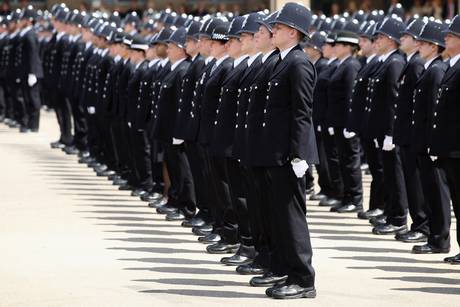 An ex-copper recommended two books to me recently, GF Newman‘s Sir, You Bastard (1970) and Bent Coppers: The Inside Story of Scotland Yard’s Battle Against Police Corruption (2004) by Graeme McLagan. I was particularly intrigued by the Newman title as most people I’ve met who worked with the police cannot stand detective fiction on the grounds that it is almost never realistic, but Sir, You Bastard, I was assured, is different. The novel covers seven years in the career of Terry Sneed, a man who who has had a meteoric rise through the police to the rank of Detective Inspector by being ruthless, intelligent, corrupt, despicable and charming in equal measure. The prologue and epilogue show Sneed with his career, and indeed his entire future in doubt, but the rest of the novel is a gripping, albeit loosely plotted journey of his ascent with chapter titles indicating his promotions ‘Detective Constable‘, ‘Detective Sergeant‘ etc. Sneed’s corruption develops from pulling cruel pranks on drivers as an uniformed policeman to brutal interrogations and abusing his position with informants. The milieu and police dialect is meticulously researched and sometimes feels like a British version of the work of Joseph Wambaugh, but Wambaugh’s cops usually grow weary and exhausted by the corruption or the drudgery of police work. Sneed, on the other hand, becomes frighteningly more confident and powerful as the story progresses.
Newman is a great writer, quite eccentric in his personal views by all accounts, and sets a cruelly ironic and blackly comic tone with apparent ease. Sneed’s Colombian mistress Billie, dismissed as a ‘spade’ by his racist colleagues, contemplates her love for a very bad man while watching a television police drama that she knows from personal experience is completely unrealistic:
The flickering colours seemed miles away in the darkened room. Billie had noticed it before; her gaze would become fixed as thoughts crossed other frontiers, and suddenly awareness o the TV would be gone. Through lifting the shutter from her eyes, it was easy picking up the threads of the plot again; the screen didn’t have to be watched or the sound listened to; it was always the same basic struggle, Good defeating Evil.
Billie watched two men in the police Buick speeding in pursuit of Evil; the chase signified that the end was nigh; Good always triumphed after the chase. In a paroxysm of sound, Evil’s car crashed into a wall, so conveniently placed. But the audience wasn’t released. Evil escaped, and ran to the fire-escape between his ricocheting bullets, his thirteen-year-old hostage, dressed symbolically in white, preventing the Good Joe Detective from shooting back. Evil climbing up the building was symbolic of his searching for God, but his reckless shooting killed thirty-nine cops, showing that his ascent heavenwards was insincere. With all fifty bullets spent, Evil threatened to throw his hostage over the edge if unscathed Good came any closer. One last emphatic appeal by Good, to no avail, and, the hostage notwithstanding, the perilous precipice-struggle ensued, Evil meeting a well-deserved fate by falling down to Hell. After the sound of Evil’s descent, Good took the trembling virgin comfortingly in his arms and, in an intimate aside with two-hundred-million viewers across the world, he imparted the message. All that was missing was a jingle: “Help our police, they’re your friends.” Billie switched off at the expense of a girl unable to get a boy-friend because she used the wrong toothpaste. For a moment she wished Terry was like that policeman hero, not especially because he was good or honest, but because he was certain to triumph. She wanted Terry always to triumph – neither for the sake of winning nor for her sake, but for Terry’s sake and what falling would do to him.
Graeme McLagan’s Bent Coppers was an interesting book to read after Newman’s fictional account of police corruption. However, his account of Scotland Yard’s attempts to confront corruption, which roughly covers the early 1990s to 2004 but also mentions cases before this timeframe, met with controversy. McLagan was sued by ex-police officer Michael Charman for libel. McLagan lost the case but subsequently won on appeal citing the ‘Reynolds Defence’. It was easy to see why many in the London Met, and even book critics, were generally upset by McLagan’s work. There is not a single footnote or reference in over four hundred pages of text. McLagan doesn’t even refer to other books on the same subject, only his own Panorama documentaries. He does refer to off the record interviews and police transcripts that have come his way but, perhaps for good reason, he was unable to reference them. There is also a stylistic problem with the writing: non-fiction subjects generally present issues with repetition but Bent Coppers really does go around in circles in its more tedious moments. That said, there are many fascinating moments to make it worth reading. The case of the detective agency Southern Investigations’ shady relationship with both the police and press seems particularly enlightening in the wake of the Leveson Inquiry, a fact the author has picked up on since:
It was believed that Southern had played a part in setting up newspaper stings. It not only hired out expensive electronic listening devices to the media, but also delivered sting ‘packages’. These kept everyone happy, apart from the victims, but who cared about them? Such a sting could take place, for example, if the agency received information from one of its police contacts that someone was dealing in drugs. Southern would then mount its own sting, planting drugs on the man or arranging for someone to pretend to want to buy drugs. A newspaper would be tipped off to be at the sting to obtain evidence. On the eve of publication of the story, the newspaper would hand its evidence over to the police, who would then move in and arrest the criminal. The newspaper got its exclusive. The police were happy because they were seen to be catching criminals. Southern was paid for its help, and the agency passed on some of the money to the officer who had supplied the original information. This kind of scam worked for a while, and no one seemed too concerned.
Amid all this talk of factual and fictional corruption, however, let me end on an optimistic note. At last month’s Remembrance Day service on the steps of St George’s Hall, Liverpool, the crowds gave the police in attendance the same level of warm and enthusiastic applause as they gave to the military veterans. The reputation of the police may have taken a battering in recent years with the Hillsborough revelations to the borderline farce of Plebgate, but that hasn’t dimmed our gratitude for the good work that they do.
Rogue Cops and Shakedown Artists – The Nature of Conspiracy Theories
In an article for the Evening Standard Matthew d’Ancona looks at the impending anniversary of the assassination of JFK and attacks the culture of conspiracy theories and the anti-politics mood that tragic and seismic event caused:
In Kennedy’s case, the bequest of his violent death in Dallas is quite specific: the grassy knoll, the “magic bullet”, the “second” Lee Harvey Oswald, the book depository, the New Orleans connection, the Mob, the Cubans, and shelves full of studies supposedly proving once and for all that JFK could not have been the victim of a lone gunman. According to a poll conducted in April, a clear majority of Americans still believes that there was a conspiracy to assassinate Kennedy, a folkloric orthodoxy reflected and reinforced most luridly in Oliver Stone’s epic movie, JFK (1991).
Into the yawning gap between the official Warren Commission and the prevailing conspiracy theories about Kennedy’s death tumbled postwar political culture. Vietnam and Watergate merely completed the process of disenchantment. Half a century of sleuthing, reconstructions, legitimate inquiry, pure conjecture, science and pseudo-science has become symbolic of a fundamental change in the way we see politics and politicians. Much more than a presidency ended in Dallas in November 1963.
As David Aaronovitch shows in his brilliant book, Voodoo Histories, conspiracy theories are at the heart of contemporary history and the way that we explain what happens to us and around us. The web has provided theorists on all budgets with the means of communicating instantly, sharing their often ludicrous ideas, and amplifying those that resonate in their digital communities.
I broadly agree with d’Ancona’s analysis here. As a teenager I was hooked on several conspiracy theories (I was never fanatic about them, mind you), but as I got older, I gradually shed these beliefs. If there is no proof, then there is no reason to believe in a conspiracy. Still, d’Ancona is rather condescending towards people’s fascination with conspiracies and overlooks how intelligent people can be inclined towards conspiracy theories. I’ve recently finished reading The Defence of the Realm: The Authorised History of MI5 and was shocked by the chapter that dealt with the paranoia that inflicted Harold Wilson in his final days as Prime Minister in 1976 as he became completely obsessed with a false belief that the intelligence services were spying on him.
Then again, as much as we agonise over conspiracy theories of events in Dealey Plaza fifty years ago, there have been other shocking conspiracies exposed that are just as disturbing as the thought that Lee Harvey Oswald was not the lone gunman on November 22, 1963. Few people, I suspect, thought Richard Nixon would ever have to resign the Presidency of the United States due to events surrounding a burglary at the Watergate Hotel. But the term ‘conspiracy’ is not as easy to define as we might think. The assassination of Abraham Lincoln was a conspiracy, although we tend not to think of it as such today as the word has become associated with shadowy intelligence agencies and reclusive billionaires secretly running the world. A plausible conspiracy theory needs to have strict borders, otherwise it veers off into the deranged ramblings of, say, David Icke.
One of my favourite novels concerning the Kennedy era and his assassination is James Ellroy’s American Tabloid (1995). In his prologue to the novel, Ellroy states his intention is to demythologise the ‘sainthood’ of Kennedy, and he also manages to demythologise a certain strand of conspiracy theory regarding Kennedy while rejecting the lone gunman explanation and presenting his own conspiracy narrative. As he put it in an interview with Ron Hogan:
I think organised crime, exiled factions, and renegade CIA killed Jack the Haircut. I think your most objective researchers do as well. When Oliver Stone diverged from that to take in the rest of the world (Lyndon Johnson, the Joint Chiefs of Staff), I lost interest.
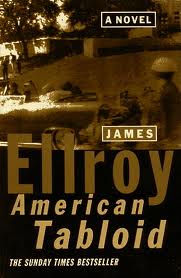 Is Ellroy correct in his vision of the JFK assassination? My feeling today is no. The truth, in its simplicity, is just as remarkable as any fictional portrayal. As Hugh Aynesworth, a reporter who witnessed the assassination, put it in a recent interview with the Telegraph: “We all love a conspiracy. No one wants to believe two nobodies [Oswald and Jack Ruby] could change the course of world history. But they did.” In a way though, this doesn’t impair the work of Ellroy as he is writing fiction, whether it ties to his or the reader’s beliefs is secondary as his portrayal of the era is gripping and convincing. You don’t have to believe in conspiracy theories to know that in the era of the late 1950s and 1960s, organised crime operated with relative impunity and Intelligence agencies had far less accountability to government than they do today. The prologue to American Tabloid could almost be compatible with Aynesworth’s anti-conspiracy stance. Ellroy argues that the men who defined the age were not in any sense powerful men who could control the country as simply as moving pieces on a chessboard, rather:
They were rogue cops and shakedown artists. They were wiretappers and soldiers of fortune and faggot lounge entertainers. Had one second of their lives deviated off course, American history would not exist as we know it.
It’s time to demythologize an era and build a new myth from the gutter to the stars. It’s time to embrace bad men and the price they paid to secretly define their time.
Here’s to them.
Praise for Poirot
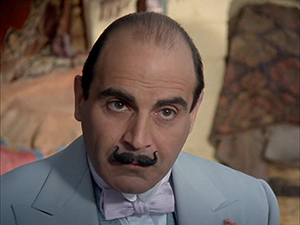
David Suchet as Hercule Poirot in Problem at Sea
In her autobiography Agatha Christie describes how the influx of Belgian refugees to Britain at the start of the First World War provided her with the inspiration for her famous fictional detective Hercule Poirot:
I reviewed such detectives as I had met and admired in books. There was Sherlock Holmes, the one and only–I should never be able to emulate him. There was Arsene Lupin– was he a criminal or a detective? Anyway, not my kind. There was the young journalist Rouletabille in The Mystery of the Yellow Room– that was the sort of person whom I would like to invent: someone who hadn’t been used before. Who could I have? A schoolboy? Rather difficult. A scientist? What did I know of scientists? Then I remembered our Belgian refugees. We had quite a colony of Belgian refugees living in the parish of Tor. Everyone had been bursting with loving kindness and sympathy when they arrived. People had stocked houses with furniture for them to live in, had done everything they could to make them comfortable. There had been the usual reaction later, when the refugees had not seemed to be sufficiently grateful for what had been done for them, and complained of this and that. The fact that the poor things were bewildered and in a strange country was not sufficiently appreciated. A good many of them were suspicious peasants, and the last thing they wanted was be asked out to tea or have people drop in upon them; they wanted to be left alone, to be able to keep to themselves; they wanted to save money, to dig their garden and to manure it in their own particular and intimate way.
Why not make my detective a Belgian? I thought. There were all types of refugees. How about a refugee police officer? A retired police officer. Not a young one. What a mistake I made there. The result is that my fictional detective must really be well over a hundred by now.
Anyway, I settled on a Belgian detective. I allowed him slowly to grow into his part. He should have been an inspector, so that he would have a certain knowledge of crime. He would be meticulous, very tidy, I thought to myself, as I cleared away a good many odds and ends in my own bedroom. A tidy little man. I could see him as a tidy little man, always arranging things, liking things in pairs, liking things square instead of round.
It’s especially interesting to think of the war refugee inspiration for Poirot the Sunday before Remembrance Day. It is only a few days before the last episode of the television series Agatha Christie’s Poirot is broadcast. It feels as though we are saying goodbye to an era, and it’s worth looking back to where it all began, in print and on television. When David Suchet made his debut appearance as Poirot in 1989, Margaret Thatcher was still in power, the World Wide Web had not yet been invented, and Christie’s novels from the Golden Age of Detective Fiction would have seemed hopelessly out of date for television. Only a few years later, detective dramas such as Between the Lines, Prime Suspect and Cracker burst onto our television screens offering a gritty, realistic depiction of police corruption and crime in contemporary Britain. Suchet’s interpretation of Poirot built an audience and reputation slowly and steadily. Albert Finney and Sir Peter Ustinov had given entertainingly hammy performances as Poirot. Suchet was informed by the Christie family that they were sick of seeing Poirot portrayed as a caricature and wanted to see a version closer to the character in the books. Suchet did not let them down. Although his Poirot is definitely an eccentric, there is depth and humanity to the character which has made him so durable and compelling. His performance in the 2010 episode of Murder on the Orient Express, which gives an interesting twist on a story which was already ingrained in the public consciousness, was one of the most moving pieces of acting I have seen in television.
Curtain: Poirot’s Last Case will be the seventieth and final episode of the Agatha Christie’s Poirot productions which has seen every major work by Christie featuring the Belgian detective adapted to television. I’ll be watching it on Wednesday night, and I don’t doubt there’ll be a little sadness that such a superb series has finally come to an end.
Elmore Leonard’s Rules of Writing: Avoid Prologues
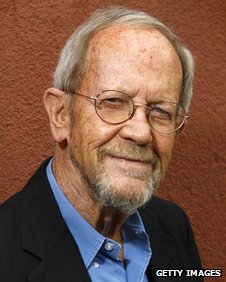
Elmore Leonard
If you ever want a quick reminder of the recently departed Elmore Leonard’s genius, it’s always worth revisiting his 10 Rules of Writing. The most oft quoted rule is the closing one, which Leonard said, ‘sums up the 10’. Put simply: ‘Try to leave out the part the readers tend to skip’. But for this post I want to look at rule 2, Avoid Prologues:
They can be annoying, especially a prologue following an introduction that comes after a foreword. But these are ordinarily found in nonfiction. A prologue in a novel is backstory, and you can drop it in anywhere you want.
I can’t fault Leonard’s argument. and you can see how it connects to his own work. In his best novels 52 Pickup (1974) and Killshot (1989) there is no real mystery. Instead, Leonard presents a series of bizarre, violent and loosely connected events. Who needs a prologue for that? However, let’s look at two examples of prologues in a crime novel, one written long before Leonard set down his rules of writing. Firstly, True Confessions (1977), John Gregory Dunne’s novel loosely based on the Black Dahlia case. The novel begins with the heading ‘NOW’ and contains the first-person prologue of retired detective Tom Spellacy. The prologue, as its title states, is set in the present day, and Spellacy is musing on the discovery of the corpse of Lois Fazenda, dubbed the ‘Virgin Tramp’ in the novel. Fazenda is Dunne’s stand-in for Elizabeth Short, aka The Black Dahlia:
Anyway, when I got there, Crotty was bending over the second half of Lois Fazenda. The top half. She was naked as a jaybird, both halves. There was no blood. Not a drop. Anywhere. Just this pale green body cut in two. It was too much for Bingo. He took one look at the top half and spilled his breakfast all over her titties, which is a good way to mess up a few clues. Not that it bothered Crotty. “You don’t often see a pair of titties nice as that,” was all he said. Respect for the dead, Crotty always used to say, was bullshit. Dead is dead.
This sets the tone for the dark, grisly humour which runs throughout the book. The next section is titled ‘THEN’, and is a third-person narrative set in the late 1940s. This forms the bulk of the novel and covers Spellacy’s original investigation. The epilogue reverts back to the ‘NOW’ heading, and Spellacy’s first-person voice. Dunne’s NOW/THEN present day/past setting of the novel is an example, I believe, of a prologue that works really well in a crime novel. Although strictly speaking it may not be a prologue at all. The first ‘NOW’ section covers twenty-four pages and is split over six chapters. A prologue always precedes the first chapter therefore just postponing the inevitable in Leonard’s view. However, the ‘THEN’ section also begins as chapter one. Also, this longer section is essentially the backstory to the present day Tom Spellacy we meet in the prologue and epilogue, reversing Leonards’ claim that ‘a prologue in a novel is backstory’.
Dunne’s use of prologue and epilogue is referenced in James Ellroy’s Blood’s a Rover (2009). The novel was Ellroy’s long awaited conclusion to the Underworld USA trilogy and was billed as covering American history from 1968 to 1972. The first two volumes of the trilogy, American Tabloid (1995) and The Cold Six Thousand (2001), covered 1958-1963 and 1963-1968 respectively. I’m sure more than a few Ellroy readers would have been surprised when they opened up the novel to find the heading ‘THEN’ followed by the first scene, an armed robbery written in the first-person, set in 1964. This is followed by the heading ‘NOW’, the first-person narration of Don ‘Crutch’ Crutchfield set in the present-day, then we cut to ‘THEN’ again (confused yet?) and things commence in 1968, the main five year time span of the novel, and back in third-person. We end with ‘NOW’ and we’re back with Crutchfield in the present day, oh and did I mention there’s an epigraph before the first ‘THEN’?
By and large I think Ellroy just about gets away with his rather complicated tribute to John Gregory Dunne, but you can see he’s veering dangerously close to what Leonard talked about when he said avoid, ‘a prologue following an introduction that comes after a foreword’. If you’re going to break the rules of the master, do it well.
If you’re lucky enough to live in or close to New York City, try and catch this wonderful event at the Paley Center for Media on November 14:
James Ellroy, modern master of historically inflected crime fiction and author of L.A. Confidential and American Tabloid, and Thomas Mallon, novelist and essayist, author of Henry and Clara and Mrs. Paine’s Garage, will explore the continuing fascination the assassination of President John F. Kennedy exerts on popular narrative, the significance of the Kennedy assassination to the American experience, and the ways in which the thematic richness of the event has reverberated through our culture in the subsequent decades.
Full details here.
James Ellroy Day? – January 26
The LA Times reports that James Ellroy’s latest novel Perfidia, the first of a ‘Second LA Quartet’, will be released in the autumn of 2014. Ellroy has published a letter on the Sobel Weber Associates website in which he goes into detail as to what will comprise the plot of the new novel and series:
My design for “The Second L.A. Quartet” is unprecedented in scope, stylistic execution and dramatic intent. I will take characters -– both fictional and real-life — from the first two extended bodies of work, and place them in Los Angeles during World War II –- as significantly younger people. The action will begin the day before the December 7, 1941 Japanese attack on Pearl Harbor and will carry an enormous range of people through to the end of the war. Massive police investigations, political intrigue, grand love affairs, war profiteering, Axis sabotage plots. Four 700-page hardcover novels that will span the homefront breadth of the greatest worldwide event of the twentieth century.
And, now, Volume I -– PERFIDIA.
The story unfolds, in densely structured real time, between December 6th and December 29th, 1941. Los Angeles is at the cusp of a titanic and horrifying world conflict. Political divisions – Isolationism versus Interventionism – rage. Anti-Japanese rancor is escalating and then the bodies of a middle-class Japanese family are found, in their home.
This is glorious news for Ellroy fans. The plot seems expansive and fascinating, covering some familiar territory which readers of his earlier work will recognise, but also containing plenty of new ideas. There will probably be a formidable publicity campaign between now and the book’s release, so I thought I would share on this website a story Ellroy told to interviewers Fleming Meeks and Martin Kihn which was reprinted in (shameless plug alert!) Conversations with James Ellroy.
Ellroy is widely acknowledged as one of the greatest crime writers working today, and as he enters this new phase of his career it worth looking back at when and where his writing career began. According to Kihn, Ellroy began writing after a near epiphany on the Bel-Air Country Club, LA, where he was working as a golf caddy:
Finally, on January 26, 1979, he went out onto the green, stared up at the sky, and prayed: “Please, God, let me start this book tonight.” That night, standing, writing on his dresser, he did. Ten months later, he sent it to four agents listed in Writers Market 1980, all of whom responded positively within a week. The man he went with sold it to Avon as a paperback original for $3,500.
In the interview with Fleming Meeks, Ellroy tells this story with a greater sense of irreverence, not mentioning the date and perhaps underplaying its significance:
“I was on the golf course. And I actually sent up a prayer to my seldom sought, blandly Protestant God. ‘God,’ I said, ‘would you please let me start this fucking book tonight?’ And I’ve been at it ever since.”
Note here the blasphemy and profanity which somehow seems appropriate for Ellroy’s entry into the crime genre. The novel he began that day was titled Brown’s Requiem and was published in 1981, and although it wasn’t a great success, Ellroy never looked back. He was still recovering from a long period of alcoholism, drug addiction and homelessness when he started writing, and it’s worth commemorating that a simple prayer of a golf caddy on a modest salary and with a slew of horrific experiences behind him was the genesis of a remarkable literary career.
So when January 26 (or James Ellroy Day if you prefer) comes round next year, I’ll be raising a glass to the Demon Dog and all of his best characters.
Here’s to them.
The Ship That Died Of Shame – Review
I know about ships. They’re wood and metal and nothing else. They don’t have souls. They don’t have wills of their own. And they don’t talk back, or so I told myself a thousand times. A thousand times I went over it all from the beginning. The beginning, like almost everything else about me, went back to the war, to motor gun boat 1087.
 So begins the narration of Skipper Bill Randall (played by George Baker) in an ambitious but almost forgotten film, which portrays both the excitement and tragedy of war and the bitter disappointment of servicemen who cannot adapt to peacetime Britain and sink deeper and deeper into a world of crime. The Ship That Died of Shame (1955) was adapted from a short story by Nicholas Montsarrat (author of The Cruel Sea) and directed by Basil Dearden for Ealing Studios, the wonderful production company whose classic series of comedies —Kind Hearts and Coronets (1949), The Lavender Hill Mob (1951), The Ladykillers (1955)–often had an undercurrent of darkness in their portrayal of the apparent gentility of British life. War films were common and popular in 1950s Britain. Films about the Royal Navy’s role in WWII, Battle of the River Plate (1956), Above Us The Waves (1955) and the adaptation of Montsarrat’s The Cruel Sea (1953), provided some of the best examples of the genre. They did not prove as popular with all the critics. One anonymous reviewer for the New Statesman complained they propagated a jingoistic view of wartime glories at a time, following the Suez Crisis, when British influence in the world was declining.
A dozen years after the Second world War we find ourselves in the really quite desperate situation of being, not sick of war, but hideously in love with it…while we ‘adventure’ at Suez, in the cinemas we are still thrashing Rommel…The more we lose face in the world’s councils, the grander, in our excessively modest way, we swell in this illusionary mirror held up by the screen. It is less a spur to morale than a salve to wounded pride; and as art or entertainment, dreadfully dull.
The criticism, however, is a small-minded one. The best war films of the era could merge thrilling action with a moving portrayal of the psychological costs of wartime on the people who lived and fought through it. At first glance, The Ship That Died of Shame appears to be just another well-constructed war film. When the story moves to a post-war setting, it becomes one of the most compelling of the relatively few British noir thrillers that were made in the era. Bill Randall and his crew, the brave and loyal Birdie (Bill Owen) and the charismatic but venal George Hoskins (Richard Attenborough) seem a perfect team aboard MGB 1087, and their courage holds fast during dangerous raiding operations along the coast of Nazi-occupied France. Randall is a brilliant seaman, but as he is confesses when the film begins, his view of boats is not a Romantic one. The real love of his life in onshore in the form of his beautiful wife Helen (Virginia McKenna), but after Helen is killed in an air raid, he feels that all his he has left is his boat and its crew. After the war, Randall finds it difficult to adapt to life on civvy street. A chance meeting with Hoskins leads to a lucrative offer. Hoskins has become involved in a smuggling ring transporting black market goods from France to Britain. Randall is clearly a moral man but he allows himself to be persuaded that it is harmless to ship products like wine and chocolates to a country suffering post-war austerity (rationing finally ended in the UK in 1954). Randall’s spirits soar when they buy and restore his beloved MGB 1087 for their criminal enterprise. Things go well at first, but The Ship That Died of Shame is a dark film that becomes progressively more disturbing. They move from smuggling cargoes of luxury goods to cargoes of guns and ammunition. On one voyage, their cargo is human, Randall is shocked to discover the man is a fugitive child killer (and probable paedophile). The partnership between Randall and Hoskins becomes untenable as Randall becomes increasingly disillusioned by their work whereas Hoskins further embraces evil.
The Ship That Died of Shame is a wonderful genre hybrid of noir and war film. It features a stellar cast, all at the top of their game. Roland Culver is brilliantly snooty as the upper-class villain Major Fordyce who declares he went into smuggling after the war as he ‘got a bit tired of working for the plebs after fighting for them.’ Richard Attenborough has become such a national treasure that I had forgotten how good he was at playing villains. George Hoskins should rank alongside Pinkie Brown and John Christie as one of the most memorable and disturbing characters he has played.
As the characters’ acts become darker, MGB 1087 becomes a character in itself. Its engines shut down for no apparent reason, and it maroons them in violent storms. The more amoral they become, the more the ship seems to push them into danger, contradicting Randall’s opening statement that a ship has no soul. It gains a soul while they lose theirs.
Break
Things are very busy with work right now. I’ve got lots of ideas for blog posts, and I’ll be blogging again around late October. See you then.
Remembering Elmore Leonard
Elmore Leonard
Elmore Leonard, one of the giants of American crime writing, passed away last Tuesday at the age of 87. Leonard was one of a few truly great writers who kick-started my passion for crime fiction. His characters were tough and yet endearingly odd. His stories were often bizarre but still believable. He maintained a consistently high quality of writing in his prolific output. Over at the Rap Sheet, J. Kingston Pierce has put together a collection of tributes from crime writers, critics and bloggers, to which I have contributed a few words. The tribute is split into two parts. You can read it here and here.
Thank you for the great stories Dutch. We will be reading them for a long time to come.
James Ellroy and David Peace: History Repeats Itself

James Ellroy and David Peace. Photograph: Eamonn McCabe
I have never liked football, so I won’t be reading David Peace’s latest novel Red or Dead about Bill Shankly’s tenure as manager of Liverpool Football Club, although judging by the reviews so far even the most diehard football fan would struggle to wade through this 700 page plus epic tome. Iain Macintosh reviews the book in the Mirror and slams Peace’s mind-numbingly repetitive prose style. Here is a passage from the novel he quotes from:
Every morning Liverpool Football Club trained in the wind. Liverpool Football Club played in the wind. And Liverpool Football Club beat Arsenal Football Club in the wind. Every morning Liverpool Football Club trained in the rain. Liverpool Football Club played in the rain. And Liverpool Football Club beat Leyton Orient Football Club in the rain. Every morning Liverpool Football Club trained in the mud. Liverpool Football Club played in the mud. And Liverpool Football Club beat Birmingham City Football Club in the mud.
And he adds wearily, ‘It goes on like this all the way down the page with every conceivable meteorological condition carefully catalogued until you’re screaming, “For the love of God, man! Just say FC!”’
I admire David Peace. He has written excellent historical crime fiction, and when I saw him speak in Belfast a few years ago he came across as intelligent and charming. He is well known for being a fan of James Ellroy, and you can some of the themes of Ellroy’s LA Quartet transplanted into Peace’s Red Riding Quartet. Peace’s novel on the miner’s strike GB84 (2004) looks back on that event as a form of endless cycle of conspiracies, not dissimilar, although smaller in scale, to Ellroy’s Underworld USA trilogy. Of course the similarities in their work go further than just theme and plotting, Peace has been heavily influenced by Ellroy’s sparse, reductive prose style, and this seems to be where he has gone wrong with Red or Dead. Peace has always dabbled with a certain clipped prose, giving the reader fragments of thought and dialogue, and gradually this style has become more concise, and this is where it seems history has repeated itself, and repeated itself, and repeated itself. According to story by Nat Sobel, James Ellroy came across his now signature prose style almost by accident after an editor demanded he make cuts to LA Confidential (1990), but he was reluctant to lose a single character or scene:
James came to my house to talk about what we could do about it. I had the manuscript on the desk in front of me, and as a joke I said to James, ‘Well, maybe we could cut out a few small words.’ I meant it entirely as a joke. But I started going through a manuscript page and cut out about a dozen words on the page. James said, ‘Give me that.’ I gave him the page. And he just kept cutting. He was cutting and cutting and cutting. When he was done with the page, it looked like a redacted piece from the CIA. I said, ‘James, how would they be able to read this?’ He said, ‘Let me read you the page.’ It was terrific. He said, ‘I know what I have to do.’ He took the whole manuscript back and cut hundreds of pages from the book and developed the style. That editor never knew what we had to do, but she forced him into creating this special Ellroy style, which his reputation as a stylist is really based on. It came from her, sight unseen, saying ‘Cut 25 percent of the book.’ He wound up cutting enough without cutting a single scene from that book.
Personally, I think Ellroy’s style had been evolving for some time, and there is a danger to putting it all down to a sudden epiphany. In any event, Ellroy achieved great critical acclaim with his new writing style, and he continued to adapt it with great success in his novels White Jazz (1992) and American Tabloid (1995). Then, in 2001 The Cold Six Thousand was published and this is where many Ellroy fans and critics thought he had taken the style to far. Here’s an example:
He saw Fed cars. He saw Fed surveillance. Feds perched down the road. Feds watched the meets. Feds checked licence plates.
Local Feds – non-FBI – Dwight Holly’s boys.
Wayne Senior was distracted. Wayne Senior was tract-obsessed. Wayne Senior missed the heat. Wayne Senior talked. Wayne Senior torqued Wayne. Wayne Senior worked to impress.
Does this look at all familiar to the quote from Red or Dead? Sure, there is the lack of adverbs, adjectives and conjunctions which is a hallmark of Ellroy’s style but by refusing to allow any modifications to the sentence, he dooms the book to a dreary repetition, just as Peace has done with his latest work. Incidentally, The Cold Six Thousand is also around the 700 page mark, so we have an idea where this style takes us in terms of length. I know fellow Ellroy fans who gave up reading the novel halfway through. I have read it twice now, and I like it, but that’s because it covers five years of fascinating American history from 1963 to 1968. The story is strong enough to forgive the stylistic indulgences and there are moments in the novel where the style actually helps the action come alive. Still, it’s a grueling read and Ellroy has practically disowned it in some interviews. In his latest novel, Blood’s a Rover (2009), he returned to a more engaging style. Many fans breathed a sigh of relief, perhaps Peace should do the same. Even football fans would admit that the game can be boring at times, but its easier to forgive occasional stretches of boredom in a ninety minute football game than it is in a pretentious magnum opus about the sport. Besides, a boring game might come alive suddenly, Peace seems to have to a style too rigid for that to happen.
One issue in which there seems to be a big difference between Ellroy and Peace is the two men’s political views. Despite both men writing of the past as a web of conspiracies Ellroy is a conservative, a Tory in his own words, whereas Peace is a man of the left. An article in the New Statesman about the politics of football sums up Peace’s intentions with Red or Dead:
In an interview in the forthcoming edition of the Blizzard, a quarterly in the vanguard of the new, post-Hornby football writing, Peace describes Red or Dead as “a Socialist Book. I think Shankly’s socialism was fundamental and integral to every aspect of his life and work. It was about equality, on and off the pitch, and working for the people and the supporters of Liverpool. It was about communal work for communal success. And I do admire this and lament its absence.” But this is no tiresome jumpers-for-goalposts pining for the muddy pitches, questionable tackling and even more questionable haircuts of a purer, irrecoverable past. As one reviewer has pointed out: “This isn’t a book about the way things were or the way things are. This is a book about the way things should be.”
The irony is Peace may have inadvertently conveyed the worst of socialism. Through its repetition, ideological lack of imagination or pragmatism, and complete contempt for what the reader wants Red or Dead is the least communal book imaginable. Iain Macintosh concludes his review of the novel:
And so Iain sighed. Iain closed the book. Iain lifted the book above his head. Iain brought the book down on his head with as much force as he could muster. Iain slipped into the sweet, sweet embrace of unconsciousness.
Peace is a great writer, but it seems like he deserves a critical drubbing for Red or Dead. You never know, maybe he’ll receive a phone call from a fellow writer from across the pond who’ll tell him, “Don’t worry pal, I’ve been there.”


 The Venetian Vase