Everybody Knows by Jordan Harper – Review
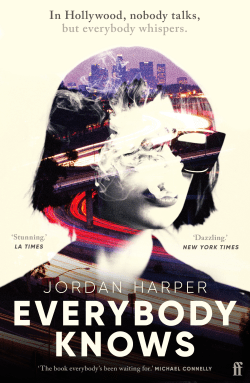
Everybody Knows is the brilliant new novel by Jordan Harper. It takes its title from an expression the characters use to discuss Hollywood secrets, up to and including sexual abuse by A-listers: ‘Nobody talks. But everybody whispers’. In Tinseltown, your career, reputation, and chance to pursue a creative life are dependant on protecting the beast – Harper’s name for the studio system and the abusers its shields. Our lead characters are two insiders who know this world intricately. Mae Pruitt is a ‘black bag’ publicist at a crisis PR firm. Some publicists job is to make you look good. Mae’s job is to make sure you don’t look bad. Early in the novel, a heavily-staged Instagram post involving one of Mae’s clients and her lap dog Mochi helps to narrowly avoid a scandal. It’s disturbing and darkly hilarious because its ring true. Mae’s world comes crashing down when her boss is gunned down outside a Beverly Hills Hotel. Suddenly the game has changed, and things can’t just be fixed anymore. Mae starts to investigate with the help of her ex-boyfriend Chris, only to find that both of their lives are in danger as they draw closer to the secrets which might finally slay the beast.
I interviewed Jordan Harper when I was researching Love Me Fierce in Danger: The Life of James Ellroy. Harper is a huge Ellroy fan, to the extent that he even named his dog Ellroy. He scripted a television pilot adaptation of Ellroy’s novel LA Confidential. He sent me a copy and I can attest to it being a brilliant piece of television. Harper had plans to adapt Ellroy’s sprawling novel into a series format, but despite a multi-million dollar budget, high-calibre cast and first-rate production values the TV pilot was never broadcast. Harper was showrunner on the pilot, involved in almost every aspect of the creative process. One can only imagine his disappointment that viewers were never given the opportunity to cast their own judgement on the show. Part of that frustration boils over into Everybody Knows, which is more than just a page-turning noir tale. It is destined to become one of the great Hollywood satires on a par with The Day of the Locust and What Makes Sammy Run?
The Enchanters: Ellroy’s captive audience
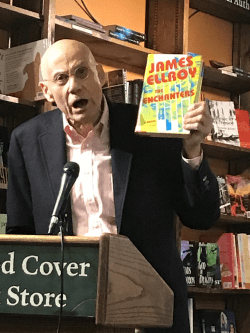
For the following piece we welcome back to the blog James Ellroy aficionado and all-round good guy Jason Carter:
“I put a spell on you!!!”
James Ellroy left his Denver audience in no doubt as to who runs an Ellroy presentation. “You’re nobody’s audience but MINE!”
Just minutes before, an employee of Tattered Cover’s Colfax location warned the audience in her introduction of Ellroy that the Demon Dog would likely utilise some colourful language that would easily offend.
The warning was well timed, as Ellroy then launched into an extra-lengthy rendition of his signature “Peepers, prowlers, pederasts, pedants” introduction, followed by the Reverend Ellroy’s promise of unlimited bedroom action sans adultery, negative ramifications and STDs for anyone brave enough to purchase literally thousands of copies of his new novel The Enchanters.
And while this salaciously solicitous greeting is often a standard feature of Ellroy’s introductions, tonight it carried even greater gravity as the Tattered Cover—an iconic independent Colorado bookstore with a decades-long history and locations throughout the state—had just announced its bankruptcy filing and also the soul-crushing closure of three of its locations…
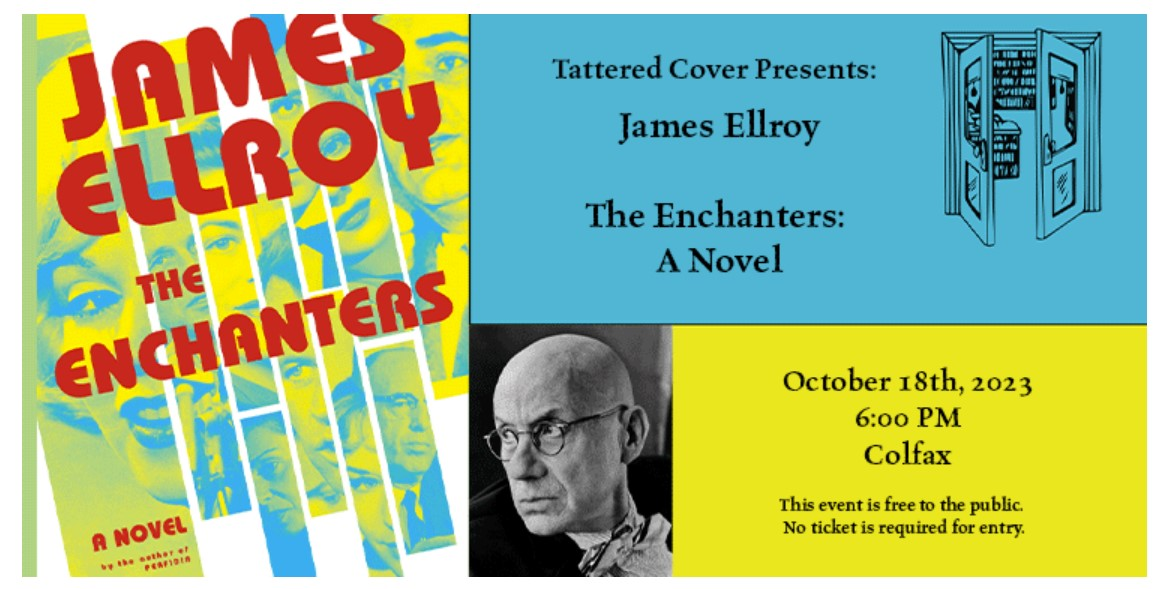
Ellroy has always championed brick and mortar bookstores and printed physical books verses their electronic counterparts, and Tattered Cover’s recent bankruptcy actions heightened the urgency exponentially: “Buy multiple copies of this book, or a serial killer I have waiting in the parking lot will slaughter all of you!” Ellroy commanded. “And don’t buy this book on the internet… it doesn’t count as much towards the New York Times best seller list.” This evening, October 18th, 2023 also came just four days shy of the 14th anniversary of when I met Ellroy for the very first time at this very bookstore on October 22, 2009… I saw the Demon Dog for a second time here on June 21, 2019 during his tour for This Storm, and that evening was memorable because Ellroy—our premier practitioner of profound profanity—chose deliberately to not use any foul language, even going as far as refusing to read any passages from This Storm due to the novel’s ubiquitous vulgarity.
“The Enchanters is my best book ever!” Ellroy followed this confident pronouncement with a far more nuanced rumination: “Ninety-six years ago, Dashiel Hammett’s first novel Red Harvest was published… Now in 2023 comes its corollary… Hammett and I represent the alpha and omega of the American hard boiled novel.”
Ellroy did also manage to insert his now famous commentary on the dividing line between Hammett and Raymond Chandler—“Chandler wrote the man he wanted to be, and Hammett wrote the man he feared he was”—while also declaring that “Hammett is infinitely greater than the candy-ass Raymond Chandler…”
Dog then read from The Enchanters exhilarating opening chapter, and then opened the floor for questions—though with strict limitations: “No questions about politics, no questions about my life, no questions about movies I might have written… I’ll cut you off at the knees!!” Only questions about The Enchanters were acceptable.
Ellroy soon contradicted this absolution however, when a patron asked him whether he would ever narrate any of his novels, as it was a perfect opportunity to promote Audible’s upcoming unabridged verbatim rendering of American Tabloid, which features Ellroy reading the narrative and the dialogue performed by a full cast, all in an epic runtime of nearly 22 hours.
The Demon Dog did also acknowledge why he chose to expand the once-second L.A. Quartet to the now L.A. Quintet—comprised chronologically of Perfidia, This Storm, The Enchanters, and two future Fred Otash novels set during the final months of 1962. “It’s a micro-history of L.A. in 1962 when I was 14…”
The number 14 is quite significant to me also… I was that same age when James Ellroy first crashed into my life thanks to a now-classic Unsolved Mysteries episode in March, 1996. While The Enchanters is heavily concerned with the death of Marilyn Monroe, Ellroy cautioned his Denver audience not to think of the book as a tribute to Ms. Monroe: “The Enchanters is classic P.I., and while it gives you the protracted life and death of Marilyn Monroe, I never liked her… I dislike her as a human being and as an actress… She never did a thing for me as a woman.”
The Enchanters is published by Penguin Random House.
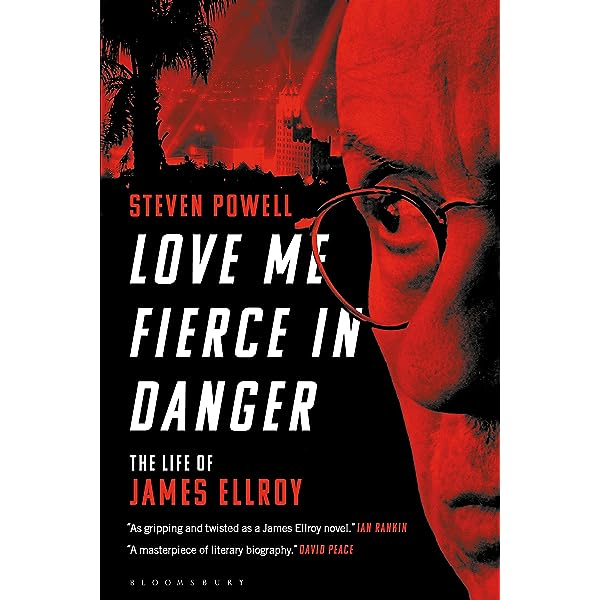
Love Me Fierce in Danger: The Life of James Ellroy is published by Bloomsbury.
Bahamian Rhapsody in Apocalypse Confidential
I am delighted to announce that my short story ‘Bahamian Rhapsody’ has been published by the brilliant online magazine Apocalypse Confidential. Apocalypse Confidential also published my previous story, ‘The Beach Blonde’.
You’ll find an extract of the story below. You can read the whole thing here:
The first time I saw Lenny Styles he was in the dock being arraigned on charges of assault and causing serious injury by dangerous driving. As a teenager I had dreamed one day I would see him in a packed football stadium belting out his hits “Don’t Forget My Love“ and “I Don’t Want You No More Baby”. He was a dashing figure then, having hit the big time in his mid-thirties. As he once told an interviewer, “I was old enough to appreciate the struggle it took to get here, but young enough to enjoy the fruits of a Rock N’ Roll lifestyle.”
Ten years later his band came crashing down amid rumors of bust-ups, threatened lawsuits and bad management. Whatever the reason, the one thing that was undeniable about Styles’ fall from grace was his declining popularity and sales. I should know; I was a diehard fan loyal enough to buy his critically panned experimental prog rock album Underground Suspicion, purely for completion’s sake of course.
The shambolic figure in the packed courtroom this morning didn’t look like the old Lenny Styles. My former idol now sported greasy unkempt hair, but not in a cool rock star way, and a bulging stomach seemed to be testing the buttons on his crumpled tan jacket. It had been a long decline for Styles. Despite claiming his bandmates had robbed him of millions in royalties he had bought a seafront mansion only twenty miles from Nassau, where I grew up listening to his albums. He moved in with his third wife, twenty years his junior, and settled down for what he hoped would be a blissful life enjoying the very best the Caribbean has to offer.
You know what they say about the best laid plans.
Mr Campion’s Memory – Review
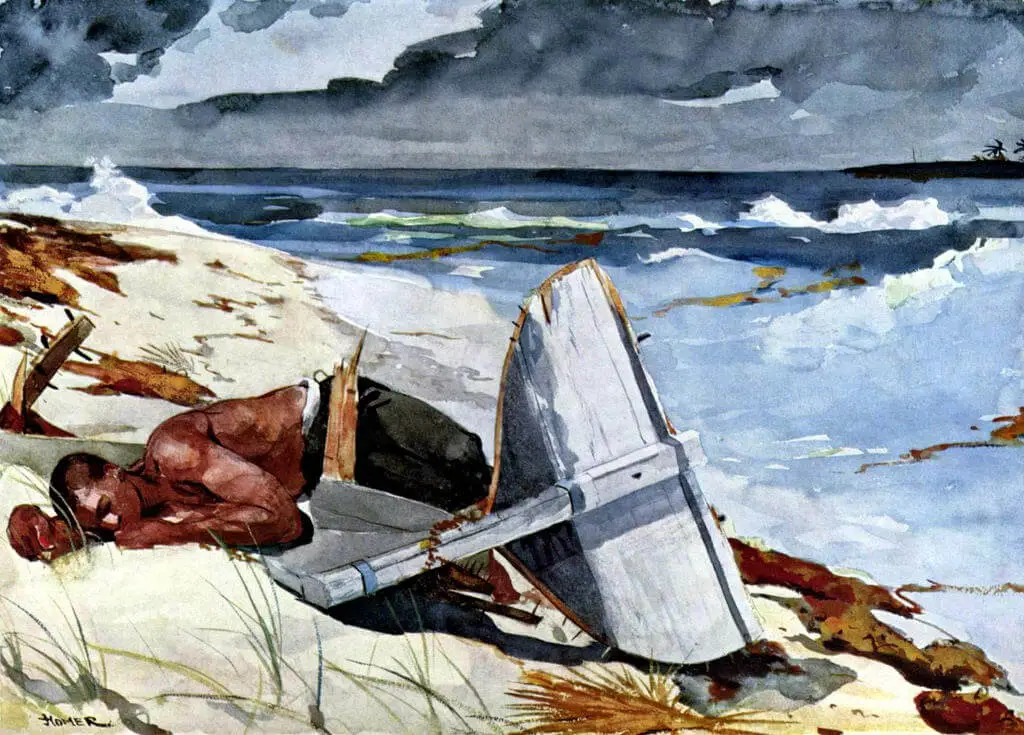
In early 1970s London, everyone in high society covets a gong. Construction magnate Sir Lachlan McIntyre wants to add a peerage to his knighthood, but his chance to don ermine is threatened by scandal and, much worse, murder. A journalist Sir Lachlan has engaged in fisticuffs with has been found shot to death.
Enter Albert Campion, an aristocrat himself who has foregone the traditional pursuits of the landed gentry in favour of a career in detection. Campion’s nephew Christopher is an aspiring public relations guru who wants his uncle’s help to clear Sir Lachlan’s name, but by doing Campion finds himself implicated. Campion’s name was found among a list of dodgy names in the late journalist’s notebook.
Mike Ripley’s first Campion novel was published in 2014. Mr Campion’s Memory is his eleventh in the series. Each novel is a perfect cocktail of mystery and fizzy wit which builds on the legacy created by Margery Allingham. Recently, Mike brought to a close his excellent online column on crime fiction ‘Getting Away With Murder’ after 200 issues. I never missed a word Mike wrote in that column which is why I made the dedication for Love Me Fierce in Danger: The Life of James Ellroy ‘To Mike Ripley – For Getting Away With It’. I thought writing ‘For Getting Away with Murder’ might have been a tad tasteless given the unsolved murder of Jean Ellroy.
The humour and expertise Mike brought to his 200 columns of ‘Getting Away With Murder’ is delightfully in evidence in the excellent Mr Campion’s Memory.
The Enchanters – Second Reading
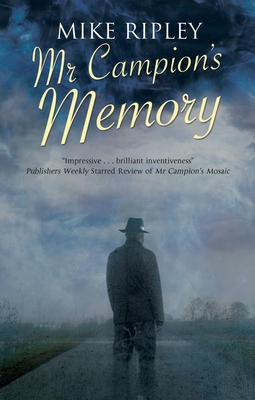
I’m currently rereading James Ellroy’s The Enchanters and enjoying it more the second time round, although naturally a few things that grated on the first reading now seem even more glaring. Rather than do a standard review, I thought I would jot down some thoughts.
The Setting
Los Angeles, 1962. Ellroy was fourteen years old at the time of the novel’s setting. ‘Geography is destiny’ Ellroy is fond of saying. To which we might add that history is memory. Ellroy has always been at his best when he can draw on his own experiences – his penchant for voyeurism, his cast-iron memory -and bring them into an historical fiction narrative. The Enchanters is strongest when he does this. Ellroy is not a natural researcher. He hires researchers to do the legwork for him while the inspiration springs from his memory. The WWII setting of Perfidia and This Storm robbed him of his modus operandi as he was completely dependent on researchers to portray the LA of before his birth.
The Characters
Now that Ellroy has abandoned the LA Quartet in favour of a Quintet (it’s a numbers game), how consistent is his portrayal of character? There are some characters, such as Dudley Smith and Elizabeth Short who have gone through too many jarring variations, but others feels they are coming into their prime. LAPD Chief William H. Parker is a far more interesting presence. He’s ambitious and cunning, unlike the pathetic, emotionally volatile figure he has been in recent novels. It helps that we don’t see too much of him. Despite deconstructing historical figures, Ellroy also left them enough mystique to stay interesting – the glimpses we see of J. Edgar Hoover in the FBI transcripts of American Tabloid to use one example. Fred Otash is also vastly more complex. Ellroy told me he never liked Otash personally… and in Widespread Panic it showed. Here, Ellroy has put his personal feelings aside, and he really explores Otash’s soul. I was less convinced that we needed Otash’s romance with the actress Lois Nettleton.
Marilyn Monroe
The FT review of The Enchanters makes the interesting point that Marilyn Monroe’s legacy has been hotly contested in recent years, and argues that Ellroy wants to ‘put that legacy right back where it used to be – in the zone of kink, innuendo, sex, gossip and scandal’. Well perhaps, but there’s something refreshing about Ellroy’s portrayal of a woman who understands her vices even though she can’t control them. His Monroe isn’t exactly an iconic icon of iconicity but she is endearingly human, and I loved her more for that.
Love Me Fierce in Danger: The Life of James Ellroy is published by Bloomsbury.
A James Ellroy Playlist: Images of Enchantment
Now that James Ellroy’s The Enchanters has been published and many readers of this site will already be ploughing through it, if you haven’t finished it already, I thought it would be a good time to assess the musical influences on the novel as part of my ongoing series on Ellroy and music.
Image of a Girl
After Marilyn Monroe’s death Freddy Otash’s first-person narration notes that ‘local disk jockeys played ‘Image of a Girl’ twenty thousand times a day’. Later at a beach party he notices some ‘Teen queens preened in Marilyn drag’ while transistor radios play ‘Image of a Girl’. The song by The Safaris reached No.6 in the US pop chart in 1960, two years prior to Monroe’s passing. In The Enchanters ‘Image of a Girl’ is used as a haunting tribute to Monroe, one of the most beautiful women in the world, and perhaps Ellroy first heard the song in the Summer of 1962, although I cannot find any evidence that it was getting constant airtime, as Ellroy suggests, shortly after Monroe’s death.
The song jumped out at me as, when I was writing Ellroy’s biography Love Me Fierce in Danger: The Life of James Ellroy, Ellroy specifically mentioned this song to me when he was talking about one of his former lovers, ‘her song was ‘Image of a Girl”. I subsequently interviewed the lady in question who told me she hadn’t heard of the song, so I played it for her:
How Are Things in Glocca Morra?
Just as Ellroy links ‘Image of a Girl’ to Monroe, he also links a specific song to Monroe’s occasional lover President Kennedy. Otash meets the actress Lois Nettleton at the The Chapman Park Hotel. Dick Haymes is singing ‘How Are Things in Glocca Morra’. Otash notes that Nettleton ‘loved the song’. John F Kennedy had more mixed feelings about the song. As this article in The Huffington Post reveals:
JFK was young congressman in 1948 listening to the Finian’s Rainbow Broadway cast album in his Washington apartment when he learned that his beloved sister “Kick” (Kathleen Kennedy) had been killed in a plane crash in France. The song “How are Things in Glocca Morra?” played as he broke down in tears.
Ellroy has chosen two songs for The Enchanters which, in specific contexts, can be associated with premature death and tragedy – the sad love song for Monroe and the ode to a fictional Irish village for JFK.
Below you can listen to Ella Logan sing ‘How Are Things in Glocca Morra’. This is from the original Broadway production that JFK was listening to when he heard the news of Kathleen’s death.
Love Me Fierce in Danger: The Life of James Ellroy is published by Bloomsbury.
The Enchanters by James Ellroy – Review
Statement One: James Ellroy is one of the most important figures in the history of American crime fiction, possibly recent American literature.
Statement Two: James Ellroy’s recent novels have left critics and his most ardent admirers divided and sometimes baffled by their complexity and the author’s stylistic experiments.
Both of the above statements are objectively correct. Whether you like them or not is somewhat beside the point. Expectations are high for Ellroy’s latest novel The Enchanters, simply because curiosity is needling away at the reader. Will it be a return to form, or will it contain much of the repetitive alliteration and convoluted plotting that flummoxed readers of Perfidia and This Storm?
The Enchanters begins on August 4, 1962. JFK is in the White House. RFK is waging war on organised crime as Attorney General. These two very different siblings, the womaniser and the idealist, reign over the metaphorical court of Camelot, but the death of a blonde bombshell is about to challenge all of that. The Enchanters begins on the day Marilyn Monroe died. Sleazebag private eye and fixer Fred Otash has his hands full. He’s helping the LAPD’s ‘Hat Squad’ to throw a kidnap suspect from a clifftop on the Chavez Ravine. Otash’s motto is ‘Opportunity is love’ and he senses Monroe’s death is a big opportunity. Does it connect to the kidnapping of a B-movie starlet Otash has been investigating? Or the spiralling production costs of Cleopatra which are bankrupting Twentieth Century Fox? Or is it related to the actor Roddy McDowell‘s self-directed, curated personal porno collection? In Ellroy’s version of Hollywood, behind the glitz and glamour, everything connects in a world of scandal and sleaze.
This is classic Ellroy territory, and the good news is that The Enchanters reads very well. Ellroy knows this world and delights in taking the reader on a tour through its seamier side. Readers may feel relieved that he has abandoned the WWII setting of his previous two novels and returned home. Also, he has scaled back on the endless alliteration of Widespread Panic, which made Otash, through the first-person narration, a rather facetious character. In The Enchanters, Ellroy gives some hidden depths to the man so that, despite Otash’s venality, he comes across as a tragic figure and a sympathetic one.
With The Enchanters, Ellroy has once again cast his spell.
Love Me Fierce in Danger: The Life of James Ellroy is published by Bloomsbury.
This review was cross-posted on Shots.
Drunk on Movies Podcast – LA Confidential
Drunk on Movies is a terrific podcast. The basic premise is simple – a guest picks a movie and a drink to go with it. They then watch the movie and talk about it while they drink. I was thrilled to be invited onto the podcast for the latest episode. The movie I picked was LA Confidential and we made it a cocktail special with each contributor choosing a different cocktail.
It was great talking to podcast host Detective Wolfman and series regular the Professor (who knows more about alcohol than I would have thought humanly possible). Given my choice of film, I spent a lot time discussing my experiences of working with James Ellroy and my biography Love Me Fierce in Danger: The Life of James Ellroy.
You can listen to the episode here. Dig it Cats!
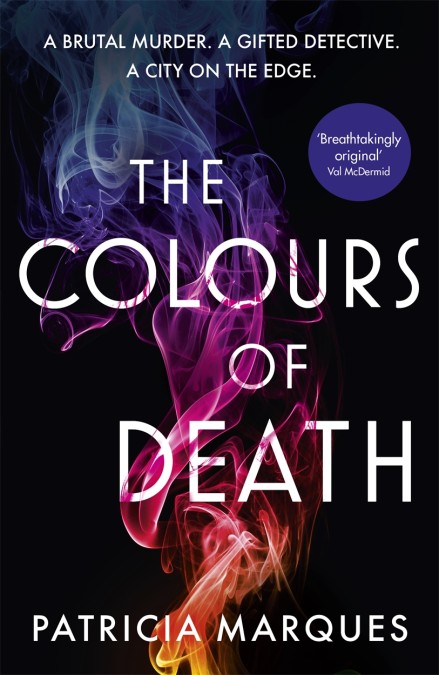
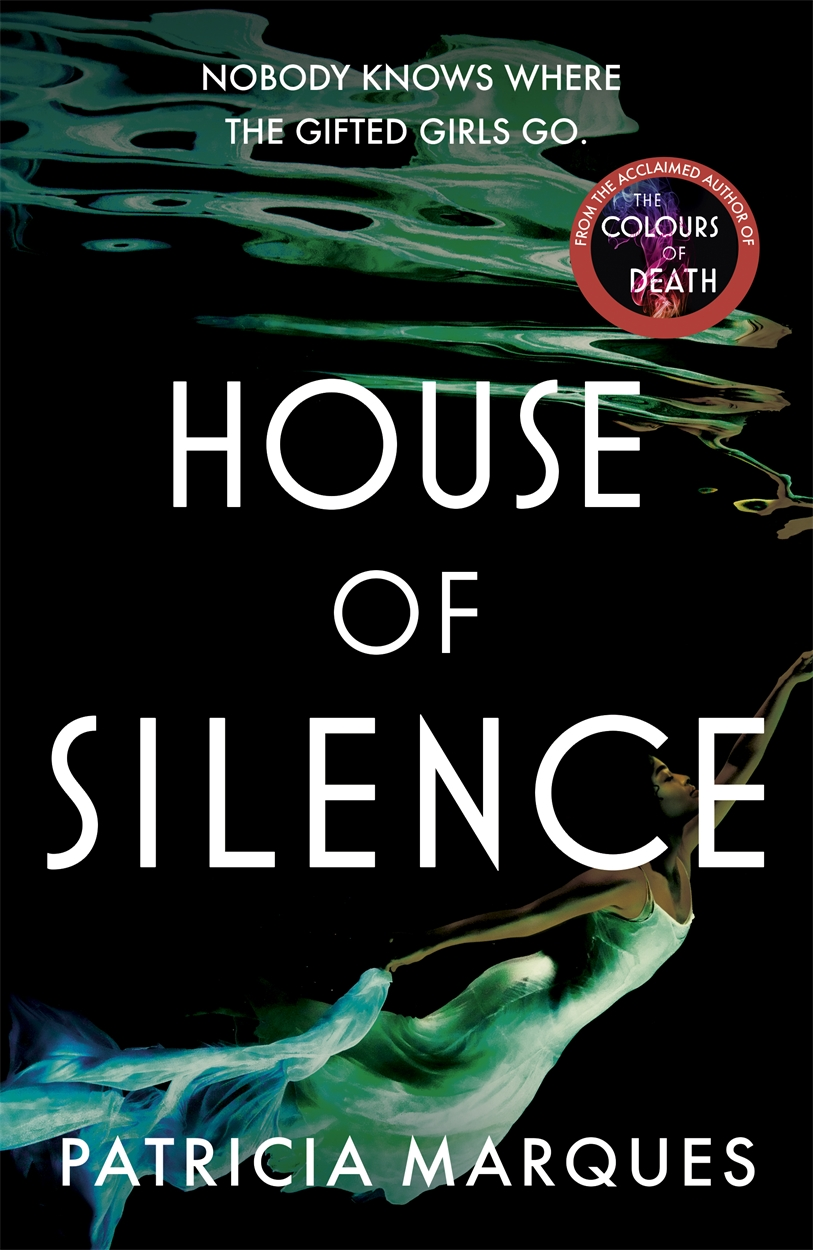
Patricia Marques: An Interview with the Author of The Colours of Death and House of Silence
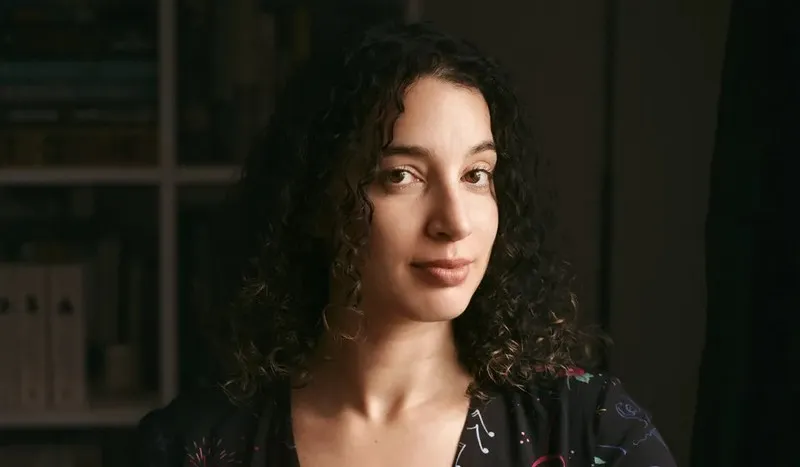
Patricia Marques is an author with a gift. Her gift is to write gripping detective fiction set in Lisbon with a speculative fiction twist.
Inspector Isabel Reis is a character with a gift. She is part of a small portion of the population born with special abilities – the gift of telekinesis and/or telepathy. These gifted individuals are distrusted by both the authorities and the general public. In Marques’ novels The Colours of Death and House of Silence, Isabel Reis investigates a series of seemingly baffling crimes while always battling the aura of suspicion that her gift bestows upon her.
I interviewed Patricia Marques about the Inspector Isabel Reis series. She’s a joy to talk to… brimming with enthusiasm about her influences but also candid about her writing struggles. She’s had a fascinating life. Our conversation is below:
Interviewer: Tell me a little bit about your writing journey.
Marques: I started writing quite early on mostly because my mum limited me to reading only two books a week, because I was going through them too quickly. So, in order not to get bored because I was running out of stories, this is around secondary school, I just started writing my own. I still have a few in those yellow English books they use to give out at school. I don’t read them because I cringe every time I do. But yeah, and I kind of carried on writing from where I started off reading. Do you know the Point Horror books?
Interviewer: Yeah, I loved reading them from my School Library.
Marques: It didn’t even occur to me until I was an adult that those were crime books but for teenagers. So, I was writing around that kind of stuff sometimes with a little bit of a supernatural edge. But I never really tried publishing. I never really thought about it, because around university time I was doing my Creative Writing BA. I just really got into fan fiction. I got lost in the fan fiction world for a while. And then I wrote what you would call a novel length, well probably longer than that, it was way too long, a novel-length fanfic. Well, if I can do this for fanfic then I can do this for my own characters. I started trying to write my own novels. It was hard. I got lost around the 20,000-word mark, like most writers do. You get to that point where you think this idea’s no longer shiny and new. It’s getting hard. I had enough of that, and so I did the MA. Part of the MA that I did with City University was If you didn’t finish the book, then basically you wouldn’t graduate. One of the requirements for that Creative Writing MA was that you had to complete a full novel, and that’s how I ended up here. The first book of the series (The Colours of Death) was what I delivered, in a very different form to what it is now, to my tutors. And then it was just going out querying agents, and I was very blessed to be picked up by A M Heath.
Interviewer: Before we just talk about the first novel, I’m just curious about the fan fiction. So which universes? Which characters?
Marques: Oh, gosh! I still write under a pseudonym nobody knows and I don’t discuss, but I don’t mind disclosing the fandoms. That’s absolutely fine. I started out in narrative fandom because I love Manga. I love Anime. I have less time now, but I’ve got two at the moment that are just pulling up my heartstrings. They’re finishing this year, so I can’t wait. Great storytelling, fantastic storytelling. But yes, I started with narrative fandom. Most of them are all Manga and Anime ones. So Naruto, I did Hitman Reborn, Bleach, that was really a fun universe to play around with. Then I did Supernatural. Very briefly dipped my toes into Inception. You have some amazing writing taking place in Inception, phenomenal writing. Gosh, what else? At the moment I’m mostly in DCEU, the extended universe. I do still write from time to time when I can fit it in.
Interviewer: It’s amazing you can juggle so many stories and still be writing (holds up a copy of The Colours of Death) these things.
Marques: It’s a form of escapism, although you’re still writing and obviously that takes time, and you still, even though it’s fan fiction, you still want to put your best foot forward. The characters are already fleshed out for you. The world is already fleshed out for you. So, it’s almost like what we did in the pandemic. I know a lot of people were able to read loads of new books, but I couldn’t start something new. I was just re-reading favourites because it felt more comforting. So, I feel like fan fiction operates for me in a similar way. I’m just dealing with what’s already there, and that’s kind of nice and safe, and you don’t have to worry too much about it. So sometimes it’s just escapism, so that I can stay sane throughout working full time, and then the actual writing that I’m supposed to be doing.
Interviewer: I suppose writing what you know is in a sense what all novelists do, because your character Isabel Reis is, like yourself, a Portuguese woman. Do you want to tell us a little bit more about your background.
Marques: I was born in Portugal, and I grew up there until I was eight. I’ve still got a lot of memories from my time growing up there. Even after we moved here (London) I was going back for holidays every year for the Summer. I don’t work there. I don’t live the Portuguese life unless I’m on holiday. But that doesn’t count because you’re still on holiday. So, everything’s quite rose tinted. It’s quite nostalgic, even though I do know about struggles that people face today, I’m not living them. So, I guess I can romanticize it a lot more than someone who lives there at the moment. I share a lot with my main character. People ask me if there’s a lot of me in her. And, personality-wise not really, other than her love for family and her family loyalty.
I don’t actually share too much with her. For instance, one of the things that I did was remove that strong support of her mother, which is something that I’ve had throughout my whole life, and that’s something that unfortunately she doesn’t have. But I guess that also came from a place of knowing myself and what’s valuable to me, and what I need in order to survive. And then I was able to remove those things from her. We share a mixed background because my mum is Angolan, and my dad’s Portuguese. Likewise, her background is the same: Angolan dad and Portuguese mum. So that kind of mixed ethnicity is there. The food is there. What she likes to eat. How she likes to eat. That’s very much me I have to say. So that’s part of me. Her love for dogs. Dogs are everywhere in Portugal all the time. They’re not like over here. They take themselves out. Whereas here you take them for a walk. You still do that, but especially in the small towns. Dogs are like how cats are here where the cats are free to move around. But the cats, they are more likely to be kept inside. Very reverse. Mostly in the in the smaller kind of towns you’d have that. Unlike me, she’s always lived there. That’s where she belongs.
Interviewer: And she has this thing called the gift. You’ve created this universe where you’ve mixed speculative and crime fiction. Do you want to tell us a little bit about what the gift is and where it came from?
Marques: When I started writing it all I had was a body at the beach which, as you know now, is no longer the case. There is no body at the beach (spoiler alert). I kind of had this unknown female Inspector who was called to the scene, and all I knew in my head was that she had headaches. She was walking up (to the beach), and she was trying to fight back this awful headache. And so it became a question of – Why is this headache so bad? It’s not just a migraine. Obviously if she had a migraine she wouldn’t move at all, because we all know how bad those are. So, I was trying to find a reason for why. What if she’s taking something that’s causing these headaches? And I thought, well, what was she taking this thing for? And that’s kind of how I ended up going, oh, well, what if she’s taking it to hold back a power, and then all of it kind of ended up being built around the gift and those questions of her headaches, and why she had them. I mean initially, I think it was something that was just explicit to her before I actually made this a thing that quite a few people had and then it just became about building the system that the characters would need to live in. And that’s when I thought, okay, she’s got telepathy. But other people don’t have telepathy. They have telekinesis, but then I kind of stopped at the two because I didn’t want it to become too overwhelming.
I didn’t want it to become X-men, although I love X-men. But that’s not what I wanted to do here. I wanted it to be as down to earth as I could possibly make it, so that it could blend in with our day to day lives. I guess I wanted people with Powers who lived in our world. They are just like us, but they happen to have this extra sense and then it was kind of navigating how they’re seen by society. And then I created the system as well. Some people have very low, low-level versions of this. Some people can maybe sense emotions, or just like a wisp of something, whereas for other people they can get into your head and listen or move a whole building. I created that escalating system of where they fell within that kind of power scope. And it was quite fun exploring how it would affect them physically. So how it impacts on their sanity, their emotions, everything. Does it have a negative impact on their brain? It was quite fun to piece those things together.
Interviewer: I think it works really well. I don’t read a lot of speculative fiction. When I saw your book, I thought, crumbs, is this for me? But I took a punt on it, and I really got into the world. Did you find that a lot? People saying, I don’t read sci-fi but I loved your book.
Marques: Oh, yeah, there was a lot of reactions to it. My agent, myself, and my publishers were very aware that it was quite a niche thing, quite difficult to pitch. Because you have people who just want crime fiction. They don’t want anything else. We have people who are really into the sci-fi, and they don’t want anything else. So, for some people it was too much of one, and for other people it was too much of the other or not enough of the other. Some of the things I saw was that people thought there wasn’t enough world building. Fair enough, but if you ask me straight out do you consider this to be a science fiction book… before I would have said No, but now I would say, well, it is, but it’s also a procedural. From what you said, I have had a lot of people who said, I took a chance on it, and yeah, I enjoyed it. So, it was nice to see those responses as well. But I’m conscious that there are still a lot of readers out there who tried it, and fair enough, thank you for trying, but it wasn’t for them. I think that’s also the same with a lot of books that aren’t just straight crime or straight sci-fi. People will try them and think, the book wasn’t for me, and that’s fair enough. I think you’re just gonna get that, no matter what genre you’ve written really.
Interviewer: Yes, and not just genre but social commentary. The gifted face prejudice. And I was wondering whether you were trying to draw a parallel with immigrant groups or LGBT?
Marques: I didn’t have one specific group in mind, but absolutely. I guess for me, and it’s interesting because I think whoever reads it, it says a lot about them who they kind of relate it to. It was social commentary on the fact that there will always be groups that are stigmatised for whatever reason people choose. But I guess for me personally, as someone of mixed heritage, I’m white. So, I don’t get a lot of that. And because people just think I’m white, and so I don’t have to deal with a lot of prejudice, but that’s not the case for a lot of members of my family. For my cousins or for my grandma, you know that they’re black. That’s not something you can hide, nor should you hide. I’ve gotten to see some of the things that they’ve faced. I know some of the things that I worry about on their behalf, because I know the colour of their skin will be used against them by other people. So, it’s something that I’ve always been very conscious of, even growing up white facing you’re always aware of these things that are happening to your family and also the community I grew up in.
I’ve been very, very lucky both in Portugal and where I’ve grown up here. I’ve been in Tottenham all my life. Well, apart from those eight years in Portugal. Since we moved here, we’ve never moved from Tottenham, and that’s like one of the most diverse communities in London. I worked in a lot of community focused places. I used to work at a Children’s Centre in Tottenham. Fantastic place. I’ve worked in the primary schools here in the Borough. Now I’m working at Greenwich University. Super diverse community. It’s a blessing but you also get to see everything that certain groups from those communities face on a daily basis from people who don’t think that certain people should be here. You get a more intimate look and feel of those things. So, I think it’s natural that it makes it into your work, even if you might not necessarily think about it. You’re not consciously thinking about it as you’re doing it. But then you look back and say, yeah, this comes from a place of knowing. That would be where the two marry up personally, but I have seen other people in reviews liken it to LGBTQIA+ ostracization. It’s a more easily digestible way for certain readers to read about these things without feeling attacked by them. They end up recognizing them on their own. I certainly don’t want to come across as preachy. but if they can recognize it, and they can empathize. And hopefully, that’s also something they can take outside of the fictional world into their daily interactions.
Interviewer: I think you handle that just right. Not being hit over the head with a message, it’s just something that’s there. And the reader must be aware of that, because they need to think, what will Isabel do next? Given people are going treat her differently and look at her differently. How was the response in the industry? You got some wonderful blurbs. The name that jumped out of me was Val McDermid. Have you found famous fans out there?
Marques: I definitely know some interesting names that have read my book and I got to speak to them about it. I don’t want to say who. I don’t know if this meeting’s allowed to be mentioned, but anyway, from a really cool band that, everybody knows. It was actually in relation to film and TV rights that I end up speaking to that person. It was really cool, and I couldn’t believe I was talking to them. I had to tell my auntie because she used to be a big fan of them. I said, you’ll never guess who I had on the call with me! It was surreal hearing people like that had read the book and they’d really loved it. Val McDermid, I think it was really helpful as she’s such a huge influence on the crime writing community. and I was lucky enough to get picked for her ‘New Blood’ panel in Harrogate. So, I do wonder if that had not happened if the book would have been as well received as it was. but I know certainly going on the panel was one of the things that alerted the crime writing community to the book and to me as a writer. I think it was an integral part of the book’s success the fact that she read it and enjoyed it enough to talk about it in the first place, and to have me on the panel to talk about it as well.
Interviewer: How do you feel now it is a successful series, and we’ve got book three coming out next year?
Marques: Yes, it will be next year. First half of the year. Book three was an anomaly. Maybe it just felt like it. It was very, very hard to write. Funnily enough, before I came on this call with you, I was just in a call with my editor going over her editing notes for book three. Book three is taking place in the UK. Isabel comes over playing the tourist for a little bit. I don’t know if it was the change in location that kind of added to the difficulty of writing the book, because writing book one and book two, and I think a lot of readers have said this, and I agree as a writer, it feels this way to me that Lisbon is almost another main character within the book, and so the shift to London was really hard. I don’t know why because I live here. It was a bizarre writing experience, and really drawn out. If you asked me to pinpoint what I found so hard about it, I just couldn’t say. But the series as a whole, it hasn’t done six figure, seven figure deal well, but it’s done pretty good. If a publisher comes back to you and signs you on for two more books, I think that’s a telling sign. I take a lot of comfort from that.
So, I’ve got book three and book four coming, and reviews have for the most part stayed really positive. I’ve kind of learned to stay away from reviews just because, although you have these amazing reviews, even the amazing reviews can be quite daunting, because you just feel the pressure mounting. Even if you want to hear all the wonderful things people are saying, it’s just like, Oh, my God! I can’t let people down. It’s an additional pressure. In terms of writing a series. it’s odd because it feels like you’re just going back to people you know. Which is probably why I struggled with Book three because it was people I know, but in the different settings. So, I’m dreading moving on to something else, because I feel I’m gonna have a lot of difficulty with it, because I think anything with new characters. It’s just gonna feel kind of wrong. It’s a comfort zone in a way. We were talking earlier about fan fiction and going back because you are comfortable with these things. I think it’s probably going to be the same. But I’m still excited about it. I’m very excited about Book four. I’m a lot more optimistic about Book three now after my editorial notes. I’m confident that I’m gonna deliver something to readers that I’m happy with myself. Because that was the biggest issue with me, thinking, ‘Oh, my God! I’m not sure I’m happy with this. I’m not sure this is what I want to deliver.’ But now I think we’re in a good place. So, I’m excited. I’m excited to get it done and then get it out there to everyone.
Interviewer: I’m looking forward to it immensely. You know these characters, but of course people change, and we are very different people from who we were ten years ago. Do you have in mind how Isabel will change?
Marques: I know where she’ll be in Book four. One thing that I’m working towards with her is flipping her perspective of herself as a gifted individual. So, we start out in a place that’s not very great. She has her eye on her own gift. She fears what it will do to her. She knows what having the gift has cost her, mainly her relationship with her mother and healthy relationships with other people, with others who don’t have a gift. It’s infected every part of her life and so she hasn’t had the most positive experience and relationship with it. And so, where I hope we end up is where at least that will change, because I’m talking about it like it’s an individual thing. Like she’s one character and her gift is another. But actually, that’s her. It’s all elements of her. It’s almost like hating your own face. It’s a part of you, and you hate yourself and so I want to get to a place with her where she doesn’t feel that way. Even though you don’t know what the future will bring. She might not know if eventually she will lose her mind to it. But I want her to get to a place where she makes peace with it, and what she has and the positive things it can bring into her life. So, I’m hoping that’s where we end up and that’s what I’m working towards. That’s the biggest change I foresee for her.
In terms of her character, she’s opening up to more people. We see that with Voronov. She’s very closed off, and for all intents and purposes he’s someone that she wants to stay away from because of his past. But then we learn a bit more about the context of that, and not everything is as it seems, and then she learns to trust. She slowly starts to open up her circle a bit more and be more forthcoming. Spend more time with those around her. I just want her to be happy. I think she needs some happiness. She’s had so much taken from her that I think she needs the people that she loves to be around her, and I think she needs to be given that space and all of her to be complete as a character. But, like you said, we all keep developing, so she’ll probably keep developing even beyond that. But that’s the bare minimum that I’d like for her, some happy times and for her to be at peace with parts of herself.
Interviewer: Did you do any kind of research into telekinesis? Are you sceptic, or do you believe in these things?
Marques: Never say never! You just never know what the human mind might be capable of. They say we barely use the majority of our brain. So, if we were to use it to full capacity, who knows? Do I believe in it, really, no, it’s fun to play with. I didn’t really do much research other than knowing the anatomy that I’m mentioning, especially when I’m talking about the erosion and what her gift causes, but even that was kind of difficult to pin down, because you want to make it as believable as possible. So, you want to ground it in fact. But it’s so hard because how are you gonna explain why it’s eroding. It’s just difficult to do. But apart from that, probably everything I’ve read up until now has been research. Even other books or other shows that you watch with supernatural elements that show how other people use telekinesis or certain types of powers. You pick up a lot on your way, and that probably does end up making it into how you create your world, but not actually any science journals or pseudo-science journals. Nothing like that, although I’d probably read them quite happily because I find those things fascinating, so it wouldn’t exactly be hardship if I was to do it.
Interviewer: What’s the reaction been to your books in Portugal?
Marques: I was happy because I think that it really hit two of my main goals, which was to be published and to be published in Portugal. I ticked two boxes. I want to keep ticking more. I’ll just make up more boxes to tick if I can. I went over there last September, and I did a promotional program of events which was really cool. Really fun. I think it’s all the things that you dream of doing when you think, oh, I’m going to be an author, and this is what you get to do. And then you find out the reality is very different. They really went all out for me as far as I’m concerned. The publishing team, they put a lot of effort into getting me on TV and radio. The few reviews that I’ve seen from Portuguese readers have been really positive. So, it was nice to see, and the coolest part was, when I got there, I was just going to get a taxi, and they had, like a little kind of bookstore there, and my book was right there in Portuguese, and I wasn’t expecting it, and that caught me by surprise. I was like, oh my God! This is amazing. This is the moment I hadn’t allowed myself to dream of.
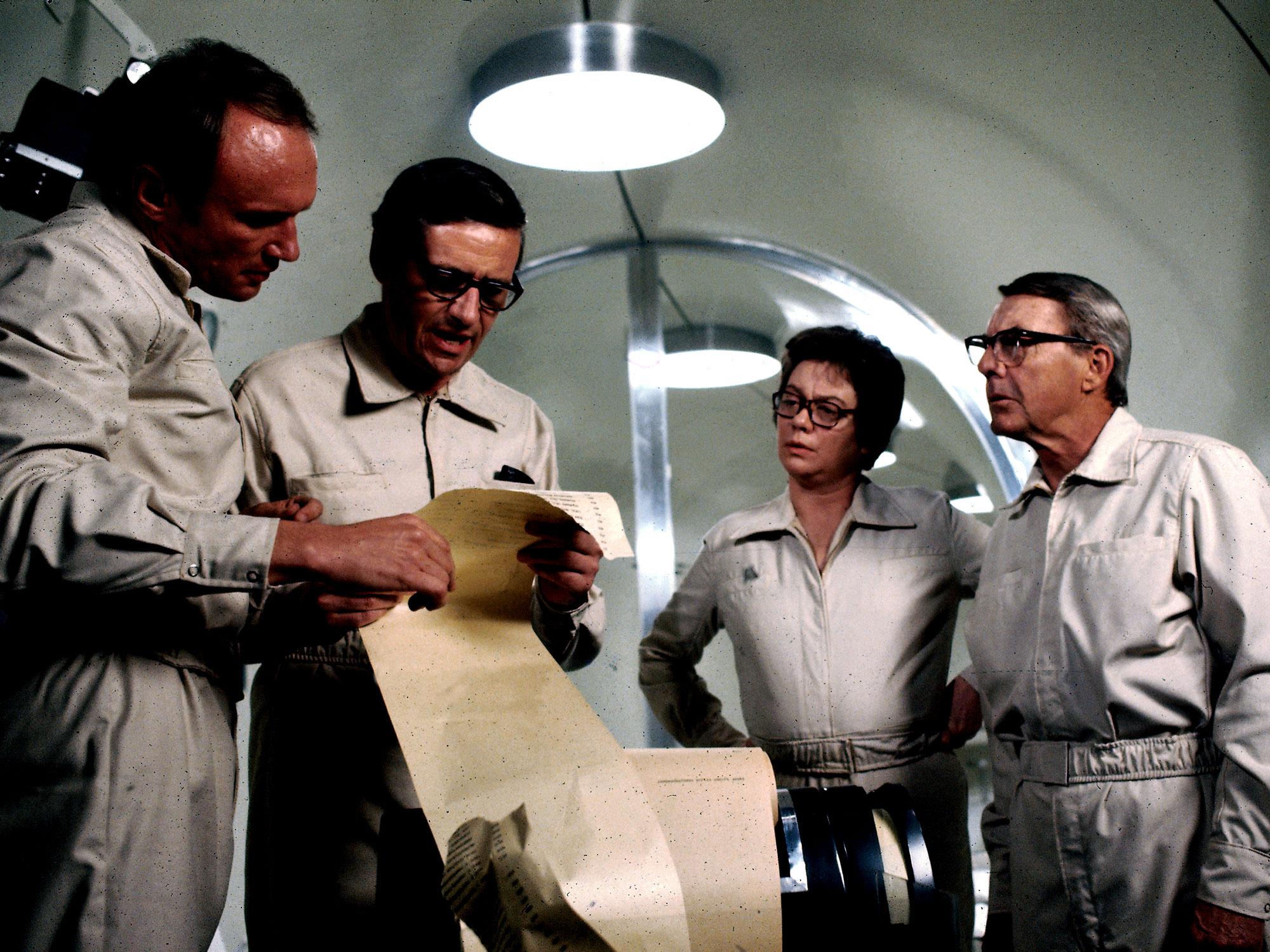
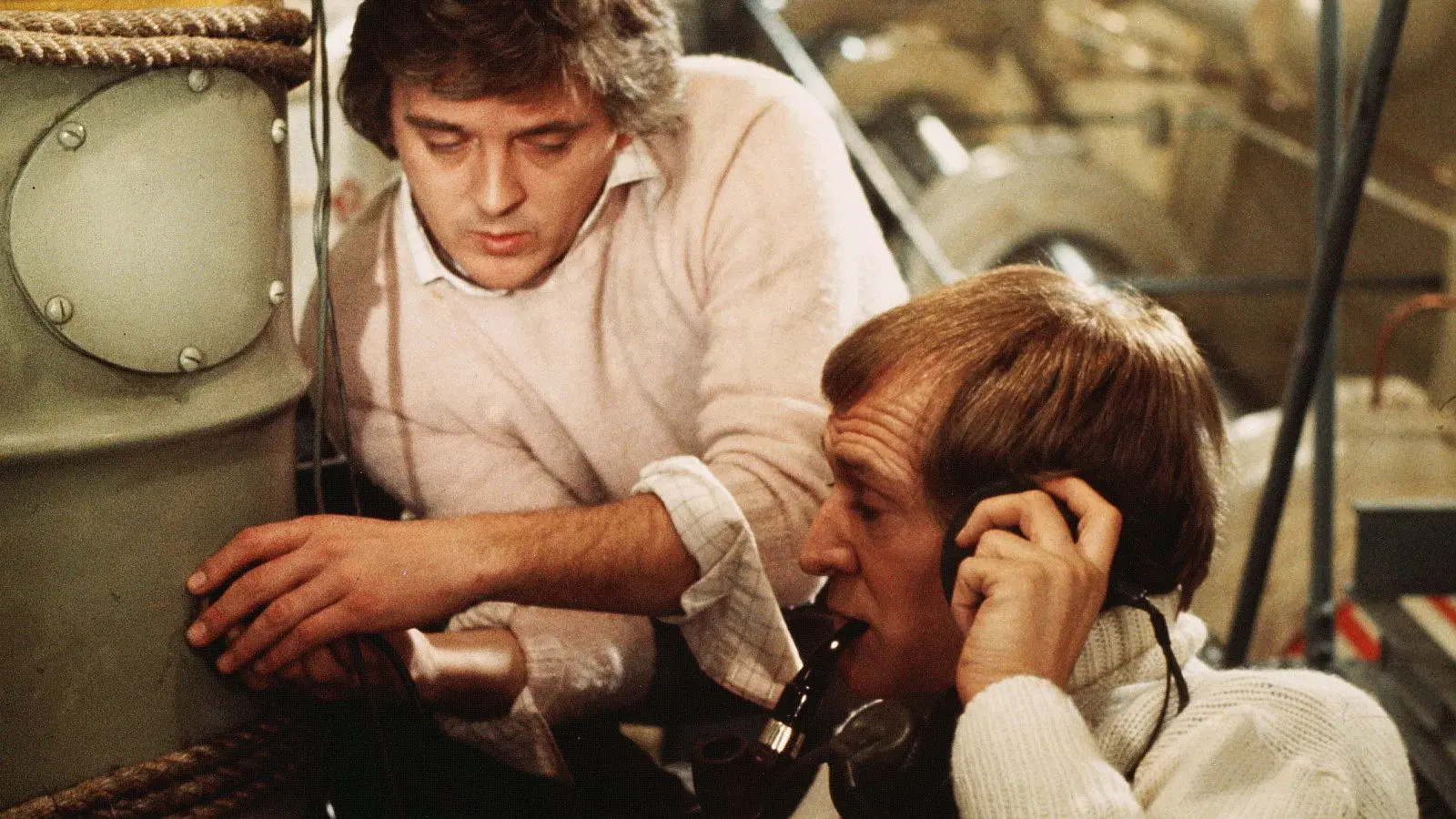
Highbrow Lowbrow returns with a suspense-themed special. Dan has the highbrow pick in this episode with the thinking man’s science fiction thriller The Andromeda Strain, based on a novel by Michael Crichton. My lowbrow pick is Juggernaut, a bomb disposal thriller that gets lost at sea.
You can listen here. Enjoy!


 The Venetian Vase