British Politics Review – The Corbyn Gamble
 The latest issue of the British Politics Review examines the future (presuming it has one) of the Labour party under the leadership of Jeremy Corbyn. I have a written a piece titled ‘Jeremy Corbyn, the Spy Genre and a Cold War Prophecy’ which looks at how Labour’s lurch to the left was prophesied in such works as High Treason (1951), A Very British Coup (1982), and The Fourth Protocol (1984). Here’s a taste:
In Roy Boulting’s film High Treason, a group of British radicals plan to sabotage the country’s main power stations, crippling the economy as a precursor to installing a far-left government at Westminster. The plotters of High Treason belong to the respectable skilled working and middle classes, and are deeply embedded in British society, albeit with just enough deluded pomposity to stand out. The social historian Dominic Sandbrook describes the cast of fifth columnists as ‘a pacifist, a cat-loving and therefore clearly homosexual bachelor, two admirers of avant-garde music’ and the most contemptible of all, their leader ‘a well-bred Labour MP with a taste for rare vases’ (p.217). Boulting, a lifelong Liberal, clearly thought British communists were somewhat laughable. And yet, it is from precisely this far-left base that Jeremy Corbyn needs to build an agenda that will have national appeal. Labour have taken a massive gamble on Corbyn, hoping that a significant change in political consensus and a clear differentiation between them and the Tories will be enough to bring them back to power, but it is at the risk, as Tony Blair warned them of ‘annihilation’. High Treason was released in 1951 at a time when fear of communist subversion was a recurring cultural theme, and in succeeding decades, several works prophesied a subversive infiltration of Parliament. The novels A Very British Coup and The Fourth Protocol portrayed a fictional far-left takeover of the Labour Party. The irony is that with the election of Jeremy Corbyn this cultural prophecy has come true over twenty years after the end of the Cold War, and only eight years after Blair, Labour’s most successful leader and moderniser, stood down.
You can read the full issue here.
If you are not familiar with the British Politics Review, then I would heartily recommend it. The brainchild of Norwegian academics who are devoted to the study of British politics, it features political commentary far better than what you find in most broadsheets. In fact back in 2007, when he was still an obscure backbencher unlikely to ever become a parliamentary private secretary let alone leader of the Labour party, Corbyn himself wrote for the BPR:
Prime ministers effectively control Parliament through a system of patronage, where they reward loyal supporters with ministerial office. This influences the behavior of Members of Parliament, and is designed to buy loyalty. Having been a Member of Parliament since 1983 I have observed the way in which patronage operates, and the way in which Parliament can, on some occasions, do the opposite of what the public wants, out of loyalty to a prime minister rather than to a set of beliefs.
One can only hope that if Corbyn is serious about becoming PM he will remember these words. Although judging by his appointment of John McDonnell and Seamus Milne, I rather doubt it.
You can view previous issues of the BPR here.
‘
On the Trail of James Ellroy
I have written a piece for Martin Edwards blog about my new book on James Ellroy. Here’s a sample:
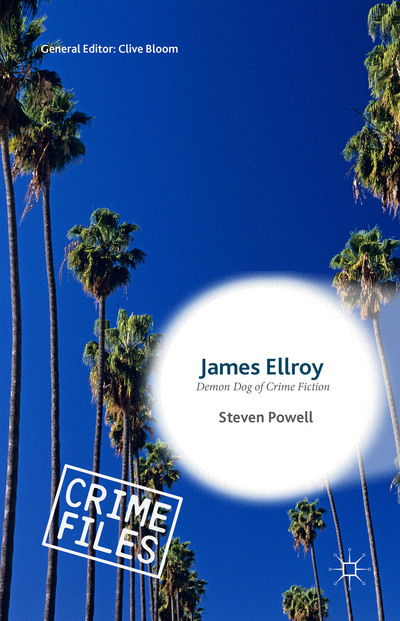
James Ellroy: Demon Dog of Crime Fiction began life as my thesis at the University of Liverpool. After I graduated, Palgrave Macmillan accepted my proposal for a new monograph on Ellroy, and I began to adapt my years of research on Ellroy into book form. There were two elements of James Ellroy’s career that I found particularly fascinating. One is referenced in the title of my study: his self-styled ‘Demon Dog of American Crime Fiction’ persona. I was determined to find out the full extent that Ellroy’s literary persona had played in shaping his works. Was it a major factor in his writing or did Ellroy simply call himself the Demon Dog to give a name to his often unhinged performances at book readings and during interviews?
You can read the entire piece here. Many thanks to Martin for giving me the chance to talk about the book.
Spectre: Sceptic or Believer?
 On the debit side, the one member of the cast who was truly wasted was not Monica Belluci (she handles her small but important role well) but Stephanie Sigman. Sigman plays Estrella in the pre-credits sequence set during the Day of the Dead in Mexico City, and while its a thrilling scene, we do not see nearly enough of her for it to make sense casting a recognisable actress in the role. Another gripe was the design of the new headquarters of British Intelligence. It looks cool, evoking both the Shard and Gherkin, and the spiral structure is fittingly symbolic, but, really, was glass architecture the best choice? The whole point of a secret service is that people shouldn’t be able to see in, plus the last HQ was destroyed in a bomb attack so, I repeat, did they think through the glass design?
Spectre Review: The Dead are Alive
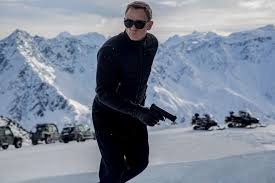 Yesterday my wife and I went to see Spectre. I hadn’t read any of the reviews and avoided the pre-release hype as much as possible so that my initial judgment of the film would not be coloured by anyone else’s opinion. My first reaction was that I liked it. I enjoyed the film a lot and think it ranks as one of the strongest entries in the series. And yet I also had the feeling that a significant minority of fans are not going to like it, but more on that later.
Spectre begins with the epigraph ‘the dead are alive’ hammered onto the screen with the brutal efficiency of an old typewriter. We are in Mexico City on the Day of the Dead. A five minute tracking shot follows Bond (attired in suitably ghoulish costume) through the streets as he hunts down Mafia Boss cum terrorist Marco Sciarra. He overhears Sciarra make a cryptic reference to ‘the Pale King’ before all hell breaks loose and the scene climaxes with Bond and Sciarra battling on board an out-of-control helicopter. Back in London, M is furious that Bond was in Mexico on an unsanctioned mission. Whitehall mandarin Max Denbigh ‘C’ is planning to abolish the licence to kill OO agents, so Bond has only a short time to uncover the organisation Sciarra and ‘the Pale King’ are working for. That’s about all I’ll say about the plot here. There is a deliberately loose narrative structure as director Sam Mendes keeps events moving from set pieces in Mexico, Rome, Austria, Morocco and London. But while the script is lacking in some regards (the reliance on four letter words to get cheap laughs is grating) there are still plenty of surprises and hardcore fans will enjoy the multitude of references to the previous films. More than that though, Mendes seems to be paying tribute to cinema as much as the Bond canon. The opening tracking shot is not just technically brilliant, it is playful, vibrant and alive with sinisterly sexy possibility. The helicopter battle seems anticlimactic by comparison, being over-reliant on CGI (but it never descends to the level of Die Another Day’s abysmal CGI effects). In fact none of the action sequences had any adrenaline pumping quality. I was won over by the film’s leisurely elegance, its beautiful use of colour and the abundance of surreal images such as Bond and Mr White’s daughter Madeleine Swann (a very strong Lea Seydoux) encounter with a spotless Rolls Royce in the middle of the African desert. The best action sequence I thought was a bone-crunching fistfight between Bond and the unstoppable killing machine Mr Hinx. All of the villains are well played in Spectre. Dave Bautista is memorable as Hinx (good at murder but lacking in polite conversation), Andrew Scott is wonderfully sleazy as C, Jesper Christensen once again steals the show as Mr White (I’ve become quite fond of the character now), and Christoph Waltz is just outstanding as the leader of the titular Spectre organisation. His near perfect mixture of malevolence and goofiness is a reminder that a Bond film is only as good as its main villain.
It all made for a great Bond film but an unusually subdued action film, which is why I think some of the younger fans who only really know Daniel Craig in the role won’t like it. Mendes seems to have reserved the London sequences for the younger fans. In these scenes all the lush romantic ambience of the film vanishes. In fact, Mendes noirish portrayal of London is so overcast in foggy gloom that if I worked for the London Tourist Board I’d consider suing. This for me was the one misstep, as things started to get reminiscent of Christopher Nolan’s Batman films, but I appreciate different Bond fans take different things from the series. Daniel Craig has given the series a lot: Casino Royale seems to get better with every viewing, Quantum of Solace was a structural mess but still had some extraordinary scenes (the Vienna opera sequence is one of my favourite moments in cinema), Skyfall I thought was overrated, and Spectre wraps up all four films quite neatly. The resolution was so tidy that it dawned on me with sadness that this could be the last time Craig takes on the role. When the film ended, we sat through all the credits waiting for that reassuring message that ‘James Bond will Return’. When it finally came, its muted, split second appearance left me feeling despondent. I looked up to see a cleaner in a Halloween costume ready to usher us out of the screening (we were the last to leave). I know there are a lot of great actors out there who would be perfect as Bond, but Spectre was so good it made me want to see Craig in the role again. But if he doesn’t come back, then this film is a fine swansong.
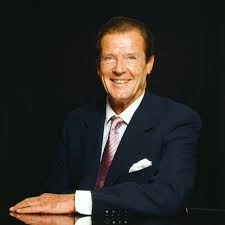 Roger Moore was my childhood hero. When I first discovered the James Bond films, he was the Bond I related to the most. He was a favourite onscreen hero for several generations of fans, and his memorable roles include Ivanhoe, Simon Templar and Lord Brett Sinclair. It is hard to think of another British star who was so loved by an army of fans and yet so frequently dismissed by critics. I remember reading a review for a film (that didn’t star Moore) a few years ago and the critic said ‘this film is so bad they might as well have put Roger Moore in it.’ When they’re blaming you for other people’s bad movies you know something went wrong with your critical reputation. But when I saw my boyhood hero stride onto the stage at the Liverpool Empire Theatre last night, still looking strong at 88, I couldn’t help thinking that no other living actor has taken such a leading role over so many stages of international film and television history. His first role was a walk-on part as a Roman soldier in Caesar and Cleopatra in 1945 where he saw his screen idol Stewart Granger playing Apollodorus deliver the line, ‘It is purple on the green below’. From that point on he was hooked. As an actor, he would try to model himself on Granger (they would star together 33 years later in The Wild Geese), and he still carries today those values of suave authority and charm that Granger embodied on screen. That being said, much of Moore’s early career was on the stage (he recounted sharing a class with Lois Maxwell, the future Miss Moneypenny at Rada in the 1940s), and he gave a suitably theatrical rendition of his first ever rehearsal as an actor, a recitation of Tennyson’s ‘The Revenge’ which he still remembers almost line for line to this day.
Roger Moore and Lana Turner in Diane (1956)
Introduced and interviewed by Gareth Owen, who ghostwrote his memoirs, Sir Roger is a natural raconteur, and he talked through his seventy-year acting career in his usual disarming fashion. The highlights of this history, some of which he touched upon and others he did not, include his role as Stephen Colley in the play I Capture the Castle. The notices he received for his performances were so glowing that it led him to being offered both an MGM contract and a chance to join the Royal Shakespeare Company in Stratford. He accepted the more lucrative MGM contract. If he had gone with the RSC, I doubt critics would have sniped years later that his acting range was limited to how high he can raise his eyebrows. His initial career in the US was not an unqualified success. Few people remember today that he replaced James Garner on the hit TV series Maverick. However, he would find tremendous success back in the UK as Simon Templar, aka The Saint in the biggest television show of the 1960s. Moore was in the running to be James Bond when Cubby Broccoli was first looking at actors for Dr No. However, it would not be until 1973, after squeezing in another TV hit The Persuaders! with Tony Curtis, that Moore landed the role of the cinema’s greatest hero. The story that Moore was Ian Fleming’s first choice to play Bond may well be false, even though it was repeated by Fleming’s biographer, but it is true that Moore immersed himself in Fleming’s writing when preparing for the role. As he revealed in a recent interview:
When I first took on the part, I read Fleming’s books. There was little offered in them about the character. However, I remember reading one line that said Bond had just completed a mission – meaning a kill. He didn’t particularly enjoy killing but took pride in doing his job well. That was the key to the role as far as I was concerned.
James Ellroy: Demon Dog of Crime Fiction – Extract

My new book James Ellroy: Demon Dog of Crime Fiction is released on October 21 as part of Palgrave Macmillan’s Crime Files series. Here’s an extract from the introduction:
James Ellroy was born in Los Angeles in 1948. He grew up in the epicentre of American noir at the height of the classic film noir period: ‘I remember feeling that things were going on outside the frame of what I was seeing. The language I got partly from my father, who swore a lot. It was an older L.A., a man’s L.A., where everybody smoked cigarettes and ate steak and went to fights’ (Kihn 1992: 32). This experiential, inchoate knowledge of Los Angeles was to prove Ellroy’s most valuable education. He absorbed what he saw at home and on the streets, and culturally he gravitated towards this world more than any other: ‘My passion for movies does not extend beyond their depiction of crime. My filmic pantheon rarely goes past 1959 and the end of the film noir age’ (Ellroy 1997a: xvii).
The city and the era had an enormous influence on his formative years and on his identity as a crime writer. One of Ellroy’s main aims as a crime novelist has been to revisit and reimagine this noir era in the LA Quartet series. Noir presents a world where politics is a byword for corruption, individuals are morally compromised, and protagonists are resigned to their fate knowing there will be no happy endings. It is noir’s darkness which makes it so attractive, and Ellroy’s historical fiction has captured the essence of this noir paradox. Yet even though his writing style is nostalgically drawn to film noir and detective fiction in the era of the 1940s and 1950s, Ellroy’s noir vision deconstructs both the perceived glamour and social conservatism of the era: his LA is a city riven with organized crime and LAPD corruption.
The history of Los Angeles and its cinematic identity was just one inspiration for Ellroy. He would also draw on biographical elements of his own life in his fiction, including, most notably, the unsolved murder of his mother Geneva Hilliker Ellroy in 1958. Ellroy would entwine LA narratives with that of his mother’s death to deepen, contextualize, spiritualize and fictionalize his mother’s influence on his life. Ellroy’s childhood discovery of the Black Dahlia case, the most famous unsolved murder in LA history, while reading Jack Webb’s The Badge (1958), was also significant. Before he reached adolescence, Ellroy had discovered the two main obsessions of his literary career: his mother’s murder and the Black Dahlia herself – Elizabeth Short.
Ellroy’s path to becoming a writer, however, was to be an unconventional one. With his father’s death in 1965, Ellroy lost all restraining influences. The next few years of his life were characterized by drug and alcohol abuse, homelessness, petty crime and several stints in the LA County Jail. It was a brush with death that finally persuaded Ellroy to reform and start writing. In 1975, Ellroy suffered a mental and physical breakdown, which he has described as ‘post-alcoholic brain syndrome’, but he did not stop substance abusing until he nearly died of pneumonia and a lung abscess (Kihn 1992: 25). In 1977, he joined Alcoholics Anonymous which became a turning point: employment followed sobriety. His first novel, Brown’s Requiem, was published in 1981. Ellroy slowly and steadily built his reputation as a crime writer. His breakthrough came with his seventh novel, The Black Dahlia (1987), in which he created a fictional solution to the murder of Elizabeth Short and allusively explored his obsession with his mother’s murder. Since then, Ellroy has become one of the most prominent of contemporary crime writers through the publication of a series of novels merging noir with historical revisionism in the LA Quartet and Underworld USA trilogy.
In parallel to his work as a novelist, Ellroy has developed a public persona as the self-styled Demon Dog of American Crime Fiction. Through interviews, Ellroy found an outlet for his literary persona, elevating standard publicity opportunities into a form of creative performance, building and deconstructing narratives which in turn play with the semi-biographical as well as the purely fictional narratives of the novels: ‘As critical acclaim and response has built up, every interview I give is a chance to puncture the myth I’ve created about my work and refine it’ (Hogan 1995: 60). The documentaries James Ellroy: American Dog (2006) and Feast of Death (2001) feature scenes with Ellroy at his favourite LA restaurant, the Pacific Dining Car, holding court with his contacts in the LAPD alongside fellow writers such as Bruce Wagner and Larry Harnisch and show-business friends Dana Delany and Nick Nolte, discussing unsolved cases and LA history. Few crime writers could match Ellroy in terms of clout and his ability to generate publicity, but by his own admission much of what he says should be taken with a degree of scepticism. Ellroy is an author at ease with his own sense of celebrity, but, in one of the many contradictory sides of his character, he relishes his self-crafted image as an outsider – too edgy, unpredictable and maverick to ever truly belong to the Hollywood or publishing establishment. He can be an intimidating figure to some journalists, as Iain Johnston wrote during one interview: ‘The myopic stare of James Ellroy, too, reveals much about his character – his suppressed anxiety, resolute obsession, locked down concentration, fierce determination and wild, black humour, are all detectable there’ (Johnston 2014). In his public appearances, Ellroy cuts a striking figure, often dressed in garish Hawaiian shirts, spouting outrageous right-wing views and barking like a dog. This manic behaviour might seem to contradict his reputation as an acclaimed historical novelist, but in part Ellroy maintains his creativity and uniqueness by eschewing respectability.
You can find more information on the book on Palgrave’s website.
Henning Mankell (1948-2015)
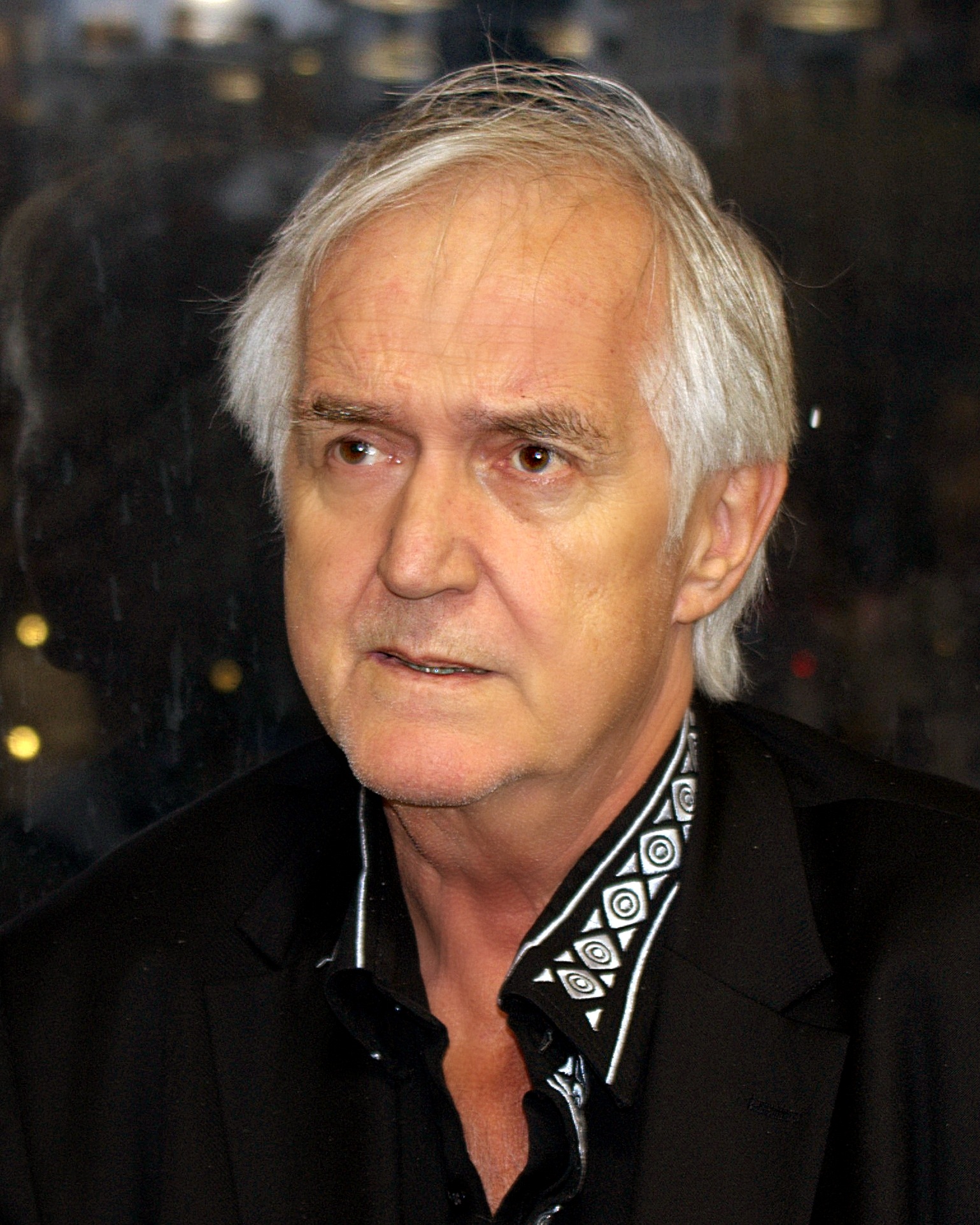 I was sad to read that Henning Mankell has passed away at the age of 67 after suffering from cancer. There have been many great crime writers, but Mankell became one of the very best by creating the character Kurt Wallander who, like Poirot or Philip Marlowe, people felt they knew because they liked him and sympathised with him.
RIP Henning.
Ellrovian Writers II: Craig McDonald and Stuart Neville
Some time ago, I wrote a post about how the writing of Megan Abbott and David Peace could be seen as ‘Ellrovian’. Both writers have expressed their admiration for the work of James Ellroy, but, as I was to discover while researching the piece, for every element of their writing which is recognisably Ellrovian there are other things which could be identified as a distinct break from Ellroy’s style; Abbott’s femme fatales seem to be a form of noir feminism, and Peace’s deeply embedded socialist views are profoundly different from Ellroy’s Tory Mysticism.
I’d like to expand this study of the Ellrovian influence on crime fiction by looking at two other contemporary writers whose work I admire – Craig McDonald and Stuart Neville. Firstly though, a disclaimer. I’m not trying to lumber these writers with the term Ellrovian. They’re both very good writers and you could look at their work in a hundred different ways. In this piece I’m just trying to pick out a few specific things. So if you like these writers, but you hate James Ellroy, look away now!
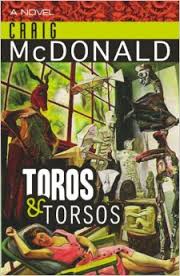 Craig McDonald has interviewed James Ellroy on multiple occasions and is very knowledgeable about his work. On the surface, McDonald’s novels featuring the grizzled, laconic novelist Hector Lassiter couldn’t be more different from Ellroy’s work. Despite an early fondness for confessional narratives, Ellroy has never had a character who is a novelist in his books. Although Ellroy’s work is neo-noir, McDonald is much more interested in art movements than genre. Even Ellroy’s fascination with German Romanticism seems coldly intellectual compared to Lassiter, who ‘writes what he lives and lives what he writes.’ But if you look at the second novel published in the Lassiter series, Toros & Torsos (2008), you can see a thematic debt to Ellroy. McDonald states the novel was ‘inspired by haunting concepts put forth by authors Steve Hodel, Mark Nelson and Sarah Hudson Bayliss.’ This goes back to Ellroy’s seventh novel The Black Dahlia (1987), which put him on the map as a crime writer. The unsolved murder of Elizabeth Short (aka the Black Dahlia) has been a lifelong obsession for Ellroy, evidenced in the fact that she reappeared as a character in his latest novel Perfidia (2014). Steve Hodel is the ex-LAPD detective and true crime writer whose theory that his father George Hill Hodel murdered Elizabeth Short captivated Ellroy (at least for a while). Hodel’s Black Dahlia Avenger (2003) is a fascinating read which draws a detailed picture of both LAPD corruption and the surrealist movement in the 1930s and 40s. His theory that the murder was connected to his father’s admiration for the work of surrealist artists oddly parallels Ellroy’s fictional solution in The Black Dahlia. And that’s one of the many incidental pleasures of Hodel’s book, no matter what you think of the theory that his father was the Dahlia killer (for my part I think he’s right; McDonald and Ellroy discuss some of the flaws of his research in an interview titled ‘James Ellroy: To Live and Die in LA’) you cannot help being drawn in by the seemingly endless ironies, coincidences and famous names that are connected to the case one way or the other. For a comprehensive picture of the ‘web of connections’ between George Hodel, surrealism, Hollywood and the Dahlia murder do read Mark Nelson and Sarah Hudson Bayliss’ Exquisite Corpse: Surrealism and the Black Dahlia Murder (2006).
So, McDonald has taken this rather complex backstory as a malleable influence for Toros & Torsos. The novel begins in the Florida Keys in 1935. Lassiter is living a carefree, idyllic existence as a writer and enjoying a rivalry/friendship with fellow writer Ernest Hemingway who lives nearby. Lassiter can see both sides of Hemingway – the man and the myth. ‘Papa’ is both fiercely intelligent and temperamental, often irresistible yet frequently boorish. The reader is never quite sure whether they are seeing the real Hemingway or the mask he presents to the world. I couldn’t help but think of James Ellroy, Demon Dog of Crime Fiction, when I grappled with Hemingway’s character. Aside from the intriguing relationship between Lassiter and Hemingway, McDonald paints a vivid picture of the Keys. You can almost taste the conch chowder and feel sticky sweat form on your back in the tropical heat. Both setting and character are thrown into a flux by the Labor Day Hurricane. The devastation wrought by the hurricane leads to some memorably haunting images. Hemingway and Lassiter wade through the reefs passing the corpses of homeless veterans (who accounted for more than half of those killed in the natural disaster). Amidst this carnage, a grisly murder suggests that a killer may have been inspired by surrealist artwork. McDonald takes this gripping premise and then makes several ambitious leaps in setting. Just as I was being won over by the lush ambiance of the Keys, the setting jumps to Spain, which was then in the throes of Civil War. After that, it cuts to late 1940s Hollywood as Lassiter babysits Orson Welles during the shooting of The Lady from Shanghai. Then finally we’re in revolutionary Cuba in the late 1950s. To summarise the relevance of these setting within a few sentences is next to impossible but, in a sense, the plotting is not the most important element of this narrative. As Corey Wilde says at The Drowning Machine blog:
Well. Sometimes you can finish a book, have a lot of great things to say about it and at the same time feel completely inadequate to the task of articulating it all. That’s me. That’s this book. I’ve spent three days trying to write a coherent review that encompasses the scope, depth, style, and intrigue of this book. I can’t do it, I haven’t the skill or talent. Hell, I’m not even sure I’ve really got my head around the whole story yet. The scope of the book covers more than just a lot of time: Natural disaster, art, politics, espionage, friendship, betrayal, murder, vice, psychology.
I feel the same way as Wilde. I found the novel gripping, moving and thrilling, and yet I was still trying to get my head round several plot points for days afterwards. I’m not trying to say its incoherent, on the contrary, everything works. I wasn’t sure if the four different settings would hold together, but each is as carefully drawn as the other. And whether you are reading about the devastation of a hurricane or of wartime Spain, both settings feel intrinsically romantic. Here the novel became reminiscent of Ellroy’s LA, where the seduction of a locale lies in its darkness. As a writer, McDonald is very interested in the act of creating art. For Lassiter and Hemingway, words can come alive with entrancing, but also sinister possibility. The ‘exquisite corpse’ and ‘one true sentence’ games are consistently referred to until it becomes apparent that abstract concepts are being brought to life with terrifying results. Ellroy, by contrast, is more interested in the bureaucratic nature of words, as seen in the proliferation of articles, memorandum, transcripts and all manner of official documents that give his later novels the appearance of a massive, impenetrable archive. The novel almost counter-intuitively takes the flaws of an art form and turns it into something tangible and engrossing. You get a great sense of what it must have been like to be at the birth of surrealism, its zenith and subsequent decline. It’s hard to grasp now how often the proponents of aesthetic movements seem to think they have changed the world and all culture will have to imitate them for evermore. The arrogance is almost dripping off the page. Surrealism comes across as the punk rock of its day, a flame that burns brightly for a few seconds and is suddenly extinguished. If McDonald is satirising how critical appreciation for an art form can be misguided, then it is appropriate that much of the humour of the novel comes at the expense of a fictional critic – Quentin Windly. Lassiter and Hemingway love mentally, and sometimes physically, torturing Windly so much that I began to wonder if McDonald took these scenes a bit too far, especially as every reader is essentially a critic. His presence is not entirely superfluous, as he is a suspect in the murders, but his reappearance towards the end is so completely signposted that I didn’t think this justified his role as comic diversion. At the risk of sounding like the loathsome Windly himself, I thought this was the one false note of the book, or am I just having a sense of humour bypass? All in all though, whether you like the Ellroy connections or not I would highly recommend Toros and Torsos as a gripping and compulsive mystery, and one of the best novels I have come across to explore how an art movement is defined by its time and setting. But if the surrealists were to be believed, art defines its time and setting.
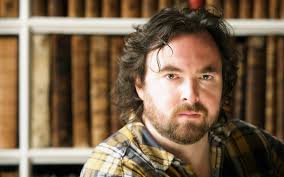 Stuart Neville and James Ellroy have one fairly unambiguous connection – they both share the same agent. Agents get a lot of stick: ‘He just takes ten per cent of your life’ as Chandler put it, but when you look at what literary agent Nat Sobel has done for the career of Neville and Ellroy, I start to ask myself if he’s still accepting clients. Stuart Neville was an aspiring but unknown writer when he had a short story accepted for ThugLit. On the basis of this short story, Sobel emailed Neville to ask him about a novel he was writing. That novel was The Twelve (2009), and it made Neville a star of the crime genre, helped in no small part by the fact that Sobel was representing him. This was the genesis of Neville’s career as a novelist, and one might say Sobel has an equally strong claim to kickstarting Ellroy’s career. In the early 1980s, Ellroy had published two novels but suddenly faced a series of rejections for his manuscript ‘L.A. Death Trip’. It was a meeting with Otto Penzler, and subsequently Nat Sobel, that put his writing caeer back on track (for a full breakdown of these events read my article ‘The Two Men Who Saved James Ellroy’s Career’).
In their writing, you can see many other connections between Neville and Ellroy. Neville sets his novels, with the exception of Ratlines (2013), in the complex world of post-Troubles Northern Ireland. If McDonald’s work reminds me allusively of Ellroy’s LA Quartet, then Neville’s is more akin to the Underworld USA trilogy. His portrayal of the six counties is of a land less violent since the Good Friday agreement but no less murky and corrupt. In Collusion (2010), for example, terrorists have reinvented themselves as politicians, but the less savvy have simply become gangsters. Loyalists, Republicans, and the Intelligence services all jostle for the most lucrative political positions, sometimes forming loose alliances but more often than not in competition with each other. This reminds me of the complex web of relationships Ellroy weaves between the FBI, CIA, organised crime and Cuban exiles in American Tabloid (1995). Neville is a native of the province, and while his portrayal of Northern Ireland is oddly affectionate and alluring, he understands that it is the one part of the United Kingdom that sometimes feels curiously foreign to people from the other home nations. Although, as Northern Ireland slowly becomes as secular as the rest of the UK it’s hard to believe now that the Troubles were, in part, a religious conflict. In one of his novels, I can’t remember if its The Twelve or Stolen Souls (2012), one former IRA member moans that Belfast and Dublin are becoming so multicultural that in a few years there will be no recognisably Irish Ireland for them to unite (I didn’t realise IRA members read the Daily Express).
Of course, there are distinct differences between Neville’s writing and Ellroy’s work. The Twelve revolves around the efforts of ex-IRA paramilitary Gerry Fegan to rid himself of the ghosts of the twelve people he killed, who haunt him everywhere he goes. Neville never lets the story stray too far from the psychological and into the paranormal, but with its ghostly theme, the novel reminded me more of the work of James Lee Burke than Ellroy. So, like Craig McDonald, Stuart Neville embraces many influences as a crime writer and to spot the Ellrovian themes and connections is just one of the many pleasures of reading his novels. Perhaps the irrefutable proof that McDonald and Neville are true Ellrovians is that they are both admirers (as am I) of Ellroy’s controversial and critically divisive The Cold Six Thousand (2001). Neville mentions liking the novel in this interview, and McDonald discusses the novel with Ellroy in the aforementioned ‘To Live and Die in LA’ interview.
Malice – Crime Fiction from the Most Beautiful Country on Earth
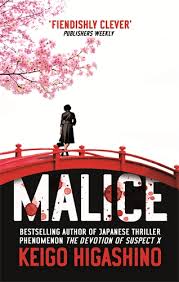 I’ve recently returned from a holiday in Japan, and I’m still with giddy with excitement after visiting such a remarkable and wondrous place. But as this is a crime fiction blog, I will not ramble on like an enthused tourist, but instead cut straight to my book review. I had to admit to our Japanese hosts that although I’ve read crime fiction from many different countries I was still woefully behind when it came to Japanese practitioners of the genre. They recommended Keigo Higashino’s Malice, and as I’d heard great things about Higashino’s smash hit The Devotion of Suspect X, I was happy read it in a single sitting on the long flight home.
When a critically acclaimed author, Kunihiko Hidaka, is found dead in his office Detective Kyochiro Kaga realises he has a locked room mystery on his hands. This is not so much a whodunnit as a whydunnit. The killer soon confesses but that confession is tainted by lies and distortions. Kaga has to distinguish between fact and fiction in the life and death of the author Hidaka. Was fellow author and discoverer of Hidaka’s corpse really a friend or rival to the victim? How much did Hidaka’s beautiful widow really know about her husband? There is even a detail Kaga grapples with, which I thought was a red herring but connects eventually, about Hidaka incurring the wrath of his neighbour after poisoning her cat. With Malice, the title refers not so much to the crime but the rivalry between the two writers. The novel is structured as a series of character perspectives of events immediately prior to and after the death of Hidaka, although as the novel progresses, the reminiscences stretch back years. With each perspective, falsehoods, hidden details and repressed feelings emerge from what has been explained before. Some memory is relayed verbally. At other points it is given as written text. The implicated writer Nonoguchi seems relieved that he can recount his involvement through the written word:
Detective Kaga has given me special permission to complete the following account before I leave the room I currently occupy. Why I asked to be allowed to do so is, I’m sure, incomprehensible to him. I doubt he’d understand even if I told him that it was a writer’s basic instinct to want to finish a piece he’d started, even if it was begun under false pretences.
Yet I believe that my experiences over the past hour or so are worthy of recording. This, too, I credit to writer’s instinct – though what I write is the story of my ruination.
Higashino is a writer fascinated by the act of writing and a writer’s psyche. But this is not an indulgent exercise in navel-gazing, as there is a both a clever and gripping layering of meta-fictional storytelling in the text. The interlinking of the two writers work (who wrote what and why?) is complemented by themes such as the stories the writers are telling and living off the page. The importance, if any, of writing that goes unread and unpublished, and the nature of authorship over manuscripts that have been rewritten, revised, reedited, copied and for that matter plagiarized. All of these issues are seamlessly interwoven into the many satisfying twists and turns of the narrative. Higashino has clearly had a lot of fun with this mystery puzzle-cum-thesis on the writer’s craft, and by the time you get to the last page, rather like the punchlines that used to end Elmore Leonard’s novels, you’ll realise the joke’s on you.
If there’s a flaw, I’d have to say it is the interaction between the characters being occasionally stilted and awkward. I wouldn’t necessarily say this was Higashino’s fault; despite having two translators, I suspect something has been lost in the text in the transition from Japanese to English. The characters often come across as very clever people giving speeches to one another, or as Jane Jakemen put it the novel reads like ‘a study of intellectuals doing their very nasty damnedest.’ Although this is sometimes grating, it never overwhelms the enjoyment of the story. Higashino has crafted a fascinating, meticulously plotted mystery novel, and I’m looking forward to discovering his other work and the work of more Japanese crime writers.
Serial Crime Fiction: Dying for More
 I have written an essay in a new anthology of critical work on crime fiction (published this month). Serial Crime Fiction: Dying for More is edited by Jean Anderson, Carolina Miranda and Barbara Pezzotti and features essays on authors including Arthur Conan Doyle, Dorothy L. Sayers, Sara Paretsky, David Peace, James Ellroy, Maurice Leblanc, Lisa Marklund, Andrea Camilleri and Jorge Luis Borges. My piece is titled ‘The Structure of the Whole: James Ellroy’s LA Quartet Series’.
It was a pleasure to work on this book, and I’m sure it will have great appeal to the student, scholar or fan of crime fiction. You can find out more about the book on Palgrave’s website. Here’s the full table of contents:
1. Introduction
PART I: THE SUM OF ITS PARTS: WHAT MAKES A SERIES?
2. Stephen Burroughs, Serial Offender; Jon Blandford
3. The Myth of the Gentleman Burglar: Models of Serialization and Temporality in Early Twentieth-Century Crime Fiction; Federico Pagello
4. ‘More than the Sum of its Parts: Borges, Bioy Casares and the Phenomenon of the Séptimo Círculo Collection’; Carolina Miranda
5. Serializing Sullivan: Vian/Sullivan, the Série noire, and the effet de collection; Clara Sitbon, Marie-Laure Vuaille-Barcan and Alistair Rolls
6. Armed and Dangerous: Le Poulpe and the Formalization of French Noir; Pim Higginson
7. Acts of Violence: The World War II Veteran Private-Eye Movie as an Ideological Crime Series; Nick Heffernan
8. The Structure of the Whole: James Ellroy’s LA Quartet Series; Steven Powell
PART II: AS TIME GOES BY: PROGRESSING THE SERIES
9. The Maturity of Lord Peter Wimsey and Authorial Innovation Within a Series; Brittain Bright
10. Series Fiction and the Challenge of Ideology: the Feminism of Sara Paretsky; Sabine Vanacker
11. From Conflicted Mother to Lone Avenger: Transformations of the Woman Journalist Detective in Liza Marklund’s Crime Series; Kerstin Bergman
12. It’s All One Book. It’s All One World: George Pelecanos’s Washington DC; Eduardo Obradó
13. Serializing Evil: David Peace and the Formulæ of Crime Fiction; Nicoletta Vallorani
14. The Flavour of the Street: The Factory Series by Derek Raymond; Anna Pasolini
15. Andrea Camilleri’s Imaginary Vigàta, Between Formula and Innovation; Barbara Pezzotti
PART III: TRANPOSITION, IMITATION, INNOVATION
16. Sherlock Holmes in Hollywood: Film Series, Genre and Masculinities; Maysaa Jaber
17. Murder, Mayhem and Clever Branding: the Stunning Success of J.B. Fletcher; Rachel Franks and Donna Lee Brien
18. From flâneur to traceur?: Léo Malet and Cara Black Construct the PI’s Paris; Jean Anderson
19. The City Lives in Me: Connectivity and Embeddedness in Australia’s Peter Temple and Shane Maloney; Carolyn Beasley
20. ‘She’s pretty hardboiled, huh?’ Rewriting the Classic Detective in Veronica Mars; Taryn Norman
21. ‘Exspecta Inexspectata’: The Rise of the Supernatural in Hybrid; Detective Series for Young Readers; Lucy Andrew
Bibliography
Index


 The Venetian Vase