Tony Hancock and The Missing Page
I’m currently tweaking a manuscript I’m about to submit, so I haven’t had much time for blogging. However, I would like to share something I’ve recently rediscovered via YouTube. When I was a kid, my parents owned several videotapes of the British comedian Tony Hancock’s classic sitcom Hancock’s Half Hour. As a child, I never thought an old black and white comedy show would appeal to me, but one day I put one into the VCR and watched a few episodes such as ‘The Blood Donor’, ‘The Two Murderers’ and ‘Twelve Angry Men’. I was immediately hooked. There was something incredibly funny, but also touching and sad about the buffoonish and pompous Hancock. Playing an exaggerated version of himself, and aided by wonderful scripts by Ray Galton and Alan Simpson, Hancock is always desperate for some kind of artistic or establishment recognition but is constantly frustrated or upstaged by his laid-back friend and lodger Sid James.
As this blog is about crime fiction, I’d like to refer you to one of the very best episodes, ‘The Missing Page’ from 1960. The episode begins with Hancock at his local library declaring to the librarian that he has read almost every book they have in stock. He manages to get a hold of a copy of the pulp thriller, Lady Don’t Fall Backwards by Darcy Sarto (the only other book he wants to read, Lolita, is always out on loan). Hancock is gripped by the mystery whodunnit featuring suave New York Detective Johnny Oxford, but to his horror when he gets to the end of the book he discovers the last page is missing, along with Johnny Oxford’s unveiling of the murderer! It’s up to Hancock and Sid James to solve the mystery of Lady Don’t Fall Backwards, but will they prove as good at detective work as Johnny Oxford? You can watch a clip from ‘The Missing Page’ below, and the entire episode is available for viewing on the WorldofTonyHancock YouTube page. In my opinion, fifty years after it was first broadcast the humour still holds up well. And unlike many spoofs of crime fiction, it actually captures the joy of reading a crime novel and playing armchair detective:
The real life Tony Hancock was a sad and tragic figure. He brought laughter and joy to millions of people and deserves his reputation as one of Britain’s best post-war comedians, but he was also self-destructive and betrayed every friend and colleague he had. He committed suicide at the age of forty-four, an alcoholic and celebrity exile living in Australia. I’d recommend Cliff Goodwin’s biography When the Wind Changed: The Life and Death of Tony Hancock (2000) as a fairly comprehensive and heartbreaking account of his life and demise.
How Many Crime Writers Are Internet Trolls?
The rapid expansion of blogs, online discussion forums and comment threads in recent years has revolutionised social networking and how people connect with each other throughout the world. But it has also given birth to a new phenomenon, the Internet Troll. The definition of an internet troll is still vague, but Wikipedia describes a troll as ‘someone who posts inflammatory, extraneous, or off-topic messages in an online community, such as an online discussion forum, chat room, or blog, with the primary intent of provoking other users into a desired emotional response or of otherwise disrupting normal on-topic discussion.’ A troll can be, depending on your opinion, a foul-mouthed timewaster or a mischievous prankster. As blogging has become almost obligatory for any crime writer who wants to promote their work, there have arisen a number of interesting cases of crime writers who have resorted to a bit of trolling. Let me start with a comparatively mild example, and one that assumes you can be a troll on your own website. James Ellroy has been known as the Demon Dog of American Crime Fiction for years, and this persona has served him well in interviews through which he has often created and refined myths surrounding his work. Ellroy has never used a computer in his career– or even a typewriter. He writes everything in longhand and this is then typed up by his assistant. His Facebook page, however, is very lively, and Ellroy often sends messages through his assistant to post on there. Shortly before the publication of Blood’s A Rover, Ellroy posted this ‘status update’:
Achtung, Fuckheads! We are now one month and eleven days away from the publication of my greatest masterpiece, “Blood’s A Rover”. It will hit stores on September 22, published by Alfred A. Knopf. It is written in panther pus, napalm, jaguar jizz and blood!!!!! Be prepared to uproot your entire lives when this book makes the scene!!!!! (Hat-tip to J. Kingston Pierce)
Those who are unfamiliar with the Demon Dog persona might be willing to dismiss Ellroy as a neo-nazi on the basis of these remarks. But his outrageousness is deliberately exaggerated to provoke shock in the reader, and hone his reputation as America’s most brilliant and out-there crime novelist. Of course, edgy humour only works when you’re very careful to get the tone right. One example of trolling which came back to haunt a crime writer was when Philip Kerr, author of the Bernie Gunther novels, wrote a scathing review on Amazon of Allan Massie’s The Royal Stuarts: A History of the Family that Shaped Britain. Kerr was motivated by revenge as Massie had written two bad reviews of Kerr’s recent novels. He was civil enough to confess to this at the end of the review:
Good manners and honesty prompt me to mention that Alan Massie has reviewed my last two novels with a distinct lack of enthusiasm. For the first review I say good luck to him. If he didn’t like my book, then that’s fair enough. He’s entitled to his opinion which is that I can’t write for toffee. Maybe I can’t.
He should however, have excused himself from reviewing me a second time. In my opinion that’s bad manners. I’m of the opinion that authors should avoid reviewing the books of their peers and, usually, I stick to this principle, but I’ve made a special exception in Mister Massie’s case. . .
Kerr wrote the review on the Amazon page probably because no newspaper would have accepted something so overtly bitter. Perhaps he thought he could vent his anger on Amazon as the review might get buried amongst the thousands of other online reviews (it has since been taken down), but when the Telegraph broke the story, Kerr looked very foolish.
These are two examples of crime writers engaging in a bit of trolling, although if readers know of any others please let me know. Perhaps crime writers are suited to trolling because of their understanding of mystery narratives and the desire to embrace new forms to create mystery and mischief in the online age, but as with the case of Kerr, we should remember that not every famous literary troll will be well received.
Raymond Chandler’s Los Angeles
The blog Hidden Los Angeles has a post on Raymond Chandler’s Los Angeles, along with some great film clips, including the one below, from a documentary on the subject. There isn’t much here that dedicated Chandler fans won’t already know about him, but the old footage and some interesting anecdotes about policing and Los Angeles in the 1930s and 1940s, make this worth watching:
Visit Hidden Los Angeles for more.
Jean Spangler: Megan Abbott’s Dahlia in The Song is You
 With her second novel The Song is You (2007), Megan Abbott takes the case of the unsolved disappearance of 1940s Hollywood starlet Jean Spangler and creates a novel as emotionally powerful, but perhaps not as ambitious in scope, as James Ellroy’s The Black Dahlia (1987). The lead character, Gil Hopkins (Hop), is a reporter and Hollywood fixer. Two years after Spangler’s disappearance, Hop is approached by a black actress named Iolene, who claims that he buried evidence important to the Spangler case. Hop had introduced Spangler and Iolene to two movie stars the night Spangler went missing and then had withheld information from the press and gave the cops false leads on Spangler (who had dated a mobster). Now that the Spangler case, which the press dubs ‘The Daughter of the Dahlia’, has fizzled out, Hop begins his own investigation.
A reoccuring theme in the novel is the marking of the female body to symbolise masculinity. Men, including Hop, and society as a masculine audience, are drawn to female characters out of a form of hatred, which leads them to destroy. This is seen in the media’s handling of the Spangler case; they lose interest in her once the mob angle surfaces. As Hop puts it, ‘ So she’s no longer a possible victim of some snazzy sex criminal. Instead she becomes, well, you see it, a two-bit mob whore’. The newspaper’s stance is not only incriminating of itself but also of their audience–with no body, and thus no signs of torture to titillate, readers get bored. Hop’s relationship with his wife Midge also reflects this kind of hate-desire. Even before their marriage falls apart when she leaves him for his good-natured friend, their sex life indicts his masculine urge to destroy the feminine:
Each night he clamped his hand on one of her white dimpled knees and pushed it down flat on the rough hotel sheets and tried to f**k all their shared ugliness away. And all her beauty, too.
For Abbott, the femme fatale has lost her power to seduce, and women have become meat to be abused. That is not to say that Hop is not disgusted by himself and the world he inhabits. His investigation into Spangler’s disappearance becomes as much an emotional investigation of himself. Ultimately, Hop is a better man than the two sexually sadistic movie stars, who are Hop’s prime suspects, and ironically have earned their fame in upbeat Hollywood musicals (playing a Donald O’Connor and Gene Kelly type duo). By comparison, Hop is more transparently flawed and compromised.
The torture-murder of Elizabeth Short and the disappearance of Jean Spangler are connected not only in terms of some of the details of the case, but in The Song is You, Abbott links the two women figuratively through the sexual torture of the female body. With Jean Spangler, Abbott has created a fictional portrayal of an unsolved mystery and unavenged victim that is every bit as haunting and powerful as Ellroy’s now iconic portrayal of the Elizabeth Short murder.
The Unhappy Life of Cornell Woolrich
Cornell Woolrich’s dark crime novels sold well in the 1940s and 1950s, but have not had lasting success. He is now almost unknown outside specialist circles, but his books were nevertheless staples of Hollywood filmmaking in the 1940s and 1950s. Woolrich’s invisible influence on cinema is perhaps why many of the titles are so familiar: The Bride Wore Black (1940), Phantom Lady (1942), Night Has A Thousand Eyes (1945), I Married a Dead Man (1948). Woolrich, with his switchback plotting, and bleak outlook, combined the Gothic sensibility of Edgar Allan Poe, with the dark, urban setting of hard-boiled crime fiction to create what has been called “paranoid noir.” Woolrich’s own life, and in particular his relationship with his mother, was in many ways at least as strange as the plots of his stories.
The trailer for Phantom Lady (1944), directed by Robert Siodmak
Woolrich was born in New York City in 1903. His father was a civil engineer, and after his parents separated, Woolrich spent some time living with him in Mexico, where one of his hobbies was collecting spent bullet cartridges in the street. However, he idolised his mother, Claire Attalie Woolrich, and from the age of 12 he lived with her in New York City. In 1921 he went to Columbia University, where he studied journalism. But during a period of illness, which left him bedridden for six weeks, he wrote a romantic novel, Cover Charge (1926). Encouraged by the success of this he dropped out of college. His second novel, Children of the Ritz (1927), won a $10,000 prize, and was produced as a film by First National Pictures in 1929.
Having moved to Hollywood to work on the script for Children of the Ritz, in 1930 Woolrich married Gloria Blackton, the daughter of a movie producer. The marriage did not last long. Within a few months they separated, probably because Blackton discovered Woolrich’s secret homosexuality, and the marriage was annulled, apparently unconsummated, in 1933. Woolrich, who seems to have enjoyed patrolling the docks dressed in a sailor’s uniform, trying to pick up men, returned to New York, where he moved in with his mother. They lived together at the Hotel Marseilles until her death in 1957. After his own death, 11 years later, Woolrich was buried with her in the same vault.
Partly because publisher Simon and Schuster “owned” the Cornell Woolrich name, and Woolrich wanted to publish elsewhere, many of his novels were written under the names William Irish and George Hopley, and this is one reason why he is less well known than he might be. Woolrich, who was an alcoholic, also became something of a recluse, doing much of his writing in the corner of the hotel room, while his mother sat watching. Following his return to New York, Woolrich began writing stories for the pulp publishers, including Black Mask and Story magazine, ultimately publishing over 250 short mystery stories, a contribution for which he won an Edgar Award in 1948. He won an Edgar Award in 1950 for his contribution to the RKO movie The Window.
It was in the 1940s, when he started writing thrillers, that Woolrich produced his best work, in particular the run of “Black” novels beginning with The Bride Wore Black (1940). In common with many of Woolrich’s plots, The Bride Wore Black involves a race against time during which a bride, whose husband is shot dead on their wedding day, pursues the gunmen, seeking vengeance. The first William Irish novel, Phantom Lady (1942) tells the story of a man convicted and sentenced to death for killing his wife, and the race to find a woman who can provide an alibi. In 1943, Raymond Chandler wrote to Alfred A. Knopf about having read Phantom Lady, and at first wondered who “William Irish” was. When he discovered it was Woolrich, he described him as “one of the oldest hands in the detective fiction business. He is known in the trade as an idea writer, liking the tour de force, and not much of a character man. I think his stuff is very readable, but leaves no warmth behind it.”
Woolrich was a difficult man, who was uncomfortable in company, and could be irascible, unpleasant, and bitter. His stories express a world view that is cynical and pessimistic about human nature. Although homosexuality is never explicitly mentioned in his work, Charles Krinsky notes in his entry for glbtq that in novels such as The Bride Wore Black, and I Married a Dead Man (1948), love, and family life, fail to provide security, safety, or fulfilling relationships. In a Woolrich novel, malice and revenge are the primary motivating forces, and lives are blighted by despair and paranoia. It is because of this that Woolrich has been described as an originator of “paranoid noir,” defined by Philip Simpson in the Blackwell Companion to Crime Fiction as stories of a “persecuted victim, caught up in a deterministic world in which the standard rules have suddenly changed for the worse.” Night Has a Thousand Eyes (1945), written as George Hopley, is arguably the archetypal novel of this type.
Woolrich, whose diabetes and alcoholism worsened to leave him disabled, became increasingly embittered. He alienated most of his friends and acquaintances and spent the final decade of his life almost entirely alone. In early 1968 an untreated foot infection developed into gangrene, and led to the partial amputation of his leg. When he died in September that year, Woolrich left his entire estate of around $1 million dollars to Columbia University, where the Claire Woolrich fellowships, named after his mother, continue to support students in journalism and writing.
Tony Blair’s Journey and Robert Harris’ Ghost
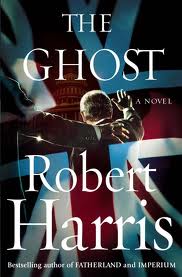 Robert Harris’ political thriller The Ghost is a thinly-veiled criticism of former British Prime Minister Tony Blair. Harris was formerly a generous donor to New Labour when Tony Blair was the party leader, but during the course of Blair’s premiership, Harris became increasingly disillusioned with Blair and the political party he had donated large sums to from his personal fortune. Above all, Harris found Blair’s partnership with President George W. Bush in the invasion of Iraq unforgivable. Harris wrote The Ghost around the time that Blair stepped down from office in 2007. The novel takes the form of a lengthy memorandum of an unnamed ghost-writer drafting the memoirs of the fictional disgraced former PM Adam Lang. There are some striking parallels between events and characters in the novel and events and people of the Blair years. But what is even more striking are the prophetic elements of the novel, as well as the final irony that the recent publication of Blair’s autobiography The Journey, was not ghost-written. Here are a few parallels between the novel and events in real life:
The late Robin Cook is the model for the character of Richard Rycart, the former Foreign Secretary of Lang, who is determined to see Lang imprisoned for war crimes.
Lang’s wife Ruth is portrayed as manipulative and scheming, and is unflatteringly based on Cherie Blair.
In the novel Lang is having an affair with his personal assistant Amelia Bly. The character is based on Anji Hunter, who Blair describes as ‘sexy and exuberant’ in his memoirs.
The strongest parallel between novel and reality is clearly the similarities between Adam Lang and Tony Blair, and this is where events since the publication of The Ghost seem to be echoing the novel. In the novel, Lang is holed up in a millionaire’s paradise on Martha’s Vineyard, living the life of a recluse, as he is hated in almost every country outside the United States. Since leaving office, it is widely reported, although never confirmed, that Blair is a non-dom, and can only spend 90 days a year in the country he used to govern for tax purposes. His travels have become almost as dangerous as Lang’s, he was almost pelted with eggs at a Dublin bookstore during a signing for his memoirs, and a visit to a book signing in London had to be cancelled as a result. But the most interesting legacy of The Ghost is that Tony Blair refused to hire a ghost-writer to help him draft his memoirs, and the critical reaction to The Journey has been uniformly hostile. In his review of Blair’s memoirs in The Observer, Andrew Rawnsley describes the prose as ‘execrable’, and the chapters ‘are as badly planned as the invasion of Iraq.’ Not only did Blair refuse a ghost-writer, it seems the book was never even edited. Blair wrote his memoirs in longhand on hundreds of notepads which were then transplanted, word for word, into the finished book. I wonder if the scathing reviews for The Journey are making Robert Harris chuckle, because if it was the success of The Ghost that made Blair decide not to hire a professional ghost-writer, then it was Harris’ last act of revenge on the political leader he once revered.
Zoe Richards and the Louise Paxton Hoax

Zoe Richards Pictured in Cheshire Life
Some time ago I wrote a post titled YouTube and the Louise Paxton Mystery. It turned out to be one of this site’s most popular posts and is still regulalrly getting hits. It concerned a series of thirty-eight video blogs that I discovered on YouTube, featuring Louise, a young woman from Norwich, who relocates to an apartment in London. The opening videos are uneventful, as they simply show Louise enjoying her new home, but then things start to go wrong. Louise starts to believe she is being stalked by a stranger who may have access to the apartment. Each video becomes progressively more paranoid and creepy, and gradually a supernatural element is woven into the story, until, in the final video, Louise disappears. Louise’ YouTube page has not been updated since her disappearance three years ago and neither has her MySpace page. There is a website dedicated to finding Louise and appealing for any information as to her whereabouts.
It is of course all a hoax, but an unsettling and successfully elaborate one. Since watching the videos, I’ve been waiting for the real Lousie Paxton to come out of the closet (or should I say cellar), and now it seems she has. Louise Paxton is Zoe Richards, an actress with a number of horror movie credits to her name. Here’s the link to her imdb page. The cast and crew of the new horror film The Torment are interviewed in Gore Press. Zoe Richards is part of the cast and confesses she was Louise Paxton in the videos (this forms just a very brief mention in the interview). The director of The Torment, Andrew Cull, also directed the Louise Paxton videos. As far I know, this is the first time that anyone involved in the hoax has gone on record to talk about it, although hats off to this YouTube user who figured out Louise was actually Zoe Richards some time ago.
A lot of the fear element has been removed now that there is no remaining ambiguity that this was a hoax, but you can still watch the Louise Paxton videos and admire the creativity. The entire project was in questionable taste, but then that’s Horror for you!
Update: I had the privilege of interviewing Zoe Richards about her experiences working on the project.
Read More: My interview with writer-director Andrew Cull, who created the Louise Paxton internet mystery In the Dark.
David Fincher’s The Social Network: A Film for the Digital Age or a Facebook Flop?
David Fincher is one of the greatest American film directors working today. His contribution to the crime/suspense genre is stunning, Alien 3 (1992), Se7en (1995), The Game (1997), Panic Room (2002), and his masterpiece Zodiac (2007). But with his latest film, The Social Network, about the founding of the social networking site Facebook, Fincher has moved from away from the crime genre.
I’m somewhat perplexed at this sudden departure. Although to be fair, his previous film The Curious Case of Benjamin Button (2008) was a bizarre, oddball project that was critically panned. The Social Network looks like it will receive a far warmer critical reception. Despite the fact that very few critics have seen the film, it is already being described as the film of the decade, a masterpiece, and of course there is the obligatory talk of Academy Awards. Much of this hype stems from the official trailer for the film which defintely falls into a love it or hate it category. I confess that I fall into the latter group. Here’s the trailer:
Am I just completely wrong in assuming this film looks like it will be terrible? When we first see Facebook founder Mark Zuckerberg (played by Jesse Eisenberg) he states that his ambition is to get into Harvard’s most exclusive clubs. Hardly inspiring; so this is going to be a ‘from riches to even more riches tale’? Then the trailer moves into quite a lot of techno-babble about the creation of Facebook. Zuckerberg talks about the site’s remarkable stats, a topic which is surely only of interest to website owners. Throw in a few hints about college life being full of parties and sex with co-eds, and then things start to go wrong. Zuckerberg finds himself mired in arguments over copyright and invasion of privacy. Again, how much interest can this be to Joe Public? Then the trailer ends on a horribly flat emo-rock like bit of philosophy, which actually made the audience groan when I saw the trailer at the cinema recently. Another thought is that the title, The Social Network, is bad and just sounds dull. Why didn’t they stick with The Accidental Billionaire, the book this film is based on and which sounds witty, interesting and dramatic?
The reason the film seems so unappealing is not because the concept is unpromising. The Social Network is being promoted as a film which captures the essence of our Digital age, just as Fitzgerald portrayed the Jazz age, and all its excesses, in The Great Gatsby. Yet, surely Facebook is more a symbol of the mediocrities of the digital world than its virtues or excesses? The site may have five hundred million users, but many of the people I know who have Facebook accounts have come to hate the site, finding it addictive and vacuous. This is exactly how I came to regard it before I deleted my account, which they don’t make it easy for you to do (don’t be tricked into simply deactivating your account). Facebook has become a long running Reality television show for the internet, and like most Reality TV I suspect the wheels will come off soon enough. If The Social Network managed to capture some of these issues about the Digital age and Facebook, I think it would make for a more compelling movie.
Perhaps Fincher should stick to what he does best. I’m looking forward to seeing his Hollywood adaptation of The Girl With the Dragon Tattoo, although he would be hard-pressed to match the original Swedish adaptations.
Writing the Hardy Boys
Crime and detective fiction for children and young readers is a neglected sub-genre that nevertheless includes some of the best known, most popular, and most ridiculed of all crime and detective stories. In the United States the Stratemeyer syndicate dominated the market for children’s mystery stories for several decades from the 1920s. Edward Stratemeyer’s careful market research, and his skill in creating formulaic plots his writers could flesh out into stories, made him rich. What happened to the hundreds of ghost writers who worked for him, though, is less uplifting. The commoditisation of writers on the Web seems in many ways to be a new story, but writers, and writing, have always come cheap.
A piece in the Washington Post by Gene Weingarten, uncovers the life of Leslie McFarlane, a writer of Hardy Boys books for Stratemeyer, who paid him, in the 1930s, the miserable sum of $85 for 45,000 words. McFarlane, whose pseudonym was Franklin W. Dixon, was, as the article points out, one of the most widely published writers of his time, but had greater aspirations than this anonymous hack work. He struggled for years to feed his family and keep a roof over their heads, always hanging on to the idea that one day he would write something other than “juveniles.” But in the end the Hardy Boys consumed him. From the article:
One day he answered an ad from the Stratemeyer Syndicate, a fabulously successful enterprise that wrote children’s books through a conveyor-belt production process. The New York syndicate made the strangest offer: Would McFarlane like to write books for youths based on plot outlines Stratemeyer would supply? He would be paid by the book, and have no copyright to the material. In fact, he could never reveal his authorship, under penalty of returning his payments. The company shipped him samples of some books about a character named Dave Fearless — dreadful, thickheaded novels with implausible plots and preposterous narrative.
…
McFarlane finally unchained himself from the Hardy Boys in 1946; the syndicate didn’t care. It found another hungry writer to continue the series. To date, there are more than 100 Hardy Boys mysteries, and they are still going strong. In 1959, many of the old Hardy Boy books were redone, streamlined, modernized, sterilized. McFarlane was never consulted, but he didn’t mind. Nor did he feel ripped off by their fantastic success. A deal is a deal, he always said. He agreed to it, so he couldn’t complain.
British Gangsters and their Curious Contribution to Literature
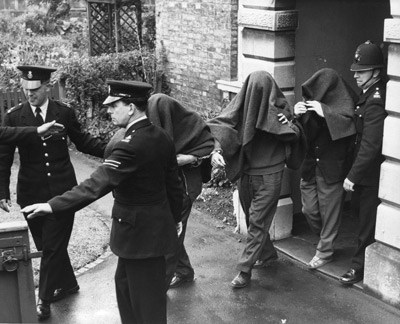
Aftermath of the Great Train Robbery
Just last month the Daily Mirror ran the story that convicted criminal Ronnie Biggs, who for years evaded justice for his role in the notorious Great Train Robbery, was to be given a lifetime achievement award for his contribution to crime, yes crime!, at a £50-a ticket gala dinner at a venue in Slough. The event, which was publicised as ‘To Rio and Back’, took place on August 29th. But, on the website of self-proclaimed gangster and celebrity author Dave Courtney there is a post dated August 27th in which Courtney rants about how the Home Office had decreed that if Biggs attended the event, alongside an assortment of well-known gangsters and ex-convicts, he would have his license revoked and be returned to prison immediately. I can find no reviews of ‘To Rio and Back’ on the internet, so I assume it went ahead without Biggs’ presence.
I support the release of prisoners on compassionate grounds, including Biggs who was released from prison over a year ago after being informed that he had only weeks to live, but it stands to reason that this policy is to allow them to spend the very end of their life with their family, and not to be applauded on stage by a rabble of fellow gangsters talking about how ‘ard they are. Over the last decade there has been a proliferation of grossly offensive gangster memoirs clogging up the shelves in the True Crime section of bookshops. Courtney himself has authored such literary classics as Stop the Ride I Want to Get Off (1999), Raving Lunacy (2000), Dodgy Dave’s Little Black Book (2001), The Ride’s Back On (2003), F**k the Ride (2005) and Heroes and Villains (2006). There is a silver lining to this dark literary cloud; Britain has never experienced gangsters as wealthy and powerful as those seen in Italy and the United States. American Gangsters like Al Capone, Sam Giancana and John Gotti never had the time to write books or organise gala dinners, although to be fair all these examples met their demise due to their love of the limelight. As we live in a country relatively unplagued by organised crime, perhaps we should be grateful that the worst we have to endure is the literary equivalent of celebrity gangsters parading their life around like your average exhibitionist Big Brother contestant.


 The Venetian Vase